
Based on the technical brochure provided, here is a technical deep-dive blog post regarding the Hamza 6×6.
Technical Deep Dive: The Hamza 6×6 MRAP
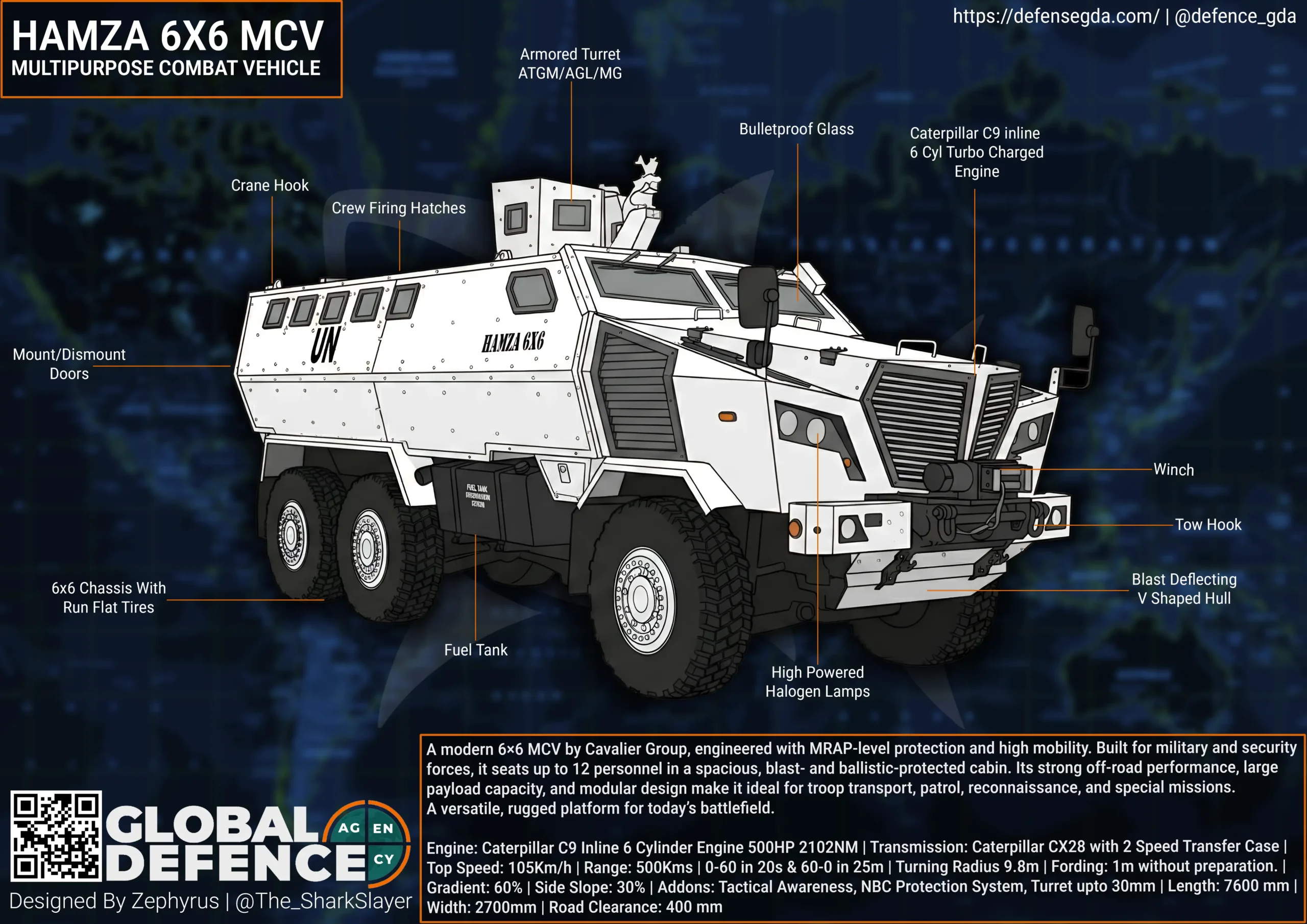
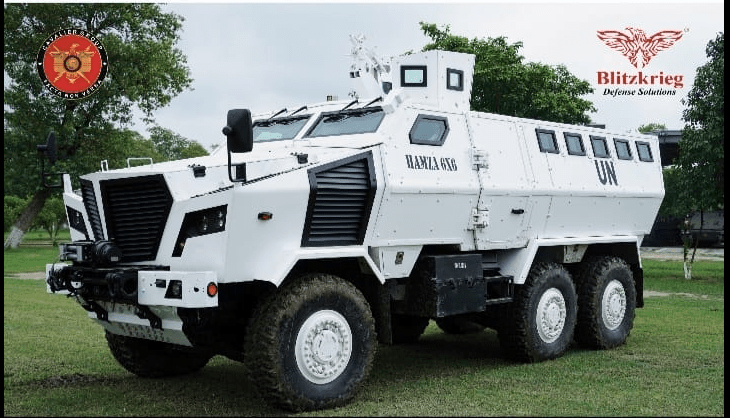
In the landscape of modern asymmetric warfare, the line between an Armored Personnel Carrier (APC) and a Mine-Resistant Ambush Protected (MRAP) vehicle often blurs. The Hamza 6×6, developed by Pakistan’s Cavalier Group, is a Multi-Role Combat Vehicle designed specifically to straddle this line, offering the patrol capabilities of an APC with the survivability profile of a dedicated MRAP.
Here is a technical breakdown of what makes this 21-ton platform a significant asset in high-threat environments.
1. Mobility and Power Train
At the heart of the Hamza 6×6 is a drive train built for durability and high output. The vehicle is powered by a Caterpillar C9 Inline 6-Cylinder Turbocharged Diesel engine. This is mated to a Caterpillar CX28 transmission featuring a 2-speed transfer case, ensuring the torque delivery necessary for difficult terrain.
Despite a combat weight (GVM) of 21,000 kg, the platform maintains impressive agility:
- Max Speed: 105 km/h.
- Gradient Capability: Greater than 60%.
- Side Slope: Greater than 30%.
- Obstacle Negotiation: It can climb steps of 500mm and cross ditches up to 1000mm wide.
The vehicle utilizes a 6×6 drive configuration with 395/85 R20 All-Terrain tires, which can be equipped with Run Flat Inserts (RFI) and a Central Tyre Inflation System (CTIS) for sustained mobility under fire.
2. Survivability and Protection
The primary design philosophy of the Hamza 6×6 is crew survival. It accommodates 12 personnel (2 crew + 10 passengers) in a layout designed to mitigate kinetic and blast threats.
- Blast Protection: The chassis allows for 10kg TNT detonation beneath the hull and 10kg TNT beneath any wheel.
- Side Blast (Optional): The vehicle can be up-armored to withstand a massive 50kg TNT side blast.
- Ballistic Rating: The ballistic protection level os “B7”, providing resistance against high-velocity rifle fire.
3. Mission Systems and Firepower
While primarily a transport and reconnaissance unit, the Hamza 6×6 does not compromise on offensive capabilities. The roof can accommodate turret systems up to 30mm, providing substantial fire support for dismounted infantry.
The vehicle is also “tech-ready” for modern networked warfare, featuring:
- Battlefield Management Systems (BMS).
- Situational Awareness: A driver assist camera system links rear-mounted cameras to the driver’s panel for maneuvering in tight combat zones.
- CBRN Defense: Optional biological and chemical protection systems are available for operations in contaminated environments
4. Technical Specifications Summary
| Feature | Specification |
| Manufacturer | Cavalier Group (Pakistan) |
| Dimensions (L x W x H) | 7.6m x 2.55m x 2.65m |
| Combat Weight | 21,000 kg |
| Crew Capacity | 2 + 10 |
| Range | < 500 km |
| Fording Depth | 1000mm (without preparation) |
| Electrical System | 24 V 23 |
Based on the technical brochure provided, here is a technical deep-dive blog post regarding the Hamza 6×6.
Technical Deep Dive: The Hamza 6×6 MRAP
In the landscape of modern asymmetric warfare, the line between an Armored Personnel Carrier (APC) and a Mine-Resistant Ambush Protected (MRAP) vehicle often blurs. The Hamza 6×6, developed by Pakistan’s Cavalier Group, is a Multi-Role Combat Vehicle designed specifically to straddle this line, offering the patrol capabilities of an APC with the survivability profile of a dedicated MRAP1111111.
Here is a technical breakdown of what makes this 21-ton platform a significant asset in high-threat environments.
1. Mobility and Power Train
At the heart of the Hamza 6×6 is a drive train built for durability and high output. The vehicle is powered by a Caterpillar C9 Inline 6-Cylinder Turbocharged Diesel engine2. This is mated to a Caterpillar CX28 transmission featuring a 2-speed transfer case, ensuring the torque delivery necessary for difficult terrain3.
Despite a combat weight (GVM) of 21,000 kg, the platform maintains impressive agility:
- Max Speed: 105 km/h4.
- Gradient Capability: Greater than 60%5.
- Side Slope: Greater than 30%6.
- Obstacle Negotiation: It can climb steps of 500mm and cross ditches up to 1000mm wide7.
The vehicle utilizes a 6×6 drive configuration with 395/85 R20 All-Terrain tires, which can be equipped with Run Flat Inserts (RFI) and a Central Tyre Inflation System (CTIS) for sustained mobility under fire8888.
2. Survivability and Protection
The primary design philosophy of the Hamza 6×6 is crew survival. It accommodates 12 personnel (2 crew + 10 passengers) in a layout designed to mitigate kinetic and blast threats9.
- Blast Protection: The chassis allows for 10kg TNT detonation beneath the hull and 10kg TNT beneath any wheel10.
- Side Blast (Optional): The vehicle can be up-armored to withstand a massive 50kg TNT side blast11.
- Ballistic Rating: The brochure lists the ballistic protection level as “B7” (referenced in the specifications list), providing resistance against high-velocity rifle fire12.
3. Mission Systems and Firepower
While primarily a transport and reconnaissance unit, the Hamza 6×6 does not compromise on offensive capabilities. The roof can accommodate turret systems up to 30mm, providing substantial fire support for dismounted infantry13.
The vehicle is also “tech-ready” for modern networked warfare, featuring:
- Battlefield Management Systems (BMS)14.
- Situational Awareness: A driver assist camera system links rear-mounted cameras to the driver’s panel for maneuvering in tight combat zones15.
- CBRN Defense: Optional biological and chemical protection systems are available for operations in contaminated environments16.
4. Technical Specifications Summary
| Feature | Specification |
| Manufacturer | Cavalier Group (Pakistan) 17171717 |
| Dimensions (L x W x H) | 7.6m x 2.55m x 2.65m 18 |
| Combat Weight | 21,000 kg 19 |
| Crew Capacity | 2 + 10 20 |
| Range | < 500 km 21 |
| Fording Depth | 1000mm (without preparation) 22 |
| Electrical System | 24 V 23 |
In Short
The Hamza 6×6 represents a robust synthesis of mobility and protection. By integrating a Caterpillar powertrain with high-level blast protection, the Cavalier Group has produced a platform capable of serving as both a frontline reconnaissance unit and a protected troop transport in volatile asymmetric warfare theaters.
Infographic