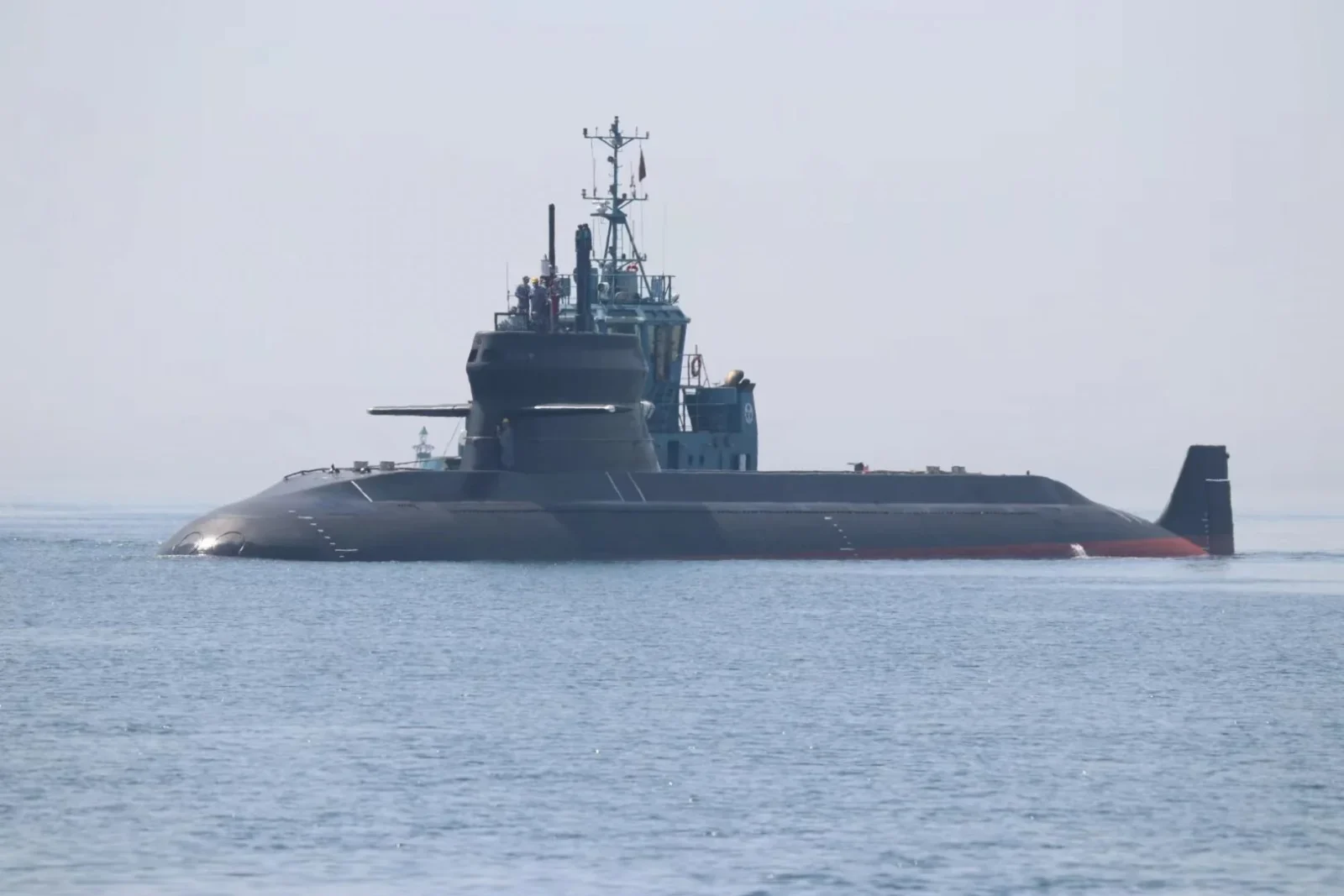



The operationalization of a nuclear-powered ballistic missile submarine (SSBN) represents the most complex engineering and strategic endeavor a nation’s military can undertake. For the Republic of India, the pursuit of a survivable, sea-based second-strike capability has been the singular objective of the multi-decade Advanced Technology Vessel (ATV) project, culminating in the launch and commissioning of the INS Arihant1. As the cornerstone of India’s nuclear triad, the SSBN ensures that even in the event of a catastrophic first strike against its land-based silos and strategic bomber airfields, a retaliatory nuclear response remains guaranteed4. However, the transition from operating conventional diesel-electric hunter-killers to mastering the unforgiving operational tempo and maintenance demands of an SSBN fleet is fraught with profound institutional and technical challenges.
In early 2018, a seismic report published by The Hindu alleged that the INS Arihant had been severely damaged and rendered inoperative for approximately ten months due to an inexplicable human error7. The report claimed that a crew member had mistakenly left a rear hatch open while the submarine was moored in harbor, leading to catastrophic saltwater flooding of the vessel’s propulsion compartment4. This alleged incident purportedly occurred during a highly volatile period, sidelining the multi-billion-dollar strategic asset during the 73-day Doklam military standoff with the People’s Republic of China in 20174. Furthermore, the report insinuated a dangerous disconnect within India’s command-and-control structure, suggesting that the civilian political leadership remained ignorant of the submarine’s crippled status until they actively sought its deployment during the crisis7.
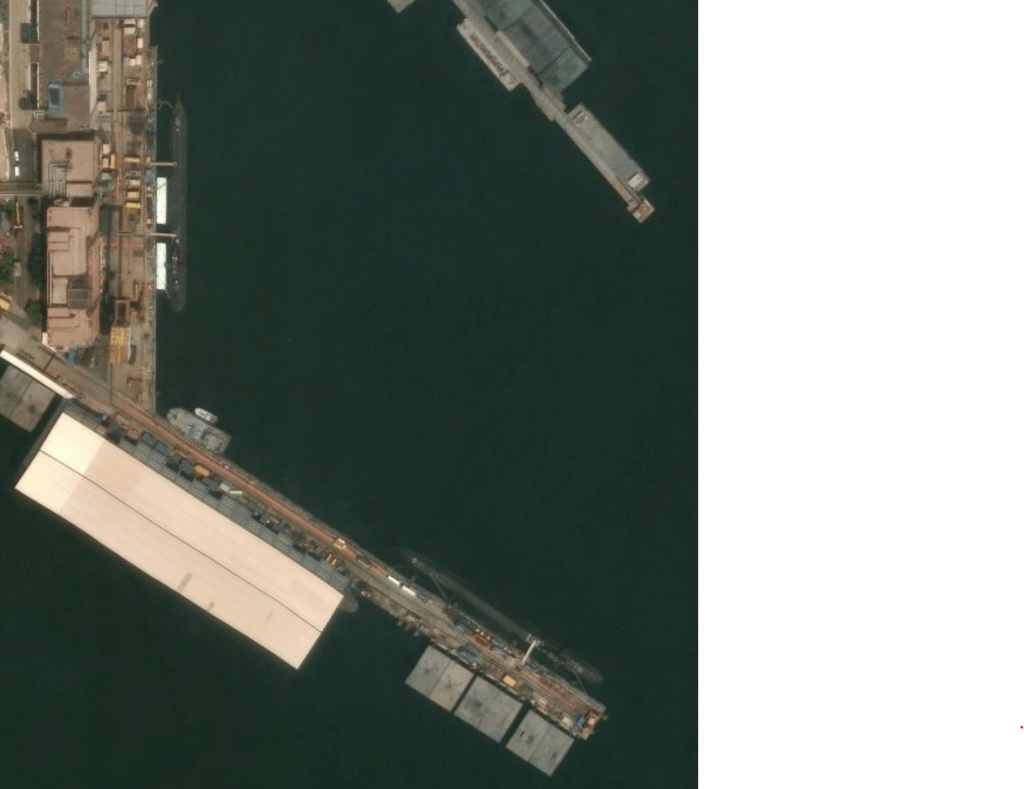
This report provides an exhaustive, peer-level analysis of the alleged INS Arihant flooding incident, heavily drawing upon technical rebuttals, specifically those articulated by defense analysts in The Economic Times, alongside extensive forensic naval architecture data and historical precedents7. By deconstructing the physical design of the Arihant-class, evaluating standard submarine operational procedures, analyzing the architecture of India’s Nuclear Command Authority (NCA), and reviewing the global history of submarine harbor accidents, this document synthesizes a nuanced and comprehensive understanding of the event. Ultimately, this analysis seeks to separate journalistic sensationalism from the unforgiving realities of nuclear submarine maintenance, offering strategic clarity on the maturation of India’s maritime deterrence posture.
The Advanced Technology Vessel Project and the Arihant-Class Architecture
To fully comprehend the operational parameters and the potential vulnerabilities of the INS Arihant, it is imperative to establish the technical foundation of the platform. The submarine is not merely a vessel; it is a mobile, underwater nuclear reactor integrated with a strategic missile silo complex. India’s journey toward this capability began in 1984 under the highly classified Advanced Technology Vessel (ATV) project, spearheaded by Vice Admiral Mihir K. Roy as the first Director General1.
The program was characterized by extensive international cooperation and indigenous industrial mobilization. Russian assistance was paramount, particularly in the realm of naval nuclear propulsion. Scores of Russian engineers collaborated with India’s Department of Atomic Energy (DAE) and the Defense Research and Development Organisation (DRDO) to miniaturize a pressurized light-water reactor (PWR), heavily based on the Soviet VM-5 reactor design1. The land-based prototype of this reactor achieved criticality at the Indira Gandhi Centre for Atomic Research (IGCAR) in Kalpakkam in 2006, paving the way for its integration into a submarine hull1.
The construction of the hull and the integration of critical systems involved the apex of Indian heavy industry. Larsen & Toubro (L&T) established a dedicated submarine design center and constructed the hull at its Hazira facility, while Tata Power Strategic Engineering Division (SED) developed the complex control systems2. Walchandnagar Industries supplied the sophisticated steam turbines and associated gearing systems that interface directly with the nuclear reactor’s secondary loop2.
The resulting submarine design is heavily derived from the Soviet Akula-class nuclear-powered attack submarine (SSN), an architecture the Indian Navy became intimately familiar with by leasing the INS Chakra from Russia to train its nuclear submariners1.
| Technical Specification | INS Arihant (S2) Operational Details |
| Displacement | Approximately 6,000 tonnes (surfaced)2 |
| Dimensions | Length: 111 m; Beam: 11 m; Draught: 15 m1 |
| Propulsion Plant | 1 × 83 MW Pressurized Light-Water Reactor (PWR) utilizing highly enriched uranium1 |
| Performance | Speed: 12–15 knots (surfaced); 24 knots (submerged)1 |
| Operating Depth | Estimated test depth of 350 meters to 450 meters1 |
| Crew Complement | Approximately 95 to 100 officers and enlisted personnel1 |
| Strategic Armament | 4 × vertical launch tubes located in a dorsal hump1 |
| Missile Loadout Options | 12 × K-15 Sagarika SLBMs (750 km range) OR 4 × K-4 SLBMs (3,500 km range)1 |
| Tactical Armament | 6 × 533 mm forward torpedo tubes capable of launching torpedoes, anti-ship cruise missiles, or naval mines3 |
Table 1: Comprehensive Technical Specifications of the INS Arihant (S2) SSBN.
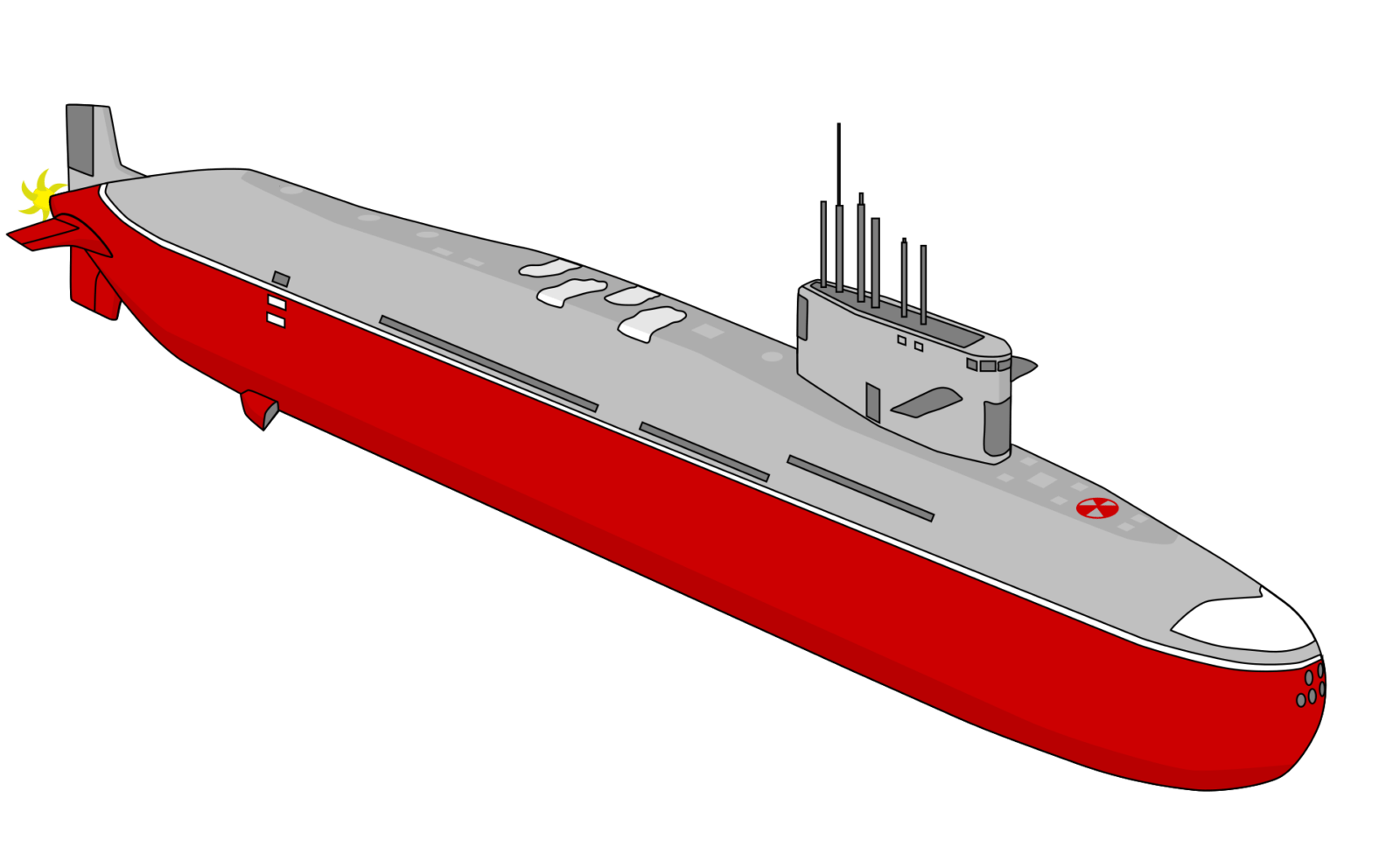
A critical element of the Arihant‘s architecture, directly relevant to the 2017 flooding allegations, is its double-hull configuration1. In naval architecture, a double hull consists of an inner, high-yield steel pressure hull that maintains a survivable, atmospheric environment for the crew and sensitive equipment, surrounded by an outer hydrodynamic hull that streamlines the flow of water3. The spaces between these two hulls contain the main ballast tanks and free-flood areas necessary for diving and surfacing maneuvers18. The nuclear reactor compartment is located centrally within the pressure hull, heavily shielded and permanently sealed to protect the crew from radiation exposure and to isolate the propulsion plant from external hazards7.
The Anatomy of the Alleged Incident: The “Open Hatch” Narrative
The controversy surrounding the INS Arihant erupted on January 8, 2018, when The Hindu published an investigative report detailing a severe, debilitating accident aboard the vessel7. The report, which sent shockwaves through the global defense community, outlined a narrative of staggering operational negligence.
According to unnamed naval sources quoted in the publication, the submarine had been undergoing operations in the harbor at Visakhapatnam, the headquarters of the Eastern Naval Command and the site of the Ship Building Centre, when a catastrophic flooding event occurred9. The report claimed that a crew member had mistakenly left a hatch on the rear left side of the submarine open4. Because the submarine was resting in the water, tidal action, a passing boat’s wake, or a shift in ballast allowed seawater to rush directly through this open aperture and into the vessel’s aft propulsion compartment9.
The implications of this saltwater ingress were devastating. The aft propulsion compartment of a nuclear submarine houses the steam turbines, the reduction gearing, the main propeller shaft, and, critically, the complex network of primary and secondary coolant pipes that service the 83 MW pressurized water reactor7. In a PWR, the primary coolant water is kept under immense pressure, often exceeding 150 atmospheres, to prevent it from boiling as it transfers extreme heat from the nuclear core to the steam generators1.
Seawater is highly corrosive to the specialized stainless steel and exotic metal alloys used in nuclear plumbing, primarily due to chloride-induced stress corrosion cracking. According to the reporting, the Indian naval authorities correctly assessed that any high-pressure pipework exposed to corrosive harbor water could no longer be trusted to operate safely4. A failure in these pipes at depth, or under operational thermal loads, would result in a Loss of Coolant Accident (LOCA), potentially leading to a core meltdown, radiation release, and the loss of the vessel and its crew4.
Consequently, the narrative dictated that the INS Arihant was forced into drydock for an exhaustive ten-month restorative overhaul. The recovery process was described as agonizingly slow; water had to be pumped out, and the entire propulsion space sanitized. Crucially, the compromised pipes could not simply be cleaned; they had to be physically cut out, removed from the submarine, and replaced with entirely new plumbing, requiring extensive re-welding and rigorous non-destructive testing inside a highly cramped, radioactive-adjacent environment4.
The media fallout from this report was immediate and unforgiving. Analysts questioned the fundamental competence of the Indian Navy, pondering how a $2.9 billion strategic asset could be sidelined by a failure of basic seamanship10. It painted a picture of a nascent nuclear navy struggling to implement the rigid safety culture required to manage an SSBN fleet.
Technical Refutation: The Fallacy of the Aft Hatch
While the physical reality of the submarine’s extended downtime and the replacement of its coolant piping appears to be factual, the specific mechanical catalyst, an “open aft hatch”, has been subjected to intense technical scrutiny by defense experts and naval architects. An analysis published in The Economic Times by defense analyst Yusuf T. Unjhawala systematically dismantled the core claims of The Hindu‘s report, exposing glaring technical impossibilities in the “open hatch” narrative7.
The Illusion of the Reactor Hatch
The most glaring error in the media’s account is the assertion of a hatch existing on the rear side of the submarine that leads directly into the propulsion compartment. As previously established, the Arihant is built upon a Russian-derived double-hull architecture featuring a permanently sealed nuclear reactor section7.
In submarine naval architecture, penetrations through the pressure hull are kept to an absolute minimum to preserve structural integrity against the crushing pressures of the deep ocean3. While the latest generation of French nuclear submarines features a specialized hatch located directly above the reactor to facilitate relatively rapid nuclear refueling, no other nation’s submarines, certainly not those of Soviet lineage, possess such a design7.
To refuel or conduct major capital replacements within the reactor compartment of an Akula-class or Arihant-class vessel, the submarine must be drydocked, and the outer and inner hulls must be physically cut open using heavy industrial machinery. Once the operation is complete, the hull is welded back together7. Furthermore, the compartment immediately aft of the reactor, which houses the steam turbines, gearbox, and generator, has no external hatches leading directly to the deck or the water7. Personnel access to these aft compartments is achieved internally via heavy watertight doors connecting to forward sections of the boat. Therefore, under normal operational circumstances, it is physically impossible for seawater to flood the propulsion compartment via a “non-existent hatch” on the rear exterior of the submarine7.
Automated Sensor Networks and the “Christmas Tree”
Even if one were to entertain the existence of an external access point, the notion that it could be left open without alerting the crew defies the operational realities of modern submarine technology. Submarines are equipped with intricate, redundant arrays of sensors and damage control systems4.
Central to a submarine’s control room is the hull opening indicator light panel, universally referred to by submariners as the “Christmas Tree”19. This panel features electrical contacts connected to every single external opening, vent, and flood valve on the vessel. When an opening is unsecured, the panel illuminates with red warning lights. Only when every hatch, flapper, and valve is confirmed shut does the board present a uniform green configuration, giving the Diving Officer the confirmation that the ship maintains its watertight integrity19.
The standard operating procedures (SOPs) for a submarine, whether preparing for a dive (the “Rig for Dive” checklist) or simply securing the vessel at the pier, are exhaustively detailed. These procedures require dual independent verifications by qualified senior petty officers and officers27. The proposition that a critical external hatch on a nuclear ballistic missile submarine could be casually left open, completely bypassing the automated sensor interlocks, the visual indicators on the Christmas Tree, and the stringent procedural checklists, strains technical credulity to the breaking point7.
Plausible Technical Realities: Shipyard Maintenance and Soft Patches
If the mainstream narrative of a careless sailor leaving a standard access hatch open is a technical impossibility, what is the most scientifically and operationally plausible explanation for the severe flooding of the INS Arihant’s propulsion chamber? The evidence overwhelmingly points not to an active-duty crew error during routine operations, but to a complex failure of industrial maintenance protocols, tag-out procedures, and watertight integrity management while the vessel was undergoing refit in the shipyard29.
Submarines are highly vulnerable when subjected to deep maintenance or post-commissioning modifications at facilities like the Ship Building Centre in Visakhapatnam. During these periods, the vessel is deliberately placed into a degraded state of readiness.
Soft Patches and Temporary Access Cuts
To facilitate the removal, repair, or installation of massive internal machinery, such as turbine rotors, large switchboards, or specialized reactor components, shipyards utilize “soft patches”32. A soft patch is a temporary access opening physically cut through the submarine’s hull casing and pressure hull33. These openings are strictly temporary and are designed to be re-welded or heavily bolted shut once the heavy industrial work is complete34.
When a soft patch is open, the submarine’s watertight integrity is entirely compromised. To a civilian journalist or a non-technical naval source attempting to describe the incident, an enormous temporary hole cut into the hull for maintenance purposes could easily be misinterpreted and reported simply as a “hatch” that was open4.
Fouled Hatches and Tag-Out Failures
Furthermore, during a major refit, normal internal watertight doors and actual access hatches are frequently left open and “fouled”, meaning they cannot be shut, because temporary services are routed through them. Shipyard workers route thick electrical shore-power cables, high-pressure pneumatic hoses, welding gas lines, and massive ventilation ducts down through the main access trunks and through the internal watertight bulkheads to reach the engineering spaces29.
With the vessel heavily modified by these temporary services, the automated warning systems, including the Christmas Tree, are deliberately tagged out (electronically disabled) by the engineering duty officer to prevent constant, deafening alarms from registering the known open hull status36.
In this vulnerable state, if an uncoordinated action occurs, such as a test of the ballast tanks that unintentionally lowers the submarine’s draft, an unexpected tidal surge, or a failure of a primary sea-water cooling valve (such as a Kingston valve or main sea chest), water can rapidly ingress into the vessel39. Because the internal watertight doors are fouled with shipyard cables, the crew cannot quickly isolate the flooding, allowing water to cascade through the interior and submerge the propulsion compartments38.
This scenario perfectly aligns with the outcome described in the media: massive saltwater inundation of the propulsion space requiring the total replacement of the secondary coolant pipework. The accident was almost certainly a failure of industrial coordination and drydock safety management, rather than a whimsical lapse in basic seamanship by an active-duty submariner.
Historical Precedents: The Universality of Harbor Flooding and Nuclear Mishaps
To objectively evaluate the competence of the Indian Navy and the severity of the Arihant incident, the event must be contextualized within the broader, global history of submarine operations. Peacetime submarine accidents, particularly those occurring in harbor or during refit, are shockingly common and have afflicted the most technologically advanced and heavily funded navies in the world. The vulnerability of a submarine while its systems are opened for maintenance is a universal hazard of the silent service.
The USS Guitarro (SSN-665): Sinking at the Pier
The most striking historical parallel to the alleged INS Arihant incident is the catastrophic sinking of the USS Guitarro, a United States Navy Sturgeon-class nuclear-powered fast attack submarine29.
On the evening of May 15, 1969, the brand-new USS Guitarro was moored at the Mare Island Naval Shipyard in Vallejo, California, undergoing final construction and calibration36. Months earlier, shipyard workers had removed a bolted manhole cover and a protective three-and-a-half-foot cofferdam from the bow sonar dome to access and replace faulty electronic transducers39. Through a staggering breakdown in communication and safety oversight, neither the cover nor the cofferdam was ever replaced, leaving an open hole on the deck of the submarine39.
On the day of the disaster, two independent, uncoordinated civilian construction teams were operating on the vessel. The aft group began filling the rear ballast tanks with water to test their integrity39. Simultaneously, the forward group perceived a trim imbalance and began forcefully pumping water into the forward trim tanks using firehoses40. This massive, uncoordinated addition of weight radically altered the submarine’s draft, driving the bow downward. Eventually, the bow dipped low enough that the tidal waters of the Napa River began pouring directly through the open sonar dome manhole39.
Because the submarine was in a shipyard maintenance state, numerous internal watertight doors and hatches were fouled with temporary service cables, ventilation ducts, and liquid nitrogen piping36. The crew and shipyard workers were unable to secure the hatches against the incoming water. Progressive flooding cascaded through the open compartments, and the USS Guitarro sank directly to the muddy bottom of the harbor alongside the pier29.
The submarine remained fully submerged for three days before salvage teams could erect cofferdams and pump the water out29. The Guitarro suffered massive water damage to millions of dollars worth of sensitive electronics, wiring, and propulsion systems, necessitating a colossal rebuilding effort that delayed her commissioning by over two years38. The incident forced the U.S. Navy to fundamentally rewrite its shipyard safety and tag-out procedures, mandating the use of quick-disconnect fittings and cofferdams for any fouled hatch38.
The Loss of HMAS AE1 and Soviet Nuclear Tragedies
Similarly, deep-sea forensic analysis of the wreck of the HMAS AE1, the Royal Australian Navy’s first submarine lost in 1914, revealed that the vessel sank due to an open hull ventilation valve31. The valve, found 60% open on the ocean floor, initiated a sequence of uncontrolled flooding in the aft compartment that dragged the submarine below its crush depth, resulting in a fatal implosion42.
When examining nuclear-specific accidents, the stakes are exponentially higher. The Soviet and Russian navies have suffered numerous catastrophes due to reactor maintenance and coolant failures.
- In 1961, the Hotel-class ballistic missile submarine K-19 suffered a catastrophic Loss of Coolant Accident (LOCA) while at sea, leading to a near core meltdown and the deaths of numerous crew members from acute radiation poisoning14.
- In August 1985, an Echo II-class submarine, the K-431, was docked in Chazhma Cove near Vladivostok undergoing a reactor refueling operation14. A violation of safety protocols during the lifting of the reactor control rods resulted in a prompt criticality excursion. The subsequent thermal explosion blew the multi-ton reactor lid into the air, releasing a massive radioactive plume into the environment and killing ten sailors instantly14.
| Submarine | Year | Nation | Incident Type | Primary Cause |
| HMAS AE1 | 1914 | Australia | Sinking at sea | Open hull ventilation valve causing progressive flooding42. |
| USS Guitarro | 1969 | USA | Sinking at pier | Uncoordinated ballast testing leading to water ingress via an open sonar dome manhole during shipyard refit39. |
| K-19 | 1961 | USSR | Reactor LOCA | Failure of primary coolant loop at sea; severe radiation exposure14. |
| K-431 | 1985 | USSR | Reactor explosion | Criticality accident during reactor refueling at Chazhma Cove dockyard14. |
| Kursk (K-141) | 2000 | Russia | Sinking at sea | Torpedo fuel leak leading to massive internal explosions; loss of 118 crew43. |
| INS Sindhurakshak | 2013 | India | Explosion at pier | Faulty battery valve leaked hydrogen; ordnance explosion causing sinking44. |
| INS Arihant | 2017 | India | Flooding in harbor | Disputed; likely shipyard maintenance failure (improper tag-out, open sea valve, or soft patch) resulting in propulsion compartment flooding4. |
Table 2: Comparative Analysis of Notable Submarine Harbor, Valve, and Nuclear Reactor Incidents.
These historical examples underscore a critical reality: submarines are complex, densely packed machines operating in hostile environments, and their vulnerability is perversely maximized when they are docked and open for maintenance. An uncoordinated ballast test, a faulty sea valve, or a mismanaged soft patch is entirely sufficient to cripple a multi-billion-dollar asset. Consequently, while the Arihant incident is deeply embarrassing and financially devastating for the Indian Navy, it is not uniquely indicative of systemic incompetence; rather, it highlights the extreme fragility of submarines during non-operational industrial periods.
Operational and Command Realities: The Doklam Disconnect
Beyond the technical anomalies of the “open hatch” theory, the original media reporting of the Arihant incident contained profound geopolitical claims that demand rigorous operational analysis. The Hindu alleged that the submarine’s absence from active duty only came to the political leadership’s attention during the 73-day Doklam military standoff between India and China in the summer of 20177. The narrative suggested that the government wanted to deploy the SSBN as a strategic deterrent during the crisis, only to discover it was crippled in drydock, implying a staggering breakdown in civil-military communication7.
An examination of India’s strategic apparatus and nuclear doctrine demonstrates why this claim is operationally and institutionally impossible.
The Architecture of the Nuclear Command Authority
India’s strategic nuclear weapons are governed by a highly centralized and robust command structure known as the Nuclear Command Authority (NCA)7. The NCA is bifurcated into two distinct bodies to ensure strict civilian control over the nuclear arsenal:
- The Political Council: Chaired solely by the Prime Minister of India, this is the only body legally authorized to order the use of nuclear weapons7.
- The Executive Council: Chaired by the National Security Advisor (NSA), this body provides vital intelligence inputs, formulates strategic options for the Political Council, and executes the directives issued by the Prime Minister7.
The physical assets that deliver the weapons, including land-based silos, strategic bombers, and the SSBN fleet, are operated by the Strategic Forces Command (SFC), which reports directly to the NCA7. Furthermore, India’s premier intelligence agencies, the Intelligence Bureau (IB) for domestic security and the Research and Analysis Wing (R&AW) for external intelligence, report directly to the NSA7.
For the INS Arihant to suffer massive flooding, be towed into a secure drydock at the Ship Building Centre, and be subjected to a colossal industrial repair effort involving the cutting of its pressure hull and the replacement of radioactive primary coolant pipes, thousands of personnel across the Indian Navy, the BARC, and the DRDO would be involved7. The logistics, financial appropriations, and security protocols required for such a repair are immense. It is an absolute operational impossibility that the NSA, the nexus of India’s intelligence and security apparatus, and by extension, the Prime Minister, remained completely ignorant of the status of the nation’s most expensive, highly classified strategic military asset for seven to eight months7.
Missile Limitations and the Demated Posture
The claim that the political leadership intended to deploy the INS Arihant specifically against China during the Doklam crisis further unravels upon analyzing the submarine’s weapon capabilities at that specific point in time.
In 2017, the Arihant was operationally equipped exclusively with the K-15 Sagarika Submarine-Launched Ballistic Missile (SLBM)1. The K-15 possesses a maximum operational range of 750 kilometers1. If the Arihant were deployed in its standard operating areas in the Bay of Bengal or the Arabian Sea, a 750 km missile physically cannot reach any strategic, high-value targets within the Chinese mainland7.
To hold major Chinese strategic and population centers at risk, the Arihant requires the much larger K-4 SLBM, which boasts an intermediate range of 3,500 kilometers1. However, the K-4 was still undergoing rigorous developmental trials in 2017 and was not yet certified or integrated for operational deployment aboard the submarine1. Therefore, ordering the deployment of the Arihant against China during the Doklam crisis would have offered zero strategic utility to the NCA and would not have been a viable coercive option7.
Additionally, India has historically maintained a strict “demated” nuclear posture, wherein nuclear warheads are kept physically separated from their delivery vehicles under the civilian custody of the Department of Atomic Energy (DAE) and the DRDO7. Operating a ballistic missile submarine on a continuous deterrence patrol fundamentally alters this posture. It requires “mated” warheads to be permanently deployed at sea, under the tactical control of the submarine’s commanding officer, secured by complex Permissive Action Links (PALs) to prevent unauthorized launch7.
If the civilian leadership had genuinely ordered an operational deployment of the Arihant in 2017, it would indicate that India had already quietly shifted to a mated, continuous at-sea deterrence posture much earlier than officially recognized7. Given the complexities of implementing secure command-and-control links over submerged assets, this is highly unlikely. It is far more plausible that during the Doklam crisis, the Arihant was already scheduled for a routine post-commissioning refit to address the inevitable “teething troubles” resulting from the complex integration of Russian reactor designs with indigenous hull fabrication, and that an industrial mishap occurred during this planned downtime9.
The Safety Culture of the Indian Navy
While the specific mechanics of the Arihant incident have been highly misrepresented, the event cannot be viewed in isolation. It must be contextualized within the Indian Navy’s specific safety record and institutional culture over the past two decades. The Indian Navy has struggled with a persistent, deeply troubling peacetime attrition rate, losing major surface platforms and submarines to entirely avoidable accidents.
The most tragic of these occurred in August 2013, when the INS Sindhurakshak, a Kilo-class diesel-electric submarine, suffered a series of massive internal explosions and sank at its berth in Mumbai harbor, killing 18 sailors17. Subsequent investigations pointed to a catastrophic hydrogen gas leak stemming from a faulty battery valve. The accumulated gas ignited, triggering the detonation of the ordnance stored in the forward torpedo room44.
The nuclear fleet has not been immune to this trend. The INS Chakra, the nuclear-powered Akula-class submarine leased from Russia to train the crews destined for the Arihant, suffered severe damage to its delicate bow sonar dome while entering the Visakhapatnam harbor in 20179. The repairs reportedly cost millions of dollars. The situation worsened in 2020 when a high-pressure air cylinder exploded on board the Chakra, damaging both the inner and outer hulls and prompting the Indian Navy to return the vessel to Russia, terminating the lease a year early17.
The surface fleet has faced similar calamities. In 2016, the guided-missile frigate INS Betwa slipped from her keel blocks and capsized during a refit in a drydock in Mumbai17. More recently, in July 2024, the multi-role frigate INS Brahmaputra suffered a catastrophic fire while undergoing refit at the Naval Dockyard in Mumbai, causing the ship to list heavily to its port side, potentially rendering it a total structural loss17.
This string of severe peacetime accidents, combined with the Arihant flooding, suggests an underlying systemic vulnerability in the Indian Navy’s dockyard maintenance protocols, quality assurance standards, and overall safety culture17. Transitioning from operating conventional diesel-electric submarines to maintaining a highly sophisticated nuclear-powered fleet requires a fundamental paradigm shift in engineering tolerances. The margins for error in maintaining a pressurized water reactor are virtually nonexistent; a loss of coolant accident or a criticality event in a densely populated harbor like Visakhapatnam or Mumbai would be an unmitigated geopolitical, environmental, and humanitarian catastrophe14.
The Arihant flooding, therefore, served as a brutal but necessary stress test for India’s nascent nuclear submarine infrastructure. The sheer complexity of replacing the primary coolant piping demanded a level of industrial precision, radiological safety, and quality assurance that the Ship Building Centre (SBC) and associated civilian contractors had to master rapidly4. This trial by fire likely forced an immediate, top-down overhaul of the Navy’s tag-out procedures, dive readiness checklists, and shipyard safety protocols, hardening the institution for the future27.
The Maturation and Future Trajectory of the Indian Nuclear Triad
Despite the severe financial and operational setback incurred by the 2017 incident, the trajectory of India’s SSBN program demonstrates remarkable institutional resilience and strategic commitment. The recovery of the INS Arihant was definitively proven to the world on November 5, 2018, when Prime Minister Narendra Modi proudly announced that the submarine had successfully completed its first 20-day deterrence patrol1.
This milestone was of monumental strategic importance. It officially completed India’s nuclear triad, proving that the vessel’s reactor, propulsion systems, and the extensively replaced pipework had successfully passed rigorous deep-water testing and sustained operational deployments6. The successful test-firing of a Submarine-Launched Ballistic Missile (SLBM) by the INS Arihant in October 2022 further validated the operational readiness, targeting accuracy, and crew proficiency of the platform1.
Furthermore, the Advanced Technology Vessel program has continued to aggressively expand, absorbing the architectural and operational hurdles experienced by the lead boat.
- INS Arighaat (S3): The second Arihant-class submarine was launched in late 2017 (in an event marked by flooding the drydock), underwent years of exhaustive sea trials, and was officially commissioned into active service on August 29, 20242.
- INS Aridhaman (S4): This vessel represents a significant evolution in the class, featuring the modified “Arihant Stretch” design. Displacing 7,000 tonnes, the hull is extended to accommodate an additional 10-meter section, doubling the missile payload of the original design to feature eight vertical launch tubes (capable of carrying eight K-4 SLBMs or twenty-four K-15 SLBMs)2. The quiet commissioning of the Aridhaman in April 2026 granted India the requisite three SSBNs necessary to realistically maintain a Continuous At-Sea Deterrence (CASD) posture, ensuring that at least one nuclear-armed submarine is on patrol at all times2.
- The S5 Class: Looking toward the future, India has already initiated the design phase for the next generation of SSBNs. The projected S5 class is expected to be significantly larger, with an estimated displacement of 13,500 tonnes, featuring 12 vertical launch tubes capable of carrying MIRV-equipped SLBMs with intercontinental ranges exceeding 6,000 kilometers16.
This rapid expansion and iterative improvement indicate that whatever systemic flaws or industrial oversights allowed the 2017 flooding to occur, the institutional knowledge within the DRDO, the Indian Navy, and the civilian defense sector has matured sufficiently to sustain a highly complex nuclear shipbuilding enterprise4.
As the SSBN fleet grows, the strategic implications for the Indo-Pacific region are profound. Nuclear-armed submarines inherently increase the potential for escalation, as they introduce new risk pathways in crowded maritime environments15. The sea is the only domain where the strategic nuclear platforms of adversary states routinely come into close physical contact during covert monitoring and surveillance operations15. During periods of heightened tension, such as the post-Pulwama crisis in 2019 when the Indian Navy deployed major combat units, the mingling of conventional and nuclear-armed submarines creates a perilous environment where an inadvertent collision or a miscalculated anti-submarine warfare (ASW) action could trigger rapid nuclear escalation15.
Strategic Synthesis
The 2017 incident aboard the INS Arihant remains a pivotal, highly scrutinized chapter in the evolution of the Indian Navy. While sensationalized media reports of a “crewman carelessly leaving a rear hatch open” captivated the public imagination and prompted widespread ridicule, rigorous technical analysis renders this specific narrative highly improbable, bordering on physical impossibility. The double-hull architecture of the Akula-derived submarine, the permanently sealed nature of its nuclear reactor compartment, and the comprehensive automated sensor suites make a simple forgotten hatch an unlikely culprit for massive propulsion flooding.
Instead, the synthesis of available evidence, viewed through the lens of historical submarine harbor accidents like the sinking of the USS Guitarro, points overwhelmingly toward a severe shipyard maintenance failure. It is highly probable that the flooding was caused by a compromised “soft patch” cut into the hull for equipment transfer, an improperly aligned main sea-water cooling valve, or a catastrophic failure in tag-out protocols while the vessel was undergoing a post-commissioning refit at Visakhapatnam. The subsequent saltwater inundation and chloride-induced corrosion of the secondary or primary coolant piping necessitated the grueling ten-month repair period.
Furthermore, the geopolitical claims suggesting that the highest echelons of the Indian government, including the National Security Advisor and the Prime Minister, were oblivious to the accident for months are fundamentally incompatible with the structure of the Nuclear Command Authority and the Strategic Forces Command. The incident did not impact the 2017 Doklam standoff, primarily because the Arihant, armed only with 750-kilometer range K-15 missiles, possessed no strategic utility against the Chinese mainland at that time.
Ultimately, the INS Arihant flooding was a highly costly, deeply embarrassing peacetime industrial blunder that exposed critical vulnerabilities in the Indian Navy’s dockyard safety culture and engineering management. However, the submarine’s successful return to service, its completion of a deterrence patrol in 2018, and the subsequent commissioning of the INS Arighaat and INS Aridhaman prove that the Advanced Technology Vessel project absorbed the harsh lessons of 2017. As India shifts toward a credible, continuous at-sea deterrence posture, the silent service has demonstrably transitioned from a period of fragile technological demonstration into a mature, resilient, and operationally hardened pillar of national defense.
Works cited
- INS Arihant – Wikipedia, https://en.wikipedia.org/wiki/INS_Arihant
- Arihant-class Submarine – Naval Wiki – Fandom, https://naval.fandom.com/wiki/Arihant-class_Submarine
- _Arihant_ -class submarine — Grokipedia, https://grokipedia.com/page/Arihant-class_submarine
- How To Sink a $3,000,000,000 Nuclear Submarine: Leave A Hatch Open – 19FortyFive, https://www.19fortyfive.com/2026/02/how-to-sink-a-3000000000-nuclear-submarine-leave-a-hatch-open/
- 9 months ago this happened : r/PrequelMemes – Reddit, https://www.reddit.com/r/PrequelMemes/comments/10gh6af/9_months_ago_this_happened/
- Arihant Class – Submarine – The Times of India, https://timesofindia.indiatimes.com/defence/weapons/submarine/arihant-class
- Deep diving into the facts about INS Arihant ‘accident’ – The Economic Times, https://m.economictimes.com/news/defence/deep-diving-into-the-facts-about-ins-arihant-accident/articleshow/62468708.cms
- https://economictimes.indiatimes.com/news/defence/deep-diving-into-the-facts-about-ins-arihant-accident/articleshow/62468708.cms
- INS Arihant left crippled after ‘accident’ 10 months ago – The Hindu, https://www.thehindu.com/news/national/ins-arihant-left-crippled-after-accident-10-months-ago/article22392049.ece
- An Open Hatch Crippled India’s $2.9 Billion Submarine – InsideHook, https://www.insidehook.com/culture/an-open-hatch-crippled-indias-2-9-billion-submarine
- India’s First Ballistic Missile Sub Sidelined For Nearly A Year Following Mishap, https://www.twz.com/17450/indias-first-ballistic-missile-sub-sidelined-for-nearly-a-year-following-mishap
- India $2.9 Billion Nuclear Ballistic Missile Submarine Flooded and Almost Sank After Someone Left the Hatch Open – Newsweek, https://www.newsweek.com/indian-india-nuclear-submarine-ballistic-missile-sank-hatch-left-open-777804
- INS Arihant – Bharatpedia, https://en.bharatpedia.org/wiki/INS_Arihant
- Nuclear Submarines in South Asia: New Risks and Dangers – ResearchGate, https://www.researchgate.net/publication/333322004_Nuclear_Submarines_in_South_Asia_New_Risks_and_Dangers
- Full article: Nuclear Submarines in South Asia: New Risks and Dangers – Taylor & Francis, https://www.tandfonline.com/doi/full/10.1080/25751654.2019.1621425
- Arihant-class submarine – Wikipedia, https://en.wikipedia.org/wiki/Arihant-class_submarine
- Indian Navy Has A Peacetime Accidents Problem – Swarajya, https://swarajyamag.com/defence/indian-navy-has-a-peacetime-accidents-problem
- SUBMARINE HYDROSTATICS – Cambridge University Press & Assessment, https://www.cambridge.org/core/services/aop-cambridge-core/content/view/46B0D88642B5699D3D98FDC624EDF0C3
- The Fleet Type Submarine – Chapter 18, https://maritime.org/doc/fleetsub/chap18.php
- Deep Diving Into The Facts About INS Arihant ‘Accident’ – Indian Defence News, https://www.indiandefensenews.in/2018/01/deep-diving-into-facts-about-ins.html
- Indian Navy’s Indigenous Nuclear Submarine INS Arihant Back in Action After Suffering Damages in Propulsion Chamber | India.com, https://www.india.com/news/india/indian-navys-indigenous-nuclear-submarine-ins-arihant-back-in-action-after-suffering-damages-in-propulsion-chamber-2833345/
- India’s first nuclear missile submarine crippled as sailor leaves hatch open – Reddit, https://www.reddit.com/r/worldnews/comments/7pfjqi/indias_first_nuclear_missile_submarine_crippled/
- INS Arihant: How India Built the Impossible – YouTube, https://www.youtube.com/watch?v=aDMhbNf518Q
- Probabilistic Risk Framework for Nuclear- and Fossil-Powered Vessels: Analyzing Casualty Event Severity and Sub-Causes – MDPI, https://www.mdpi.com/2077-1312/13/3/553
- In 2017, Indian Submarine Sank Due To Open Hatch – YouTube, https://www.youtube.com/shorts/Dcn53NHFJbk
- India’s first nuclear missile submarine crippled as sailor leaves hatch open, https://ukdefencejournal.org.uk/indias-first-nuclear-missile-submarine-crippled-sailor-leaves-hatch-open/
- Dive Safety & Planning Checklist – UF | EHS, https://www.ehs.ufl.edu/wp-content/uploads/2025/12/safplnck.pdf
- What are the steps involved in ensuring a submarine is ready to dive, like checking depth beneath the keel and securing hatches? – Quora, https://www.quora.com/What-are-the-steps-involved-in-ensuring-a-submarine-is-ready-to-dive-like-checking-depth-beneath-the-keel-and-securing-hatches
- https://www.ibiblio.org/hyperwar/NHC/NewPDFs/USN/USN%20Manuals%20and%20Reports/Sub.Salvage.Manual/Sub.Salvage.Manual.App.I/Sub.Salvage.Manual.App.I.htm
- SUBMARINE GENERAL SAFETY CHECKLIST, https://navalsafetycommand.navy.mil/Portals/100/Documents/Sub-General.pdf
- A Hundred-Year-Old Mystery Solved: What Really Happened to AE1, https://navyhistory.au/a-hundred-year-old-mystery-solved-what-really-happened-to-ae1/
- OCTOBER 2009 – Naval Submarine League, https://s36124.pcdn.co/wp-content/uploads/2021/12/2009-Oct-OCRw.pdf
- Glossary of Terms – Lighting (All) – Theatrecrafts.com, https://theatrecrafts.com/pages/home/topics/lighting/glossary/
- Best Practices for Tank Boundary and Penetration Testing Final, https://www.nsrp.org/wp-content/uploads/2015/10/Deliverable-2005-333r13-Tank_Boundary_Penetration_Testing_Final_Report-NASSCO.pdf
- FEDERAL PROJECT – Maine.gov, https://www.maine.gov/dot/sites/maine.gov.dot/files/doing-business/bid-opportunities/bid-books/bp024605.10_0.pdf
- Salvage of the USS GUITARRO (SSN 665) – Ibiblio, https://www.ibiblio.org/hyperwar/NHC/NewPDFs/USN/USN%20Manuals%20and%20Reports/Sub.Salvage.Manual/PDFs/Sub.Salvage.Manual.App.I.pdf
- TUCF Daily SSBA Check List | PDF | Underwater Diving | Equipment – Scribd, https://www.scribd.com/document/870784724/TUCF-ADM-OPS-FM-057-SSBA-Daily-Check-List
- Sources about USS Guitarro aftermath? : r/submarines – Reddit, https://www.reddit.com/r/submarines/comments/1mx3xse/sources_about_uss_guitarro_aftermath/
- ‘We Left A Manhole Open’: How A New Navy Nuclear Submarine Sank While Docked, https://www.19fortyfive.com/2025/11/we-left-a-manhole-open-how-a-new-navy-nuclear-submarine-sank-while-docked/
- USS Guitaro. What happened? Nobody sounded the diving alarm why? – Quora, https://www.quora.com/USS-Guitaro-What-happened-Nobody-sounded-the-diving-alarm-why
- The Tales and Trials of the Indigenous and Formidable INS Arihant, https://mhsindia.org/all/the-tales-and-trials-of-the-indigenous-and-formidable-ins-arihant/210119/
- Research Vessel Petrel Baseline Survey of HMAS AE1, https://cms-web.seamuseum.net/sites/default/files/2024-09/ae1_petrel_report-final-print-version.pdf
- Kursk submarine disaster – Wikipedia, https://en.wikipedia.org/wiki/Kursk_submarine_disaster
- List of submarine and submersible incidents since 2000 – Grokipedia, https://grokipedia.com/page/List_of_submarine_and_submersible_incidents_since_2000
- News of India – Deep Sea Submarine, https://deepseasubmarine.weebly.com/news-of-india.html
- Explosion sinks Indian submarine INS Sindhurakshak (VIDEO) – The World from PRX, https://theworld.org/stories/2016/07/30/explosion-sinks-indian-submarine-ins-sindhurakshak-video
- India’s n-sub should raise red flags for Pakistan | The Australian Naval Institute, https://navalinstitute.com.au/indias-n-sub-should-raise-red-flags-for-pakistan/
- INS Arihant | Military Wiki – Fandom, https://military-history.fandom.com/wiki/INS_Arihant
- The Coming of Age of India’s Nuclear Triad | Carnegie Endowment for International Peace, https://carnegieendowment.org/posts/2026/04/the-coming-of-age-of-indias-nuclear-triad
- How To Sink A $3 Billion Dollar Submarine: Leave A Hatch Open – 19FortyFive, https://www.19fortyfive.com/2023/05/how-to-sink-a-3-billion-dollar-submarine-leave-a-hatch-open/
- India launches its second nuclear-powered submarine – IPFM Blog, https://fissilematerials.org/blog/2017/12/india_launches_its_second.html
- Arihant-class SSBN – News & Discussions | Page 2 | Strategic Front Forum, https://www.strategicfront.org/forums/threads/arihant-class-ssbn-news-discussions.323/page-2
- The bedrock of overhauling activities of the Eastern Naval Command: INS Eksila, https://mhsindia.org/all/the-bedrock-of-overhauling-activities-of-the-eastern-naval-command-ins-eksila/210122/