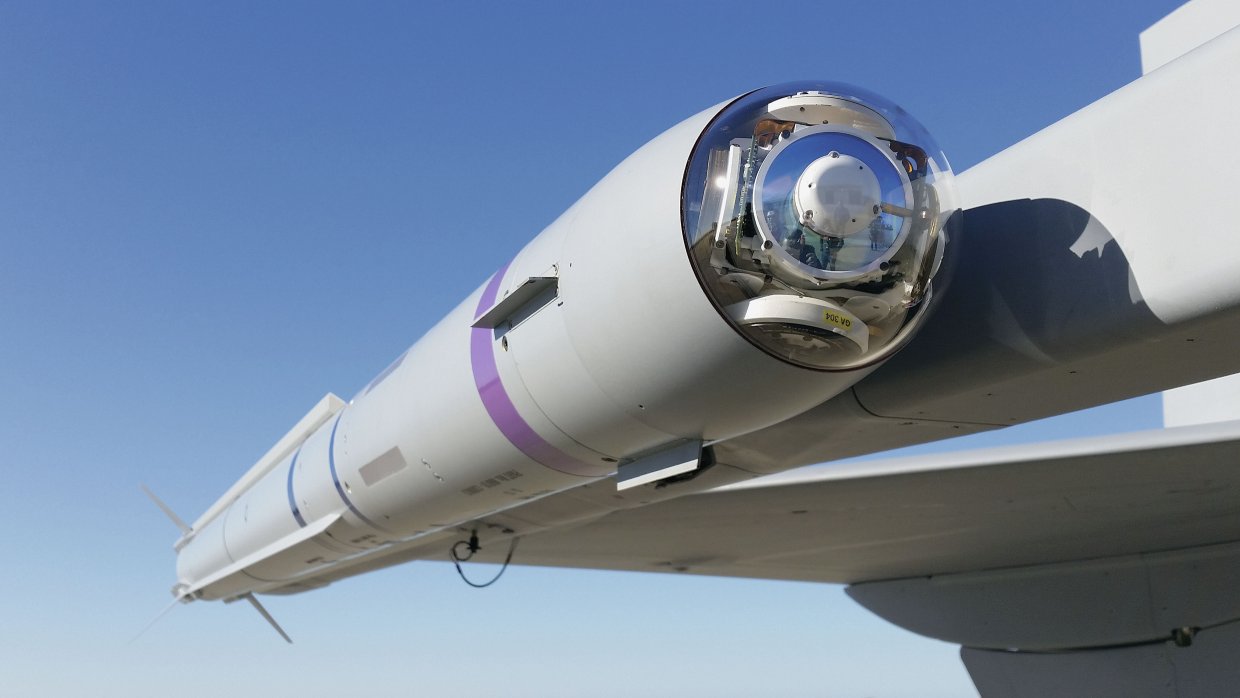

Modern air to air combat is almost always about missiles, shooting your enemy before he even knows where you are, so in this article, I will be trying my best to help you understand more about them and the tactics used to employ and decieve them.
What are missiles?
Missiles are guided rockets that are controlled by either an internal or an external source and an internal flight computer that takes inputs from multiple sensors to help guide the missile on an interception path towards its intended target.
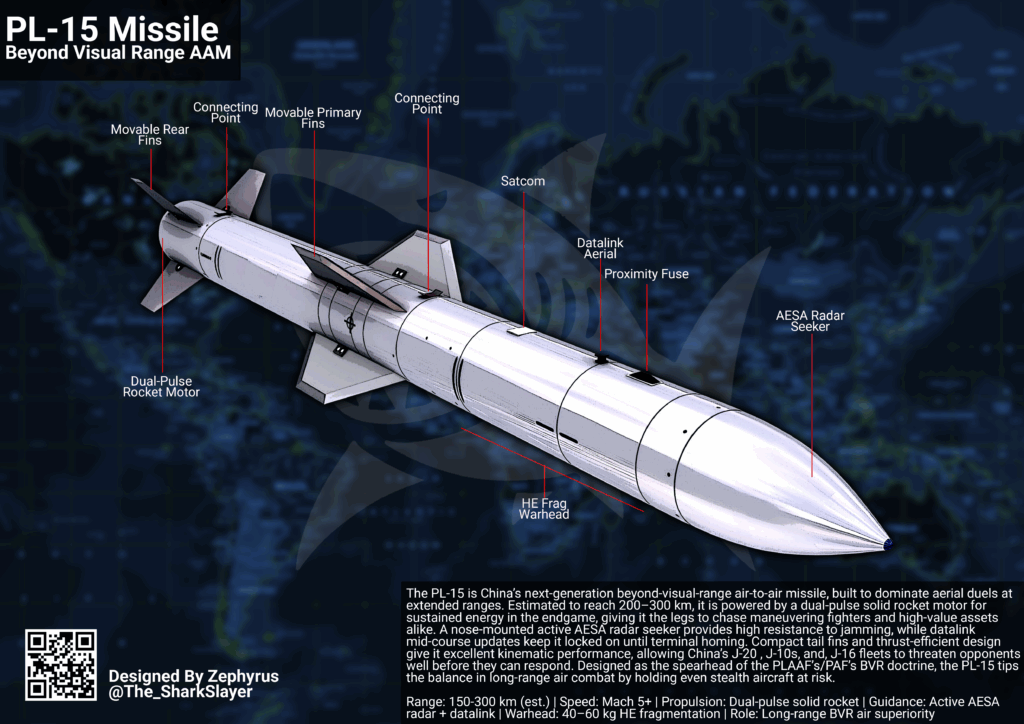
Parts of a Missile.
1- Seeker
This part locks on to the target.
2- Guidance System
This part guides the missile towards the intended target
3- Warhead
This is the explosive and the shrapnel that actually incapacitates the target.
4- Propulsion System
Traditionally Solid rocket motors and Ram Jet Intakes on newer missiles.
5- Fuse
This part tells the missile when to explode.
Types of Air to Air Missiles
There are two classes of air to air missiles based on their engagement range
1- Within Visual Range (Short Range)
These missiles are mostly heat seeking, i.e. these lock on to the target’s heat signature. They are mostly used under 15nm.
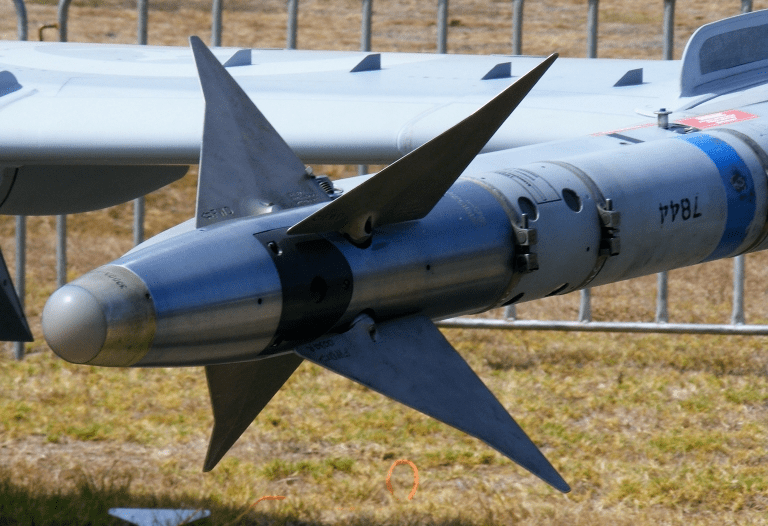
Types of WVR Seekers
i – IR seeker
Missiles with this kind of seeker locks on to the heat signature of the target aircraft.
a- Rear Aspect (Old Tech)
The shooter needs to be aft of the target to get a lock.
examples are older generation AIM9 Sidewinders, Matra Magic, PL-2s
b- All Aspect
The shooter can get a lock irrespective of the orientation of the target.
Examples are generation AIM9 Sidewinders, PL5s
ii- Imaging IR seeker
This seeker works as an Infrared camera trained on the plane’s infrared silhouette, instead of focusing on the heat source the seeker actively tracks the aircraft making it much more difficult to counter using flares.
a- High off Bore sight
the shooter can be anywhere even beside the target aircraft, the missile is cued by the shooter’s helmet mounted display.
Examples are PL-10, MICA IIR, A-Darter
2- Beyond Visual Range (Long Range)
These are long range missiles that are used to attack targets that are beyond the range of sight, usually more than 50NM away.
They are launched at a lofted trajectory which means they are launched towards the sky at high altitudes and speeds for maximum range. They are initially guided by inertia with target updates from either the shooter aircraft or from another sensor via datalink.
In the terminal phase they can be divided into three main types.
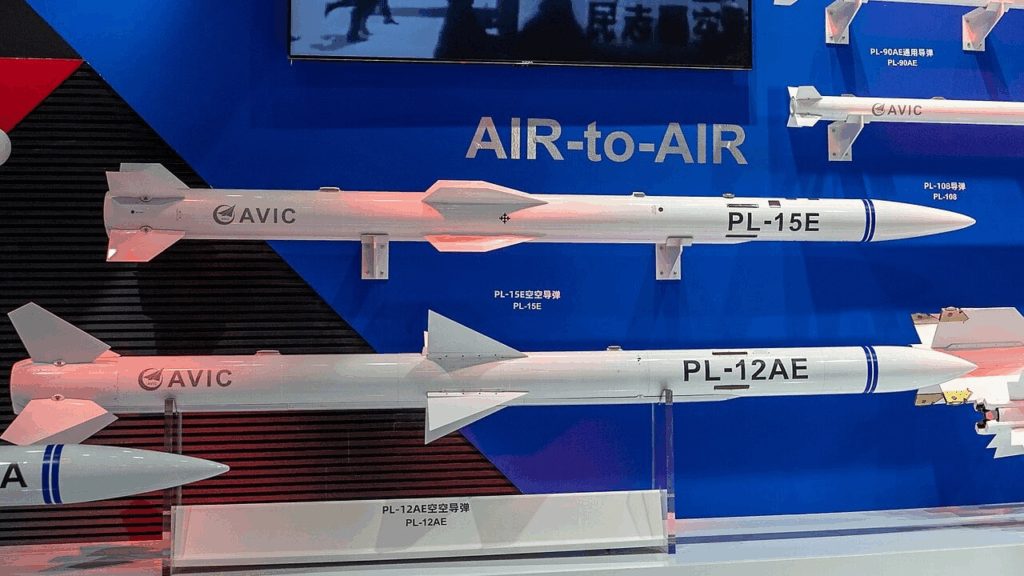
i-Active Radar Homing
In the terminal phase the missile is guided by an onboard radar.
For Example, AIM120, PL15, Meteor, Mica rf, python 5, SD-10
ii-Semi Active Radar Homing
the missile is guided by an external sensor throughout the flight.
For example AIM7, R27, Super 530.
iii-Passive Radar homing
This kind of missile locks on the electronic emissions(Radar/Jammer) of the target aircraft.
R27EP, AIM120/PL15/SD10 in Home on Jam mode.
The Physics of Air to Air Combat
Like everything else in this universe; missiles too are at the mercy of laws of physics. These physical aspects have the final say in whether you get splashes or not.
Range:
Range is the maximum distance your missile can hit a target at, The Range is almost never what is mentioned on the spec sheet and at the end of the day it depends upon many factors such as
i- Speed of the launch aircraft.
This gives the missile an initial boost, i.e. think of a fast bowler pacing before throwing a ball.
ii- Altitude of the launch aircraft.
The higher you go, the thinner the air resistance is for the missile and the less drag it will face.
iii- The speed and orientation of the target aircraft.
A missile shot at the target moving towards the missile will have a higher chance of hitting than a missile launched at an aircraft moving away.
iv- Air Resistance
The lower you are, the higher the air resistance gets. The greater the air resistance the greater the drag on the missile. The greater the drag, the lower kinetic energy gets.
v- The RCS of the target aircraft.
The smaller the radar return of the target the closer you will have to get an active lock. i.e. A shooter can lock on the Su30MKI from a farther distance than lets say a Tejas. the loadout of the target affects its RCS significantly.
vi- Electronic Warfare
Self protection jammers and EW Assets greatly decrease the range of detection and locking.
Ranges – Continued
1- R(max1):
Longest theoretical range when the target is coming at you head on if the conditions are perfect and the missile is lofted at a high angle and high altitude.
2- R(max2):
Maximum range if the enemy is running away from the missile, this is much shorter because the missile has to chase a target.
3- R(min):
The minimum range, this means that the target is too close to shoot and the missile won’t be able to arm itself or activate its seeker.
4- R(opt):
The theoretical best range where the missile has best energy and kinematics for terminal manoeuvring.
Engagement Zone
The envelope where the missile has a good chance of successfully engaging the target.
1- No Escape Zone (NEZ)
If the target is in this zone then it is a sure shot kill, only EW, terrain or luck can save them, this is the actual Kill Range of the missile.
This depends upon the kinetic energy of the missile and can be enhanced by using Ram Jets or multiple pulse rocket motors.
2- Weapon Employment Zone (WEZ)
This is the zone in which the missile can realistically hit a manoeuvring target. This is much larger than the NEZ. The target has a high probability of being hit in this zone.
Poles
Think of them as the distances between the target and the shooter.
1- A Pole
The range when the shooter can turn cold as the missile activates its own seeker and doesn’t require midcourse updates.
2- F Pole
The distance between the shooter and the target at the time of missile impact is called F-Pole. (Bigger F-Pole means better survivability rate for the shooter)
3- E Pole
The shortest distance where you can fire your missile and turn cold after immediately and still have the missile hit is called E-pole.
Types of Missile Launch Sequences
There are two major kinds of missile launch sequences.
1- Lock on Before Launch
The missile’s seeker actively acquires the target aircraft before launch, this is mostly done in WVR combat minus HOBS. In this mode the seeker gets information from its own or the shooter’s sensor prior to being launched,
2- Lock on After Launch
The missile is pickled (launched) before its seeker goes pitbull (active). The missile is guided by its internal navigation system, with timely updates from either the shooter’s sensor or another independent sensor via datalink. The missile then gets near the target and turns on its own seeker.
Missile Countermeasures
There are different tactics and countermeasures for defeating different kinds of missile threats.
1- Flares:
To counter a heat seeking missile you have to provide it a heat source that is greater than your own heat source. To achieve this you use flares (balls of chemical that burn hotter than the aircraft exhaust); they have to be timed perfectly.
2- Chaff:
Chaff are pieces of mylar that are packed in cartridges, what it does upon launch it creates a cloud of highly radar reflecting material which the radar seeker can confuse for the target.
3-DIRCM:
This uses a laser beam mounted on a turret that blinds the incoming IR guided missile making it lose its lock.
4-Jammers
These are pods that use electronic noise to drown the spectrum with distorted radar returns.
Missile Defeat Tactics
1- Crank
Turn 30 to 45 degs away from the bandit while maintaining radar lock for your missile to go A-Pole.
2- Beam
Going perpendicular 90 degs to the threat radar to break radar lock.
3- Notch
A kind of beam manoeuvre against a specific radar mode, for example using it blind the tracking radar.
4- Cold Turn/Drag
Go full After Burner away from the incoming missile, this increases your distance and makes the missile lose energy.
5- Terrain Masking
Using the terrain such as mountains and valleys to break missile locks. Can fly near deck to make the missile lose energy.
- A2A
- ACM
- aerial tactics
- AIM‑9X
- air combat
- air warfare
- air‑to‑air
- AMRAAM
- beyond visual range
- BFM
- BVR
- chaff
- countermeasures
- dogfighting
- ECCM
- ECM
- electronic warfare
- EW
- fighter jets
- flares
- IR missiles
- kinematics
- missile tactics
- missiles
- modern warfare
- no‑escape zone
- PL‑15
- radar missiles
- SA
- situational awareness
- within visual range
- WVR