
Introduction
The militarization of the Himalayan frontier along the Line of Actual Control (LAC) has fundamentally altered the geopolitical and tactical paradigms of the Sino-Indian strategic calculus. The immense topological gradients of the region present unparalleled challenges to the deployment, sustainment, and operational efficacy of mechanized forces, infantry, and particularly air power. In response to persistent frontier friction, culminating in the 2020 Galwan Valley skirmishes and sustained standoffs, the Indian Air Force (IAF) has structurally reorganized its basing strategy. This evolution emphasizes a highly synchronized, network-centric approach that integrates forward high-altitude launch and recovery nodes with deep-rear strategic launchpads located in the Indian plains. At the absolute center of this localized deployment architecture in the northern theater is the forward triad of airbases located in the Union Territory of Ladakh: Leh, Thoise, and the newly operationalized base at Nyoma.
While these forward bases afford a critical proximity to the LAC, drastically reducing the time-to-target for combat aircraft and enabling the rapid logistical insertion of troops into highly contested valleys, their extreme elevations impose severe aerodynamic, physiological, and mechanical constraints on flight operations. The user query correctly identifies a primary bottleneck in high-altitude aviation: these airfields are situated at such extreme heights above sea level that they are aerodynamically hostile to military operations, particularly regarding the exponential increase in fuel consumed during prolonged takeoff rolls and the severe payload restrictions required to safely achieve liftoff. Operating fully laden fourth- and fifth-generation fighter jets, as well as strategic heavy transport aircraft, at altitudes exceeding 10,000 feet above mean sea level (MSL) dictates a fundamental and inescapable compromise between internal fuel capacity, weapon payloads, and runway length requirements. This operational limitation, known broadly in aviation aerodynamics as the “payload penalty,” requires complex tactical workarounds, including mid-air refueling, strict rotational deployments, and aggressive weight-saving measures.
To circumvent the inherent limitations of high-altitude staging in Ladakh, the IAF relies extensively on its rearward infrastructure located within the Central Air Command (CAC) and Eastern Air Command (EAC). Positioned at significantly lower elevations across the Indo-Gangetic plains, central India, and the Brahmaputra valley, these bases provide the dense aerodynamic environment necessary for fully laden combat and transport aircraft to launch without weight restrictions. This structural dichotomy, where lower-altitude rear bases provide the mass, fuel, and payload capability, while high-altitude forward bases provide proximity, rapid turnaround, and tactical recovery capabilities, forms the backbone of India’s airborne deterrence posture against adversarial forces across the LAC. This comprehensive research report exhaustively analyzes the physical characteristics of the forward triad, the profound aerodynamic constraints governing high-altitude flight operations (specifically addressing takeoff fuel consumption), the strategic depth provided by the CAC and EAC, and the precise flight-time calculus required to execute military operations across multiple sectors of this highly contested theater.
The Geographic and Infrastructural Anatomy of the Forward Triad
The projection of Indian air power in the Ladakh sector relies heavily on a triad of high-altitude airfields. These facilities have evolved from rudimentary dirt strips utilized during the 1962 Sino-Indian conflict into heavily fortified, technologically advanced aviation hubs capable of sustaining advanced fighter operations and strategic heavy airlift.
Leh Air Force Station (VILH)
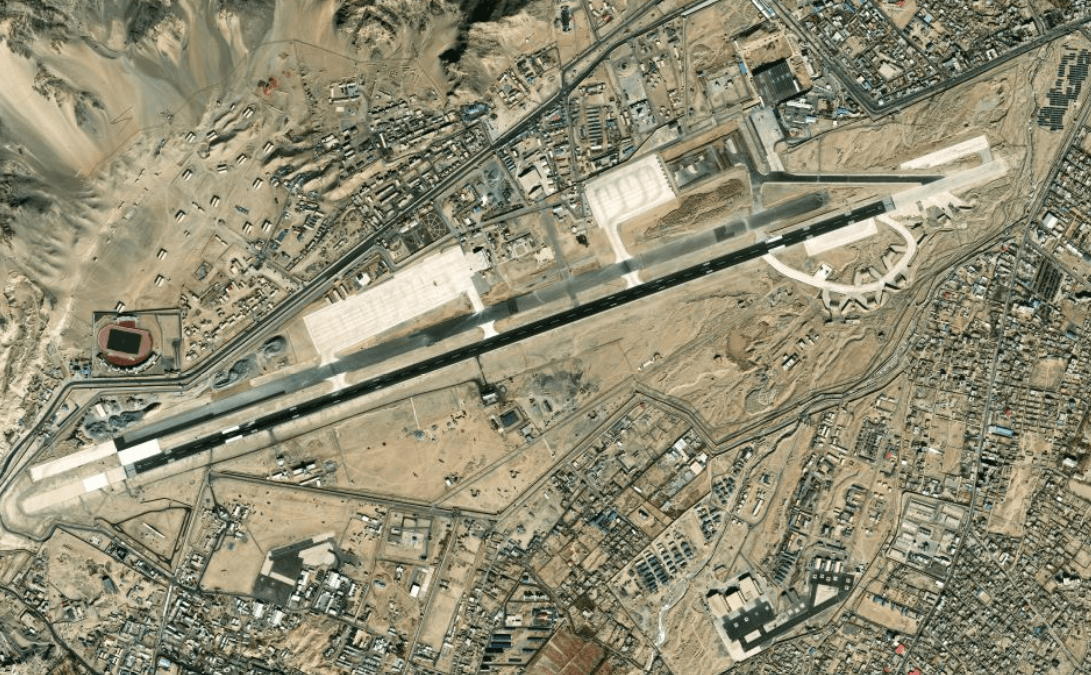
Located in the Indus River valley, the Kushok Bakula Rimpochee Airport in Leh serves as a critical dual-use civil-military aviation facility and the administrative anchor of the Ladakh sector.1 Situated at an elevation of 10,682 feet (3,256 meters) MSL, it remains one of the highest commercial and military airports globally.2 The operational environment at Leh is notoriously hostile to aviation. The airfield is hemmed in by towering Himalayan peaks, rendering the approach unidirectional and highly complex due to the rising terrain on the eastern end.3 Furthermore, anabatic and katabatic wind patterns, specifically the powerful, unpredictable mountain winds that reliably sweep through the valley in the afternoon, historically restricted civilian flight operations to the morning hours, though military operations run continuously during emergencies.3
To mitigate these bottlenecks and support both a surge in regional development and heightened military logistical demands, the Military Engineering Service (MES) recently constructed a second parallel runway (taxi track) at the facility at a cost of approximately ₹452 crore.4 Completed in a record 21 months despite sub-zero temperatures and rugged high-altitude terrain, this secondary strip serves primarily as a parallel taxiway for smoother ground movement but is structurally rated to double as an emergency runway for IAF operations during wartime.4 This ensures operational continuity in the event of runway cratering or localized battle damage on the main strip by adversarial tactical ballistic missiles.
| Leh Air Force Station Runway Specifications | Details |
| ICAO Code | VILH 2 |
| Elevation | 10,682 feet (3,256 meters) 1 |
| Coordinates | 34° 08′ 07″ N / 077° 32′ 43″ E 5 |
| Primary Runway ID | 07L/25R 2 |
| Runway Dimensions | 9,040 feet x 150 feet (2,755m x 46m) 2 |
| Surface Type | Asphalt 2 |
| Takeoff Distance Available | 9,420 feet (Runway 07L) / 9,680 feet (Runway 25R) 2 |
Thoise Air Force Station (VI57)
North of Leh, situated in the Nubra Valley, lies the Thoise Air Force Station. At an elevation of 10,046 to 10,070 feet (3,070 meters) MSL, Thoise occupies the only major expanse of flat terrain in the immediate region.6 The facility features a formidable hard-surface runway extending 10,925 feet in length.8
Thoise serves a highly specialized and vital logistical function: it is the primary aerial conduit for the sustainment of Indian troops deployed on the Siachen Glacier and the Saltoro Ridge.6 Serving as a staging ground for both rotary-wing operations (heavy-lift helicopters ferrying supplies to ultra-high-altitude outposts) and fixed-wing tactical airlifts, the base is an irreplaceable node in the IAF’s northern logistics chain.6 Due to its immense strategic value and proximity to the Actual Ground Position Line (AGPL) with Pakistan and the LAC with China, it remains exclusively under military jurisdiction, shielded from the complexities and airspace congestion of civilian air traffic management.6
| Thoise Air Force Station Runway Specifications | Details |
| ICAO Code | VI57 6 |
| Elevation | 10,046 – 10,070 feet (3,070 meters) 6 |
| Coordinates | 34° 39′ 09″ N / 077° 22′ 33″ E 7 |
| Primary Runway ID | 10/28 7 |
| Runway Dimensions | 10,925 feet x 145 feet (3,330m x 44m) 8 |
| Surface Type | Hard/Asphalt 8 |
| True Heading | 107° / 287° 7 |
Nyoma Airbase: The Apex of High-Altitude Staging
The most significant development in India’s forward basing strategy is the operationalization of the Nyoma Airbase in eastern Ladakh. Originally a dusty mud-paved Advanced Landing Ground (ALG) utilized briefly in 1962, the facility languished for decades until an An-32 transport aircraft successfully landed there in 2009, proving its latent utility for the modern IAF.1 In the aftermath of the 2020 Galwan Valley skirmishes, the Indian Ministry of Defence drastically accelerated its infrastructure development, leading to the laying of a foundation stone in September 2023 by Defence Minister Rajnath Singh.1 The ₹218 crore (approximately $26–27 million) upgrade, executed by the Border Roads Organisation (BRO) under the “Project Himank” portfolio, was officially declared operational on November 13, 2025, marked by the landing of a C-130J Super Hercules piloted by Air Chief Marshal A.P. Singh.1
Nyoma represents an unprecedented engineering achievement in military aviation infrastructure. At a staggering elevation of 13,700 feet above MSL, it holds the distinction of being the world’s highest operational fighter-capable airbase.1 The facility boasts a newly paved 2.7-kilometer (approximately 8,850 feet) concrete runway designed meticulously with high-altitude engineering techniques capable of enduring temperatures plunging to -40°C.1
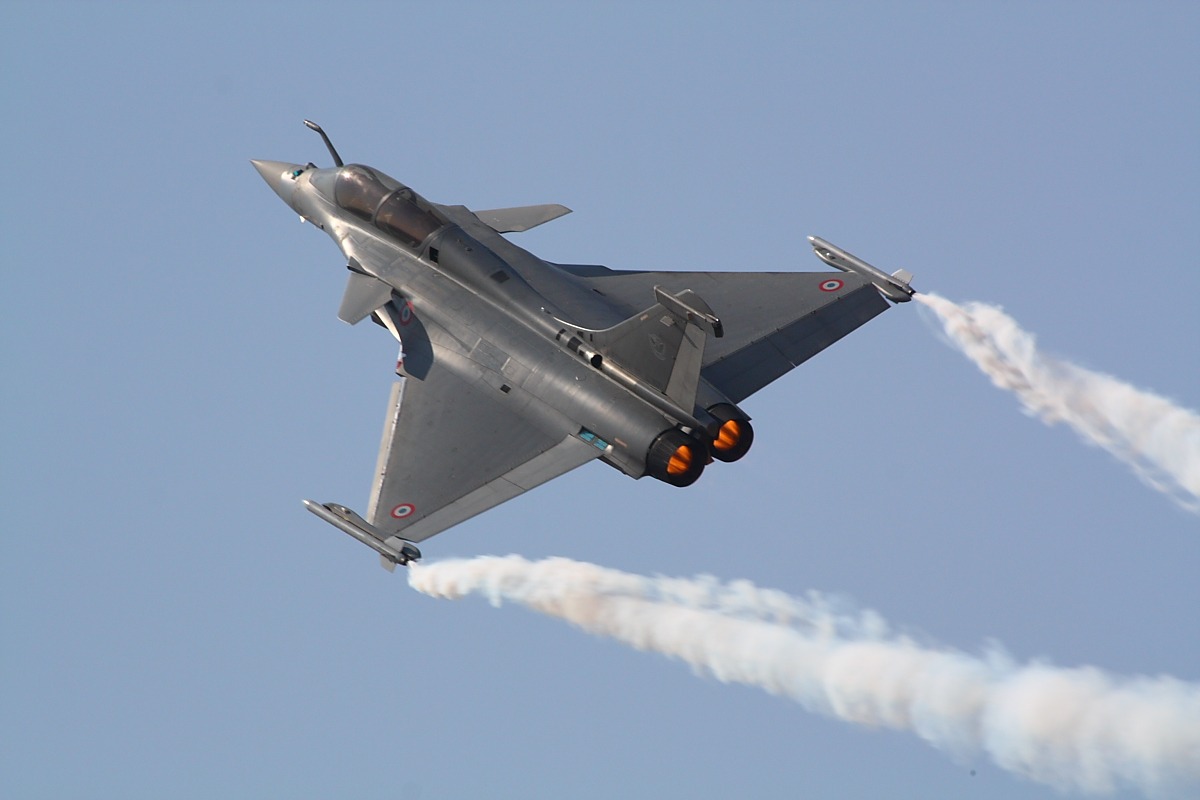
Strategically, Nyoma’s paramount value lies in its extreme proximity to the LAC, a mere 30 to 35 kilometers away.10 This proximity provides a virtually instantaneous reaction capability, allowing the IAF to generate sorties for Su-30MKI, Rafale, and MiG-29UPG fighters, as well as C-17 Globemaster III transports and Apache helicopters, within minutes of a tactical alert.1 To support these assets, the base features hardened aircraft shelters, specialized weapon depots, advanced Air Traffic Control (ATC) systems, and high-altitude fuel storage systems, firmly establishing it as a primary node for both strategic deterrence and rapid kinetic response.1
| Nyoma Airbase vs. Chinese Tibet Airfields | Location / Region | Elevation | Capabilities / Role | Distance to LAC |
| Nyoma Airbase (India) | Eastern Ladakh | 13,700 ft | Fighter base, 2.7km runway, Su-30MKI, C-130J | 30-35 km (Extremely close) 10 |
| Rutog / Ritu Airfield (China) | Ngari Prefecture, Tibet | ~14,040 ft | PLA military installation, dual-use upgrades | Close (Opposite Pangong-Tso) 1 |
| Qamdo / Bamda Airport (China) | Changdu, Tibet | 14,219 ft | High-altitude civilian airport, 4,500m runway | Far from Indian LAC sectors 1 |
The Physics of High-Altitude Aviation: Density Altitude and Thrust Degradation
While the forward positioning of Leh, Thoise, and Nyoma offers indisputable tactical advantages regarding reaction time and time-on-target, the extreme elevations impose severe aerodynamic penalties. The user query highlights that these bases are not conducive to operations because “more fuel is needed for takeoffs.” To understand the exact mechanics of this phenomenon, one must analyze the laws of physics that dictate atmospheric behavior. As altitude increases, atmospheric pressure and air density decrease linearly.13 This inverse relationship directly degrades both the aerodynamic lift generated by an aircraft’s airframe and the thrust produced by its jet engines, culminating in severe operational constraints.1
Density Altitude and the Lift Equation
The foundational metric for assessing high-altitude aircraft performance is “Density Altitude.” Formally defined in aviation regulations, density altitude is pressure altitude corrected for nonstandard temperature variations.14 The published performance criteria for modern fighter and transport aircraft are generally based on standard atmospheric conditions at sea level, known as the International Standard Atmosphere (ISA), which dictates a baseline of 15°C (59°F) and 29.92 inches of mercury (1013 hPa).14
When an aircraft operates at an airfield like Nyoma (13,700 feet), the ambient air is profoundly thinner. If summer temperatures in the high desert of Ladakh rise above the ISA standard for that specific elevation, the density altitude can artificially inflate significantly. For instance, on a hot summer afternoon, the density altitude at Nyoma can push up to 18,000 feet.12 This means the aircraft’s wings and engines perform exactly as though they are operating at 18,000 feet, regardless of the physical runway elevation.12
Density altitude is mathematically approximated by the following formula:

where OAT is the Outside Air Temperature and the ISA Temperature is the standard baseline for that altitude.13
The reduction in air density directly impacts the generation of aerodynamic lift. The aerodynamic lift generated by a wing is governed by the Lift Equation, expressed as:

where  is Lift, is air density, is true airspeed, is the wing surface area, and is the coefficient of lift.18 Because air density () drops significantly at 13,700 feet, the aircraft must compensate by achieving a substantially higher true airspeed () to generate the equivalent amount of lift required to overcome its gross weight.13 Consequently, an aircraft requires a much longer takeoff roll down the runway to reach the necessary rotation speed ().19
Thrust Degradation in Jet Engines
Simultaneously, the reduced air density mathematically chokes the mass flow rate of oxygen entering the engines. Jet engines, whether the AL-31F turbofans powering the Su-30MKI or the Snecma M53-P2 turbofans on the Mirage 2000, rely on ingesting vast quantities of dense air, compressing it, mixing it with jet fuel, and igniting it to produce forward thrust.20 At extreme altitudes, the compressor stages process far fewer air molecules per second.23
For naturally aspirated and unsupercharged reciprocating engines, the power drop is catastrophic and linear, losing approximately 3.5 percent of horsepower for every 1,000 feet of altitude gained, meaning at 7,000 feet, 25 percent of the engine power has simply vanished.17 While military turbofans are highly optimized, they still suffer a drastic, inescapable decay in thrust at high elevations.23 The Thrust-to-Weight Ratio (TWR) of the fighter jet plummets, reducing its acceleration and rate of climb.25 An Su-30MKI, which normally relies on its 122.6 kN of afterburning thrust to achieve rapid, short takeoffs at sea level, finds its thrust output heavily curtailed at 13,700 feet.21
Operational Consequences: Takeoff Fuel Burn and the Payload Penalty
The intersection of reduced lift and reduced thrust directly addresses the core thesis of the inquiry: high-altitude bases require more fuel for takeoff and strictly limit payload capacities. This creates a highly complex logistical puzzle for IAF mission planners.
The Physics of High Takeoff Fuel Consumption
The assertion that “more fuel is needed for takeoffs” is aerodynamically accurate when evaluating the ground roll and initial climb phases of the flight profile. Because the air density at Leh and Nyoma is so low, a fighter jet must achieve a significantly higher True Airspeed (TAS) to generate sufficient lift to break ground.1 Because the engine is simultaneously producing less thrust due to oxygen starvation, the acceleration of the aircraft is sluggish compared to sea-level operations.23
The result is a drastically elongated takeoff roll. An aircraft that might require 2,500 feet to reach liftoff speed at the Bareilly airbase (near sea level) might require 6,000 to 7,000 feet of runway at Nyoma.12 During this extended ground roll, the fighter must run its engines at maximum continuous power or full afterburner for a significantly longer duration. Afterburners consume jet fuel at an astronomical rate. Therefore, the total volume of fuel burned simply to transition from a static state on the runway to a safe initial climb altitude is substantially higher at high-elevation bases than at sea-level bases.
The Zero-Sum Game: The Payload Penalty
While the aircraft burns more fuel during the takeoff phase, it paradoxically must carry less total fuel in its tanks to safely initiate that takeoff. This is the operational essence of the “payload penalty”.10
Aviation safety regulations, strictly enforced by flight manuals, dictate that an aircraft’s Maximum Takeoff Weight (MTOW) is entirely dependent on the elevation of the departure airport, the available runway length, and the ambient temperature.26 If a pilot attempts to force a heavily laden aircraft into the air at high density altitudes, the outcome is often an aborted takeoff, a runway overrun, or a fatal failure to clear terrain obstacles along the departure path.26 Since the runway lengths at Leh (9,040 feet), Thoise (10,925 feet), and Nyoma (8,850 feet) are fixed physical constraints, the only variable the pilot and mission planners can alter is the gross weight of the aircraft.1
To safely achieve liftoff before the runway ends at Nyoma’s 13,700-foot elevation, the aircraft must drastically shed mass. A fighter jet taking off from Nyoma cannot possibly carry its maximum capacity of internal fuel alongside a full suite of air-to-surface or air-to-air munitions.15 Planners are forced into a zero-sum compromise. They must dictate stringent trade-offs:
- Take off with a heavy weapons payload but minimal internal fuel.
- Take off with full fuel tanks but a very light, tactically restrictive weapons payload.
In a combat scenario involving the LAC, the standard tactical mitigation almost always involves the former.15 Fighter aircraft, such as the Su-30MKI and the Rafale, will launch from Leh or Nyoma heavily laden with munitions (the kinetic element required for the mission) but carrying minimal internal fuel to keep the overall gross weight within the narrow safety margins dictated by the density altitude.15 Immediately after reaching a safe operating altitude, these fighters must rendezvous with an aerial refueling tanker, such as an Ilyushin Il-78, to top up their fuel tanks before proceeding to the combat zone.15
This reliance on mid-air refueling introduces severe logistical complexity, increases time penalties, and exposes the high-value, slow-moving tanker assets to long-range surface-to-air missiles (SAMs) or enemy interceptor aircraft.15 Consequently, while Nyoma provides an incredibly short geographical distance to the LAC, the aerodynamic realities ensure that it cannot function as a standalone, independent strike base without the support of a broader, integrated aerial network.
Environmental, Logistical, and Survivability Challenges
Beyond the complex physics of flight, operating forward bases at the roof of the world introduces acute logistical and survivability challenges that fundamentally shape the IAF’s deployment doctrine.
Environmental and Maintenance Brutality
Temperatures at Nyoma and Thoise regularly plunge to -30°C to -40°C during the winter months.1 These cryogenic conditions wreak havoc on mechanical systems, hydraulic fluids, and advanced avionics. Standard variants of jet fuel run a high risk of waxing or freezing in the tanks, necessitating specialized heating systems for JP-8 fuel storage and transfer.1 Every gallon of fuel pumped into a fighter at Nyoma during the winter must be carefully temperature-controlled.12
Human factors are equally critical and often the most limiting constraint. Maintenance crews are forced to conduct highly intricate mechanical work on advanced fighter aircraft in full arctic survival gear, operating in hypoxic (low oxygen) conditions.12 This severely degrades maintenance turnaround times and increases the likelihood of human error. Furthermore, the extreme environment restricts major infrastructure repair, runway resurfacing, and construction to a brief, fleeting window during the summer months.1
Survivability and the Proximity Threat
While Nyoma’s distance of 30 to 35 kilometers from the LAC allows for immediate reaction, it simultaneously places the airbase well within the lethal envelope of the People’s Liberation Army (PLA) Ground Force.10 Nyoma is acutely vulnerable to saturation strikes from Chinese 155 mm artillery, long-range multiple launch rocket systems (MLRS), and short-range tactical ballistic missiles.12
Additionally, the modern proliferation of low-cost, high-impact unmanned aerial vehicles (UAVs) and loitering munitions poses a severe, asymmetrical threat to stationary, high-value assets parked on the tarmac.10 IAF veterans and strategic analysts note that permanently basing expensive fighter squadrons at Nyoma during an active conflict is tactically unsound.12 Instead, the base is designed to operate on a “come and go” or rotational basis.12 Fighters from deeper bases will forward-deploy to Nyoma for brief operational windows, execute their sorties, and retreat to safer depths. To survive the initial salvos of a conflict, Nyoma relies on recently constructed hardened aircraft shelters, aggressive asset dispersal, electronic warfare (EW) countermeasures, and layered, localized air defense systems.1
Strategic Depth: The Role of Central and Eastern Air Commands
Because continuous, heavy-payload operations from the Ladakh triad are aerodynamically and logistically unfeasible, the IAF relies entirely on the immense strategic depth provided by its bases situated in the plains and foothills. The Central Air Command (CAC) and Eastern Air Command (EAC) form the heavy-lifting backbone of India’s air strategy against China, providing the necessary operational mass that forward bases cannot support.
The Geographic Asymmetry Advantage
When evaluating the Sino-Indian theater, India possesses a distinct and highly advantageous topological asymmetry in aerial warfare. The Tibetan Plateau on the Chinese side of the LAC rests at an average elevation of 13,000 to 14,000 feet.10 Virtually all PLA Air Force (PLAAF) bases in the Tibet Autonomous Region (TAR), such as the Rutog/Ritu Airfield (~14,040 feet) and the Qamdo/Bamda Airport (14,219 feet), suffer from the exact same payload penalties, thrust degradation, and density altitude issues as Leh and Nyoma.1
However, India’s deep-rear bases in the CAC and EAC are located near sea level. This geographic reality enables what defense strategists term the “heavy payload recovery and loitering advantage”.10 An IAF Su-30MKI can launch from a base in the Indian plains fully loaded with maximum internal fuel and its maximum payload of 8,000 kg of weaponry.10 It can climb into the Himalayas, execute prolonged combat air patrols (CAP) or deep strike missions over the LAC, and then recover (land) at a forward high-altitude base like Nyoma or Leh if necessary.10 China fundamentally lacks this dynamic; its fighters must launch from the high plateau inherently handicapped by reduced fuel or armament loads, and they have no low-altitude recovery bases nearby.10
Central Air Command (CAC)
Headquartered in Prayagraj (formerly Allahabad) at Bamraulli, the CAC patrols the critical north-central sectors of India, bordering Nepal and the highly sensitive middle sectors of the LAC (such as Uttarakhand and Himachal Pradesh).28 The command features major strategic bases at Agra, Bareilly, Gorakhpur, and Gwalior, supplemented by supporting facilities at Bihta, Darbhanga, Nagpur, and Kanpur.28
The CAC fields a versatile, highly lethal fleet. It is home to the venerable Dassault Mirage 2000 multirole fighters, which boast a maximum speed of nearly 2,494 km/h and remain a primary platform for precision ground strikes.22 The command also operates an extensive heavy transport fleet, including Antonov An-32s, Ilyushin Il-76s, and the modern C-130J Super Hercules aircraft, which are instrumental in ferrying airborne infantry, medical supplies, and heavy armor from the plains directly into Leh, Thoise, and Nyoma.28
Eastern Air Command (EAC)
Headquartered in Shillong, Meghalaya, the EAC is responsible for the defense of the airspace over Sikkim, Arunachal Pradesh, and the broader Northeast, sectors that have witnessed the most frequent and severe border standoffs with the PLA. The command’s permanent airbases include Chabua, Guwahati, Bagdogra, Barrackpore, Hasimara, Jorhat, Kalaikunda, and Tezpur, with forward operating bases at Agartala, Kolkata, Panagarh, and Shillong.31
The EAC represents a massive concentration of modernized kinetic power. While it historically relied on legacy MiG-21 and MiG-27 squadrons, it has since transitioned into a bastion for the Su-30MKI air superiority fighters and the newly inducted Dassault Rafale multirole fighters.31 Helicopter units operating Mi-17s and ALH/Hal Chetaks are distributed across Bagdogra, Kumbhirgram, and Mohanbari to facilitate mountain logistics, artillery placement, and quick reaction troop insertions along the rugged McMahon Line.31
| Eastern Air Command (EAC) Select Bases and Squadrons | Squadron | Aircraft Type / Unit |
| Tezpur Air Force Station (Assam) | No. 2 Sqn, No. 106 Sqn 31 | Su-30MKI, No. 115 Helicopter Unit 31 |
| Hasimara Air Force Station (West Bengal) | No. 101 Sqn 31 | Dassault Rafale 31 |
| Chabua Air Force Station (Assam) | No. 102 Sqn 31 | Su-30MKI, Mi-8/Mi-17 Helicopter Units 31 |
| Bagdogra Air Force Station (West Bengal) | No. 142 SSS Flight 31 | HAL Chetak 31 |
| Jorhat Air Force Station (Assam) | No. 43 Sqn, No. 129 Helicopter Unit 31 | Transport / Logistics 31 |
Spatial Geometry and Flight Time Calculus in a War Across the LAC
In the event of a kinetic escalation across the LAC, the rapid mobilization of air assets from the CAC and EAC to the frontier will dictate the tempo and ultimate outcome of the conflict. Understanding the time-to-target requires meticulously calculating the aerial distances from deep bases to specific flashpoints along the border and correlating them with aircraft performance metrics.
To calculate these flight times, one must utilize the operational cruising speeds and maximum dash speeds of the respective aircraft:
- Sukhoi Su-30MKI: Capable of Mach 2 (approximately 2,120 km/h) in a high-altitude dash, with a standard economical cruising speed ranging from 900 to 1,000 km/h.21
- Dassault Mirage 2000: Capable of a maximum speed of 2,494 km/h, though sustained combat cruise is subsonic/transonic depending on payload drag.22
- Dassault Rafale: Capable of Mach 1.8 dash, highly capable of supercruise depending on configuration.
- C-130J Super Hercules: A tactical airlifter with a maximum cruise speed of approximately 660 km/h (355 KTAS).29
- MiG-21 Bison / MiG-29 UPG: Capable of maximum speeds of 2,230 km/h and 2,445 km/h respectively.22
(Note: The calculated flight times below assume direct, straight-line aerial routing at optimal high-altitude cruise velocities. Actual combat routing would involve terrain masking, evasion of enemy air defenses, and potentially longer transit times. All road travel times highlight the severe logistical limitations of ground transport in these sectors).
Western Sector Analysis (Ladakh)
The Ladakh sector relies on immediate kinetic response from Nyoma and Leh, backed by heavy reinforcement from the CAC. The distances from the plains to the mountains are substantial, yet rapidly traversed by air.
- Nyoma to LAC: 30 to 35 km.10
- Fighter Reaction: An airborne Su-30MKI patrolling near Nyoma can reach the LAC in under 2 minutes.
- Bareilly (CAC) to Leh: The straight-line aerial distance is 929 km, compared to a grueling 3,375 km road distance.32
- Su-30MKI Cruise (950 km/h): ~58 minutes.
- C-130J Transport (660 km/h): ~84 minutes (1 hour 24 minutes).
- Gwalior (CAC) to Leh: The aerial distance is 874 to 884 km, while the road distance is 1,377 to 1,387 km, taking over 25 hours by vehicle.34
- Mirage 2000 Cruise (950 km/h): ~55 minutes.
- C-130J Transport (660 km/h): ~80 minutes.
Middle Sector Analysis (Uttarakhand / Central)
The Central sector (e.g., the disputed Barahoti region in Uttarakhand) is directly covered by the CAC, allowing for extremely rapid deployment without the need for high-altitude staging bases.
- Bareilly to Uttarakhand LAC (Barahoti region): ~309.7 km straight-line distance.37
- Su-30MKI Dash (1,500 km/h): ~12 minutes.
- Mirage 2000 Cruise (950 km/h): ~20 minutes.
- Gwalior to Uttarakhand LAC: ~468 km straight-line distance.38
- Mirage 2000 Cruise (950 km/h): ~30 minutes.
Eastern Sector Analysis (Sikkim and Arunachal Pradesh)
The EAC bases are positioned remarkably close to the LAC compared to the deep bases of the CAC. This proximity, combined with the low elevation of the Assam plains, allows for the rapid generation of overwhelming combat mass. The contrast between ground logistics and aerial capability is most stark in this sector.
- Gorakhpur (CAC) to Nathu La (Sikkim LAC): While the road distance is 745 km and takes approximately 10 to 11 hours to drive, the straight-line aerial distance is approximately 450 to 500 km.39
- Fighter Cruise (950 km/h): ~30 to 35 minutes.
- Tezpur (EAC) to Tawang (Arunachal Pradesh LAC): The road journey from Tezpur to Tawang stretches 320 to 334 km and requires navigating the treacherous Sela Pass (13,700 feet), taking a punishing 10 to 12 hours depending on weather.41 However, the direct aerial distance is a mere 139 km.44
- Su-30MKI Dash (1,500 km/h): ~5.5 minutes.
- Helicopter Insertion (e.g., Apache/Chinook at 280 km/h): ~30 minutes.
| Sector Flight Time Matrix | Departure Base | Destination/Sector | Aerial Distance | Su-30MKI / Fighter Time | C-130J / Transport Time | Ground Travel Time |
| Western (Ladakh) | Bareilly (CAC) | Leh | 929 km 32 | ~58 minutes | ~84 minutes | N/A (3,375 km) 32 |
| Western (Ladakh) | Gwalior (CAC) | Leh | 884 km 34 | ~55 minutes | ~80 minutes | ~25 hours 34 |
| Middle (Uttarakhand) | Bareilly (CAC) | Barahoti (LAC) | 309.7 km 37 | ~12 to 20 mins | ~28 minutes | ~7.5 hours 37 |
| Eastern (Sikkim) | Gorakhpur (CAC) | Nathu La (LAC) | ~450 km | ~30 minutes | ~40 minutes | ~10 hours 40 |
| Eastern (Arunachal) | Tezpur (EAC) | Tawang (LAC) | 139 km 44 | ~5.5 minutes | N/A | 10-12 hours 41 |
The Operational Architecture of Flight Times
The data compiled in the sector matrix illustrates a highly optimized, responsive network. In the event of a surprise escalation in Arunachal Pradesh, Su-30MKIs from Tezpur can be loitering over Tawang in under six minutes, completely negating the grueling 12-hour road logistics bottleneck.43
In the Ladakh sector, the 55-to-60 minute transit time from deep bases like Bareilly and Gwalior to Leh demonstrates exactly why the forward triad (Leh, Thoise, Nyoma) is essential. A 60-minute delay in close air support during a localized, fast-moving border clash is tactically unacceptable; therefore, maintaining fighters on strip-alert at Nyoma (30 km from the LAC) bridges the critical temporal gap until the heavily armed squadrons from the CAC arrive.10
Operational Calculus and Deterrence Strategy
The integration of the high-altitude forward triad with the sea-level rear bases generates a comprehensive deterrence posture characterized by both “Deterrence by Denial” and “Deterrence by Punishment”.10
Deterrence by Denial
By operationalizing Nyoma with a 2.7 km runway capable of receiving C-17s and C-130Js, the IAF ensures that it can flood the Ladakh sector with ground troops, artillery, and armor within hours of a recognized threat.1 The C-130J-SOF variant, with its maximum cruise speed of 660 km/h and advanced EO/IR imaging systems, can rapidly insert special forces directly onto the Nyoma tarmac.29
The ability to rapidly bridge the logistical divide denies the adversary the opportunity to achieve a localized strategic surprise or execute a swift land grab. This approach effectively breaks the historical “Scorched Earth Policy,” wherein India deliberately left border infrastructure undeveloped to prevent its use by an invading force.10 Instead, by building world-class infrastructure directly on the border, India signals a confident, forward-leaning posture capable of immediate defense.
Deterrence by Punishment
The placement of fighter-capable infrastructure at Nyoma, backed by the immense firepower of the CAC and EAC, establishes deterrence by punishment.10 While the payload penalty ensures that Nyoma cannot serve as a permanent, standalone bastion for heavily armed strike fighters, its utility as a staging and recovery node alters the combat geometry of the theater.10
During an engagement, Rafales and Su-30MKIs taking off from Hasimara, Tezpur, or Bareilly can maximize their lethality by launching with full bomb loads and fuel.10 They can transit to the Himalayas, execute their strikes or CAPs, and rather than returning all the way to the plains, which would require conserving significant fuel reserves, they can land at Leh or Nyoma to rearm (using prepositioned munitions), refuel, or conduct emergency repairs.10 This operational loop maximizes the time fighters spend in the combat zone, multiplying the effective force size and increasing the punishment inflicted upon adversarial incursions.
Conclusion
The Indian Air Force’s basing strategy along the Line of Actual Control is a masterclass in adapting strategic intent to the uncompromising laws of physics and topography. The forward airbases at Leh, Thoise, and the newly commissioned, record-breaking Nyoma airfield constitute a vital vanguard for national defense. Operating at extreme elevations ranging from 10,000 to 13,700 feet, these bases suffer from severe density altitudes that precipitate thrust degradation and require extended takeoff rolls. The assertion that they are aerodynamically challenging is entirely accurate: aircraft consume vastly more fuel during the elongated takeoff phase while being simultaneously forced to carry a fraction of their maximum internal fuel and payload to safely break ground. Fighters launching from these nodes are forced into a zero-sum compromise, sacrificing fuel for munitions and relying heavily on complex aerial refueling and rotational deployments to remain combat-effective. Furthermore, their extreme proximity to the border subjects them to the constant threat of localized artillery and drone saturation.
However, these aerodynamic and survivability vulnerabilities are systematically offset by the strategic depth of the Central and Eastern Air Commands. Operating from the geographically advantageous lower altitudes of the Indian plains, bases like Bareilly, Gwalior, Gorakhpur, and Tezpur act as the heavy-lift and deep-strike reservoirs of the IAF. Aircraft launching from these rearward nodes can leverage maximum payload capabilities without penalty, rapidly closing the 150 to 900-kilometer aerial gaps to the LAC in a matter of minutes, vastly outpacing the arduous 10 to 25-hour logistical nightmare of ground transport.
By utilizing the forward triad as quick-reaction launchpads, logistical offload zones, and high-altitude recovery nodes, while simultaneously relying on the CAC and EAC for heavy combat mass, the IAF has engineered an interlocking, mutually supporting network. This architecture not only mitigates the payload penalties inherent to high-altitude aviation but also establishes a formidable, highly responsive deterrent across the entirety of the Sino-Indian frontier.
Works cited
- Nyoma Airbase: How India Built one of the World’s Highest …, accessed May 21, 2026, https://aviospace.org/nyoma-airbase-worlds-highest-operational-fighter-base/
- Leh Airport Runway Specifications | PDF – Scribd, accessed May 21, 2026, https://www.scribd.com/doc/55808923/Leh-Airport-Runway-Details
- Kushok Bakula Rimpochee Airport – Wikipedia, accessed May 21, 2026, https://en.wikipedia.org/wiki/Kushok_Bakula_Rimpochee_Airport
- Explainer: Leh airbase: From a dusty strip to a modern hub for IAF’s most advanced aircraft, accessed May 21, 2026, https://www.tribuneindia.com/news/explainers/explainer-leh-airbase-from-a-dusty-strip-to-a-modern-hub-for-iafs-most-advanced-aircraft/
- VILH – AIM India, accessed May 21, 2026, https://aim-india.aai.aero/eaip-v2-01-2025/eAIP/IN-AD%202.1VILH-en-GB.html
- Thoise Air Force Station – Wikipedia, accessed May 21, 2026, https://en.wikipedia.org/wiki/Thoise_Air_Force_Station
- Thoise Airport | VI57 | Pilot info | Nubra, India – Metar-Taf.com, accessed May 21, 2026, https://metar-taf.com/airport/VI57-thoise-airport
- VI57 – Thoise Airport – SkyVector, accessed May 21, 2026, https://skyvector.com/airport/VI57/Thoise-Airport
- Thoise – India – World Airport Codes, accessed May 21, 2026, https://www.world-airport-codes.com/india/thoise-83854.html
- Nyoma-A Tool for Strategic Communication – CAPSS India a top …, accessed May 21, 2026, https://capssindia.org/nyoma-a-tool-for-strategic-communication/
- Highest Fighter Airbase in the World at 13,700 feet Inaugurated – Aviation A2Z, accessed May 21, 2026, https://aviationa2z.com/index.php/2025/11/18/highest-fighter-airbase-in-the-world-at-13700-feet-inaugurated/
- World’s Highest Fighter Base: IAF Veterans Explain Why Nyoma …, accessed May 21, 2026, https://www.eurasiantimes.com/worlds-highest-fighter-base-iaf-veterans-explain-why-nyoma-airfield/
- Dense Pilots Under Pressure: Understanding Air Density Altitude, accessed May 21, 2026, https://goflexair.com/density-altitude
- Density Altitude – FAA Safety, accessed May 21, 2026, https://www.faasafety.gov/files/events/NM/NM07/2023/NM07120280/FAA-P-8740-02-DensityAltitude.pdf
- FROM NYOMA TO MORAN, accessed May 21, 2026, https://orcasia.org/article/1625/from-nyoma-to-moran
- How Does Density Altitude Affect Flight? – Hartzell Propeller, accessed May 21, 2026, https://hartzellprop.com/how-does-density-altitude-affect-flight/
- Understanding density altitude – AOPA, accessed May 21, 2026, https://www.aopa.org/news-and-media/all-news/2016/september/08/density-altitude
- Four Forces on an Airplane | Glenn Research Center – NASA, accessed May 21, 2026, https://www1.grc.nasa.gov/beginners-guide-to-aeronautics/four-forces-on-an-airplane/
- Airplane math that matters – AOPA, accessed May 21, 2026, https://www.aopa.org/news-and-media/all-news/2020/june/flight-training-magazine/airplane-math-that-matters
- Chapter 5: Aerodynamics of Flight – Federal Aviation Administration, accessed May 21, 2026, https://www.faa.gov/sites/faa.gov/files/07_phak_ch5_0.pdf
- Sukhoi Su-30 – Wikipedia, accessed May 21, 2026, https://en.wikipedia.org/wiki/Sukhoi_Su-30
- From Rafale Jets to Sukhoi Su-30 MKI, Here Are Aircraft That Bolster IAF’s Capabilities, accessed May 21, 2026, https://defencestories.com/2021/05/14/from-rafale-jets-to-sukhoi-su-30-mki-here-are-aircraft-that-bolster-iafs-capabilities/
- Chapter 11 (Aircraft Performance) – Federal Aviation Administration, accessed May 21, 2026, https://www.faa.gov/sites/faa.gov/files/13_phak_ch11.pdf
- Does thrust output in jet airplane remains constant when altitude increases?, accessed May 21, 2026, https://aviation.stackexchange.com/questions/80178/does-thrust-output-in-jet-airplane-remains-constant-when-altitude-increases
- Thrust Weight Interactive Calculator – Firgelli Automations, accessed May 21, 2026, https://www.firgelliauto.com/blogs/engineering-calculators/thrust-weight-calculator
- 14 CFR § 91.605 – Transport category civil airplane weight limitations. – Law.Cornell.Edu, accessed May 21, 2026, https://www.law.cornell.edu/cfr/text/14/91.605
- Can airplanes takeoff over maximum gross weight? : r/flying – Reddit, accessed May 21, 2026, https://www.reddit.com/r/flying/comments/1jjoiyc/can_airplanes_takeoff_over_maximum_gross_weight/
- Central Air Command (India) | Military Wiki – Fandom, accessed May 21, 2026, https://military-history.fandom.com/wiki/Central_Air_Command_(India)
- C-130J SUPER HERCULES – Lockheed Martin, accessed May 21, 2026, https://www.lockheedmartin.com/content/dam/lockheed-martin/aero/documents/C-130J/C-130Brochure_NewPurchase_May2020_Web.pdf
- C-130J Super Hercules Whatever the Situation, We’ll Be There – Lockheed Martin, accessed May 21, 2026, https://www.lockheedmartin.com/content/dam/lockheed-martin/aero/documents/C-130J/C130JPocketGuide.pdf
- Eastern Air Command (India) – Wikipedia, accessed May 21, 2026, https://en.wikipedia.org/wiki/Eastern_Air_Command_(India)
- Bareilly to Leh Distance – Flights – Goibibo, accessed May 21, 2026, https://www.goibibo.com/flights/bareilly-to-leh-distance/
- Bareilly to Leh Distance- 3375 Km – MakeMyTrip, accessed May 21, 2026, https://www.makemytrip.com/flights/bareilly-leh-distance.html
- Distance Between Gwalior to Leh Is 1377 Kms , Duration, Driving Directions & Route Map, accessed May 21, 2026, https://www.yatra.com/distance-between/distance-from-gwalior-to-leh.html
- Gwalior to Leh Distance – Flights – Goibibo, accessed May 21, 2026, https://www.goibibo.com/flights/gwalior-to-leh-distance/
- Gwalior (GWL) to Leh (IXL) Distance – 874 KM, Flight Distance & Travel Info – EaseMyTrip, accessed May 21, 2026, https://www.easemytrip.com/flights/distance-gwalior-gwl-to-leh-ixl/
- Bareilly to Uttarakhand – 4 ways to travel via train, car, and taxi – Rome2Rio, accessed May 21, 2026, https://www.rome2rio.com/s/Bareilly/Uttarakhand
- Gwalior to Uttarakhand – 7 ways to travel via train, plane, bus, and car – Rome2Rio, accessed May 21, 2026, https://www.rome2rio.com/s/Gwalior/Uttarakhand
- Gorakhpur to Sikkim – 6 ways to travel via train, bus, taxi, car, and plane – Rome2Rio, accessed May 21, 2026, https://www.rome2rio.com/s/Gorakhpur/Sikkim
- Gorakhpur to Nathu La (Mountain) – 6 ways to travel via train, plane, and taxi – Rome2Rio, accessed May 21, 2026, https://www.rome2rio.com/s/Gorakhpur/Nathu-La-Mountain
- Tezpur to Tawang Distance – Trypdeals, accessed May 21, 2026, https://www.trypdeals.com/tezpur-to-tawang-distance
- Tezpur to Tawang Distance – Route, Travel Time & Complete Guide – Northeast Advisor, accessed May 21, 2026, https://www.northeastadvisor.in/post/tezpur-to-tawang-distance
- Tezpur to Tawang Road Trip: 7 Essential Things You Must Know, accessed May 21, 2026, https://travelsket.com/arunachal-pradesh/tezpur-to-tawang/
Distance Between Tezpur to Tawang Is 334 Kms , Duration, Driving Directions & Route Map, accessed May 21, 2026, https://www.yatra.com/distance-between/distance-from-tezpur-to-tawang.html