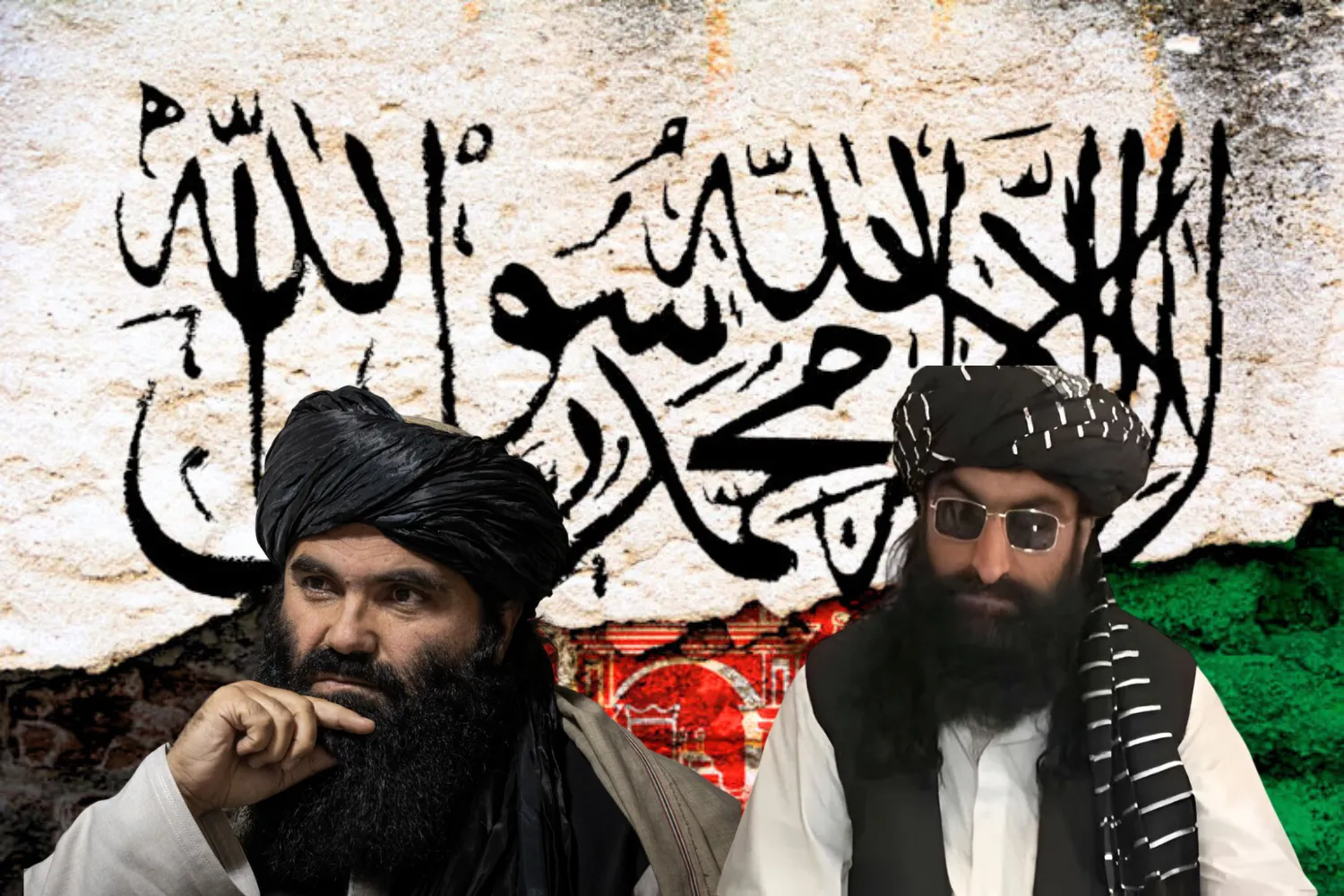

The Tehrik-i-Taliban Pakistan (TTP) and the Afghan Taliban (TTA/IEA) are often viewed as separate militant entities with separate objectives and leadership. However, a closer look at their structure, ideology and operational behavior reveals a far more integrated relationship sharing the same ideological foundation, ethnic roots and decades of cooperation.
In reality, TTP is not an offshoot but an extension of the Afghan Taliban’s struggle with shared leadership networks and mutual logistical support that continue the same militant legacy under a different banner. In essence, the TTP is a reflection of the Afghan Taliban on Pakistani soil, effectively functioning as two sides of the same coin, feeding on each other’s strength, survival and pursuit of dominance that together threaten regional stability.
Historical Roots of Alliance
The roots of the relationship between the Tehrik-i-Taliban Pakistan (TTP) and the Afghan Taliban can be traced back to the 1990s. TTP leaders such as the late Baitullah Mehsud and Hakimullah Mehsud had deep-rooted ties with senior figures within the Afghan Taliban including the Haqqani Network. Baitullah Mehsud fought alongside the Afghan Taliban during their rise in the 1990s and was appointed as governor of a tribal area by the then Taliban leader Mullah Omar.
Following the U.S.-led invasion of Afghanistan in 2001, hundreds of Taliban and Al-Qaeda fighters fled to Pakistan’s tribal areas where the Mehsud group provided them shelter in their hideouts. In the mid-2000s, Pakistan launched a military operation to eliminate foreign militants, former Afghan jihad veterans and local insurgents in the Federally Administered Tribal Areas (FATA). In response, Baitullah Mehsud unified nearly 40 militant groups under the banner of the TTP in 2007, sharing the Afghan Taliban’s ideological objective of establishing a radical Islamic state, this time on Pakistani soil.
Shared Ideology and Ethnic Bond
After the withdrawal of U.S. from Afghanistan in 2021, the TTP (Tehrik-i-Taliban Pakistan) began following the footsteps of its “big brother” the TTA (Afghan Taliban). Both share the same extremist ideology rooted in a rigid interpretation of Sharia law and the rejection of democratic governance. The Afghan Taliban and the TTP share deep ideological, cultural and ethnic affinities, with the TTP’s leadership and core fighting elements primarily operating from sanctuaries inside Afghanistan. Inspired by the success of Afghan Taliban in seizing power, TTP has sought to replicate the same strategy within Pakistan, resulting in a dramatic resurgence of militancy and a reported 500% rise in terrorist attacks since the Taliban’s takeover of Kabul.
TTP’s Financial and Logistical Network with Taliban and Al-Qaeda
With direct support and protection of Afghan Taliban on political, economic and tactical fronts, TTP now stands as the largest terrorist organization in Afghanistan with an estimated 6,000–6,500 fighters. The government of Afghan Taliban has provided the Tehrik-i-Taliban Pakistan (TTP) advanced weapons left behind by NATO forces, financial assistance and training facilities. Sirajuddin Haqqani’s network has been linked to facilitating weapon transfers and arranging the release of Islamic State–Khorasan (IS-K) prisoners on the condition that they join the TTP. Reports further indicate that TTP members and their families receive regular aid packages from the Taliban and the TTP chief Noor Wali Mehsud approximately 3.5 million Afghanis ($50,000) monthly to hile urging him to secure additional funds from private donors.
According to multiple U.N. and intelligence reports, Al-Qaeda has reestablished a strong presence under Taliban rule, operating with the consent of the Afghan Taliban. The group has reportedly set up eight new training camps across Afghanistan, assisting anti-Pakistan militants in planning and launching cross-border attacks. One such Al-Qaeda camp in Kunar Province is conducting suicide bomber training to support the operational needs of the TTP, further strengthening its capacity to conduct attacks inside Pakistan. Operating under the umbrella of the Afghan Taliban, Al-Qaeda’s collaboration with the TTP is not limited to training it also provides fighters for tashkils (military formations) and offers advanced tactical traning and instruction.
Afghan Taliban In TTP Ranks
Many TTP fighters are Afghan nationals and several serving members of the Islamic Emirate of Afghanistan (IEA) have been identified participating in attacks against Pakistan’s security forces, with one report indicating that 75% of suicide bombers in Pakistan in 2023-24 were Afghan nationals. Large contingents of TTP militants routinely cross into Pakistan under the protection of Afghan Taliban border forces, with Afghan guards frequently engaging in unprovoked fire to provide cover for these infiltrations. This deliberate cross-border facilitation underscores the Afghan Taliban’s covert support in sustaining the TTP’s insurgency.
Taliban’s Protection and Safe Haven for TTP
Since the U.S. withdrawal from Afghanistan in 2021, TTP’s political leadership have found a permissive safe haven in Afghanistan under the Taliban administration (TTA). A detained TTP commander disclosed that the entire TTP leadership, including chief Noor Wali Mehsud, is hiding in Afghanistan and moves freely across the country. TTP leaders have met with high-ranking Afghan Taliban officials, including Interior Minister Sirajuddin Haqqani, in high-level meetings.
Commander Taj Wali (also known as the “governor of the Mehsud area” within the TTP structure), a close aide of Noor Wali Mehsud, is reported to be in Afghanistan, has publicly issued threats to Pakistan from Afghan soil. TTP commanders issuing threats and operating from Afghan soil is widely reported and a major source of friction between two countries.
Taliban’s Weapon Supply to TTP
Afghan Taliban seized around $7 billion worth of U.S. military equipment including advanced assault rifles, night-vision gear, thermal optics and armored vehicles after the U.S withdrawal. U.S. and UN reports confirm that Afghan Taliban has transferred captured U.S. military equipment to TTP fighters including night-vision devices, rifles and armored vehicles while also providing training on their use. This transfer of advanced equipment has significantly enhanced the lethality and sophistication of recent TTP attacks against Pakistani security forces.
Diplomatic Support and Political Shield
In October 2025, tensions between Pakistan and Afghanistan escalated sharply after repeated Pakistani requests for action against the TTP were ignored by the Afghan Regime. Afghan Taliban has not only refused to take concrete action but has indirectly supported the TTP through political protection and operational tolerance. Pakistan’s subsequent airstrikes on TTP hideouts inside Afghanistan triggered retaliatory attacks from Afghan border forces which further exposed the Taliban’s willingness to shield the TTP rather than restrain it.
Amid these clashes, Afghan Foreign Minister Amir Khan Muttaqi visited India, where he issued remarks widely perceived as a warning to Pakistan, urging Islamabad “not to test the courage of Afghans.” and dismissed Islamabad’s concerns as internal issues. His statements made from Indian soil during heightened tensions showed the Taliban’s growing support and loyalty toward TTP, prioritizing it over maintaining stable relations with Pakistan.
Afghan Taliban’s continued cooperation with TTP, ranging from providing safe havens, financil and logistical support to defending the group diplomatically, reflects a shared worldview rooted in common objectives and mutual dependence. The Taliban’s reluctance to act against the TTP, coupled with its recent confrontational stance toward Pakistan, underscores that both groups function as a single destabilizing force, functioning not as separate actors but as extensions of the same militant network operating across both sides of the border.