

Strategic Context: The Imperative for Fleet Replenishment and Doctrinal Continuity
The Sukhoi Su-30MKI has served as the undisputed backbone of the Indian Air Force (IAF) for over two decades, representing one of the most successful adaptations of a foreign aerospace platform to highly specific indigenous operational requirements. Originally conceived as an advanced, deeply customized derivative of the Russian Su-30 “Flanker” family, the Su-30MKI (Modernizirovannyi Kommercheskiy Indiiskiy) evolved through the complex integration of heavy Russian aerodynamics, sophisticated French and Israeli avionics, and a progressively increasing suite of Indian subsystems.1 With an initial authorized procurement target of 272 airframes designed to equip over a dozen fighter squadrons, the Su-30MKI became the vanguard of India’s long-range interception, deep penetration strike, and overall air dominance capabilities.2
However, high-performance military aviation carries an inherent and unavoidable risk of attrition. Over nearly twenty years of rigorous operational deployments, ranging from routine high-altitude border patrols in the Himalayas to complex multi-national exercises and kinetic combat operations such as the Balakot air strikes, the IAF lost 12 Su-30MKI airframes to various mechanical failures, accidents, and crashes.1 This attrition systematically reduced the active inventory from the sanctioned 272 airframes down to roughly 259 to 260 operational aircraft.5 This reduction created a critical deficit in a force structure that was already struggling to maintain its mandated squadron strength of 42 combat squadrons, a baseline deemed necessary to counter the dual-front deterrence requirements posed by Pakistan and the People’s Republic of China.5
The strategic necessity to replace these specific lost airframes became acutely pronounced following the 2020–2021 Sino-Indian border skirmishes in the Galwan Valley.2 The suddenly heightened operational tempo along the Line of Actual Control (LAC) underscored the immediate need for maximum fleet availability. In response to the geopolitical shock of the China standoff, the Ministry of Defence (MoD) moved to urgently initiate the procurement of an additional 12 Su-30MKIs, alongside a parallel emergency procurement of 21 MiG-29 fighters intended to bolster depleted IAF strength via a highly compressed 2-to-3-year delivery timeframe.6
This 12-aircraft acquisition is not merely a quantitative replacement exercise designed to return the fleet to its mandated baseline; it represents a profound qualitative leap. The newly procured jets serve as the transitional bridge between the legacy Su-30MKI fleet and the highly anticipated “Super Sukhoi” upgrade standard, effectively functioning as the spearhead for India’s deepest indigenization effort within a foreign-origin heavy fighter platform.9
Chronology of Procurement: Navigating Bureaucratic and Geopolitical Friction
The procurement timeline for these 12 airframes illustrates the complex interplay of domestic bureaucratic acquisition cycles, severe geopolitical disruptions, and a strategic national recalibration toward domestic defense manufacturing. While the intent to purchase additional airframes was signaled in various iterations over the last decade, including aborted negotiations in 2010 for an additional 42 aircraft, the current specific acquisition was definitively catalyzed by the 2020 border standoff.2 However, the formalization of the contract faced extensive delays triggered by global macroeconomic shocks.
In May 2022, the Indian government was forced to temporarily suspend the Su-30MKI order entirely.9 This suspension was a direct, second-order consequence of the geopolitical fallout from the outbreak of the Russia-Ukraine war.9 The conflict raised immediate and severe concerns within the MoD regarding Moscow’s ability to maintain supply chain continuity for the critical structural components destined for Hindustan Aeronautics Limited (HAL).9 Furthermore, the rapid imposition of comprehensive Western sanctions on the Russian financial system created formidable, near-insurmountable roadblocks in executing payment transfers, forcing a total re-evaluation of the contract’s viability under standard operating procedures.9
The procurement was eventually revived and formally pushed through the defense acquisition apparatus in late 2023, reflecting a stabilization of alternative payment mechanisms and a renewed, aggressive commitment to indigenous integration. On September 15, 2023, the Defence Acquisition Council (DAC), chaired by the Defence Minister, granted the pivotal Acceptance of Necessity (AoN) for the 12 Su-30MKI aircraft as part of a broader Rs 45,000 crore capital acquisition package.11 Crucially, this AoN was categorized under the “Buy (Indian-Indigenously Designed, Developed and Manufactured) / Buy (Indian)” procurement category.11 This classification inherently mandated an unprecedented level of domestic content for a Russian-origin platform, directly aligning the procurement with the national ‘Aatmanirbhar Bharat’ (Self-Reliant India) policy.11
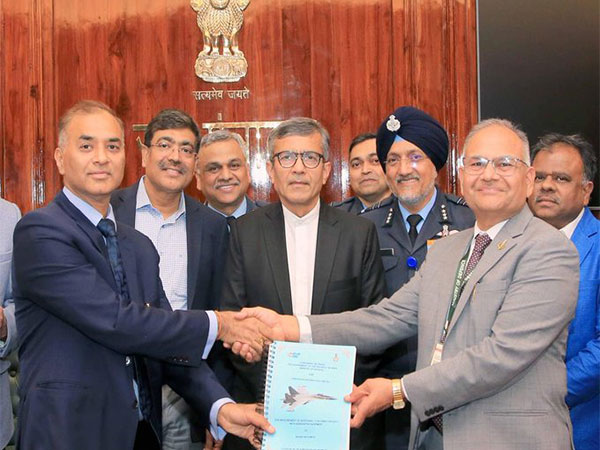
Following extended negotiations regarding exact cost structures and supply chain logistics, the Cabinet Committee on Security (CCS) officially cleared the procurement on December 12, 2024.9 The formal contract between the MoD and HAL was signed on the exact same day, transitioning the program from a stated requirement to a legally binding manufacturing mandate.10
| Procurement Milestone | Date | Strategic Significance and Context |
| Initial Procurement Intent Signaled | Mid-2020 | Driven by the Galwan Valley skirmishes and the urgent need to bolster frontline squadron strength against the dual-front threat.2 |
| Order Formally Suspended | May 2022 | Halted due to the cascading effects of the Russia-Ukraine war, reflecting severe concerns over parts delivery and international payment transfer mechanisms.9 |
| DAC Acceptance of Necessity (AoN) | September 15, 2023 | Cleared under the “Buy (Indian)” category as part of a Rs 45,000 crore package, mandating over 60% indigenous content.11 |
| CCS Clearance & Contract Signing | December 12, 2024 | Finalized at Rs 13,500 crore, tasking HAL Nashik with the immediate restart of the dormant Su-30MKI production line.10 |
| Arrival of Foundational Material Kits | April 2026 | A dozen “new material kits” successfully delivered from Russia to HAL, allowing the physical airframe manufacturing phase to rapidly commence.9 |
| Projected Initial Delivery of Airframes | Late 2026 | First fully assembled and tested airframes from this batch expected to be formally handed over to the IAF.9 |
The critical physical turning point of this timeline occurred when a dozen “new material kits” arrived from Russia at HAL’s Nashik facility by April 2026.9 This delivery marked the transition from contractual paperwork to the physical assembly of deep structural components. Deliveries of the fully assembled and flight-tested fighter jets are projected to commence from the end of 2026, operating on a highly compressed schedule compared to the historically protracted acquisition timelines associated with Indian defense procurements.9
Financial Architecture and Broad Contractual Framework
The financial architecture of the Su-30MKI replenishment program extends far beyond the headline figure of the aircraft themselves, encompassing a much broader ecosystem of propulsion sustainment, maintenance infrastructure, and indigenous weapon integration. The primary contract signed on December 12, 2024, is valued at approximately Rs 13,500 crore (roughly $1.4 billion to $1.56 billion depending on exchange rate fluctuations), inclusive of all taxes, duties, and associated ground support equipment.4
This valuation translates to a unit cost of approximately Rs 1,125 crore per aircraft. Historical data indicates that HAL-manufactured Su-30MKIs carry a significantly higher unit cost compared to direct “flyaway” imports from Russian manufacturing plants. Previous estimates placed a direct Russian-supplied fighter at roughly $42.15 million, whereas the locally HAL-built equivalent cost around $70.3 million under previous manufacturing tranches.18 The current elevated cost structure for the 12 new jets reflects several complex macroeconomic and industrial factors inherent in sovereign defense manufacturing.
Firstly, reopening a dormant, highly specialized aerospace production line incurs immense capital expenditure.19 Secondly, the integration of entirely new indigenous avionics suites, next-generation mission computers, and Active Electronically Scanned Array (AESA) radars requires extensive non-recurring engineering (NRE) investments.20 Finally, maintaining a sprawling domestic supply chain consisting of over 400 local vendors and 2,000 Micro, Small, and Medium Enterprises (MSMEs) introduces localized cost premiums.18 However, military planners accept this premium, as it is overwhelmingly offset by the strategic, long-term benefits of maintaining an active sovereign manufacturing capacity and insulating the fleet from foreign supply shocks.5
The Propulsion Ecosystem: The AL-31FP Strategic Reserve Contract
A fighter aircraft, irrespective of its aerodynamic brilliance or sensor suite, is only as viable as its underlying propulsion logistics. Parallel to the primary airframe contract, the Indian government moved decisively to secure the long-term kinematic operability of the entire Su-30MKI fleet. On September 2, 2024, the CCS approved a massive Rs 26,000 crore ($3.05 billion) contract specifically for the procurement of 240 AL-31FP aero-engines.5 This contract, officially signed on September 9, 2024, tasks HAL’s Engine Division located in Koraput, Odisha, with manufacturing these critical turbofans over an eight-year period at a sustained production rate of 30 units per year.4
The first engine under this newly authorized batch was delivered rapidly on October 1, 2024, in the presence of senior MoD and HAL leadership.9 Crucially, the AL-31FP engine contract incorporates a stringent and progressive indigenization mandate. Starting with a baseline indigenous content of 54%, the localized manufacturing of engine components is projected to reach 63% by the completion of the delivery cycle.5 This massive, multi-billion-dollar engine reserve ensures that both the existing 259 active airframes and the 12 newly acquired jets will not suffer from fleet-wide groundings due to the exhaustion of engine lifecycles, a critical, recurring vulnerability that has historically plagued the operational readiness of Russian-origin fighter fleets globally.
| Major Contract Element | Value (INR) | Value (USD Equivalent) | Key Operational Deliverables |
| 12 Su-30MKI Airframes | Rs 13,500 crore | ~$1.4 – $1.5 billion | 12 fighters, associated equipment, 62.6% indigenous content, manufactured at HAL Nashik.9 |
| 240 AL-31FP Engines | Rs 26,000 crore | ~$3.05 billion | 240 turbofans, scaling from 54% to 63% indigenous content, manufactured at HAL Koraput over an 8-year span.9 |
| MRO Hub & Support Facilities | Rs 20,000 crore | ~$2.4 billion | Broader life-cycle support mechanisms, including a Nagpur-based MRO facility for broader military aircraft fleets.25 |
Overcoming Global Geoeconomic Roadblocks: SWIFT Bans and Alternate Currencies
The acquisition of the 12 Su-30MKIs has been an exercise in navigating one of the most complex financial landscapes in modern defense procurement. Following the Russian invasion of Ukraine in 2022, the expulsion of major Russian banks from the SWIFT international messaging system effectively paralyzed traditional, dollar-denominated payment channels utilized for international arms sales.26 For an extended period, India had to formally suspend the Su-30MKI order simply because the MoD could not legally or practically transfer funds to Moscow for the required titanium forgings, raw materials, and technical support.9
To circumvent the sudden weaponization of the US dollar and the Western financial clearing system, India and Russia were forced to execute a rapid, unprecedented macroeconomic pivot. In July 2022, the Reserve Bank of India (RBI) authorized the establishment of Special Vostro accounts to facilitate bilateral trade settlements directly in local currencies.28 This revitalization of the “Rupee-Rouble” mechanism, a relic of Cold War-era bilateral trade, became the vital financial lifeline for ongoing defense procurement.30
Simultaneously, India capitalized on Western energy embargoes by massively increasing its intake of heavily discounted Russian crude oil. Within 18 months, India became Russia’s largest crude customer, importing roughly 2 million barrels per day at a discount that initially hovered between $20 and $30 per barrel below the Brent benchmark.29 As a result, bilateral trade turnover exploded from a modest $8.7 billion in 2021 to nearly $69 billion in the 2023-2024 fiscal year, overwhelmingly driven by hydrocarbons.26
This dynamic created a highly unique financial situation: Russia accumulated billions of Indian Rupees in Special Vostro accounts, but struggled to easily repatriate or utilize them due to currency convertibility limitations and India’s massive trade deficit with Moscow.29 These seemingly trapped Rupee surpluses ultimately provided an elegant, insulated solution for the defense sector. Russia could utilize its accumulated Rupee reserves residing in Indian banks to pay for Indian goods, or seamlessly reinvest them into joint defense ventures locally. This mechanism effectively allowed the Indian MoD to pay HAL and the Russian Original Equipment Manufacturers (OEMs) in domestic currency without exposing the transactions to Western financial clearinghouses.26
When direct Rupee-Ruble settlements proved insufficient or overly complex for specific sub-contractors, Indian refiners and defense entities also utilized UAE Dirhams and Chinese Yuan to clear Russian transactions, showcasing a rapid, pragmatic adaptation to a heavily sanctioned, multi-currency settlement environment.29 This shift aligns with broader geopolitical trends, including the development of China’s Cross-Border Interbank Payment System (CIPS) and the unveiling of BRICS Pay in 2024, all of which aim to dilute the hegemony of the US dollar in strategic trade.34
The CAATSA Sanctions Hurdle and Diplomatic Navigation
Beyond the logistical friction of executing payments, the Indian government faced the looming, existential threat of primary and secondary sanctions. Since 2017, the United States has wielded the Countering America’s Adversaries Through Sanctions Act (CAATSA), sweeping legislation that threatens severe secondary sanctions against any nation engaging in “significant transactions” with the Russian defense or intelligence sectors.35
This legislation has successfully derailed and collapsed Russian fighter exports globally over the past decade. Fearing exclusion from the US financial system, nations across the globe have abandoned Russian aerospace platforms. Egypt notoriously canceled a major order for Su-35S fighters; Indonesia similarly backed out of a $1.1 billion deal for 11 Su-35s; the Philippines canceled a contract for Mi-17 helicopters; and Serbia backed away from purchasing advanced Russian Surface-to-Air Missile (SAM) systems.35
India, however, occupies a highly unique and privileged strategic position as an indispensable US partner in the broader Indo-Pacific security architecture aimed at balancing the rise of China. While Washington applied intense diplomatic pressure on India to divest from Russian hardware, and explicitly warned against the $5.5 billion procurement of the S-400 missile defense system, it has historically adopted a policy of strategic leniency and de facto waivers regarding India’s legacy defense platforms.31
The procurement of the 12 Su-30MKIs walked a precarious diplomatic tightrope. By heavily framing the acquisition under the domestic “Aatmanirbhar Bharat” initiative and loudly emphasizing the 62.6% indigenous content, New Delhi effectively localized the narrative.17 The procurement was presented to the international community not as a massive new import from an adversary state, but as the routine sustainment of a long-standing domestic manufacturing line designed to save Indian MSME jobs.17 Furthermore, the relatively low dollar value of the direct Russian material input, compared to the overall $1.5 billion contract, helped mitigate the overt optics that typically trigger automatic CAATSA enforcement.38
| Roadblock / Hurdle | Mechanism of Disruption | Strategic Mitigation and Workaround |
| CAATSA Sanctions | Threat of US secondary sanctions paralyzing Indian defense entities and blocking global banking access.35 | Leveraging India’s strategic value to the US Indo-Pacific strategy; diluting the Russian value proposition through 62.6% indigenous content.35 |
| SWIFT Banking Exclusion | Inability to transfer standard USD payments to Russian OEMs for parts and technical support.27 | Deployment of RBI Special Vostro accounts; Rupee-Ruble trade mechanism fueled by massive Russian oil imports, augmented by Dirham/Yuan settlements.28 |
| Supply Chain Shock | Uncertainty of Russian material deliveries post-Ukraine war, halting assembly lines.9 | Transitioning critical avionics (radars, EW) to domestic Indian sources; securing raw material kits via advanced deliveries (April 2026).5 |
Industrial Logistics: Reviving the Nashik Ecosystem and Supply Chain Realities
The logistical execution of physically manufacturing these 12 jets falls entirely upon HAL’s Aircraft Manufacturing Division located in Nashik, Maharashtra. The Nashik facility is the undisputed nerve center of the Su-30MKI ecosystem. Having successfully produced 272 units since the early 2000s, it represents the largest license-manufacturing program in the history of the Su-30 series of fighter aircraft.39
However, HAL faced a severe and imminent industrial cliff. By 2020-2021, the original order of 272 aircraft was nearing total completion, with only a few airframes left on the floor. The Nashik assembly line was facing the grim prospect of going entirely dormant.18 The shutdown of this line posed a systemic risk not just to HAL’s corporate bottom line, but to an established, highly integrated network of over 400 local tier-1 suppliers and over 2,000 MSMEs that manufactured approximately 6,000 to 31,500 individual components for each aircraft.18 Industry analysts and defense lobbyists heavily warned the MoD that a collapse of this supply chain would result in the permanent loss of highly specialized aerospace manufacturing skills, taking decades to rebuild.18
The December 2024 contract for the 12 new jets effectively resuscitated the Nashik production line, injecting critical capital into the MSME ecosystem.9 However, restarting a complex aerospace line is fraught with logistical friction. While HAL had mastered “Phase IV” production, meaning they manufacture the airframe from basic raw materials rather than merely assembling semi-knocked-down kits, it remained inextricably reliant on Russia for specific, highly complex raw inputs.39 Deep structural components, such as over 5,800 specialized titanium blocks and forgings, as well as proprietary aluminum and steel plates, must still be sourced directly from Russia’s United Aircraft Corporation (UAC) and Sukhoi due to strict contractual stipulations and domestic Indian metallurgical limitations.43
This specific dependency illuminates the critical milestone achieved in April 2026, when a dozen “new material kits” successfully arrived from Russia.9 These kits contain the foundational titanium and alloy structures that the Indian defense industry cannot yet forge at scale. With these core materials safely secured onshore, HAL Nashik is utilizing precision assembly jigs to rapidly construct the airframes, ensuring that the aggressive delivery timeline beginning in late 2026 can be met without further supply chain interruptions.9
Persistent Strategic Dependencies
Despite the triumphs of indigenization and financial maneuvering, absolute self-reliance remains an aspirational goal rather than a current reality. As noted by defense planners, roughly 40% of the platform’s overall value still relies on foreign inputs.5 Beyond the raw titanium forgings, India remains dependent on Russia for critical deep-engine components (despite the HAL Koraput line’s progress) and specific metallurgical alloys whose proprietary secrets Moscow steadfastly refuses to transfer.5
Furthermore, India entirely lacks a domestic manufacturer for zero-zero ejection seats. This void ensures continued, non-negotiable reliance on Russian (Zvezda) or Western alternatives for critical pilot survivability systems.5 The contract dictates that another 7,146 smaller items like specialized aerospace-grade nuts, bolts, screws, and rivets must also be sourced from Russia, highlighting the enduring complexities of full supply chain independence.43
The ‘Aatmanirbhar’ Paradigm: Deepening Indigenous Content and Avionics
The defining characteristic of the 12 new Su-30MKIs is their classification under the “Aatmanirbhar Bharat” initiative. The MoD has legally mandated that these airframes feature an indigenous content of 62.6%.14 This represents a monumental paradigm shift from the earlier phases of the Su-30MKI program, which began as mere assembly of knocked-down kits and slowly transitioned to raw-material manufacturing with heavy reliance on Russian proprietary subsystems.9
The 62.6% metric is not merely a measure of localized airframe alloys and labor; it is driven by the total replacement of high-value, critical Russian avionics, mission computers, and weapon systems with advanced Indian equivalents. This deep localization insulates the platform from future geopolitical supply shocks and significantly enhances its electronic, sensor, and kinematic combat capabilities.5 A total of 51 major systems are being upgraded across the fleet through a collaborative effort involving HAL (30 systems), the Defence Research and Development Organisation (DRDO) (13 systems), and private sector entities (8 systems).5
Sensor Fusion: The Virupaksha AESA Radar
The most profound technological upgrade involves the aircraft’s primary sensor. The legacy Su-30MKIs rely on the Russian NIIP N011M Bars (Panther) Passive Electronically Scanned Array (PESA) radar.5 While historically powerful, the PESA architecture is increasingly susceptible to modern electronic counter-measures and lacks the discrete tracking and multi-target engagement capabilities of newer technologies.5 The new airframes, and eventually the entire upgraded fleet, will abandon the Russian radar entirely in favor of the Virupaksha Active Electronically Scanned Array (AESA) radar.5
The Virupaksha is a heavy-fighter derivative of the indigenous Uttam AESA radar developed by the DRDO. Utilizing advanced Gallium Nitride (GaN) based transmit/receive modules (featuring an estimated 2400 TR modules), the Virupaksha is projected to increase the fighter’s detection range by an astonishing 1.5 to 1.7 times while offering vastly superior resistance to localized electronic jamming.5
Furthermore, the original Russian fly-by-wire flight control system is being actively superseded by a fully indigenous Flight Control System (FCS).5 This transition gives India absolute sovereign control over the aircraft’s core source code, enabling the seamless integration of future domestic weapons without requiring costly, time-consuming Russian consultation. The legacy Russian OLS-30 infra-red search and track (IRST) system, which possesses a limited 30 km range, is also slated for replacement with an indigenous, long-range dual-band IRST co-developed by Bharat Electronics Limited (BEL) and HAL.5
Electronic Warfare, AI, and Survivability
In the modern, highly contested airspace, survivability depends heavily on the Electronic Warfare (EW) suite. The new batch of Su-30MKIs will field an advanced indigenous EW suite developed by the Defence Avionics Research Establishment (DARE).5 This sovereign architecture includes the High Band Jammer Pod (HBT), the Dhruti Radar Warning System (replacing the outdated manual RWRs previously utilized), and a Dual Colour Missile Approach Warning System (MAWS).5 By severing reliance on imported EW libraries, the IAF can rapidly update its threat-library databases based on localized signal intelligence, a crucial tactical advantage in the complex Indo-Pacific theatre.
Maintenance protocols are also undergoing a revolution. The Indian Institute of Technology (IIT) Bombay has been deeply engaged to develop artificial intelligence-based predictive maintenance solutions.5 These AI systems will optimize engine diagnostics, spares inventory, and overall combat potential, entirely replacing the legacy electronic maintenance management system previously provided by the original equipment manufacturer.5
Kinematic Lethality: Sovereign Weapons Integration
Kinematic lethality forms the third pillar of this indigenization effort. During recent border skirmishes, the IAF discovered severe operational inadequacies with the Russian R-77 active-radar homing Beyond Visual Range (BVR) missile, particularly regarding its effective engagement range against modern adversaries equipped with advanced jamming.9 Consequently, the entire Su-30MKI fleet is being aggressively standardized on the indigenous Astra Mk1 BVRAAM, which boasts a verified range of 110 km and superior lock-on-after-launch capabilities.9
The integration of the Astra family provides a unique strategic advantage. While the IAF utilizes the formidable 150km-range French Meteor BVRAAM, the Meteor is considered a “silver bullet” weapon restricted strictly to the small fleet of Dassault Rafale fighters.20 The Astra Mk1, due to its universality across the fleet, serves as the standard high-end BVRAAM that most IAF pilots will utilize to engage targets at standoff ranges greater than 100km.20 The ongoing integration of the upcoming longer-range Astra Mk2 further solidifies the Su-30MKI as a highly lethal air-to-air platform.49
For air-to-ground and anti-shipping roles, the aircraft serves as the primary launch platform for the BrahMos supersonic cruise missile. Recent upgrades include the integration of the Extended Range variant (BrahMos-ER), capable of striking strategic targets well beyond 300 km.1 Furthermore, the fighters are being equipped with the DRDO’s Rudram family (Rudram 1, 2, and 3) of next-generation anti-radiation missiles, granting the heavy fighter a potent Suppression of Enemy Air Defenses (SEAD) capability designed to dismantle adversary radar networks in contested airspace.9
The ‘Super Sukhoi’ Roadmap and the 12th Airframe Testbed
The 12 newly acquired airframes serve a strategic purpose far beyond mere numerical replacement; they are the physical genesis of the overarching “Super Sukhoi” modernization program. The IAF and MoD are currently finalizing an estimated $7.5 billion (Rs 65,000 crore) upgrade roadmap designed to elevate 84 existing Su-30MKIs closer to fifth-generation combat standards and extend their service life by up to 30 years.5
A compelling strategic insight emerges from the precise allocation of the 12 new jets within this massive upgrade framework. While 11 of the newly manufactured airframes will enter active service immediately to replenish frontline combat squadrons, the 12th airframe has been specifically earmarked for a unique mission: it is slated to become a dedicated technology testbed for the DRDO.20
Using a brand-new, zero-hour airframe as a DRDO testbed is a highly calculated risk-mitigation strategy. Historically, integrating radically new avionics, such as an entirely new mission computer, the Virupaksha AESA radar, and sovereign flight control software, onto a legacy airframe requires pulling an active fighter out of frontline squadron service for years of iterative ground and flight testing. By utilizing the 12th new-build jet natively constructed with the specific structural provisions for these new systems, DRDO acquires a pristine platform dedicated purely to proving the Super Sukhoi architecture.20
This accelerated testing pipeline guarantees that once the massive upgrade package is validated on the 12th airframe, the subsequent retrofitting of the 84 older airframes can proceed with minimal developmental delays. The Super Sukhoi upgrade, validated through this platform, will ultimately feature advanced capabilities such as manned-unmanned teaming (MUM-T) for drone coordination, stealth-enhancing radar absorbent materials (RAM), and a fully modernized glass cockpit utilizing Topsight-I helmet-mounted displays and multi-function avionics displays developed by Samtel-HAL Display Systems.5
Projected Delivery Timeline for the 12 Aircraft
Following the stabilization of the supply chain and the critical arrival of foundational material kits from Russia in April 2026, HAL officially confirmed the delivery schedule for the newly manufactured fighters.
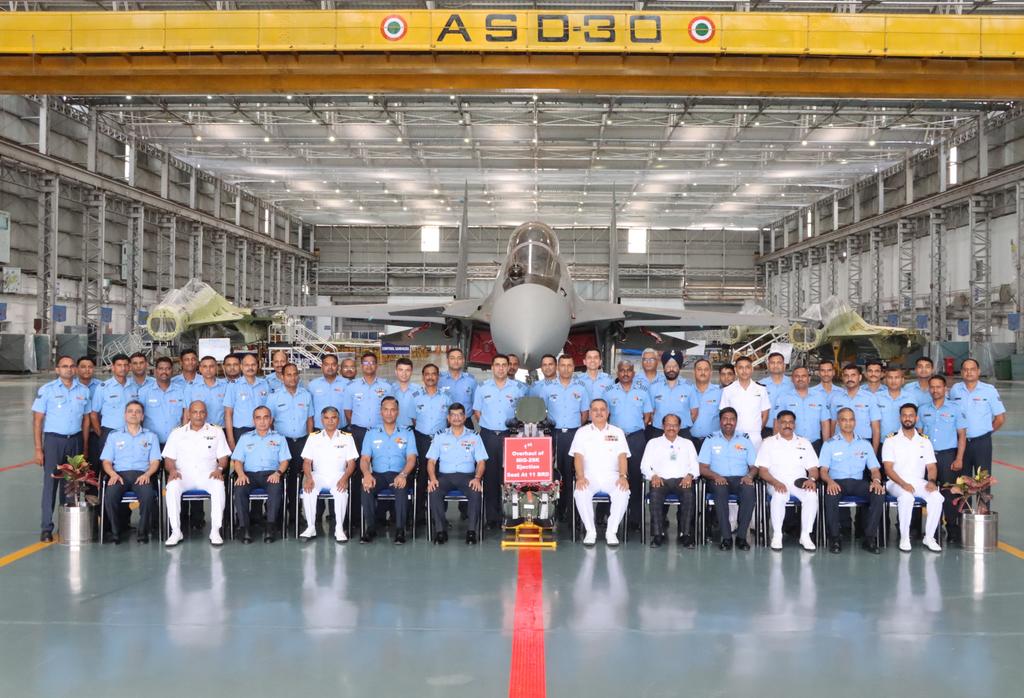
The first fully assembled and flight-tested Su-30MKI from this new batch of 12 aircraft is scheduled for delivery to the Indian Air Force starting in April 2027, falling within the 2027-28 Financial Year (FY). Once this initial aircraft successfully clears its final operational acceptance trials, the production line at Nashik will rapidly scale its output. The remaining 11 airframes are expected to be systematically delivered and inducted into the IAF fleet throughout the subsequent 2028-29 Financial Year.
This timeline signifies a highly accelerated production tempo for HAL, aiming to quickly replenish the depleted squadron numbers and ensure the IAF maintains its required strategic posture without facing protracted capacity gaps.
Export Horizons: The Armenian Proposition and Geopolitical Realignment
The successful resuscitation of the Su-30MKI assembly line at Nashik, combined with the deep integration of highly capable indigenous technologies, has catalyzed an unprecedented development in India’s defense posture: the emergence of the Su-30MKI as a highly viable export commodity on the global arms market.
For decades, India was strictly an importer of complex aerospace platforms. However, the deep localization of the Su-30MKI has generated significant international interest, specifically from the Republic of Armenia. Situated in the volatile and highly contested South Caucasus, Armenia is seeking to rapidly modernize its air force to counter neighboring Azerbaijan. Azerbaijan has aggressively modernized its military, recently signing a massive $4.6 billion agreement with Pakistan to acquire 40 JF-17 Block III multirole fighter jets equipped with Chinese AESA radars and long-range PL-15 BVR missiles.49
To counter this severe capability gap, reports indicate advanced negotiations between Armenia’s Ministry of Defence and HAL for the procurement of 8 to 12 Su-30MKI fighters in a landmark deal potentially valued between $2.5 billion and $3 billion.49 Deliveries could commence in 2027, with full completion by 2029.49
Crucially, Armenia is not seeking the standard Russian Su-30SM variant; they specifically desire the Indian Su-30MKI configuration.49 The Armenian military recognizes that the indigenous DRDO Uttam/Virupaksha AESA radar offers superior electronic counter-countermeasures (ECCM) and target tracking compared to legacy Russian systems, and the integration of the Astra family of BVR missiles provides a decisive kinematic advantage over the Russian R-77.49 For Armenia, this procurement symbolizes both a massive leap in aerial capability and a strategic break from decades of near-total dependency on Russian weapon supplies, which have proven unreliable due to the war in Ukraine.49
If finalized, this export order would be transformative. It would mark India’s first export of a newly built heavy combat aircraft, fully vindicating the immense capital sunk into HAL Nashik over the past twenty years.49 Furthermore, exporting Indian-produced Su-30MKIs presents a highly unique geopolitical workaround. Nations hesitant to purchase directly from Russia due to the paralyzing threat of CAATSA sanctions may view procurement from India as a politically insulated alternative, given Washington’s reluctance to aggressively sanction New Delhi and the high percentage of non-Russian indigenous content.2 Therefore, the 12 replacement jets currently being manufactured for the IAF serve as the ultimate proof-of-concept for the global export market, demonstrating that HAL can reliably produce, integrate, and support high-end heavy fighters independent of total Russian oversight.
Conclusion
The Indian Air Force’s acquisition of 12 additional Su-30MKI fighters is far more than a routine procurement designed to replace lost assets; it is a watershed moment in South Asian defense industrialization. What initially began in 2020 as an emergency reaction to border skirmishes evolved into a multi-billion-dollar catalyst for sovereign self-reliance. By legally mandating a 62.6% indigenous content rate, the Ministry of Defence successfully forced the localization of the most highly valuable components of modern aerial warfare, AESA radars, advanced electronic warfare suites, and long-range precision weapons. Simultaneously, the MoD secured the kinematic future of the entire fleet through the parallel Rs 26,000 crore AL-31FP engine manufacturing contract.
The successful navigation of formidable global roadblocks, ranging from the looming, existential threat of US CAATSA sanctions to the crippling logistical realities of the SWIFT banking exclusions, demonstrates a highly matured strategic autonomy within the Indian defense apparatus. By leveraging the macroeconomic realities of the Rupee-Ruble energy trade and securing critical raw material kits despite severe wartime supply constraints, India ensured the survival of HAL Nashik and its sprawling, vital MSME ecosystem.
Ultimately, these 12 fighters represent the transitional nexus of Indian airpower. As 11 jets enter the vanguard to hold the line against regional adversaries, the 12th jet, functioning as a dedicated DRDO testbed, will unlock the next-generation Super Sukhoi era. In executing this complex procurement, India has not only secured its immediate airspace and insulated its supply chains but has also positioned itself as an emerging, credible exporter of localized heavy-fighter technology on the global stage.
Works cited
- IAF issues tender for 12 Su-30MKI fighter jets | Republic World, accessed May 26, 2026, https://www.republicworld.com/defence/indian-armed-forces/indian-air-force-set-to-procure-12-more-su-30mki-fighter-jets-in-bids-to-enhance-squadron-strength
- Sukhoi Su-30 – Wikipedia, accessed May 26, 2026, https://en.wikipedia.org/wiki/Sukhoi_Su-30
- Sukhoi, LCA and More – SP’s Aviation, accessed May 26, 2026, https://www.sps-aviation.com/experts-speak/?id=768&h=Sukhoi-LCA-and-More
- Indian MoD signs deal with HAL for 12 Su-30MKI fighter jets – Air Force Technology, accessed May 26, 2026, https://www.airforce-technology.com/news/indian-mod-deal-hal/
- HAL to Make 12 More Su-30 MKI – What it means For Atmanirbharta …, accessed May 26, 2026, https://airpowerasia.com/2025/12/26/hal-to-make-12-more-su-30-mki-what-it-means-for-atmanirbharta/
- Amidst border face–off with China, India moves to buy 21 MiG–29 & 12 Su–30MKI fighters for $2.4 B – SP’s MAI, accessed May 26, 2026, https://www.spsmai.com/news/?id=173&q=Amidst-border-face-off-with-China-India-moves-to-buy-21-MiG-29-and-12-Su-30MKI-fighters-for-$2.4B
- Russia Expects Expedited Fighter Jet Deal With India – Interfax – The Moscow Times, accessed May 26, 2026, https://www.themoscowtimes.com/2020/07/03/russia-expects-expedited-fighter-jet-deal-with-india-interfax-a70765
- DAC gives the nod to buy 12 Su-30 jets, other military equipment – Believers IAS Academy, accessed May 26, 2026, https://believersias.com/dac-gives-the-nod-to-buy-12-su-30-jets-other-military-equipment/
- Sukhoi Su-30MKI – Wikipedia, accessed May 26, 2026, https://en.wikipedia.org/wiki/Sukhoi_Su-30MKI
- Sukhoi Su-30MKI – Military Wiki | Fandom, accessed May 26, 2026, https://military-history.fandom.com/wiki/Sukhoi_Su-30MKI
- Procurement of Light Armoured Multipurpose Vehicles, Integrated Surveillance & Targeting System and Next Generation Survey Vessels gets a nod Proposals for avionic upgradation of Dornier Aircraft – Press Release Page | Press Information Bureau, accessed May 26, 2026, https://www.pib.gov.in/PressReleasePage.aspx?PRID=1957703
- 150% Dividend, 1:2 Stock Split: PSU Defence Co To Procure 12 Su, accessed May 26, 2026, https://www.goodreturns.in/news/150-dividend-1-2-stock-split-psu-defence-co-to-procure-12-su-30mki-aircraft-1300809.html
- India’s ‘Aatmanirbhar Bharat’ drives recent investments across India’s defence, accessed May 26, 2026, https://www.army-technology.com/news/india-aatmanirbhar-bharat-drives-recent-investments-across-indias-defence/
- Ministry of Defence signs contract with HAL for procurement of … – PIB, accessed May 26, 2026, https://www.pib.gov.in/PressReleaseIframePage.aspx?PRID=2083948
- Ministry of Defence signs contract with HAL for procurement of 12 Su-30MKI aircraft – PIB, accessed May 26, 2026, https://www.pib.gov.in/PressReleseDetailm.aspx?PRID=2083948
- Archives | Page 16 – Defence News India, accessed May 26, 2026, https://defence.in/forums/archives/page-16
- Hindustan Aeronautics Ltd – Sharekhan, accessed May 26, 2026, https://www.sharekhan.com/MediaGalary/Equity/HAL-Dec18_2024.pdf
- An Indian facility that makes Su-30MKI jets may shut down, toppling 400 local suppliers – Defense News, accessed May 26, 2026, https://www.defensenews.com/industry/2019/08/15/an-indian-facility-that-makes-su-30mki-jets-may-shut-down-toppling-400-local-suppliers/
- India nearing a deal to export Su-30MKI to Armenia valued at $3 billion; will feature Uttam AESA and Astra – Reddit, accessed May 26, 2026, https://www.reddit.com/r/IndianDefense/comments/1rkidhm/india_nearing_a_deal_to_export_su30mki_to_armenia/
- Reading Between The Lines The Long Term Implications of DAC Approvals – MYind.net, accessed May 26, 2026, https://myind.net/Home/viewArticle/reading-between-the-lines-the-long-term-implications-of-dac-approvals
- HAL completes Sukhoi order, last two jets to roll out soon – The Hindu, accessed May 26, 2026, https://www.thehindu.com/news/national/hal-completes-sukhoi-order-last-two-jets-to-roll-out-soon/article61734613.ece
- Composite | PDF | Treaty On The Non Proliferation Of Nuclear Weapons | Joint Comprehensive Plan Of Action – Scribd, accessed May 26, 2026, https://www.scribd.com/document/620527089/Composite
- Top search result for ‘Su-30MKI’ – Vayu Aerospace and Defence Review, accessed May 26, 2026, https://www.vayuaerospace.in/search.html?q=Su-30MKI
- Su-30MKI Archives – raksha-anirveda.com, accessed May 26, 2026, https://raksha-anirveda.com/tag/su-30mki/
- India’s Recent Defence Contracts 2024-2025 | PDF | Aviation – Scribd, accessed May 26, 2026, https://www.scribd.com/document/884051247/India-Defence-Deals-2024-2025
- India-Russia Summit: Navigating Geopolitics and Upholding a ‘Special and Privileged’ Partnership – Chintan, accessed May 26, 2026, https://chintan.indiafoundation.in/articles/india-russia-summit-navigating-geopolitics-and-upholding-a-special-and-privileged-partnership/
- Indo-Russian Defence Relationship – SPRF, accessed May 26, 2026, https://sprf.in/indo-russian-defence-relationship/
- Mapping Russian Investment in India – Observer Research Foundation, accessed May 26, 2026, https://www.orfonline.org/research/mapping-russian-investment-in-india
- How Russia-India Trade Corridors Are Reshaping Energy Flows and Currency Settlements | by AMO Research | Medium, accessed May 26, 2026, https://medium.com/@amo_pbl/how-russia-india-trade-corridors-are-reshaping-energy-flows-and-currency-settlements-919721391bab
- India’s Trade Relations with China, The USA, And Russia: Challenges and Future Prospects, accessed May 26, 2026, https://ijefm.co.in/v9i2/Doc/25.pdf
- EXPLAINED: What is Rupee-Rouble mechanism? Why is India considering to revive it?, accessed May 26, 2026, https://www.thehindu.com/business/Economy/explained-what-is-rupee-rouble-mechanism-why-is-india-considering-to-revive-it/article65313729.ece
- Russia sees rising oil revenue on Iran war energy shock – The National News, accessed May 26, 2026, https://www.thenationalnews.com/business/energy/2026/05/22/russia-sees-rising-oil-revenue-on-iran-war-energy-shock/
- UAE Commits US$5 Billion to India: What the Modi Visit Means for Investment and Trade, accessed May 26, 2026, https://www.middleeastbriefing.com/news/uae-commits-us5-billion-to-india-what-the-modi-visit-means-for-investment-and-trade/
- Is the petrodollar a war casualty or death greatly exaggerated? – Responsible Statecraft, accessed May 26, 2026, https://responsiblestatecraft.org/petrodollar-death-exaggerated/
- Will India Produce And Export Russian Su-30s To Circumvent US Sanctions?, accessed May 26, 2026, https://simpleflying.com/india-produce-russian-su-30s-circumvent-us-sanctions/
- Indonesia to arm up with Rafale, F-15 fighter jets – Asia Times, accessed May 26, 2026, https://asiatimes.com/2021/02/indonesia-to-arm-up-with-rafale-f-15-fighter-jets/
- India hurries to get Russian S-400 systems amid border conflict with, accessed May 26, 2026, https://www.app.com.pk/global/india-hurries-to-get-russian-s-400-systems-amid-border-conflict-with-china/
- What are the key defence projects under ‘Make In India’ scheme – Invest UP, accessed May 26, 2026, https://invest.up.gov.in/wp-content/uploads/2022/04/press-release-28april22-1-min.pdf
- HAL’s Nasik Unit Completes Production from Raw Material Phase (Phase 4) of 140 Su-30MKI Jets – Raksha Anirveda, accessed May 26, 2026, https://raksha-anirveda.com/hals-nasik-unit-completes-production-from-raw-material-phase-phase-4-of-140-su-30mki-jets/
- As Sukhoi-30MKI production nears end, HAL worries about future orders, accessed May 26, 2026, https://www.ajaishukla.com/2017/08/as-sukhoi-30mki-production-nears-end.html
- India’s HAL Gets AL-31 Engine Manufacturing Orders For Su-30MKI – RUSSIAN AVIATION, accessed May 26, 2026, https://www.ruaviation.com/news/2017/4/5/8426/
- HAL to Restart Su-30MKI Production at Nashik Facility Under $1.3 …, accessed May 26, 2026, https://aviationspaceindia.com/news/hal-restart-su-30mki-production-nashik-facility-under-13-billion-contract
- First Sukhoi-30 overhauled at Nashik, highlights HAL’s growing capability – Broadsword by Ajai Shukla, accessed May 26, 2026, https://www.ajaishukla.com/2014/10/first-sukhoi-30-overhauled-at-nashik.html
- HAL and the Indian Defense Ministry have awarded a contract for the production of 12 Su-30MKI aircraft – RuAviation, accessed May 26, 2026, https://ruavia.su/hal-and-the-indian-defense-ministry-have-awarded-a-contract-for-the-production-of-12-su-30mki-aircraft/
- Japan, India to Enhance Space and Cyber Security Cooperation by Security Pact Revision, accessed May 26, 2026, https://defence.in/threads/japan-india-to-enhance-space-and-cyber-security-cooperation-by-security-pact-revision.9231/
- How is Tejas LCA an indigenous fighter jet when its critical components like engine, radar, flight controls, ejection seat, and others are from abroad? – Quora, accessed May 26, 2026, https://www.quora.com/How-is-Tejas-LCA-an-indigenous-fighter-jet-when-its-critical-components-like-engine-radar-flight-controls-ejection-seat-and-others-are-from-abroad
- Defence ministry signs ₹13,500 crore deal with HAL for Su | DD News, accessed May 26, 2026, https://ddnews.gov.in/en/defence-ministry-signs-%E2%82%B913500-crore-deal-with-hal-for-su-30mki-aircraft/
- Defence Ministry Signs ₹13,500 Crore Deal with HAL for 12 Sukhoi Jets – Angel One, accessed May 26, 2026, https://www.angelone.in/news/share-market/defence-ministry-signs-deal-with-hal-for-sukhoi-jets
- Armenia Nears $3 Billion Deal With India for Su-30MKI Jets to Counter Azerbaijan-Pakistan Axis – Defence Security Asia, accessed May 26, 2026, https://defencesecurityasia.com/en/armenia-india-su30mki-3billion-deal-caucasus-airpower-shift/
- Armenia Eyes Indian Su-30MKI Upgrade and Also Potential Purchase Amidst Russian Delays – Reddit, accessed May 26, 2026, https://www.reddit.com/r/armenia/comments/1ga63z8/armenia_eyes_indian_su30mki_upgrade_and_also/
- Armenia’s patience runs out: Negotiates with India for Su-30MKI – Reddit, accessed May 26, 2026, https://www.reddit.com/r/armenia/comments/1ger5of/armenias_patience_runs_out_negotiates_with_india/
- HAL Secures ₹45000 Crore MoD Tender for 156 Prachand Light Combat Helicopters, accessed May 26, 2026, https://defence.in/threads/hal-secures-rs45-000-crore-mod-tender-for-156-prachand-light-combat-helicopters.7493/
- MoD Signs Contract With HAL For Procurement Of 12 Su-30MKI Aircraft | World DNA | WION, accessed May 26, 2026, https://www.youtube.com/watch?v=qzX3iYpci-s
HAL downplays rumours of India–Armenia Su-30MKI deal – Aerospace Global News, accessed May 26, 2026, https://aerospaceglobalnews.com/news/india-armenia-su30mki-deal-rumours-hal-response/