

Introduction: The Circular Trajectory of India’s Combat Aviation Procurement
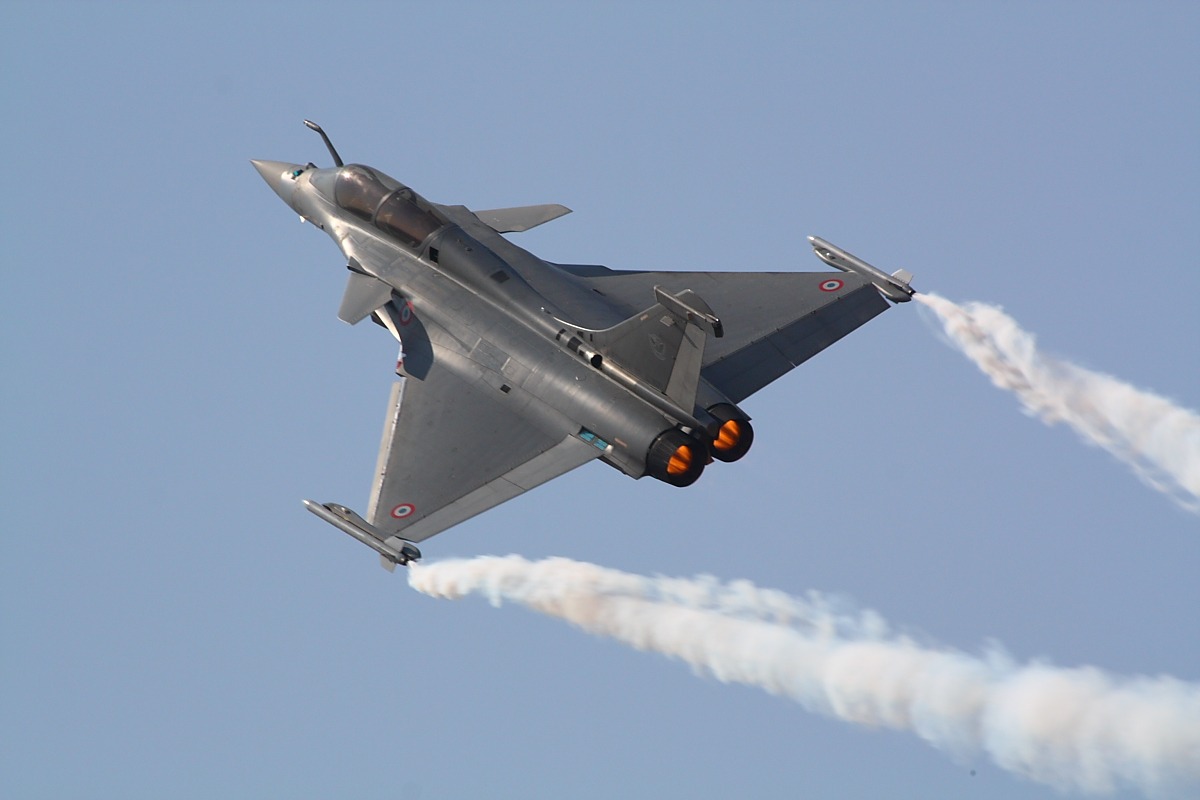
The Indian Ministry of Defence (MoD) currently stands at the precipice of finalizing one of the most consequential, economically massive, and geopolitically significant military aviation procurements in modern strategic history. Valued at an estimated ₹3.25 lakh crore (approximately $36 billion to $40 billion), the imminent issuance of a formalized Letter of Request (LoR) to the government of France for 114 Dassault Rafale multirole fighter jets marks a defining and transformative moment for the Indian Air Force (IAF).1 This monumental development, systematically processed under the auspices of the Multi-Role Fighter Aircraft (MRFA) program, is explicitly designed to arrest the precipitous and alarming decline of India’s operational fighter squadron strength, thereby fundamentally recalibrating the complex balance of air power in the highly volatile South Asian geopolitical theater.5
However, the MRFA initiative is deeply intertwined with a convoluted historical legacy that continues to draw intense scrutiny from defense economists and strategic analysts alike. Barely a decade after the highly publicized collapse of the original Medium Multi-Role Combat Aircraft (MMRCA) tender, which initially sought the acquisition of 126 Rafale fighters, New Delhi has ostensibly returned to the exact same platform, albeit under a drastically altered economic and geopolitical framework.7 Critics and defense observers have frequently invoked the hoary French adage, “Plus ça change, plus c’est la même chose” (the more things change, the more they remain the same), highlighting the perpetually circular, often heavily bureaucratized nature of India’s defense acquisition apparatus.7 The revival of this massive procurement, rebranded under a new strategic moniker and emerging at nearly four times the originally anticipated package price, raises profound questions regarding defense economics, long-term strategic force planning, and the rapidly evolving combat doctrine of the IAF.7
This comprehensive analytical report meticulously examines the multifaceted dimensions of the 114-Rafale acquisition program. It provides an exhaustive analysis of the historical context, specifically evaluating the controversial financial auditing of the preceding 36-jet Inter-Governmental Agreement (IGA).9 Furthermore, it extensively evaluates the profound geopolitical and tactical catalysts driving this sudden urgency, most notably the harsh, unyielding combat lessons derived from the May 2025 “Operation Sindoor,” which confirmed the undeniable emergence of a collusive, real-time two-front threat matrix involving both Pakistan and the People’s Republic of China.11 Finally, the report delves deeply into the intricate, highly classified technological disputes currently complicating the contractual negotiations, specifically focusing on the friction between India’s relentless pursuit of technological sovereignty via source-code access for indigenous weapon integration, and France’s stringent defense of its proprietary algorithms and electronic warfare architecture.3
The Genesis and Evolution of the Procurement Cycle
To fully comprehend the strategic rationale and the economic magnitude of the current $40 billion MRFA proposal, one must methodically deconstruct the convoluted, multi-decade history of India’s multirole fighter acquisitions. The saga began in the early 2000s, when the IAF recognized an impending obsolescence crisis within its legacy Soviet-era fleets. This realization eventually crystallized into the ambitious 2007 MMRCA tender, a global competition designed to procure 126 medium multi-role combat aircraft, which Dassault Aviation successfully won in 2012 after a grueling technical evaluation.10
However, the subsequent commercial negotiations regarding localized production guarantees, technology transfer matrices, and quality assurance liabilities with the state-owned Hindustan Aeronautics Limited (HAL) ultimately collapsed.10 Faced with an intractable deadlock and rapidly aging aircraft, the government made the unprecedented decision to completely scrap the 126-jet tender in 2015.10 In its place, to address critical operational voids, a fast-tracked Inter-Governmental Agreement (IGA) was signed in September 2016 for the direct acquisition of 36 Rafale jets in flyaway condition, a deal valued at approximately €7.87 billion (₹58,891 crore).5
The 2016 IGA immediately sparked intense domestic political debate and widespread allegations regarding procurement anomalies, prompting a highly detailed and unprecedented review by the Comptroller and Auditor General (CAG) of India, the results of which were presented to Parliament in February 2019.9 The primary objective of the CAG’s exhaustive performance audit was to conclusively determine whether the 2016 emergency procurement provided better financial and operational value to the Indian exchequer compared to the stalled 2007 MMRCA negotiations.9
Auditing the 2016 Inter-Governmental Agreement
The CAG report utilized a complex methodology, mathematically converting the 126-jet bid from 2007 into an equivalent, inflation-adjusted cost for 36 aircraft in 2016, ultimately concluding that the IGA was marginally more cost-effective across specific parameters.9 The resulting comparative data offered a granular look into international defense pricing structures.
| Financial and Operational Metrics | Findings and Determinations from the CAG Performance Audit (2019) |
| Overall Package Price | The CAG determined that the comprehensive 2016 IGA package was 2.86% cheaper than the audit-aligned price of the preceding 2007 MMRCA bid.9 |
| Basic Aircraft Unit Cost | While government claims highlighted that the basic, unequipped aircraft was 9% cheaper in the 2016 deal, the CAG noted this was offset by other associated package costs, resulting in the 2.86% final figure.16 |
| India Specific Enhancements (ISE) | The highly customized €1.3 billion ISE package within the 2016 deal represented a substantial, quantifiable cost saving of 17.08% when compared to the equivalent technological enhancements requested during the earlier negotiations.9 |
| Delivery and Production Schedule | The 2016 contract managed to improve the final delivery timeline by exactly one month, stipulating 71 months for total completion compared to the 72 months outlined in the earlier bid.9 |
| Sovereign Bank Guarantees | A major point of contention was that the 2016 deal lacked a sovereign bank guarantee from the French government. The CAG noted this omission provided substantial indirect financial savings for Dassault Aviation, savings which the audit suggested should have been aggressively negotiated and passed directly to the Indian government.10 |
| Resulting Operational Gap | The drastic reduction in procurement volume from 126 to merely 36 jets created a severe, undeniable operational preparedness gap for the IAF, prompting the immediate issuance of a fresh Request for Information (RFI) for the MRFA to backfill the deficit.16 |
The Supreme Court of India subsequently reviewed the geopolitical and procedural integrity of the 2016 deal. In a landmark December 2018 judgment, the Court upheld the procurement, stating there was absolutely no occasion to “really doubt the decision-making process” that would warrant setting aside a critical defense contract.17 The Court further dismissed all review petitions in November 2019.17 The judicial bench, after examining sealed-cover documents, noted that the granular pricing details were heavily protected by Article 10 of the Indo-French IGA, which strictly governs the protection of classified defense material, thereby preventing public dissemination of the exact per-item cost breakdowns.20 Despite the domestic legal closure, the controversy continued internationally, with a French judge appointed in June 2021 to lead a judicial investigation into the deal, a probe which reportedly faced diplomatic hurdles and delays regarding international cooperation requests.17
The closure of this contentious legal and auditing chapter, however, did absolutely nothing to solve the IAF’s underlying, catastrophic structural deficit. The 36 Rafales acquired under the IGA were barely sufficient to equip two squadrons (the No. 17 Golden Arrows at Ambala and the 101 Squadron at Hasimara), doing little to replace the massive numbers of retiring legacy fleets.5 Recognizing this undeniable reality, the MoD officially launched the MRFA program. Following years of bureaucratic deliberation, on February 12, 2026, the Defence Procurement Board (DPB) granted critical clearance, which was immediately formalized the very same day by the Defence Acquisition Council (DAC), approving the acquisition of 114 Rafales via a government-to-government framework.23
The proposal’s structure dictates that 18 to 24 aircraft will arrive from France in ‘fly-away’ condition to ensure rapid deployment, while the remaining 90 platforms will be manufactured domestically in India.1 This local production is mandated under a strict “Make in India” requirement, initially targeting 30% indigenous content but contractually bound to scale up to 50% to 60% indigenous components during the phased production cycle.1 If finalized and integrated alongside the 36 existing IAF Rafales and the 26 Rafale-Marine jets recently procured for the Indian Navy, India will soon operate an incredibly formidable, unified fleet of 176 Rafale aircraft, making it one of the largest operators of the type globally.2
The Geopolitical Catalyst: Operation Sindoor and the Collusive Threat Matrix
While bureaucratic momentum and delayed recapitalization cycles explain the mechanical administrative advancement of the deal, the strategic, almost existential urgency that is currently accelerating this $40 billion procurement is deeply and irrevocably rooted in recent military confrontations. The entire strategic calculus of the Indian subcontinent was violently altered in May 2025 during the intense, multi-domain, four-day military conflict known within Indian military circles as “Operation Sindoor,” and referred to by Pakistani forces as “Operation Bunyan al-Marsoos” or “Marka-e-Haq”.13
The May 2025 Conflict: A Multi-Domain Stress Test
The severe crisis was triggered on April 22, 2025, when a devastating terrorist attack struck the town of Pahalgam in Indian-administered Jammu and Kashmir, resulting in the tragic deaths of 26 civilians, primarily tourists.13 Departing from its traditional, historically restrained doctrine of localized border skirmishes or limited artillery duels, the Indian political and military leadership authorized a massive escalation.27 India officially initiated Operation Sindoor on May 7, executing deep, multi-domain precision strikes across multiple sites deep within Pakistan’s Punjab province and Pakistan-administered Kashmir.13
The operation represented the most daring, sophisticated, and technologically complex Indian air offensive conducted since the Bangladesh Liberation War of 1971.28 The IAF deployed approximately 72 combat aircraft in highly synchronized, overlapping waves, utilizing heavy Su-30MKI air superiority fighters, upgraded Mirage 2000s, and relying heavily on the advanced capabilities of the Rafale.27 The Rafales operated as apex force multipliers, leveraging their low-observable characteristics and deploying SCALP stealth standoff cruise missiles and HAMMER precision-guided munitions to devastate fortified targets.13 Simultaneously, the Indian armed forces executed a massive standoff attack, utilizing BrahMos supersonic cruise missiles to inflict heavy damage on critical Pakistani military infrastructure, including direct strikes on the Nur Khan airbase in Rawalpindi and the Bholari airbase in the Sindh province.13 This was augmented by the deep penetration of Israeli-made unmanned aerial vehicles (UAVs) that reached as far as Karachi and Lahore.13
However, the conflict highlighted severe, undeniable vulnerabilities within India’s defensive and offensive architecture. Pakistan retaliated fiercely and rapidly.13 They launched massive counter-strikes utilizing automated drones and missiles targeting Indian cities, including Amritsar.26 The sheer volume of incoming threats forced India to operationalize and fire its newly acquired Russian S-400 Triumf air defense missile system stationed at the Adampur Air Force Station, marking the highly advanced system’s very first global combat use.26
More critically, the aerial combat phase on the night of May 6-7 exposed a shifting technological balance. Pakistan successfully and aggressively deployed its newly acquired, Chinese-built Chengdu J-10C fighters.13 The J-10C, acting as an advanced node in a broader Chinese-supplied data-fusion network, was armed with the PL-15 Beyond Visual Range Air-to-Air Missile (BVRAAM).27 The combination of advanced algorithmic warfare, high-speed data fusion, and the extreme kinematic range of the PL-15 proved highly lethal.27 India suffered undeniable and confirmed aircraft losses during this engagement.13 On May 31, 2025, India’s Chief of Defence Staff, General Anil Chauhan, publicly admitted to combat jet losses on the first day of the fighting, with independent defense assessments and international reports suggesting the loss of three to five Indian jets, specifically including at least one MiG-29 and, alarmingly, one Rafale.13 The reported downing of a Rafale by a J-10C at an unprecedented standoff range of 182 kilometers absolutely shattered the IAF’s long-held aura of absolute technological invincibility.31 It brutally proved that highly integrated, 4.5-generation adversaries could completely negate India’s qualitative edge if the IAF lacked sufficient mass and advanced electronic countermeasures.31
The “One Front Reinforced” Doctrine and the Squadron Crisis
The most alarming strategic takeaway from Operation Sindoor was not simply the loss of airframes, but the absolute manifestation of active, real-time Chinese support for Pakistan during active combat operations.11 Top Army brass and defense analysts concluded that India no longer faces a theoretical, distinct “two-front” war scenario; rather, it faces a highly integrated “one front, reinforced” reality.11 In this paradigm, China utilizes Pakistani conflicts as a “live lab” to safely test its military hardware, data-link architectures, and proxy capabilities against Western and Indian platforms.11
This stark realization struck directly at the heart of the IAF’s most glaring structural weakness: severe, systemic squadron depletion.6
- Mandated vs. Actual Strength: The IAF is officially mandated by parliamentary doctrine to maintain 42.5 active fighter squadrons to effectively deter and combat a simultaneous two-front threat.5 As of early 2026, the effective combat strength has collapsed dramatically to merely 29 to 31 operational squadrons.5
- Impending Legacy Retirements: This already critical number is poised to plummet further. The final two squadrons of aging, accident-prone MiG-21 Bison interceptors are mandated to be completely retired from service by 2025, alongside the impending phased retirement of the deep-strike SEPECAT Jaguars.6
- Adversarial Expansion: While India waits patiently for delayed indigenous HAL Tejas Mk1A deliveries and looks toward the mid-2030s for the deployment of the Advanced Medium Combat Aircraft (AMCA), its adversaries are rapidly expanding.5 Pakistan has not only inducted the highly capable J-10C but has formally initiated high-level negotiations to acquire 40 Shenyang J-31 (locally designated J-35) fifth-generation stealth fighters from China.5 The Chinese People’s Liberation Army Air Force (PLAAF), having fully operationalized its J-20 fifth-generation fleet, is concurrently advancing toward sixth-generation developmental programs.12
Consequently, exhaustive internal reviews post-Operation Sindoor have led top policy makers and military brass to conclude that even the traditional 42-squadron mandate is completely inadequate for the modern threat environment.12 Urgent discussions are currently underway regarding the evaluation, accretion of capabilities, and the complete “re-orbatting” (reorganizing and redeploying) of the force.12 Sources indicate a push to officially authorize an increase of 25% to 35% in maximum squadron strength, a fresh mandate that will require immediate Acceptance of Necessity (AoN) clearances from the Cabinet Committee on Security (CCS).33 In this hyper-lethal threat environment, the 114-Rafale deal is no longer viewed as an expensive luxury, but as an absolute, non-negotiable existential imperative to immediately restore deterrence.4
Technological Architecture: The Omnirole Capabilities of the Rafale
The strategic decision to completely standardize the core of India’s medium-weight combat fleet around the Dassault Rafale stems directly from the platform’s widely demonstrated, highly versatile “omnirole” architecture.35 Built primarily by a deeply integrated consortium of elite French defense contractors, Dassault Aviation, Thales Group, and Safran Aircraft Engines, the 4.5-generation, twin-engine, canard delta wing aircraft is uniquely capable of performing air supremacy, deep-strike interdiction, aerial reconnaissance, close air support, anti-ship strikes, and specialized airborne nuclear deterrence all during a single operational sortie.35
Kinematic Performance and Advanced Weapons Integration
With an exceptionally light empty weight of approximately 10 tonnes, the IAF variant of the Rafale features an impressive 14 hardpoints (13 on the naval Rafale-M variant) capable of carrying a total external load exceeding nine tonnes (20,000 lbs.) of heavy ordnance or drop tanks.35 The interoperability and seamless integration of its vast array of weapons systems are governed by a highly advanced Mil-Std-1760 compliant stores management system.35 The aircraft relies on an incredibly sophisticated sensor suite, heavily centered around the Thales RBE2 AA Active Electronically Scanned Array (AESA) radar.36 This is paired seamlessly with the Front-Sector Optronics (FSO) Infra-Red Search and Track (IRST) system, enabling the pilot to conduct passive target detection and engagement without emitting a detectable radar signature that could alert adversary warning receivers.36
The combat lethality of the Rafale is heavily dependent on its bespoke, highly advanced European weaponry, which grants the IAF specific tactical advantages over its regional adversaries:
| Weapon System | Technical Classification & Guidance | Strategic Significance for the IAF |
| MBDA Meteor | Active radar-guided Beyond Visual Range Air-to-Air Missile (BVRAAM).35 | Utilizes advanced ramjet propulsion to maintain a highly energetic state during the terminal intercept phase. Engagement range heavily exceeds 100 km. Viewed as the primary kinetic counter to the Chinese PL-15.37 |
| MBDA SCALP-EG | Long-range, stand-off stealth cruise missile.35 | Features low-observable characteristics and terrain-hugging flight profiles. Range exceeds 300 km. Enables the IAF to execute deep interdiction strikes on heavily defended targets without penetrating adversary air defense envelopes.37 |
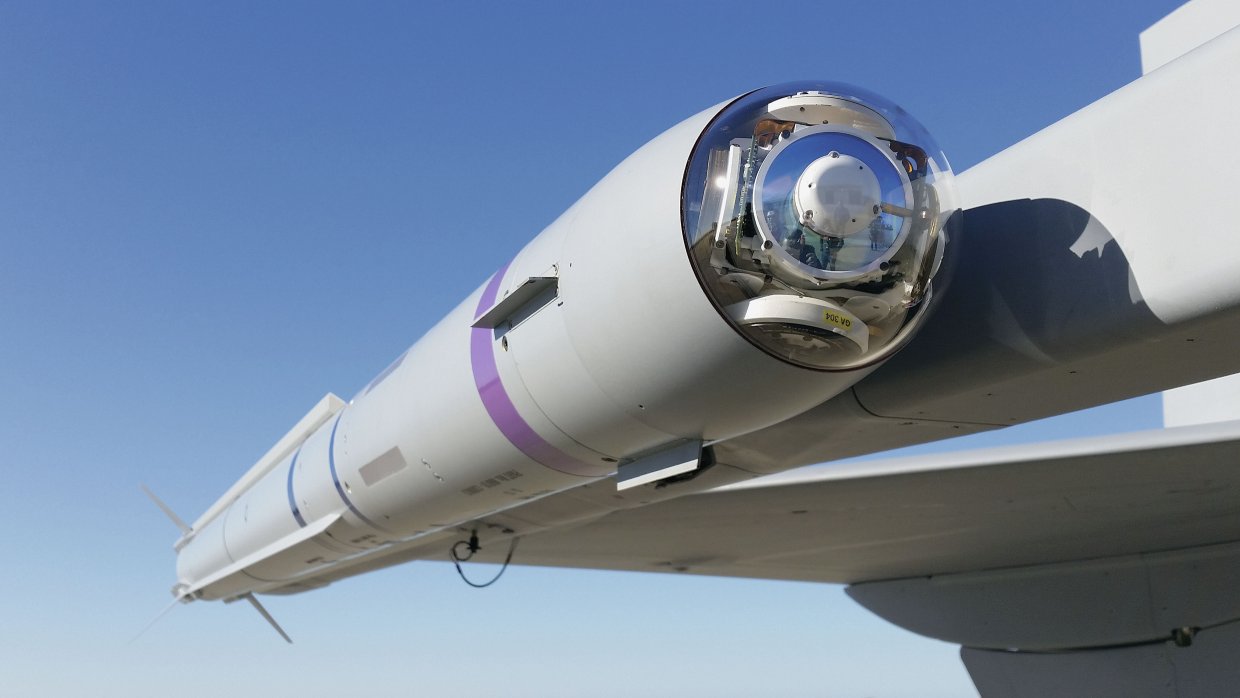
| Safran HAMMER | Highly Agile and Manoeuvrable Munition Extended Range (AASM).35 | A modular, rocket-boosted precision glide bomb equipped with INS/GPS and Imaging Infra-Red (IIR) guidance. Critical for pinpoint strikes against fortified bunkers in mountainous terrain, typical of the Line of Control.35 |
| MBDA MICA | Infrared (IR) and Electromagnetic (EM) guided interception missile.35 | A highly versatile missile that can be fired within visual range (WVR) for close combat or beyond visual range (BVR). Provides a comprehensive 360-degree self-defense envelope.35 |
| Thales SPECTRA | Self-Protection Equipment Countering Threats to Rafale Aircraft.14 | A highly classified, deeply integrated electronic warfare (EW) suite offering multi-spectral threat warning, advanced active radar jamming, and sophisticated decoying capabilities.14 |
India-Specific Enhancements (ISE) and Fleet Synergy
A highly critical and uniquely tailored component of India’s Rafale acquisition strategy is the integration of 13 classified India-Specific Enhancements (ISE).38 These specialized modifications, initially developed under the 2016 IGA at a substantial research and development cost exceeding €1.3 billion, include the integration of highly advanced Israeli Helmet Mounted Display Systems (HMDS), specialized cold-engine start capability designed specifically for extreme high-altitude bases like Leh in the Ladakh region, customized low-band radar warning receivers, advanced synthetic aperture radar (SAR) modes, ground moving target indicator and tracking systems, and bespoke radio altimeters.21
The 114 new aircraft destined for the MRFA program are expected to be produced to the highly advanced F4 standard right off the assembly line, with rigid contractual provisions already in place for future software and hardware migration to the eventual next-generation F5 standard.24 The F4 standard represents a massive leap in capability, introducing the improved RBE2 XG radar, the CONTACT encrypted software-defined radio system from Thales, and structural compatibility with next-generation weapons like the SCALP-NG, MICA-NG, and newly developed heavier variants of the AASM Hammer guided bomb.41 Furthermore, the IAF’s existing fleet of 36 F3-R standard Rafales will be systematically upgraded to the F4 level under the same programmatic umbrella, ensuring total, uncompromised fleet commonality across all squadrons.24
This absolute mandate for commonality extends deeply into the maritime domain. In April 2025, the Indian Navy finalized a landmark ₹63,000 crore ($7.4 to $7.5 billion) contract to procure 26 Rafale-Marine (Rafale-M) fighter jets, specifically optimized for deployment aboard the indigenous aircraft carrier INS Vikrant.5 The Rafale-M was strategically selected over fierce competition from Boeing’s F/A-18 Super Hornet specifically because of the immense logistical, training, and maintenance interoperability it shares with the IAF’s existing Rafale fleet stationed at Ambala (Western Air Command) and Hasimara (Eastern Air Command).21
The Source Code Impasse: Sovereignty Versus Technological Security
While the operational logic and aerodynamic necessity for the MRFA are incredibly solid, the actual contract negotiations have recently collided with a severe, potentially deal-breaking strategic roadblock that threatens to heavily derail the entire procurement timeline. As of mid-2026, a fundamental, highly contentious dispute regarding advanced software architecture and core source code access has emerged between New Delhi and Paris, rapidly transforming what should have been a standard commercial procurement into a highly sensitive clash over national technological sovereignty.14
The Mandate for Domestic Weapon Integration
Operating under the strict directives of Prime Minister Modi’s Atmanirbhar Bharat (Self-Reliant India) policy, the MoD has explicitly and forcefully mandated that the 114 new Rafales must be fully capable of seamlessly carrying, targeting, and firing indigenous Indian weapons.47 Specifically, the IAF seeks to deeply integrate the DRDO-developed Astra Mk2 and Mk3 series of BVRAAMs, as well as the highly potent BrahMos-NG supersonic anti-ship and land-attack cruise missile, directly into the Rafale’s primary fire-control systems.1 Furthermore, India aims to aggressively utilize its domestic defense startups, cultivated under the iDEX framework, to develop advanced “plug-and-play” mission modules, electronic warfare pods, and targeting algorithms for the aircraft.15
To successfully achieve this level of seamless, indigenous integration, the IAF strictly requires comprehensive access to the Rafale’s core source codes, the highly complex, underlying mathematical and software architecture governing the central mission computer, the RBE2 AESA radar, and the critical SPECTRA EW suite.14
The French “Black Box” Paradigm and the Russian Proximity Threat
France has categorically and repeatedly refused to provide full source code access to the Indian government.3 The Rafale’s core systems, frequently described by aviation analysts as the aircraft’s central “brain,” contain highly classified proprietary algorithms that precisely define how the aircraft rapidly processes electronic threats, fuses complex sensor data, and executes algorithmic warfare in highly contested airspace.14
French reluctance is deeply rooted in two primary, uncompromising concerns:
- Proprietary Intellectual Property Protection: Dassault Aviation and the Thales Group view the Rafale’s source code as their most heavily guarded corporate intellectual property. Relinquishing it to a foreign nation would mean losing total engineering control over the platform’s future evolutionary path, heavily jeopardizing lucrative future upgrade revenue streams.3
- The Russian Espionage and Tech-Leak Threat: The most critical, geopolitically sensitive sticking point is the integration of the BrahMos missile. The BrahMos is a highly successful joint venture between India’s Defence Research and Development Organisation (DRDO) and Russia’s NPO Mashinostroyeniya, essentially acting as an advanced export variant of the Russian P-800 Oniks anti-ship missile.1 French defense negotiators and intelligence officials possess acute, overriding fears that deeply integrating the BrahMos into the Rafale’s core avionics architecture would necessitate exposing highly sensitive French flight algorithms and electronic warfare logic to the Russian software engineers who are intrinsically involved in developing the missile’s digital software handshake protocols.1 In an era marked by the prolonged Russia-Ukraine war and extremely heightened NATO-Russia technological tensions, Paris views this potential tech-leak vulnerability as an absolute, non-negotiable red line.3
The Operational Compromise and the “Sovereignty vs. Speed” Dilemma
Seeking to salvage the $40 billion deal, Dassault has proposed limited, highly compartmentalized solutions. They have offered Interface Control Documents (ICDs) that would theoretically permit selected Indian weapons to communicate with the aircraft via a heavily secured, partitioned middleware layer, completely preventing direct Indian access to the core architecture.3 However, from the Indian strategic perspective, this merely formalizes a “Black Box” problem.15
If India accepts the French terms, its operational sovereignty remains severely and permanently constrained.14 In a high-intensity wartime scenario against rapidly evolving adversary stealth technology (such as the J-35), updating radar threat libraries, tweaking EW algorithms, or quickly integrating a newly developed domestic weapon would strictly require sending highly classified combat data back to France, waiting for Dassault engineers to rewrite the proprietary code, and hoping for a rapid patch.15 As one prominent strategic analysis heavily noted, without complete source code access, a buyer effectively receives only a fraction of the incredibly expensive aircraft’s true combat capability, forever remaining tethered to the Original Equipment Manufacturer (OEM) for even the most basic tactical modifications.3
This bitter disagreement reflects a tectonic, fundamental shift in India’s broader procurement strategy: the difficult transition from simply acquiring massive amounts of foreign hardware to aggressively demanding unmitigated national technological sovereignty.14 Complicating matters further, and applying intense leverage against Paris, Russia has reportedly countered the French offer by proposing the direct sale of the Sukhoi Su-57E fifth-generation stealth fighter, explicitly promising full, unhindered source code access. This shrewd maneuver heavily leverages India’s traditional, historical reliance on Russian defense technology to aggressively undermine the French negotiating position, creating a tense standoff that delays the vital MRFA timeline.39
Industrial Integration, Lifecycle Economics, and the MRO Burden
Beyond the high-stakes software dispute and the tactical nuances of air-to-air combat, the successful structural execution of the massive $40 billion MRFA deal hinges entirely on highly complex industrial economics and the desperate need to finally stabilize the IAF’s chaotic, financially draining logistics chain.
The Financial Nightmare of the “Veritable Museum”
A major, consistent critique of the MRFA program is that the Rafale, while undeniably highly capable, officially becomes the seventh distinctly different fighter type currently in the IAF’s active operational inventory.34 The IAF currently operates a wildly diverse, heavily fragmented, and logistically incompatible fleet comprising heavy Russian Sukhoi Su-30MKIs, upgraded Soviet-era MiG-29s, French Mirage 2000Hs, aging Soviet MiG-21 Bisons, deeply specialized Anglo-French SEPECAT Jaguars, the indigenous HAL Tejas Light Combat Aircraft (LCA), and the currently small fleet of Rafales.34
This extreme fragmentation turns the modern IAF into what aviation analysts frequently and derisively term a “veritable museum” of combat aircraft, resulting in an absolutely unsustainable Maintenance, Repair, and Overhaul (MRO) financial bill.34 Maintaining seven completely parallel, non-interoperable supply chains, managing distinct pilot and technician training pipelines, purchasing disparate ground-support test equipment, and stocking isolated, platform-specific weapons inventories creates a severe, cascading logistical nightmare. This deeply strains the IAF’s already limited financial resources, eating heavily into the capital acquisition budget.34
Historically, platforms manufactured domestically under long-term license agreements by HAL, such as the Jaguar and the Su-30MKI, allowed India to slowly establish localized, massive MRO frameworks. This eventually ensured higher fleet availability and far easier, cheaper mid-life overhauls.22 In stark contrast, platforms directly imported with highly limited industrial offsets, such as the initial Mirage 2000 fleet, suffered from painfully slow, astronomically expensive upgrade cycles.22 Under the 2016 IGA for the 36 Rafales, stringent contractual guarantees legally required a 75% fleet availability rate at all times, a vast, much-needed improvement over the Su-30MKI’s historically poor ~55% availability rate. However, sustaining this high readiness rate via imported French spares shipped thousands of miles is economically punishing and strategically vulnerable in the long term.34
Domestic Production and the “Make in India” Ecosystem
To aggressively alleviate this massive lifecycle economic burden, the 114-jet MRFA deal is intrinsically and legally linked to widespread localized industrialization. By strictly mandating that 90 of the 114 jets be produced completely within India, the MoD aims to forcibly build a highly robust, self-sustaining domestic aerospace ecosystem.1
- Final Assembly Line (FAL): Dassault Aviation has firmly committed to establishing a comprehensive Final Assembly Line at the Dassault Reliance Aerospace Limited (DRAL) facility in Nagpur, vastly expanding on its currently existing, smaller manufacturing footprints in Hyderabad.24
- Private Sector Integration: Unlike the failed 2007 MMRCA negotiations, which rigidly mandated the state-owned HAL as the sole primary partner, the modern MRFA program relies heavily on integrating massive private Indian defense conglomerates. Tata Advanced Systems, which already successfully partners with Dassault Systèmes for complex Rafale fuselage manufacturing for global export orders, alongside Mahindra, Dynamatic Technologies, and dozens of specialized Micro, Small and Medium Enterprises (MSMEs), are slated to supply highly critical components to actively achieve the 60% indigenous content goal.24
- Engine Sustainment: To address the most complex aspect of aerospace logistics, Safran, the elite manufacturer of the Rafale’s M88 turbofan engine, is actively constructing a massive, state-of-the-art MRO facility in Uttar Pradesh.22 Expected to be fully operational by late 2026, this strategic facility will directly service and overhaul the complex M88 engines for both the IAF’s vastly expanded fleet and the Navy’s Rafale-M fighters, drastically reducing turnaround times and ensuring localized engine sustainability until the 2030s.41
By effectively absorbing the massive MRFA order and the naval Rafale-M into a single, highly unified, localized supply chain, the MoD hopes to permanently mitigate the severe economic shock of introducing yet another fighter variant. The ultimate, long-term strategic goal is to eventually phase out the obsolete Mirage 2000s, Jaguars, and MiG-29s, radically consolidating the entire IAF structure around a much more manageable, highly lethal triad: the heavy Su-30MKI, the medium-weight Rafale, and the lightweight indigenous Tejas.22
Broader Geopolitical Implications and Export Dynamics
India’s decisive move to double down on the Rafale architecture reverberates far beyond the immediate confines of the Himalayas or the Indian Ocean, rapidly triggering highly significant realignments in global defense supply chains and intricate geopolitical alliances.
The Global Supply Chain and the Ukrainian Deficit
The sheer, unprecedented magnitude of the combined Indian order, 114 MRFA jets plus the 26 Naval variants, places immense, potentially overwhelming stress on Dassault Aviation’s final assembly production lines in Merignac, France. While Dassault has proactively and aggressively scaled its production capacity, anticipating a rate of four Rafales per month to properly manage a massive backlog of growing export orders (including from Egypt, Qatar, and Indonesia), the absolute prioritization of India’s $40 billion mega-contract has direct, severe consequences for other allied nations.23
Most notably, India’s massive acquisition has effectively crowded out other critical European strategic priorities. According to extensive defense reporting from mid-2025 and early 2026, the formalized progression of the Indian LoR has severely dimmed, if not entirely extinguished, Ukraine’s immediate prospects of acquiring a requested fleet of up to 100 Rafale jets.1 As the deeply embattled Ukrainian Air Force struggles desperately to contest Russian air superiority, the unavoidable diversion of French aerospace manufacturing capacity toward fulfilling Indian requirements highlights the harsh, uncompromising nature of finite global defense industrial capacity constraints during periods of high geopolitical tension.1
Strategic Autonomy Versus American Diplomatic Pressure
Furthermore, the steady advancement of the MRFA deal represents a highly calculated, deeply strategic rejection of intense American aerospace lobbying. The formulation and imminent dispatch of the LoR to Paris in early 2026 coincided precisely with a high-profile diplomatic visit to New Delhi by US Secretary of State Marco Rubio.26 During this critical period, the United States aggressively pushed for the Foreign Military Sale (FMS) of the Lockheed Martin F-35 Lightning II fifth-generation stealth fighter to the IAF, hoping to finally break into the lucrative Indian fighter market.48
By deliberately proceeding with the French Rafale over the American F-35, Prime Minister Narendra Modi’s government is heavily reinforcing India’s long-standing, fiercely protected doctrine of strategic autonomy. Relying extensively on French military hardware insulates the IAF from the highly stringent, often intrusive end-user monitoring agreements (such as CISMOA) and the constantly looming, politically weaponized threat of the Countering America’s Adversaries Through Sanctions Act (CAATSA) that inevitably accompany high-end US military exports. France has consistently, over multiple decades, proven to be an incredibly reliable, transactional supplier that strictly refrains from conditioning its arms sales on India’s geopolitical voting record at the UN, its domestic policies, or its complex, historical bilateral relationship with Russia.34
The impending, highly anticipated visit of Prime Minister Modi to France in late June 2026, preceded by intricate technical and strategic dialogues involving the IAF Chief of Air Staff in early June, is expected to formally solidify this comprehensive Indo-French strategic partnership. This diplomatic sequence will firmly cement Paris as New Delhi’s preferred, most trusted Western defense partner for the next half-century.1
Strategic Synthesis and Future Trajectory
The impending acquisition of 114 Dassault Rafale fighters under the Multi-Role Fighter Aircraft program is far more than a routine, cyclical military procurement; it represents the absolute cornerstone of India’s future aerospace strategy and survival. Forced by the harsh, undeniable mathematical realities of severe squadron depletion and the harrowing, highly lethal tactical lessons painfully learned during Operation Sindoor, the Indian Ministry of Defence has permanently abandoned the luxury of prolonged, multi-decade evaluations in favor of rapidly acquiring proven, omnirole capability.6
The sheer financial magnitude of the ₹3.25 lakh crore package reflects the astronomically high cost of maintaining modern aerial deterrence in a multipolar world.2 While critics rightfully point out the highly apparent cyclical inefficiency of returning, a decade later, to a platform that was previously discarded during the MMRCA tender, the strategic environment of 2026 is vastly different.7 An environment characterized by active, real-time China-Pakistan military collusion and the proliferation of advanced algorithmic air warfare demands a highly versatile multirole asset capable of seamlessly delivering kinetic superiority, deep-strike survivability, and credible airborne nuclear deterrence.11
However, the ultimate success and operational viability of this unprecedented megadeal hinges almost entirely on successfully resolving the highly contentious source-code impasse.39 If India completely capitulates to French demands regarding the “Black Box” architecture to speed up the delivery timeline, it risks permanently subordinating its domestic weaponization programs and directly violating the core, foundational tenets of Atmanirbhar Bharat.15 Conversely, if a delicate diplomatic and technical middle-ground involving highly secure interface protocols or compartmentalized code-sharing is achieved, the localized production of 90 Rafales will rapidly catalyze a massive domestic aerospace renaissance.23 This would definitively unify the operational doctrines of the IAF and the Indian Navy under a highly lethal, interoperable, and economically self-sustaining combat ecosystem.22 As the global geopolitical center of gravity shifts ever further toward the contested Indo-Pacific, the massive strategic resurgence of the Rafale ensures that India’s military wingspan will remain highly formidable, highly lethal, and technologically relevant in an increasingly hostile and unpredictable neighborhood.
Works cited
- India’s $40 Billion Rafale Deal Could Leave Ukraine Further Back in Line, accessed May 26, 2026, https://united24media.com/world/indias-40-billion-rafale-deal-could-leave-ukraine-further-back-in-line-19186
- India moves a step closer to 114 Rafales deal: ‘LoR for mega contract ready, to be sent to France soon’. : r/europe – Reddit, accessed May 26, 2026, https://www.reddit.com/r/europe/comments/1tnp84n/india_moves_a_step_closer_to_114_rafales_deal_lor/
- India’s US$40 Billion Rafale Deal in Crisis as France Blocks Source Code Access Over Fears of BrahMos-Russia Tech Leak, accessed May 26, 2026, https://defencesecurityasia.com/en/india-40-billion-rafale-deal-crisis-france-blocks-source-code-brahmos-russia-tech-leak/
- India’s mega 114 Rafale jet plan — cost, timeline and key facts – The Times of India, accessed May 26, 2026, https://timesofindia.indiatimes.com/defence/news/indias-mega-114-rafale-jet-plan-cost-timeline-and-key-facts-about/articleshow/128147236.cms
- 114 Rafale jets deal moves ahead as India finalises LoR for France: Report, accessed May 26, 2026, https://m.economictimes.com/news/defence/114-rafale-jets-deal-moves-ahead-as-india-finalises-lor-for-france-report/articleshow/131329340.cms
- India’s Shrinking Wings – Addressing The Indian Air Force’s Squadron Crisis – The Geostrata, accessed May 26, 2026, https://www.thegeostrata.com/post/india-s-shrinking-wings-addressing-the-indian-air-force-s-squadron-crisis
- Rafale Returns? A Decade Later, India is Back to the Same Fighter …, accessed May 26, 2026, https://m.thewire.in/article/security/rafale-returns-a-decade-later-india-is-back-to-the-same-fighter-deal-at-four-times-the-price
- The Wire: The Wire News India, Latest News,News from India, Politics, External Affairs, Science, Economics, Gender and Culture, accessed May 26, 2026, https://m.thewire.in/?s=uttarakhand
- CAG Report on Rafale Deal – Shankar IAS Parliament, accessed May 26, 2026, https://www.shankariasparliament.com/current-affairs/cag-report-on-rafale-deal
- CAG Report Summary – PRS India, accessed May 26, 2026, https://prsindia.org/files/policy/policy_committee_reports/CAG%20Report%20Summary_Capital%20Acquisition%20in%20IAF.pdf
- 4. Tactical Successes and Strategic Challenges in Indian Defense Policy – Hoover Institution, accessed May 26, 2026, https://www.hoover.org/sites/default/files/research/docs/Ganguly_SurveyofIndia2026_ch04_web-260223.pdf
- With 42 squadrons, IAF weighs more firepower for two-front war – The New Indian Express, accessed May 26, 2026, https://www.newindianexpress.com/india/2025/Sep/22/with-42-squadrons-iaf-weighs-more-firepower-for-two-front-war
- Two wins, two losses: What India, Pakistan have learned a year after war, accessed May 26, 2026, https://www.aljazeera.com/news/2026/5/10/two-wins-two-losses-what-india-pakistan-have-learned-a-year-after-war
- India’s Rafale Deal Under Fire as Software Access Limits Spark Sovereignty Fears, accessed May 26, 2026, https://aviospace.org/india-rafale-deal-software-access-sovereignty-fears/
- Sovereignty vs. Speed: Why France’s “Source Code Denial” could derail the 114 Rafale (MRFA) deal : r/indianaviation – Reddit, accessed May 26, 2026, https://www.reddit.com/r/indianaviation/comments/1s1bs4n/sovereignty_vs_speed_why_frances_source_code/
- CAG Report on Rafale Deal – Shankar IAS Parliament, accessed May 26, 2026, https://www.shankariasparliament.com/blogs/pdf/cag-report-on-rafale-deal
- Rafale deal controversy – Wikipedia, accessed May 26, 2026, https://en.wikipedia.org/wiki/Rafale_deal_controversy
- Rafale Jet – PIB, accessed May 26, 2026, https://www.pib.gov.in/PressReleasePage.aspx?PRID=1592470
- Rafale Review Explained – Supreme Court Observer, accessed May 26, 2026, https://www.scobserver.in/journal/rafale-review-explained/
- Closely examined Rafale fighter jet prices of 2007 and 2016; not court’s job to compare: SC, accessed May 26, 2026, https://timesofindia.indiatimes.com/india/closely-examined-rafale-fighter-jet-prices-of-2007-and-2016-not-courts-job-to-compare-sc/articleshow/67094932.cms
- Rafale with India-Specific Enhancements – SP’s Aviation, accessed May 26, 2026, https://www.sps-aviation.com/story/?id=3037&h=Rafale-with-India-Specific-Enhancements
- Rafale-M roars after Pahalgam: How India’s French fighter deal could turn up the heat on Pakistan – The Economic Times, accessed May 26, 2026, https://m.economictimes.com/news/defence/rafale-m-roars-after-pahalgam-how-indias-french-fighter-deal-could-turn-up-the-heat-on-pakistan/articleshow/120786789.cms
- The 114 Rafales of the MRFA programme take a decisive step towards the Indian Air Force, accessed May 26, 2026, https://meta-defense.fr/en/2026/05/26/inde-114-rafale-lor/
- India’s Return to Rafale Jets – CSDR, accessed May 26, 2026, https://csdronline.com/blind-spot/indias-return-to-rafale-jets/
- Four Days in May: The India-Pakistan Crisis of 2025 – Stimson Center, accessed May 26, 2026, https://www.stimson.org/2025/four-days-in-may-the-india-pakistan-crisis-of-2025/
- 2025 India–Pakistan conflict – Wikipedia, accessed May 26, 2026, https://en.wikipedia.org/wiki/2025_India%E2%80%93Pakistan_conflict
- The Kashmir 2025 Crisis: Data Fusion and the Changing Nature of Air Warfare, accessed May 26, 2026, https://www.isi-indonesia.com/post/the-kashmir-2025-crisis-data-fusion-and-the-changing-nature-of-air-warfare
- Military Lessons from Operation Sindoor | Carnegie Endowment for International Peace, accessed May 26, 2026, https://carnegieendowment.org/research/2025/10/military-lessons-from-operation-sindoor
- Pakistan Alarmed As India Doubles Down On France’s Rafale With Biggest Fighter Jet Deal Ever, accessed May 26, 2026, https://timesofindia.indiatimes.com/videos/times-axis/pakistan-alarmed-as-india-doubles-down-on-frances-rafale-with-biggest-fighter-jet-deal-ever/videoshow/131316522.cms
- A Geopolitical Analysis of Kashmir Part 3: The Silent Winners in the India-Pakistan 2025 Dispute – Defense Corporations, accessed May 26, 2026, https://atlasinstitute.org/a-geopolitical-analysis-of-kashmir-part-3-the-silent-winners-in-the-india-pakistan-2025-dispute-defense-corporations/
- The four-day near-peer air war, accessed May 26, 2026, https://airpower.airforce.gov.au/sites/default/files/2025-11/Layton_ASPC_BP53007191.pdf
- Rafale Slayer The J-10C: What May 2025 Exposed – CASS, accessed May 26, 2026, https://casstt.com/rafale-slayer-the-j-10c-what-may-2025-exposed/
- IAF likely to see strength exceed mandated 42 fighter squadrons – AP7AM, accessed May 26, 2026, https://www.ap7am.com/en/110132/iaf-likely-to-see-strength-exceed-mandated-42-fighter-squadrons
- Rafale Maintenance Costs Will Add Hugely to IAF’s Already Strained Finances – The Wire, accessed May 26, 2026, https://m.thewire.in/article/security/rafale-dassault-france-iaf-aircraft-fighter-jet-cost-ambala
- Adapt and deliver – Dassault Aviation, accessed May 26, 2026, https://www.dassault-aviation.com/en/defense/rafale/adapt-and-deliver/
- Dassault Rafale – Wikipedia, accessed May 26, 2026, https://en.wikipedia.org/wiki/Dassault_Rafale
- Rafale Fighter Jets, Speed, Specifications, Significance – Vajiram & Ravi, accessed May 26, 2026, https://vajiramandravi.com/upsc-exam/rafale-fighter-jet/
- Dassault Rafale, A Game Changer In The Indian Peninsula | by Aerodynamics Club BPGC, accessed May 26, 2026, https://ic-aero.medium.com/dassault-rafale-a-game-changer-in-the-indian-peninsula-c1aff7b9483b
- Why India is Fighting France Over Rafale Source Code? – YouTube, accessed May 26, 2026, https://www.youtube.com/watch?v=4BUzt-OVBaY
- India-specific Rafale add-ons after delivery of all 36 fighters – The Hindu, accessed May 26, 2026, https://www.thehindu.com/news/national/india-specific-rafale-add-ons-after-delivery-of-all-36-fighters/article25532159.ece
- India Greenlights Acquisition of 114 Rafales – The Aviationist, accessed May 26, 2026, https://theaviationist.com/2026/02/16/india-greenlights-acquisition-of-114-rafales/
- The Rafale Marine Deal: Adding Strategic Depth to India–France Ties – MP-IDSA, accessed May 26, 2026, https://idsa.in/publisher/issuebrief/the-rafale-marine-deal-adding-strategic-depth-to-india-france-ties
- India and France shake on contract for 26 Rafale naval fighters, said to cost $7.5B, accessed May 26, 2026, https://breakingdefense.com/2025/04/india-and-france-shake-on-contract-for-26-rafale-naval-fighters-said-to-cost-7-5b/
- India Orders 26 Rafale Marine carrier-based aircraft for $7.5 billion – Naval News, accessed May 26, 2026, https://www.navalnews.com/naval-news/2025/04/india-orders-26-rafale-marine-carrier-based-aircraft-for-7-5-billion/
- India signs $7.4 billion deal to buy 26 Rafale fighter jets : r/europe – Reddit, accessed May 26, 2026, https://www.reddit.com/r/europe/comments/1k9w0kx/india_signs_74_billion_deal_to_buy_26_rafale/
- India Clears Biggest-Ever Fighter Jet Deal With France, 26 Rafale Marine Jets For Navy Approved – YouTube, accessed May 26, 2026, https://www.youtube.com/watch?v=iA4vQLBnPZM
- Indian MRCA competition – Wikipedia, accessed May 26, 2026, https://en.wikipedia.org/wiki/Indian_MRCA_competition
Rafale Over F-35? India Signals Big Defence Shift, 114 Rafale Jets Deal with Rubio | India Today, accessed May 26, 2026, https://www.youtube.com/watch?v=_wDXmhgvNW8