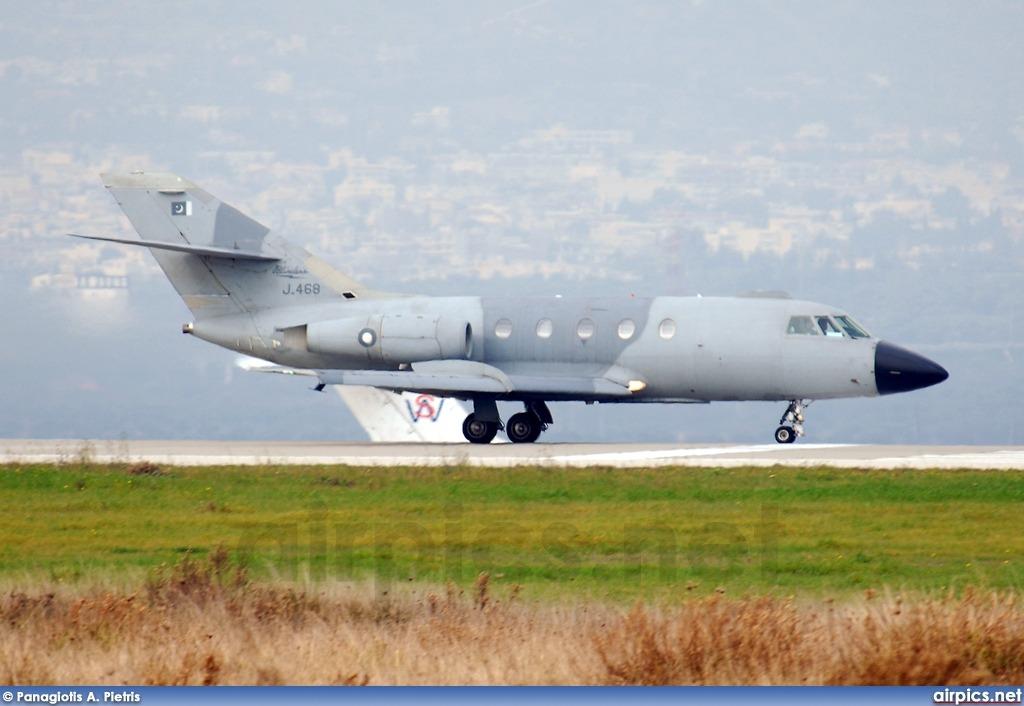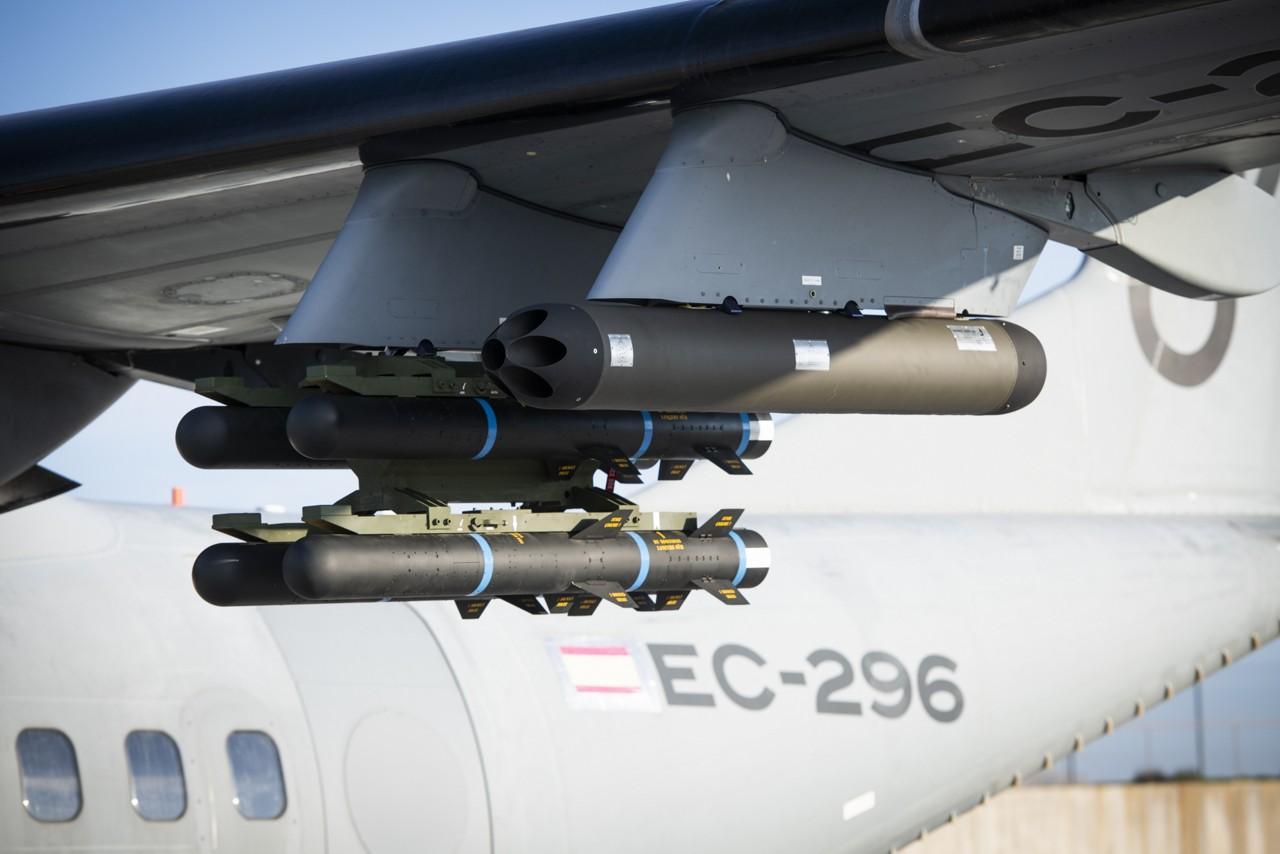



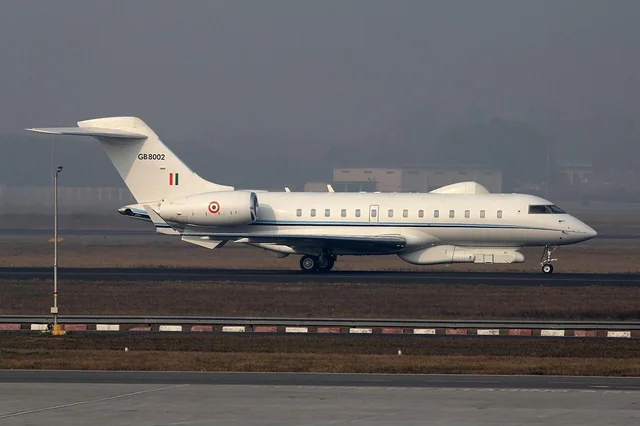

Two modified Bombardier Global 5000 aircraft, tail numbers GB8001 and GB8002, operate from Indira Gandhi International Airport in New Delhi under the Airborne Research Center (ARC), the aviation branch of India’s external intelligence agency, R&AW. The aircraft are operated by the Indian Air Force and configured as IAI ELTA ELI-3150 airborne intelligence, surveillance, and reconnaissance platforms.
Platform Overview
The ELI-3150 is based on the Global 5000 business jet, chosen for its range, altitude, and endurance. The aircraft carries a crew of three and a mission crew of six, each seated at dedicated operator consoles. Two Rolls-Royce BR710A2-20 turbofan engines power the aircraft to a maximum speed of Mach 0.88 and a service ceiling of 51,000 ft. Its operational endurance is eight to ten hours, providing wide-area surveillance coverage across large regions.
ELM-2055DX SAR/GMTI Radar
The primary sensor is the ELM-2055DX, a Ku-band synthetic aperture radar with ground moving target indication capability. The system can generate wide-area strip imagery covering more than 2,000 km² per hour and high-resolution spot imagery for stationary targets. GMTI modes detect and track slow-moving vehicles across diverse terrain. Depending on configuration, detection standoff extends from 60 km to 80 km, allowing persistent surveillance under all weather conditions.
WASP Wide-Area EO/IR System
The WASP (Wide Area Surveillance Payload) complements the radar with simultaneous visible and mid-wave infrared imagery. The sensor weighs 6.5 kg excluding its digital processing unit. Ground resolution is 0.15 m at 6,000 ft and 0.5 m at 20,000 ft with area coverage of 2 km² and 20 km² respectively. The field of view is 52° × 48°, and the scanning rate is programmable up to 1.5 Hz. Each pixel is geo-referenced through an integrated inertial navigation system, and data is transferred via a USB 3.0 interface.
ELK-1882 NC² Communications Suite
Mission connectivity is handled by the ELK-1882 NC² communications system. It provides both line-of-sight and beyond-line-of-sight links using two SATCOM domes, LOS datalinks, and ARC-840 software-defined radios. The radios employ AES-256 encryption and support high-bandwidth data transfer for radar, EO/IR, and SIGINT payloads. Frequency-hopping and spread-spectrum techniques provide resistance against jamming, while integrated coexistence logic prevents interference with other onboard transmitters.
ELK-7065 Dart RF Location System
The ELK-7065 Dart is a compact V/UHF 3D RF location system that identifies the origin of hostile communications. It uses a single vector-sensor antenna capable of calculating both azimuth and elevation from received signals. Unlike conventional systems that require multiple antennas or platforms, Dart provides instantaneous geo-location from one aircraft. It can detect short burst push-to-talk transmissions in urban and open environments and display emitter positions in real time on the operator console.
ELL-8385 ESM/ELINT System
The ELL-8385 provides electronic support and electronic intelligence capability. It intercepts, classifies, and geolocates radar transmissions from airborne, maritime, and ground emitters. The system is designed to operate in dense electromagnetic environments and to handle modern agile radars with short dwell times. The collected data supports real-time situational awareness and the generation of national electronic order of battle records.
Operational Role
The ELI-3150 gives India a long-range, multi-sensor ISR capability that integrates radar, electro-optical, and electronic intelligence functions into a single airborne platform. It fills the gap between satellite reconnaissance and tactical UAV coverage, offering continuous monitoring over borders and littoral zones. Operating from Delhi, the aircraft can reach key theaters across the subcontinent without refueling, supporting both intelligence collection and mission support roles.
Labelled Diagram/Infographic