

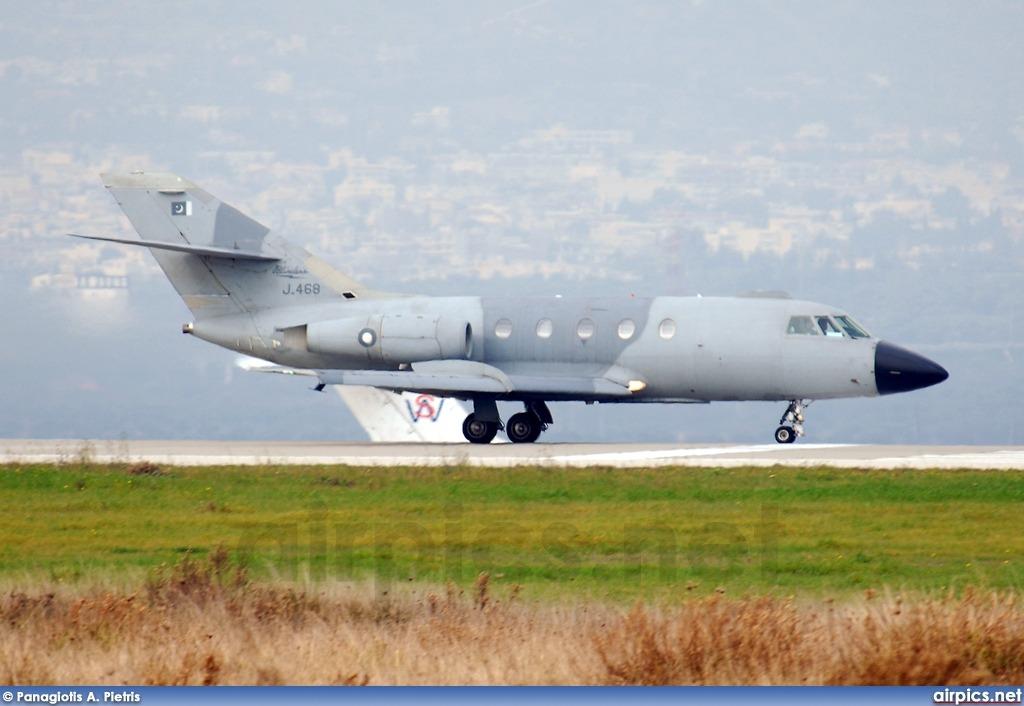

In modern air warfare, control of the electromagnetic spectrum is often the difference between dominance and defeat. The Pakistan Air Force (PAF) has quietly built an ecosystem of specialized platforms that allow it to sense, disrupt, and manipulate the spectrum over South Asia. This triad of airborne electronic warfare assets — the DA-20 (Electronic Attack) Lodhi, the DA-20 (Electronic Inetelligence) ‘Iqbal’, and the DA-20 (Communication Intelligence) ‘Mir’ variant, forms the core of No. 24 Electronic Warfare Squadron, known as the “Blinders.”

Fleet Review
In the Pakistan Air Force (PAF), spectrum warfare isn’t handled by a single multipurpose platform. It’s executed through precision specialization.
No. 24 Electronic Warfare Squadron — the Blinders — employs three mission-specific DA-20 Falcons:
- DA-20 Iqbal — ELINT platform for electronic order of battle (EOB) mapping.
- DA-20 Mir — COMINT platform for signal interception and exploitation.
- DA-20 Lodhi — Electronic-Attack (EA) platform for jamming and denial operations.
Each aircraft is built on the Dassault Falcon 20 business-jet airframe, chosen for endurance, stability, and a low-profile civilian appearance. Together they form an airborne electromagnetic warfare (EW) architecture that is persistent, flexible, and lethal in execution.
“We’ve had the Blinders since the IAF was learning for walk.”
The statement isn’t bravado — it’s doctrine. Pakistan’s investment in airborne EW predates India’s current networked warfare drive. The Blinders exist not for display, but to dominate the electromagnetic layer that every modern engagement begins and ends in.
DA-20 Iqbal — ELINT: Mapping the Electromagnetic Skeleton
Mission Role: Long-range Electronic Intelligence (ELINT) collection and emitter geolocation.
Key Systems: Distributed antenna fairings, high-power surveillance radar in a redesigned nose section.
Iqbal functions as the electromagnetic cartographer. It detects, intercepts, and catalogues enemy radars and emitters across vast regions, building Pakistan’s electronic order of battle in real time. The aircraft’s mission suite enables wide-area scanning, long-baseline geolocation, and rapid signature cataloging — the digital groundwork for both defensive and offensive EW operations.

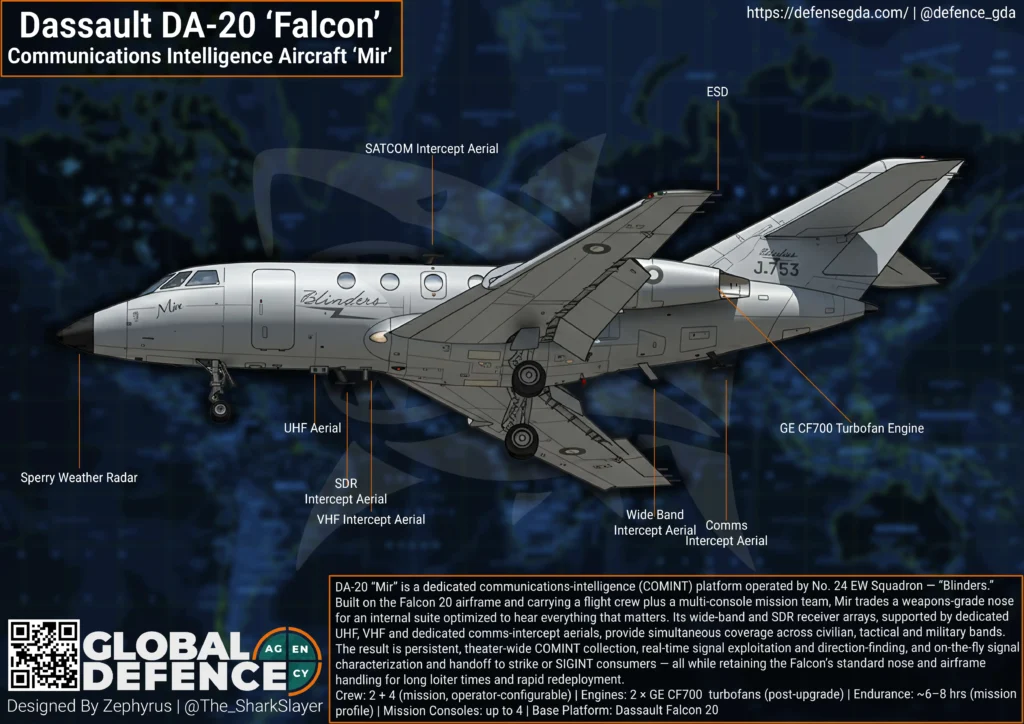
DA-20 Mir — COMINT: Listening, Decoding, Exploiting
Mission Role: Communications Intelligence (COMINT) and spectrum analysis.
Key Systems: Wide-band and SDR receiver arrays, UHF/VHF aerials, dedicated comms intercept antennas; retains the Falcon’s original nose.
Mir is designed for the invisible war of information. It collects, isolates, and decodes communication signals across tactical, civilian, and military bands. Its wideband receiver array allows simultaneous collection from multiple emitters, while onboard signal processors perform protocol recognition, voice/data decoding, and direction finding.
Where Iqbal identifies who and where, Mir exposes what and how. The aircraft serves as a flying data furnace — converting intercepted transmissions into actionable intelligence for theater commanders and strike assets.
DA-20 Lodhi — Electronic Attack: Shaping the Spectrum
Mission Role: Electronic Attack (EA) and suppression of enemy sensors and communications.
Key Systems: Distributed Frequency-Reconfigurable Modular (DFRM) jammers, emitter fairings, and a modified high-power radar for targeting and cueing.
Lodhi is the Blinders’ active element. It delivers selective, directional jamming across multiple bands — from tactical to command-level networks. The aircraft supports stand-off strike missions, suppression of enemy air defenses (SEAD), and real-time electronic attack coordination.
By integrating signal geolocation from Iqbal and COMINT inputs from Mir, Lodhi enables surgical disruption of critical nodes rather than brute-force blanket jamming. The result: precision spectrum denial without uncontrolled escalation.

Networked Spectrum Warfare
The Blinders’ DA-20 fleet operates as a distributed, layered system:
- Detection: Iqbal scans and maps emitters, identifying frequency, modulation, and location.
- Exploitation: Mir intercepts communications and extracts usable intelligence.
- Action: Lodhi conducts targeted jamming or suppression based on fused intelligence.
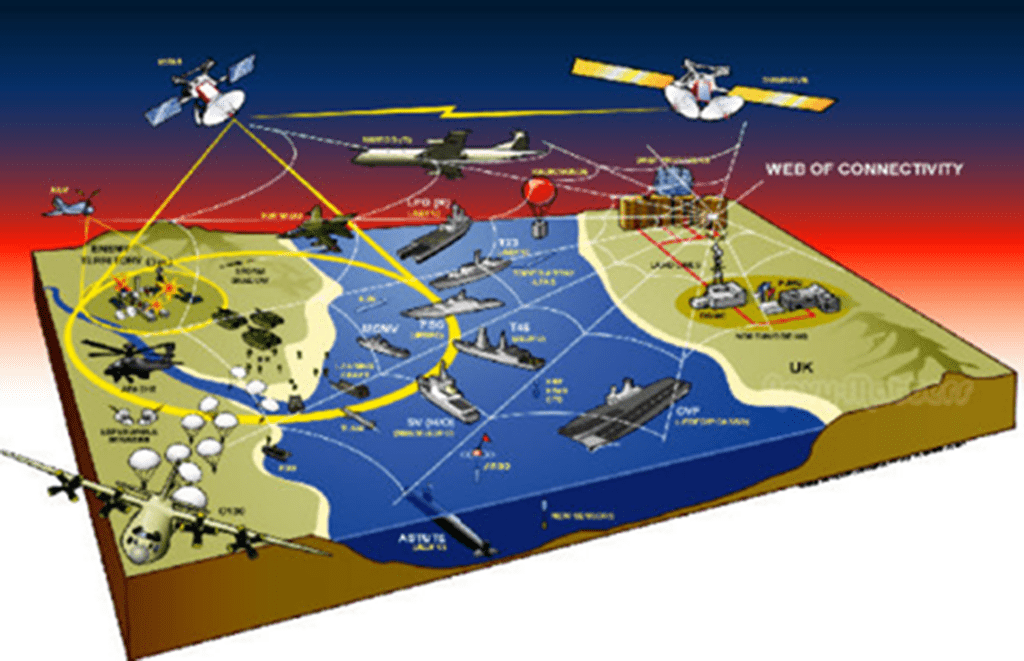
Through data links and ground fusion centers, the triad supports fast sensor-to-shooter chains across Pakistan’s integrated ISR and strike networks. Each aircraft can function independently, but their true potential appears when operated as a synchronized package.
Dominance in the South Asian Electromagnetic Battlespace
In South Asia, where dense RF congestion and overlapping radar coverage define the environment, spectrum dominance depends on precision, not brute power. The Falcon-based Blinders excel here:
- Persistent Theatre Awareness: Long loiter times give uninterrupted monitoring of border corridors and maritime zones.
- Task-Specific Efficiency: Each airframe is optimized for one role — collection, exploitation, or attack — reducing system interference and maximizing mission focus.
- Rapid Redeployment: The Falcon 20’s civilian profile and maintenance simplicity allow flexible basing and quick turnaround between sorties.
- Escalation Control: Selective, reversible jamming gives commanders the ability to apply pressure without open kinetic engagement.
During recent Pakistan-India standoffs, the Blinders’ data feeds were central to command-level situational awareness. ELINT and COMINT fusion enabled early detection of adversary intent, while Lodhi’s EA packages were used to suppress communications in contested corridors — short bursts, precise timing, zero collateral interference.
All data is from public sources, images intuition.