



Introduction to a New Era of Stand-Off Lethality
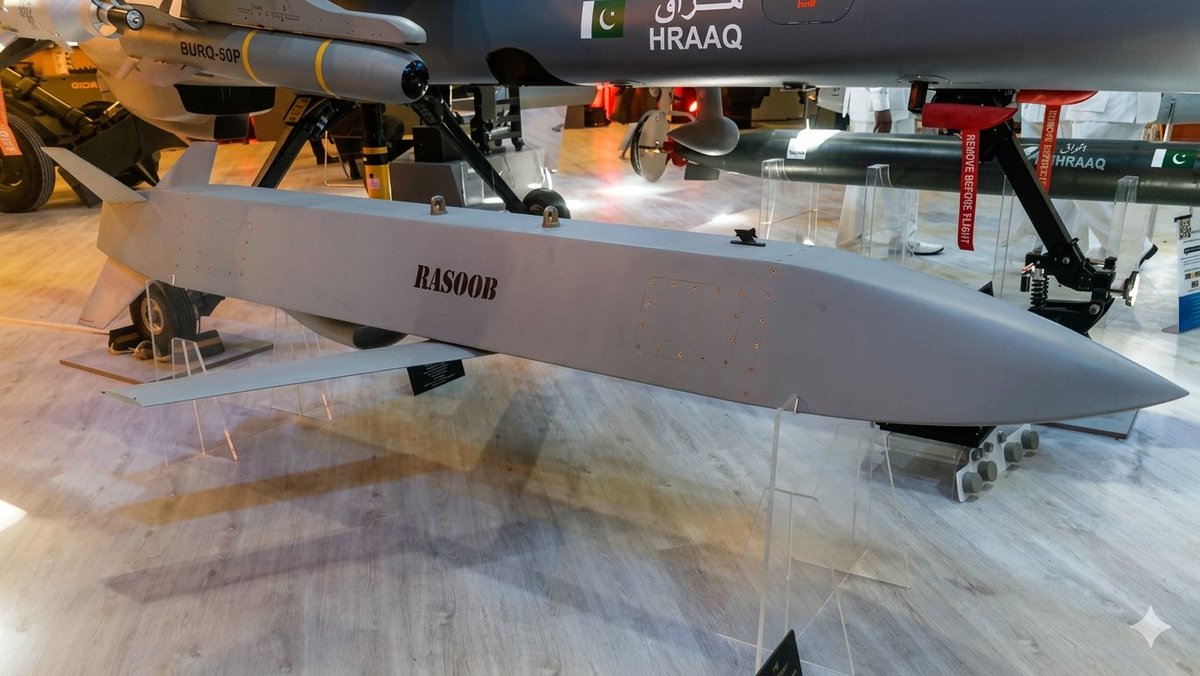
The modern aerospace and maritime operational environments have undergone a profound and irreversible transformation over the last decade. This evolution is driven by the rapid proliferation of advanced integrated air defense systems (IADS), multi-layered naval defense networks, and the overarching necessity for distributed lethality across a highly contested battlespace. In this increasingly complex tactical matrix, the strategic utility of heavily armed, exquisite, and expensive delivery platforms, such as heavy multi-role fighters and large surface combatants, is continuously challenged by the advent of relatively low-cost, highly precise, and stealthy stand-off munitions. It is within this complex geopolitical and technological landscape that the military apparatus of Pakistan has fundamentally recalibrated its approach to precision strike and long-range power projection. The culmination of this doctrinal and technological shift was prominently displayed at the 2024 International Defence Exhibition and Seminar (IDEAS 2024) held in Karachi, where Global Industrial Defence Solutions (GIDS) officially unveiled the Rasoob-250 air-launched cruise missile.1
Marketed as a lightweight, high-precision, subsonic air-launched cruise missile (ALCM), the Rasoob-250 represents far more than an incremental upgrade or a simple addition to Pakistan’s existing munitions inventory. It embodies a meticulously calculated strategic pivot toward low-observable, terrain-hugging, and sea-skimming kinetic capabilities.3 These attributes are specifically engineered to neutralize high-value adversarial targets while minimizing the risk of detection and interception to both the munition itself and the platform from which it is launched.3 Historically, the Pakistani military’s guided munitions ecosystem, particularly its cruise missile portfolio, was heavily weighted toward the requirements of strategic deterrence.4 Weapons such as the Hatf-VIII (Ra’ad) and its subsequent derivatives were primarily engineered for deployment from dedicated fast-jet platforms, carrying massive payloads designed to deliver strategic or even nuclear effects against heavily fortified command centers, massed armor formations, and ballistic missile launchers.4
However, the introduction of the Rasoob-250 signifies a significant maturation of Pakistan’s domestic defense industrial base, marking a deliberate transition from an exclusive reliance on strategic deterrence toward the mastery of conventional, tactical, precision-strike warfare.2 By hyper-optimizing the missile’s weight, structural geometry, and aerodynamic dimensions, the aerospace engineers behind the project have created a weapon that explicitly prioritizes pinpoint accuracy and platform versatility over raw explosive yield.2 This specific design philosophy allows the Rasoob-250 to be deployed not only from traditional fighter aircraft like the JF-17 Thunder but also from slower, lighter, and non-traditional platforms. These include unmanned combat aerial vehicles (UCAVs), long-endurance maritime patrol aircraft (MPA), and rotary-wing assets, thereby democratizing the capability for long-range precision strikes across the entirety of the armed forces.2
This comprehensive report provides an exhaustive analysis of the Rasoob-250, examining its technical specifications, aerospace engineering features, advanced guidance architecture, and terminal lethality. Furthermore, the analysis evaluates the missile’s platform integration potential, its prospective role in a unified tri-service operational model, and its profound implications for the regional strategic balance. Particular attention is devoted to the missile’s application within anti-access and area-denial (A2/AD) operations in the Arabian Sea, where asymmetric naval warfare dictates the pace of tactical innovation.6 By contextualizing the Rasoob-250 within Pakistan’s broader, rapidly expanding munitions ecosystem, which includes a myriad of new loitering munitions, small diameter bombs, and advanced ground-launched systems, this analysis decodes the technological trajectories and strategic calculations defining the future of South Asian military dynamics.2
The Strategic Context and the Evolution of the Air Weapons Complex Lineage
To fully understand the operational significance and the engineering pedigree of the Rasoob-250, one must first examine the industrial architecture responsible for its inception. The missile is the direct product of Pakistan’s deeply entrenched and increasingly self-reliant defense manufacturing ecosystem. This ecosystem is spearheaded by the National Engineering & Scientific Commission (NESCOM), a state-owned defense conglomerate that oversees a vast network of research and development bureaus.2 Within the NESCOM umbrella, the Air Weapons Complex (AWC) has historically served as the vanguard for airborne kinetic solutions and guided munitions.2 The Rasoob-250 is recognized as the third major air-launched cruise missile developed by Pakistan, directly inheriting the engineering legacy, metallurgical research, software algorithms, and aerodynamic data generated by the Ra’ad-I, Ra’ad-II, and the Taimoor ALCM programs.2
The Ra’ad family of missiles, bearing the military designation Hatf-VIII (Target-8), established Pakistan’s foundational competency in stand-off strike capabilities.5 The original Ra’ad ALCM was designed as a subsonic weapon capable of delivering a 450 kg ammunition load, with an estimated blast yield scalable from 5 to 12 kilotons of TNT in strategic configurations, over a range of 350 to 550 kilometers.5 The second derivative, the Ra’ad-II, pushed this operational envelope further, extending the stand-off range to 600 kilometers.5 These systems were indispensable for maintaining a credible minimum deterrence posture, ensuring that Pakistan possessed a survivable second-strike capability from the air. However, their immense mass, exceeding 1,100 kg, and highly specific aerodynamic integration requirements restricted their deployment strictly to dedicated, heavy-lift fast-jet platforms, specifically the Pakistan Air Force’s legacy Mirage III/V strike fighters and certain configurations of the F-16 fleet.5
The subsequent development of the Taimoor ALCM marked the critical initial phase of adapting these strategic technologies for conventional anti-ship and land-attack roles. The Taimoor provided a conventional guided strike capability, with an export variant deliberately capped at a 290-kilometer stand-off range to comply with international technology transfer thresholds and the Missile Technology Control Regime (MTCR) guidelines.4 Yet, even with the Taimoor entering service, the Pakistani military recognized a distinct and critical operational void. Neither the heavy Ra’ad nor the Taimoor could address the burgeoning requirement for an ultra-compact, lightweight, stealth-optimized munition capable of being carried by platforms with substantially lower payload capacities.6
The Rasoob-250 project, internally designated during its research phase as “PAF Project Rasoob,” was initiated specifically to fill this capability gap.2 It reflects a deliberate, long-term strategy by the Pakistan Air Force (PAF) and the broader military establishment to proliferate precision strike capabilities beyond the traditional confines of high-end tactical aviation. By designing a weapon that can be launched from almost any airborne node, the AWC has created a system that fundamentally alters the cost-to-kill ratio in conventional conflicts.2
Furthermore, the genesis and rapid deployment of the Rasoob-250 are inextricably linked to Pakistan’s overarching drive for strategic independence and indigenous subsystem integration.10 This strategic imperative is most prominently illustrated by the ongoing avionics and weapons upgrades to the JF-17 Thunder combat aircraft fleet.10 Under a comprehensive modernization initiative designated as the “Operational Capability Upgrade” (OCU) or “PFX Alpha,” the PAF is systematically overhauling the radar, electronic warfare suites, and mission computers of the JF-17.10 While the primary goal of PFX Alpha is capability enhancement, a secondary, yet equally vital, objective is to establish absolute autonomy in the management of the aircraft’s weapon systems.10 The JF-17 was originally developed through a joint venture with China, and while this partnership has been highly successful, Pakistan seeks to reduce its reliance on foreign original equipment manufacturers (OEMs) for critical munitions.10 By integrating fully domestic weapons like the Rasoob-250 and the AZB-81LR Small Diameter Bomb into the JF-17’s operational flight program, the PAF mitigates the risks associated with geopolitical supply chain disruptions, avoids end-user restrictions, and definitively proves the maturity of its domestic aerospace sector.10
Aerodynamic Architecture, Stealth Engineering, and Kinetic Profile
The engineering architecture of the Rasoob-250 reflects a highly sophisticated application of modern radar theory, computational fluid dynamics, and terminal ballistics optimization. At the very core of the missile’s design philosophy is an absolute commitment to low-observability (LO) and multispectral stealth.2 The airframe of the Rasoob-250 has been meticulously crafted with an angular, faceted geometry, a stark and deliberate departure from the traditional cylindrical, tube-like bodies that characterized legacy cruise missiles of the Cold War era.2 This specific structural shaping is the foundational element of radar cross-section (RCS) reduction.2 When the electromagnetic waves emitted by an enemy radar system strike a traditional cylindrical object, the energy is scattered in multiple directions, but a significant portion reflects directly back to the radar receiver, creating a large, easily trackable blip on the operator’s screen. Conversely, the faceted, sharp-angled edges of the Rasoob-250 are mathematically aligned to deflect radar energy away from the source receiver, dissipating the signal into the surrounding atmosphere and rendering the missile nearly invisible to conventional radar systems.2
In contemporary naval and air-defense environments, the detection and tracking range of a threat is directly proportional to its RCS. By minimizing this electromagnetic signature, the Rasoob-250 inherently shrinks the engagement envelope of hostile surface-to-air missiles (SAMs) and close-in weapon systems (CIWS).6 This stealth characteristic is further augmented by the missile’s physical dimensions. While the exact volumetric measurements remain classified by GIDS, the system is universally described in defense analyses as highly compact, deliberately trading payload volume and fuel capacity for a drastically reduced visual, acoustic, thermal, and electromagnetic footprint.2
The physical specifications and performance metrics of the Rasoob-250 illustrate a highly optimized kinetic platform designed for surgical strikes. The weapon features a total system mass of merely 285 kg, a figure that critically includes its launch booster.2 Within this incredibly light airframe, the warhead itself accounts for 75 kg, configured specifically as a semi-armor-piercing payload.2 This specific warhead-to-mass ratio is indicative of a highly specialized tactical philosophy. Instead of relying on a massive, general-purpose blast-fragmentation warhead to destroy a target through sheer explosive overpressure, as is the case with the massive 450 kg payloads of the Ra’ad series 5, the Rasoob-250 is engineered for kinetic penetration. The hardened casing of the 75 kg warhead is designed to punch through the reinforced steel bulkheads of surface combatants, the concrete reinforcement of command bunkers, or the protective layers of radar installations before detonating internally.2 An internal detonation within the confined space of a ship’s hull or a bunker channels the explosive energy destructively through the structure, multiplying the lethal effect and ensuring a mission kill with a fraction of the explosive material.
Comparative Specifications and Technical Benchmarking
To fully appreciate the engineering parameters and the generational leap represented by the Rasoob-250, it is highly instructive to compare its attributes against legacy Pakistani systems, as well as international equivalents operating in the same specific tactical niche. A primary point of comparison is the Turkish Roketsan Çakır missile, which shares a remarkably similar operational design philosophy and physical footprint.2
| Technical Specification / Feature | GIDS Rasoob-250 (Pakistan) | AWC Hatf-VIII Ra’ad (Pakistan) | Roketsan Çakır (Turkey) |
| System Classification | Lightweight Stealth ALCM | Strategic/Heavy ALCM | Lightweight Stealth Cruise Missile |
| Total System Mass | 285 kg (inclusive of booster) | ~1,100 kg | 275 kg |
| Warhead Mass | 75 kg | 450 kg | 70 kg |
| Warhead Configuration | Semi-Armor-Piercing | Conventional/Strategic Yield | High Explosive/Semi-Armor Piercing |
| Maximum Operational Range | 350 km | 350 km – 550 km | 150+ km |
| Cruising Velocity | Mach 0.7 | ≤ 0.8 Mach (980 km/h) | High Subsonic (Mach 0.75 – 0.85) |
| Terminal Accuracy (CEP) | < 5 meters | Undisclosed (High Precision) | < 3 meters |
| Primary Launch Platforms | UCAVs, MPA, Helos, JF-17 | Heavy Strike Fighters (Mirage, F-16) | UCAVs (Akinci, Aksungur), Fighters |
| Electromagnetic Signature | Low-Observable (Faceted/Angular) | Conventional/Moderate RCS | Low-Observable |
| Guidance Architecture | INS, GNSS, TERCOM, DSMAC, IIR | INS, GNSS, TERCOM, Optical | INS, GNSS, Radar Altimeter, IIR/RF |
The data presented above elucidates the dramatic reduction in mass achieved by the AWC aerospace engineers.2 Despite weighing less than a third of the legacy Ra’ad missile, the Rasoob-250 maintains a highly impressive standoff range of 350 kilometers.2 This extended range, achieved within such a tight weight constraint, is a testament to highly efficient aerodynamic lift generation and a highly optimized propulsion system. The missile cruises at a subsonic velocity of exactly Mach 0.7.8
The selection of a subsonic cruising speed over a supersonic profile is a deliberate, highly calculated tactical compromise. While supersonic missiles, such as the Mach-3 capable CM-302 or the SMASH anti-ship ballistic missile currently operated by the Pakistan Navy 7, drastically compress the reaction time available to enemy defenders, they also incur severe penalties in terms of stealth and range. Supersonic flight generates immense thermodynamic friction as the airframe pushes against the atmosphere, creating a massive infrared (IR) signature that can be easily tracked from hundreds of kilometers away by modern space-based early warning satellites and naval electro-optical sensors. Furthermore, pushing an airframe past the sound barrier requires substantially more fuel, which in turn necessitates larger, heavier missile bodies, rendering them impossible to mount on lightweight drones or helicopters. By cruising steadily at Mach 0.7, the Rasoob-250 maximizes the specific fuel consumption of its internal engine, enabling the 350 km range within a 285 kg envelope, while simultaneously keeping its thermal bloom virtually negligible.2 This thermal discipline preserves the missile’s low-observable characteristics, ensuring that it remains hidden from both radar and infrared tracking systems until the final moments of its flight.3
Advanced Navigation, Target Discrimination, and the Terminal Kill Chain
The efficacy of a semi-armor-piercing warhead weighing only 75 kg is entirely dependent on extreme, surgical precision.2 If such a relatively small weapon impacts an unarmored, non-critical section of a warship, such as a storage locker or an empty crew compartment, it may pass entirely through the vessel’s superstructure without achieving a functional mission kill. Consequently, the Rasoob-250 relies on a highly advanced, multi-layered guidance and navigation architecture designed to ensure a Circular Error Probable (CEP) of less than 5 meters.2
The flight profile of the Rasoob-250 is divided into three distinct phases: the launch phase, the midcourse transit, and the terminal engagement phase. During the midcourse phase, the missile must navigate over hundreds of kilometers of potentially featureless ocean or complex, heavily defended terrestrial terrain without emitting any signals that could give away its position. To achieve this silent navigation, the primary guidance suite utilizes a highly accurate Inertial Navigation System (INS) continuously updated and corrected by Global Navigation Satellite System (GNSS) inputs.9
However, modern near-peer conflicts are characterized by intense electronic warfare (EW). Satellite signals can be easily spoofed, degraded, or entirely jammed by dedicated EW platforms. Recognizing this vulnerability, the developers have equipped the Rasoob-250 with autonomous, non-jammable navigation technologies: Terrain Contour Matching (TERCOM) and Digital Scene Matching Area Correlation (DSMAC).9 TERCOM utilizes a downward-facing radar altimeter to constantly measure the topography beneath the missile, comparing these real-time elevation profiles against pre-loaded, high-resolution digital maps stored in the missile’s onboard memory.9 DSMAC functions similarly but utilizes optical or infrared sensors to compare visual landmarks, such as coastlines, river bends, or specific intersections, against pre-loaded satellite imagery.9 These systems guarantee that the missile remains perfectly on course even in a completely GNSS-denied environment, immune to the most sophisticated electronic jamming efforts.9
Crucially, this navigation architecture facilitates a highly evasive sea-skimming and terrain-hugging flight profile.3 Over land, the missile flies mere meters above the topography, dynamically adjusting its altitude to use hills, valleys, and forests to physically mask its approach from ground-based early warning radars.3 Over the ocean, the sea-skimming capability allows the missile to drop down and fly just a few meters above the wave crests.3 Because radar waves travel in straight lines and cannot bend around the curvature of the Earth, a physical phenomenon known as the “radar horizon” is created. A missile flying at 5 meters above sea level will remain completely hidden behind the curvature of the Earth, invisible to a ship’s surface search radar, until it breaks the radar horizon at a distance of approximately 20 to 30 kilometers. At a cruising speed of Mach 0.7, this affords the defending vessel slightly over a minute to detect the tiny radar cross-section, track the incoming threat, formulate a firing solution, and launch interceptors.3
As the Rasoob-250 breaches the radar horizon and enters the terminal engagement phase, it requires a highly sophisticated mechanism to lock onto the specific target, discriminate it from civilian vessels or decoys, and select the optimal point of impact. For this critical task, the missile is reportedly equipped with an advanced Imaging Infrared (IIR) seeker.8 The utilization of an IIR seeker over a traditional active radar seeker is a masterstroke in stealth optimization. Active radar seekers emit pulses of electromagnetic energy to find their targets; these emissions act like a flashlight in a dark room, instantly detected by a warship’s Electronic Support Measures (ESM), which then triggers the deployment of radar-reflecting chaff and active electronic jamming.
Conversely, an IIR seeker is entirely passive; it emits absolutely zero energy.11 Instead, it “sees” the thermal contrast between the target and the surrounding cold ocean or terrain.11 Modern IIR seekers do not merely look for a hot spot; they process high-resolution thermal images, allowing onboard artificial intelligence to compare the thermal silhouette of the target against a pre-programmed database of enemy warships and installations. This enables the Rasoob-250 to intelligently ignore burning chaff and thermal flares designed to distract it.11 More importantly, the AI-driven IIR seeker allows the missile to target specific, critical vulnerabilities on a ship, such as the bridge, the engine exhaust stacks, the combat information center, or the Vertical Launch System (VLS) cells.8 This surgical terminal precision guarantees disproportionate structural and functional damage to high-value assets, validating the use of the smaller 75 kg kinetic penetrator.2
Platform Agnosticism: The Democratization of Air Power and Force Multiplication
One of the most revolutionary tactical aspects of the Rasoob-250 is its absolute platform versatility.2 Historically, the carriage and deployment of 350-kilometer stand-off munitions were the exclusive, heavily guarded domain of high-end, multi-role fighter jets. The immense weight and drag of legacy systems like the Ra’ad required robust underwing hardpoints and considerable engine thrust, limiting the number of platforms capable of projecting such strategic power.2 By aggressively reducing the total mass of the Rasoob-250 to 285 kg, GIDS has effectively democratized long-range strike capabilities, spreading them across the Pakistani military’s diverse and expansive aviation fleets.2 This transforms previously benign surveillance, utility, or transport assets into formidable, long-range strike platforms.2
Unmanned Combat Aerial Vehicles (UCAVs) and Persistent Overmatch
The most profound operational integration of the Rasoob-250 is with Pakistan’s indigenously developed Shahpar-III drone, a combination that represents a paradigm-shifting force multiplier for modern, network-centric warfare.3 The Shahpar-III is a state-of-the-art Medium-Altitude Long-Endurance (MALE) UAV capable of operating at high altitudes for up to 30 continuous hours.3 Equipped with a sophisticated suite of advanced electro-optical/infrared (EO/IR) sensors, Synthetic Aperture Radar (SAR), beyond-line-of-sight satellite communication (SATCOM), and AI-based targeting systems, the Shahpar-III effectively acts as both the intelligence-gathering sensor and the kinetic shooter.3
When armed with the Rasoob-250, a single Shahpar-III UCAV can loiter deep within friendly airspace, or far out over the open ocean, for more than a day, completely unconstrained by the physiological limitations of human pilot fatigue.2 Upon autonomously identifying a high-value maritime or land target through its high-resolution SAR radar, which can see through clouds and darkness, the drone can instantaneously launch the cruise missile, striking targets up to 350 km away from its loitering position.2 This combination provides the armed forces, and especially the Pakistan Navy, with a highly cost-effective, persistent, and long-range strike and surveillance capability. It allows for a continuous threat presence over vast geographic areas that would be prohibitively expensive to maintain using standing combat air patrols (CAP) with manned fighter jets.2
Rotary Wing Assets and Maritime Patrol Aircraft Integration
Beyond unmanned systems, the Rasoob-250 is explicitly designed with the aerodynamic tolerances required for integration with slower, heavier-lift maritime assets.2 The missile can be launched from the Pakistan Navy’s venerable Sea King helicopters, instantly transforming these traditional anti-submarine warfare (ASW) or utility rotary-wing aircraft into highly potent anti-surface warfare (ASuW) platforms capable of sinking destroyers from hundreds of kilometers away.2 Furthermore, the missile is perfectly tailored for deployment from the RAS-72 Sea Eagle maritime patrol aircraft and the highly anticipated “Sea Sultan” platform currently under development.2
The Sea Sultan represents a massive leap in Pakistan’s naval aviation capabilities. Based on the airframe of the Embraer Lineage 1000E commercial jetliner, this platform boasts an extraordinary extended ferry range exceeding 4,000 nautical miles.7 This range allows for deep-ocean intelligence, surveillance, and reconnaissance (ISR) missions across the entirety of the Indian Ocean Region. A scaled mockup of the Sea Sultan displayed to defense analysts indicated the structural capacity to carry up to four anti-ship missiles on external hardpoints.7 The Rasoob-250’s incredibly compact dimensions and low weight make it an ideal, perhaps optimal, candidate for this role.7 With four low-observable, 350 km-range cruise missiles equipped on a platform capable of crossing the Indian Ocean and remaining on station for hours, the Pakistan Navy achieves an unprecedented level of strategic reach. This effectively pushes the maritime threat axis far beyond Pakistan’s immediate coastal waters and exclusive economic zone (EEZ), directly threatening adversary supply lines and carrier battle groups in the deep ocean.7
Manned Fighter Jet Integration and “Shoot-and-Scoot” Salvo Tactics
While heavily optimized for slower, persistent platforms, the Rasoob-250 remains an exceptionally lethal asset for the Pakistan Air Force’s frontline manned fighter fleet, specifically the JF-17 Thunder.6 As previously noted, the missile is a core kinetic component of the PFX Alpha indigenous weapons integration upgrade.10 Because the missile weighs a mere 285 kg, a single JF-17 Thunder could theoretically carry multiple Rasoob-250s across its various underwing and fuselage hardpoints without suffering severe aerodynamic drag penalties or critically compromising its thrust-to-weight ratio for defensive maneuvering.6
This multi-carriage capability enables a single, relatively light fighter aircraft to execute massive “salvo” launches.6 A flight of four JF-17s could ripple-fire over a dozen Rasoob-250 missiles simultaneously at an enemy naval flotilla or a dispersed ground convoy, before immediately executing a hard turn and retreating outside the enemy’s air-defense intercept envelope.6 This “shoot-and-scoot” mobility is a central tenet of modern air warfare, ensuring platform survivability while simultaneously overwhelming the target with multiple, stealthy, sea-skimming threats arriving from different vectors in a coordinated time-on-target strike.7
The Tri-Service Doctrine: The “Naval Strike Missile” Paradigm
To grasp the full strategic intent behind the development of the Rasoob-250, the munition must be viewed through the lens of institutional and doctrinal consolidation. Prominent defense analysts and military publications have drawn direct, compelling parallels between the Rasoob-250 and the highly successful Norwegian-developed Kongsberg Naval Strike Missile (NSM), describing the Rasoob as Pakistan’s indigenous equivalent to the NSM’s tri-service deployment model.16
Historically, the military branches of Pakistan operated highly fragmented and disparate inventories of anti-ship and land-attack cruise missiles, driven by branch-specific procurement programs.16 The Pakistan Navy utilized the subsonic Harbah and Zarb missiles for its coastal defense batteries and fast attack craft, the supersonic CM-302 missiles on its modern Type 054A/P Tughril-class frigates, alongside legacy Western systems like the Harpoon and Exocet.7 Simultaneously, the Pakistan Air Force maintained its own bespoke ALCMs, such as the Taimoor and Ra’ad.2 The Pakistan Army operated the ground-launched Babur cruise missiles.18 This deeply fragmented procurement strategy inherently resulted in complex, redundant logistical supply chains, highly disparate training regimens for technicians and operators, and a distinct lack of interoperability and data-sharing between the services during joint operations.16
The Rasoob-250 offers a centralized, fully indigenously produced solution to this historical fragmentation.16 Much like how the Kongsberg NSM has been seamlessly adapted for launch from the decks of naval frigates, the backs of coastal battery trucks, and the internal weapons bays of F-35 fighter jets across various NATO militaries, the Rasoob-250 possesses the foundational modular architecture to serve as a universal, cross-domain effector for the Pakistani Armed Forces.16
If fully adopted under a tri-service model, the Pakistan Navy could deploy surface-launched variants of the Rasoob-250, fitted with slightly larger booster rockets for zero-speed launches, from the Vertical Launch System (VLS) cells or deck canisters of its upcoming Jinnah-class frigates, its MILGEM-class corvettes, or its Yarmouk-class offshore patrol vessels.7 Simultaneously, the Pakistan Army Rocket Force Command (ARFC) could field the missile on highly mobile transporter erector launchers (TELs) for hidden coastal defense or deep-inland precision strikes against staging areas, while the PAF continues to utilize the air-launched variant on its fighters and drones.
This level of standardization would yield massive strategic and economic benefits. It would drastically reduce the per-unit cost of the missile through massive economies of scale in manufacturing. It would simplify maintenance, overhaul, and software upgrade cycles across the military, and ensure that all three branches share a common, highly lethal tactical language and logistical footprint in the event of a high-intensity, multi-domain conflict.16
Anti-Access/Area-Denial (A2/AD) Architecture in the Arabian Sea
The operational deployment and strategic logic of the Rasoob-250 are inextricably linked to the maritime security dynamics of the Arabian Sea and the broader Indian Ocean Region (IOR).6 The strategic calculus in this specific maritime theater is defined by a profound and growing conventional asymmetry; the neighboring Indian Navy has embarked on a massive, heavily funded modernization and expansion program, acquiring new aircraft carriers, nuclear-powered ballistic missile submarines, and fleets of advanced air-defense destroyers equipped with long-range surface-to-air missiles like the Barak-8.7 Recognizing that it cannot compete in a symmetrical, hull-for-hull naval arms race, the Pakistan Navy has officially adopted an aggressive Anti-Access and Area-Denial (A2/AD) posture. This strategy is explicitly designed to make the coastal, offshore, and chokepoint waters of the Arabian Sea prohibitively dangerous and costly for hostile surface action groups to operate within.7
The Rasoob-250 is positioned as the kinetic, airborne linchpin of this A2/AD strategy.3 The architecture of an effective A2/AD network relies on combining persistent, multi-layered intelligence, surveillance, and reconnaissance (ISR) with highly survivable, long-range effectors.7 Over the past decade, Pakistan has steadily built the requisite sensor networks to enable this strategy. This includes the installation of coastal active electronically scanned array (AESA) radars, the integration of the RIBAT electronic support measures (ESM) suite for passive electronic intelligence gathering, and the implementation of secure, encrypted tactical data-link protocols such as “Link Green”.7 Furthermore, Pakistan has expanded its space-based ISR capabilities, recently launching the SUPARCO PRSC-EO3 satellite to complete its electro-optical constellation, and finalizing a $406 million deal for PIESAT Synthetic Aperture Radar (SAR) satellites, ensuring high-resolution, all-weather tracking of naval movements from low earth orbit.12
When an enemy flotilla is detected by these space-based sensors, coastal radars, or by a high-flying Shahpar-III UAV acting as a forward picket, the targeting coordinates can be instantaneously relayed via Link Green to a dispersed network of Rasoob-250 launch platforms.3 Because the Rasoob-250 boasts a 350-kilometer stand-off range, the launching platforms, be they JF-17s racing from inland airbases, Sea Sultan MPAs loitering hundreds of miles away, or camouflaged coastal batteries, can remain entirely safe, operating well outside the typical 100-to-150-kilometer engagement envelope of the enemy’s shipborne air-defense systems.2
Furthermore, the low financial cost and small physical form factor of the Rasoob-250 fundamentally alter the cost-exchange ratio of maritime engagements.3 In modern naval warfare, overwhelming a sophisticated IADS requires salvo saturation, the tactic of firing more missiles simultaneously than the enemy’s radar tracking channels and interceptor magazines can successfully process and engage.7 If a defending destroyer carries 32 interceptor missiles, an attacking force must mathematically fire 33 or more anti-ship missiles to guarantee at least one hit. Legacy heavy missiles like the Ra’ad, or imported supersonic missiles, are generally too expensive and exist in too few numbers to execute a massive, sustainable saturation attack.
However, because the Rasoob-250 allows for multiple munitions to be carried on lighter, cheaper platforms, a coordinated strike by a swarm of Shahpar-III drones and JF-17s could theoretically launch dozens of stealthy, sea-skimming Rasoob-250s simultaneously.3 As these low-observable missiles approach the target flotilla at Mach 0.7, hugging the wave crests and utilizing passive IIR seekers to avoid electronic detection, they present an incredibly complex and overwhelming threat picture.6 The defending warship would have mere seconds to detect the incoming swarm as it breaches the radar horizon, and would be forced to rapidly expend multi-million-dollar interceptors in a desperate attempt to shoot down relatively low-cost, indigenously produced cruise missiles.7 Even if the defense systems perform flawlessly and 90% of the missile swarm is successfully intercepted, the surviving 10%, carrying highly accurate 75 kg semi-armor-piercing warheads guided by AI-driven target discrimination, would be more than sufficient to incapacitate the critical combat systems, radars, and flight decks of a major surface combatant.2 This capability provides Pakistan with a highly credible, asymmetric strategic deterrence, ensuring that the Arabian Sea remains a highly contested and perilous sea space during any conventional conflict.3
Crucially, this surface denial strategy operates in symbiotic tandem with Pakistan’s parallel underwater modernization efforts, specifically the induction of the eight Hangor-class diesel-electric attack submarines currently being built in collaboration with China, which are equipped with advanced air-independent propulsion (AIP) technology.7 While the Hangor submarines, armed with heavyweight torpedoes and sub-launched cruise missiles, represent the ultimate stealthy, sub-surface threat, the Rasoob-250 provides the complementary airborne and surface-launched threat.12 Together, they create an insurmountable multi-domain dilemma for any opposing naval commander, who must simultaneously defend against silent submarines below and swarms of stealthy cruise missiles skimming the waves from above.12
Contextualizing the Munitions Ecosystem: The Shift to “Precision Over Yield”
To fully appreciate the doctrinal shift represented by the Rasoob-250, it is vital to analyze the missile not in a vacuum, but within the broader context of the vast array of munitions displayed by GIDS and other Pakistani defense manufacturers at the IDEAS 2024 exhibition. The Rasoob-250 is not an isolated research project; it is the flagship of a comprehensive, military-wide strategy to transition toward smaller, hyper-accurate, and digitally networked munitions.2
At the same exhibition, Qaswa Industries showcased the AZB-81LR, a Small Diameter Bomb (SDB) engineered as a stand-off weapon with an impressive glide range of 200 kilometers.8 Much like the Rasoob-250, the AZB-81LR prioritizes a radically reduced physical footprint, weighing only 250 lbs (approx. 113 kg), and utilizes an imaging infrared (IIR) seeker to achieve precision strikes against high-value targets.8 This allows a single aircraft to carry a dense payload of munitions, multiplying the number of targets it can engage in a single sortie.6
Simultaneously, GIDS unveiled an entire, highly developed spectrum of loitering munitions (kamikaze drones), further blurring the doctrinal lines between unmanned aerial vehicles and traditional cruise missiles.8
The Expanding Loitering Munition Portfolio
| Munition System | Propulsion Type | Maximum Range | Warhead Mass | Operational Role |
| Sarkash | Turbojet | 1,000 km | 50 kg | Strategic deep strike, >2 hours endurance 8 |
| Blaze 75 | Gasoline Engine | 500 km | 30 kg | Long-range strategic engagements, high endurance 8 |
| Blaze 50 | Undisclosed | 180 km | 20 kg | Medium-range attacks and tactical reconnaissance 8 |
| Blaze 25 | Electric Motor | 75 km | Unknown | Short-range anti-tank, ultra-low acoustic/thermal signature 8 |
The introduction of the turbojet-powered “Sarkash” drone, with its 1,000 km range and 50 kg warhead, demonstrates a clear capability to execute strategic, deep-inland strikes at a fraction of the cost of a traditional ballistic missile.8 Meanwhile, the “Blaze” series offers highly scalable lethality tailored to specific tactical environments. The Blaze 25’s use of an electric motor is particularly notable; it ensures a near-zero acoustic and thermal signature, making it virtually undetectable to infantry or armored columns until the moment of impact.8
On the ballistic and ground-launched front, the Pakistan Army Rocket Force Command (ARFC) continues to rapidly iterate on its guided multiple launch rocket systems (MLRS) and tactical ballistic missiles. This includes the operational deployment of the Fatah-II and Fatah-III, and the recent successful test-firing of the Fatah-IV, a 750 km-range ground-launched cruise missile/rocket equipped with advanced avionics, IIR seekers, and state-of-the-art navigational aids ensuring extreme precision over extended ranges.13 To protect these offensive assets, GIDS is also developing the FAAZ-SL, a highly mobile, short-range (20–25 km) surface-to-air missile system utilizing imaging infrared and radar guidance, designed specifically to counter stealth fighters and drones in a “shoot-and-scoot” operational profile.15
When analyzed collectively, these disparate systems reveal a unified, highly cohesive military doctrine. Whether it is the turbojet-powered Sarkash drone, the ground-launched Fatah series, the AZB-81LR glide bomb, or the Rasoob-250 ALCM, Pakistan’s defense industry is systematically equipping its armed forces to execute long-range, precision engagements that minimize reliance on massive explosive yields and expensive, vulnerable delivery platforms.2 This overarching “precision over yield” philosophy reduces the logistical burden of transporting massive munitions, significantly lowers the collateral damage footprint in complex environments, and most importantly, ensures that the destruction of specific, high-value military nodes, such as radar arrays, air defense batteries, and naval command centers, can be achieved with absolute, surgical certainty.2
The integration of these highly accurate, low-observable effectors into a cohesive battlefield management network is already well underway. The Pakistan Army’s ongoing implementation of the PAKFIRE and Rehobar digital battlefield management systems, alongside the broader Integrated Battlefield Management System (IBFMS), establishes the necessary sensor-to-shooter digital architecture to seamlessly direct weapons like the Rasoob-250 to their targets in real-time.12 By closing this complex kill chain entirely using indigenous space-based sensors, indigenous targeting software, and indigenously manufactured kinetic effectors, Pakistan drastically enhances its operational sovereignty and insulates its war-fighting capability from external geopolitical pressure.12
Conclusion
The unveiling of the Rasoob-250 air-launched cruise missile at IDEAS 2024 marks a definitive and highly consequential inflection point in the technological and doctrinal evolution of Pakistan’s armed forces.1 Through the meticulous, innovative engineering of an incredibly compact, 285 kg airframe 2, the Air Weapons Complex and GIDS have successfully delivered a stand-off weapon that perfectly marries the survivability of a low-observable, faceted design with the surgical precision of advanced terrain-matching and passive imaging infrared guidance.9
By deliberately constraining the weapon’s mass and prioritizing terminal accuracy over raw kinetic yield, the Rasoob-250 achieves unprecedented platform agility. Its ability to be deployed not only from frontline JF-17 Thunder fighters but also from long-endurance Shahpar-III UCAVs, Sea Eagle maritime patrol aircraft, and Sea King helicopters acts as a profound force multiplier.2 This extreme versatility enables continuous, persistent threat projection across vast maritime and terrestrial theaters without exhausting the finite, highly valuable resources of the manned fighter jet fleet.3
Furthermore, the clear potential for the Rasoob-250 to evolve into a unified, tri-service standard, mirroring the operational success and logistical brilliance of the Kongsberg Naval Strike Missile, offers Pakistan a viable pathway to consolidate its previously fragmented and inefficient munitions inventory.16 Such unprecedented standardization would dramatically enhance joint interoperability across the Army, Navy, and Air Force while optimizing procurement costs and maintenance logistics.16
On a grand strategic level, the Rasoob-250 serves as the kinetic enabler of Pakistan’s evolving and increasingly lethal Anti-Access/Area-Denial (A2/AD) posture in the Arabian Sea.7 Its sea-skimming flight profile, combined with the capacity for massive salvo saturation launches from distributed, low-cost platforms, poses a highly complex and potentially insurmountable interception challenge to the multi-layered air defenses of adversarial naval forces.3 When viewed alongside emerging autonomous loitering munitions like the Sarkash and Blaze series, the precision-guided AZB-81LR, and the Fatah MLRS family 2, the Rasoob-250 underscores a resolute national commitment to indigenous defense production. It reflects a highly sophisticated embrace of modern, network-centric, precision-strike warfare. As these advanced systems move rapidly from development, through testing, to active deployment, they will fundamentally reshape the calculus of deterrence, power projection, and conventional military engagement across the entirety of the South Asian operational theater.
Works cited
- Rasoob 250 – Quwa, accessed May 19, 2026, https://quwa.org/tag/rasoob-250/
- Pakistan Unveils Rasoob 250 Cruise Missile at IDEAS 2024 – ProPakistani, accessed May 19, 2026, https://propakistani.pk/2024/11/25/pakistan-unveils-rasoob-250-cruise-missile-at-ideas-2024/
- “Rasoob-250”: How Deadly Is Pakistan’s Next Missile? – YouTube, accessed May 19, 2026, https://www.youtube.com/watch?v=px1goyTUcac
- Pakistani Military’s Conventional Deterrence Against India’s Cold Start Doctrine, accessed May 19, 2026, http://www.riazhaq.com/2018/03/pakistani-militarys-conventional.html
- Ra’ad (air-launched cruise missile) – Wikipedia, accessed May 19, 2026, https://en.wikipedia.org/wiki/Ra%27ad_(air-launched_cruise_missile)
- Rasoob 250: पाकिस्तानी नौसेना की नई मिसाइल कितनी खतरनाक, भारतीय युद्धपोतों के लिए बढ़ा खतरा, accessed May 19, 2026, https://navbharattimes.indiatimes.com/world/pakistan/rasoob-250-air-launched-cruise-missile-pakistan-navy-power-against-indian-navy-in-arabian-sea/articleshow/131063026.cms
- Pakistan Navy Plans Modernization, Indigenization – South Asia Investor Review, accessed May 19, 2026, https://www.southasiainvestor.com/2025/02/pakistan-navy-plans-modernization.html
- IDEAS 2024: Pakistan Defense Industry’s New Drones, Missiles and Loitering Munitions – Opinion, accessed May 19, 2026, https://pakistanlink.org/Opinion/2024/Dec24/06/08.HTM
- Raad/Taimoor ALCMs: PAF Stand-Off Capabilities Enhanced || Islamabad Files – YouTube, accessed May 19, 2026, https://www.youtube.com/watch?v=blHclbY8k5Y
- Pakistan’s JF-17 Thunder to Receive “Operational Capability …, accessed May 19, 2026, https://defencesecurityasia.com/en/pakistans-jf-17-fighter-jets-to-receive-upgrades-under-ocu-pfx-alpha/
- IDEAS 2024: Pakistan Defense Industry’s New Drones, Missiles and Loitering Munitions, accessed May 19, 2026, http://www.pakalumni.com/profiles/blogs/ideas-2024-pakistan-defense-industry-s-new-drones-missiles-and-lo
- Pakistan Commissions Hangor Submarine, Tests SMASH Missile & Completes EO Satellite Constellation – YouTube, accessed May 19, 2026, https://www.youtube.com/watch?v=TzwtONpY3zs
- PAF Huge Airstrike Near Iran Border | New Mysterious Weapon Used | Defence Outpost, accessed May 19, 2026, https://www.youtube.com/watch?v=-L4WUAc46pE
- Pakistan’s Deadly Combo Rasoob-250 + Shahpar 3, The Updated Version Of Taimur Missile, @PakPlaceTv – YouTube, accessed May 19, 2026, https://www.youtube.com/watch?v=-McP2hI-d-A
- FAAZ-SL: Pakistan to Unviel Stealth Jet Killer System Soon? – YouTube, accessed May 19, 2026, https://www.youtube.com/watch?v=GQs_2ZxPE5g
- NESCOM – Quwa, accessed May 19, 2026, https://quwa.org/tag/nescom/
- Pakistan Missile News – Quwa, accessed May 19, 2026, https://quwa.org/category/pakistan-missile-news/
- Quwa: Defence News & Analysis, accessed May 19, 2026, https://quwa.org/
- Deadliest Hunter: Pak Navy’s 1st Hangor Sub. Induction Soon… – YouTube, accessed May 19, 2026, https://www.youtube.com/watch?v=yNKCOGYq_x8
- Munitions – Quwa, accessed May 19, 2026, https://quwa.org/tag/munitions/
- IDEAS 2024: Pakistan Defense Industry’s New Drones, Missiles and Loitering Munitions – Haq’s Musings, accessed May 19, 2026, http://www.riazhaq.com/2024/12/ideas-2024-pakistan-defense-industrys.html
- Pakistan’s successful test-fire of long-range cruise missile – YouTube, accessed May 19, 2026, https://www.youtube.com/shorts/Rlo1pgNmBIY
Pakistan fields new supersonic cruise missile built on Chinese technology : r/LessCredibleDefence – Reddit, accessed May 19, 2026, https://www.reddit.com/r/LessCredibleDefence/comments/1t787fb/pakistan_fields_new_supersonic_cruise_missile/