
1. Introduction and Strategic Context
The development, maturation, and proliferation of the Changhe Z-10 (also designated WZ-10) dedicated attack helicopter represents one of the most consequential milestones in the modernization of the People’s Liberation Army Ground Force (PLAGF) Aviation units. Prior to the successful fielding of the Z-10, Chinese rotary-wing anti-armor and close-air-support capabilities were severely restricted, reliant almost entirely on retrofitted utility helicopters that lacked the survivability, payload capacity, and sensor integration required for the modern, multi-domain battlespace.1 The requirement for a purpose-built, highly survivable, and heavily armed attack helicopter platform—one capable of operating in dense electromagnetic environments and high-altitude terrains, culminated in a complex, multi-decade developmental journey. This journey was characterized by covert international design collaboration, severe technological embargoes, corporate espionage controversies, and eventual, hard-won indigenous technological maturation.
Today, the Z-10 stands as a premier medium-weight attack helicopter, demonstrating aerodynamic performance, electronic warfare resilience, and precision-strike capabilities commensurate with leading Western and Russian counterparts, such as the Boeing AH-64 Apache, the Eurocopter Tiger, the AgustaWestland A129 Mangusta, and the Kamov Ka-52 Alligator.3 Beyond its foundational domestic utility within the People’s Liberation Army, the Z-10 has evolved into a highly competitive, internationally exportable platform, culminating in the advanced Z-10ME variant.
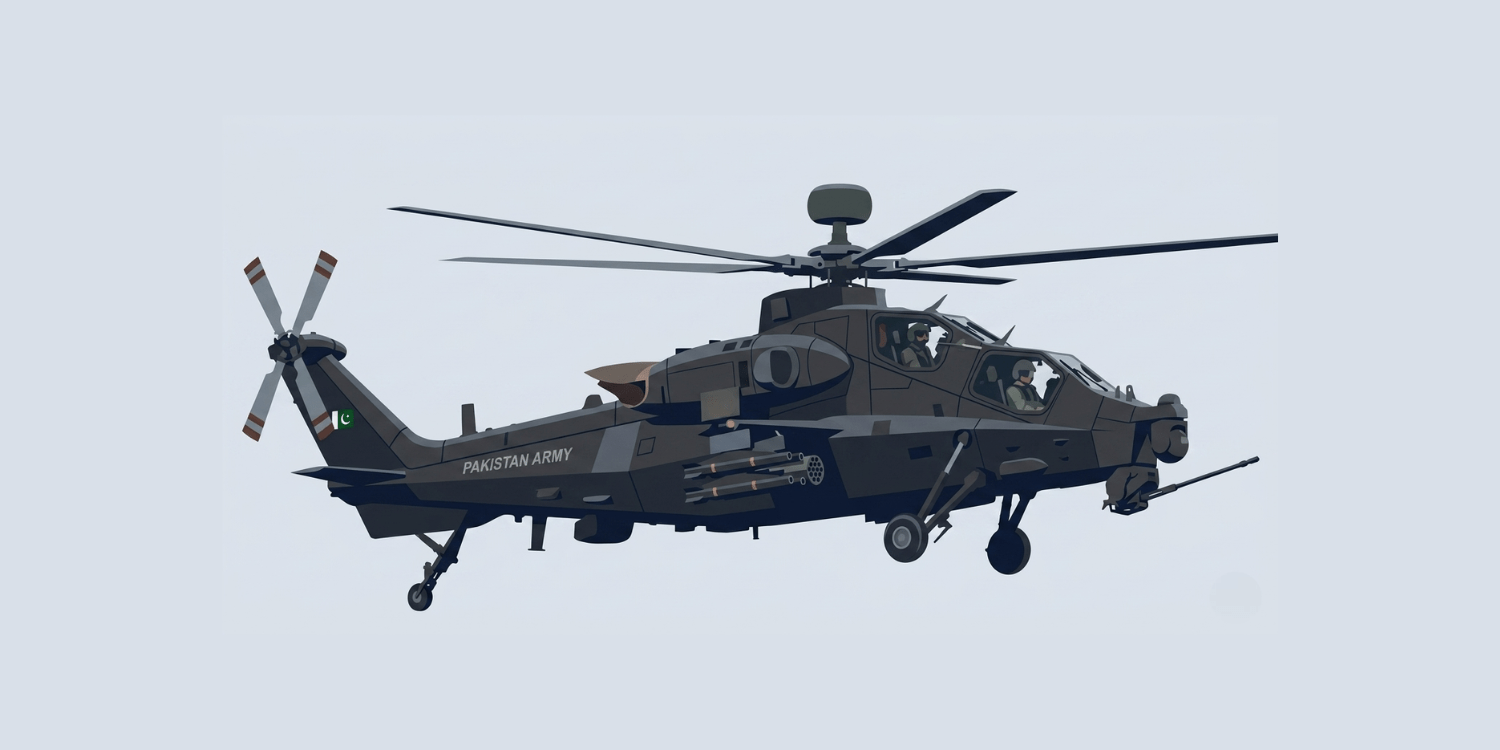
The procurement and formal induction of the Z-10ME by the Pakistan Army Aviation Corps marks a profound geopolitical and tactical shift in the South Asian operational theater.6 Displacing decades of Pakistani reliance on aging Western platforms and bypassing the political vulnerabilities of United States export controls, the introduction of the Z-10ME introduces advanced network-centric, standoff strike capabilities to the region.6 This report provides an exhaustive analysis of the Z-10’s inception, its technical and aerodynamic evolution, its diverse operational variants, and the specific strategic capabilities introduced to the Pakistan military through the Z-10ME acquisition.
2. Doctrinal Antecedents and the Need for a Dedicated Attack Platform
To fully comprehend the significance of the Z-10 program, one must analyze the historical capability gaps within Chinese military aviation. The People’s Liberation Army Ground Force officially established its dedicated army aviation units in January 1988.1 In its nascent stages, the unit possessed virtually no organic attack capabilities. Instead, it relied heavily on aging, transport-oriented rotary-wing assets transferred from the People’s Liberation Army Air Force (PLAAF), including legacy Soviet platforms like the Mil Mi-4 and Mil Mi-8, the domestic Harbin Z-5, and a limited number of Aérospatiale Gazelles acquired from France.1
Throughout the 1980s and 1990s, Chinese rotary-wing modernization was largely driven by the Harbin Z-9 program, a domestically manufactured, license-built variant of the French Eurocopter AS365 Dauphin.2 The first Z-9 flew in 1981, built from components supplied by Aérospatiale, and the heavily indigenized Z-9B entered PLAGF service in 1994.2 The Z-9 was designed as a multi-purpose medium utility helicopter, featuring a four-blade main rotor and an 11-blade fenestron faired-in tail rotor, capable of transporting 10 fully armed soldiers.2 To address the glaring lack of anti-armor aviation, Chinese engineers developed the WZ-9 (Armed Z-9), modifying the teardrop-shaped utility airframe by adding single pylons to each fuselage side, allowing for rocket pods or early-generation anti-tank guided missiles (ATGMs).9
However, defense analysts and military planners quickly recognized that the WZ-9 was fundamentally inadequate for high-intensity conflicts. Despite the integration of composite materials to lower its radar cross-section (RCS) and increase structural strength, the WZ-9 remained far too lightly protected to be classified as a true dedicated attack helicopter.2 It lacked the stepped tandem cockpit necessary for specialized pilot-gunner coordination, possessed insufficient armor to survive modern short-range air defense (SHORAD) systems, and its civilian-derived airframe could not support the heavy payloads and sensors required for deep battlefield interdiction. Consequently, in 1992, the PLAGF initiated a preliminary developmental program to conceptualize and field a medium-weight, purpose-built attack helicopter, an initiative that would formally commence as a state-sanctioned weapons program in 1998.1
3. Inception: Project 941 and the Clandestine Russian Foundation
During the early 1990s, the Russian domestic defense industry faced a catastrophic near-total collapse. The dissolution of the Soviet Union and the subsequent implementation of “shock therapy” economic reforms under the Yeltsin administration led to a sharp reduction in state defense orders.11 Budget financing for advanced aerospace developments virtually ceased, leading to massive wage arrears and a severe outflow of highly qualified engineering personnel.11 It was under these dire economic conditions that the Kamov Design Bureau, historically famous for its distinctive coaxial rotor naval helicopters, sought foreign capital to sustain its operations.
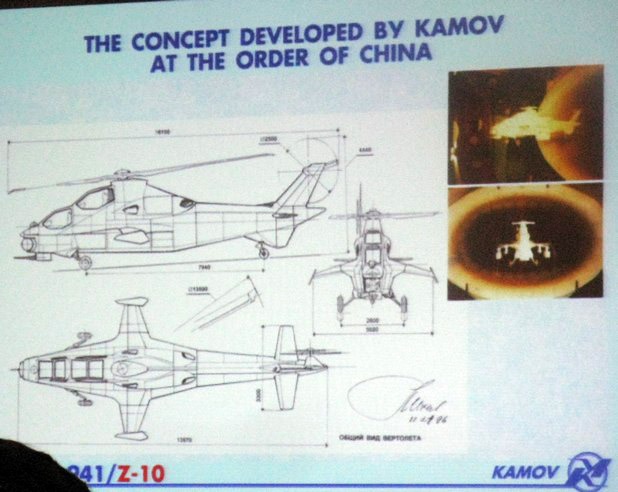
In 1994, the Chinese Helicopter Research and Development Institute (CHRDI), operating under the umbrella of the Aviation Industry Corporation of China (AVIC), secretly signed an agreement with the Kamov Design Bureau to draft an advanced conceptual design for a new Chinese attack helicopter.1 This initiative, internally designated by the Russians as “Project 941,” served as a critical lifeline of stable financing for Kamov.11
The terms of reference and initial data were officially delivered to Kamov engineers on June 12, 1995.11 The Chinese specifications were exacting and represented a significant departure from Kamov’s traditional design philosophy. The mandate required Kamov to engineer a helicopter utilizing a conventional single main rotor and classic tail rotor design, explicitly rejecting Kamov’s signature coaxial configuration.11 Furthermore, the design necessitated a stepped tandem cockpit, a chin-mounted 23mm AM-23 cannon, and provisions for 90-1 ATGMs, 12.7mm machine gun pods, and unguided rocket blocks.11 Crucially, the airframe was strictly constrained to accommodate a gas turbine engine of highly specific mass, size, and power outputs, dimensions that precisely mirrored the American General Electric T700 turboshaft, the powerplant utilized by the Sikorsky UH-60 Black Hawk.11
Kamov’s brief was exhaustive. The Russian bureau conducted the foundational aerodynamic calculations, structural weight distributions, and powerplant arrangements, producing detailed graphics and wind-tunnel models.12 The completed Project 941 package was handed over to China in the late 1990s as a fully mature conceptual program ready for immediate prototyping.12 Following this handover, the 602nd Aircraft Design Institute of AVIC assumed full control, translating the Russian blueprints into physical prototypes and conducting all subsequent flight testing entirely autonomously.1
This foundational Russian involvement was maintained as a closely guarded state secret for over a decade. It was only during a press conference at the 2013 Heli-Expo convention in Las Vegas that Sergei Mikheyev, the General Designer of the Kamov enterprise and president of the Helicopter Industry Association of Russia, publicly revealed Kamov’s authorship of the Z-10’s basic design, praising China for bringing the conceptual blueprints to operational fruition.12 This revelation highlighted a profound irony within modern military aviation: the primary attack helicopter of the PLA, WZ-10, shares a conceptual lineage with the designers of the Russian Ka-52 Alligator, yet the Z-10 has evolved to avoid many of the structural and doctrinal failures the Ka-52 recently experienced in Eastern European combat theaters.13
Following extensive prototyping by the 602nd Institute, the Z-10 executed its maiden flight on April 29, 2003.1 As the platform matured, it formally entered Chinese Army Aviation service in 2009.1 Within the PLAGF, the helicopter was bestowed the official nickname Pi Li Huo (霹雳火), which translates to “Fierce Thunderbolt”, a moniker directly derived from the nickname of the character Qin Ming in the classical Chinese literary masterpiece, Water Margin.1
4. The Propulsion Crisis: Embargoes and Western Corporate Complicity
While the Russian Kamov bureau successfully provided the aerodynamic blueprint for the Z-10, China’s domestic aerospace sector in the late 1990s and early 2000s critically lacked the advanced turboshaft engine technology required to physically power a heavily armored, highly maneuverable attack helicopter. To circumvent this technological bottleneck, Chinese defense entities orchestrated a complex procurement strategy to acquire Western engines, leading to one of the most significant export control scandals in modern aerospace history.
In 1998, as the 602nd Research Institute proposed the final design under the “Special Armed Project,” Chinese officials established a civilian rotary-wing initiative known as the “China Medium Helicopter” (CMH) program.1 Ostensibly, the CMH was marketed as the development of a six-ton civilian utility helicopter. Under the guise of equipping this civilian platform, China approached Pratt & Whitney Canada (PWC), a subsidiary of the Connecticut-based United Technologies Corporation (UTC), to procure advanced PT6C-67C turboshaft engines and the associated Full Authority Digital Engine Control (FADEC) software.1
The PT6C-67C engines, boasting a maximum continuous power of 1,142 kW (1,531 shp), were ideal for the high-performance demands of an attack helicopter.1 Between 2001 and 2002, PWC successfully delivered ten PT6C-67C engines to China, which were subsequently installed in the initial batch of Z-10 prototypes, powering the aircraft during their critical developmental flight tests from 2003 onward.1
However, investigations initiated by the United States Department of Justice in 2006 revealed that executives at both PWC and UTC were acutely aware that the CMH program was a thinly veiled cover for the Z-10 military project. Internal corporate communications explicitly documented this complicity. A highly damning email from August 2000, sent by a marketing manager to PWC’s export officials, explicitly referenced the task of providing engines for an “attack helicopter” internally designated by the Chinese as the “Z10”.17 Further internal emails from September 2001 circulated among PWC marketing vice presidents acknowledged the risk of violating U.S. sanctions, with one manager writing: “We need to be very careful with the Z10C program. If the first flight will be with a gun ship then we could have problems with the US government”.14 The same email noted that PWC had misled the Canadian government to secure the export permits by claiming the military “gun ship” versions would utilize Chinese domestic engines.14
The export of U.S.-origin military software and advanced FADEC systems to aid in the development of China’s first modern attack helicopter constituted a severe violation of the Arms Export Control Act and the U.S. arms embargo imposed on China following the 1989 events in Tiananmen Square.15 PWC had taken a “calculated risk” to position itself as the exclusive supplier for a projected two-billion-dollar Chinese civilian helicopter market, compromising U.S. national security in the process.15
In June 2012, after a prolonged federal investigation supported by the Defense Criminal Investigative Service, UTC, PWC, and Hamilton Sundstrand pleaded guilty to the criminal charges, agreeing to pay over $75 million in fines, one of the largest resolutions of export violations involving a major defense contractor in the history of the Justice Department.15
5. Indigenous Engine Evolution: From the WZ-9 to the WZ-16
The immediate consequence of the PWC scandal was the abrupt termination of Western engine supplies. Cut off from the highly reliable PT6C-67C, the 602nd Aircraft Design Institute was forced to rapidly redesign the engine bays of the Z-10 to accommodate the domestically produced Zhuzhou WZ-9 turboshaft engine.1 This transition marked the beginning of a prolonged struggle to match the aerodynamic potential of the Z-10 airframe with adequate propulsion.
5.1. The WZ-9 Bottleneck
The early production batches of the Z-10 were powered by the baseline WZ-9 and WZ-9A turboshaft engines.1 These early domestic powerplants delivered roughly 957 kilowatts of maximum continuous power.6 Compared to the 1,142 kW output of the previously utilized Pratt & Whitney engines, the WZ-9 left the Z-10 profoundly underpowered.1
This power deficit had cascading negative effects on the helicopter’s operational parameters. To maintain flight stability and maneuverability, Chinese engineers were forced to rigorously trim the airframe’s weight. This weight reduction directly compromised the thickness of the ballistic armor and severely restricted the maximum payload the helicopter could carry.1 The limitations were particularly acute in “hot and high” atmospheric conditions, such as those found on the Tibet Plateau or the Himalayas, where the reduced air density further robbed the engines of lift generation.1 Even with these limitations, the WZ-9A still permitted the Z-10 to achieve a respectable maximum speed of 290 km/h (160 knots) and a cruise speed of 230 km/h, with internal fuel tanks supporting an operational range of 800 kilometers.1
5.2. Incremental Upgrades: WZ-9C and WZ-9G
To reclaim the lost capabilities, Chinese engine manufacturers embarked on aggressive enhancement programs. The WZ-9 was subsequently upgraded to the WZ-9C variant, which boosted the maximum power output to 1,200 kW (1,600 shp), an impressive 30% increase in power over the baseline engine.1 Originally conceptualized for export models, the WZ-9C provided the Z-10 with sufficient lift to finally carry its maximum designed payload of external munitions and heavier appliqué armor.1
For later export models, specifically the Z-10ME-02, the powerplant was further refined into the WZ-9G.19 The WZ-9G represents a major leap in combat survivability, pushing the power output to 1,500 hp.19 Crucially, the WZ-9G features a redesigned physical architecture. The engine inlets incorporate new centrifugal separation sand filters, drastically reducing particulate ingestion and engine wear in dusty, desert, and high-wind environments.19 Furthermore, the exhaust nozzles on the WZ-9G are oriented to point upwards, rather than to the sides.19 This upward configuration directs the extremely hot exhaust gases directly into the massive downwash of the main rotor blades, rapidly dissipating the heat signature and reducing the helicopter’s vulnerability to infrared-homing (heat-seeking) surface-to-air missiles.1
5.3. The Safran Partnership and the WZ-16 (Ardiden 3C)
Simultaneously, China sought a long-term, structurally advanced propulsion solution through international cooperation. AVIC and the Aero Engine Corporation of China (AECC) entered into a joint venture with France’s Safran Helicopter Engines to co-develop the WZ-16, also known commercially as the Ardiden 3C.22

The WZ-16/Ardiden 3C is a new-generation turboshaft engine operating in the 1,700 to 2,000 shaft horsepower (1,200–1,500 kW) class, designed specifically for 5 to 8-ton medium helicopters.23 Built upon a remarkably compact modular architecture, the WZ-16 boasts a best-in-class power-to-weight ratio and delivers fuel consumption rates approximately 10% lower than competing engines in the same power bracket.22 The engine underwent a grueling certification process, completing over 10,000 hours of testing to confirm high levels of design maturity, before receiving its Type Certificate from the Civil Aviation Administration of China (CAAC) in October 2019.22
The integration of the WZ-16 into the latest Z-10M and Z-10ME variants finally bridges the gap between the helicopter’s aerodynamic potential and its operational reality, affording it superior endurance, the ability to operate unconstrained at maximum takeoff weights in mountainous terrain, and the capacity to carry its full complement of 16 heavy anti-tank missiles.18
Z-10 Powerplant Evolution Summary
| Engine Variant | Power Output | Key Features & Operational Impact |
| Pratt & Whitney PT6C-67C | 1,142 kW (1,531 shp) | Western engines used in initial prototypes. FADEC equipped. Embargoed in 2012.1 |
| Zhuzhou WZ-9 / WZ-9A | ~957 kW (~1,280 shp) | First domestic replacement. Underpowered, leading to payload and armor restrictions in high altitudes.1 |
| Zhuzhou WZ-9C | 1,200 kW (1,600 shp) | 30% power increase over baseline. Allowed restoration of payload capacity and integration of appliqué armor.1 |
| Zhuzhou WZ-9G | 1,500 hp | Upward-facing exhaust nozzles for IR signature reduction; centrifugal sand filters for desert operations.19 |
| AECC/Safran WZ-16 | 1,200–1,500 kW (1,700-2,000 shp) | Co-developed as Ardiden 3C. Highly fuel-efficient, granting maximum payload carrying capability over longer distances.22 |
6. Airframe Architecture, Survivability, and Avionics
The physical design of the Z-10 represents a synthesis of stealth considerations, crew protection, and modular weapon integration. The helicopter possesses a length of roughly 14.2 to 15 meters, a height of approximately 3.9 meters, and a five-blade main rotor with a diameter of 12 to 13 meters, complemented by a four-blade tail rotor.3 Its empty weight sits at approximately 5,100 kg, scaling up to a maximum takeoff weight (MTOW) of 7,000 kg (and up to 9,000 kg in the most heavily upgraded export variants).3
6.1. Stepped Tandem Cockpit and Structural Stealth
Following conventional attack helicopter doctrine, the Z-10 utilizes a stepped tandem cockpit arrangement. The weapon systems operator (gunner) occupies the forward seat, while the pilot is positioned in the elevated rear seat, granting both crew members excellent forward and downward visibility.4 To minimize the aircraft’s radar cross-section, the fuselage is manufactured with sloped sides in a faceted, diamond-like configuration, mitigating radar wave reflections.4 Furthermore, the side structures and exhaust cowlings appear highly conformal and rounded, contributing to limited geometric stealth capabilities.26
6.2. Crew Protection and Graphene Armor
Crew survivability is paramount in the Z-10’s design. The cockpit canopy is constructed from advanced bullet-proof glass tested to withstand direct impacts from 7.62mm armor-piercing rounds.29 The crew compartment itself is lined with composite armor.29 In the highly upgraded Z-10ME and Z-10ME-02 variants, the airframe is augmented with external appliqué graphene-based armor plates and titanium-ceramic composite panels layered around the cockpit and the engine nacelles.1 Graphene composites offer unprecedented strength-to-weight ratios, ensuring the helicopter can absorb heavy kinetic impacts from heavy machine guns and light anti-aircraft artillery without incurring the crippling weight penalties associated with traditional steel armor plating.
6.3. Electronic Warfare and Integrated Countermeasures
The Z-10 operates in highly contested electromagnetic environments, necessitating a sophisticated, multi-layered electronic warfare (EW) and self-defense suite. Baseline models employ the YH-96 electronic warfare system, which networks a series of distributed sensors, including radar warning receivers (RWR), laser warning receivers (LWR), and infrared missile approach warning systems (MAWS), directly to a 6×4 countermeasure dispenser array, enabling the automated deployment of chaff and flares when hostile targeting is detected.1
For offensive electronic warfare and signals intelligence (ELINT/ESM) missions, the Z-10 can carry the KG300G self-defense jamming pod on one of its hardpoints.1 Enclosed in a stealth-optimized casing, the KG300G provides organic spectrum searching, multi-target active jamming, and advanced digital radio frequency memory (DRFM) signal processing capabilities.1
The countermeasures suite underwent a radical transformation in the Z-10ME-02 export variant. This iteration eliminated the legacy discrete MAWS sensors, replacing them with a series of active electronically scanned array (AESA) radar panels flush-mounted around the fuselage.1 These localized AESA panels function as highly sensitive passive signal detectors for spherical situational awareness, while also possessing the capability for active target searching and localized radar jamming.1 Furthermore, the Z-10ME integrates advanced Directional Infrared Countermeasure (DIRCM) systems mounted on the stub wings.1 When an incoming heat-seeking missile is detected by the new ultraviolet/infrared warning receivers, the DIRCM rapidly swivels and fires a highly concentrated laser directly into the missile’s seeker head, blinding it and throwing it off course.1
6.4. Targeting Avionics and the Yu Huo Millimeter-Wave Radar
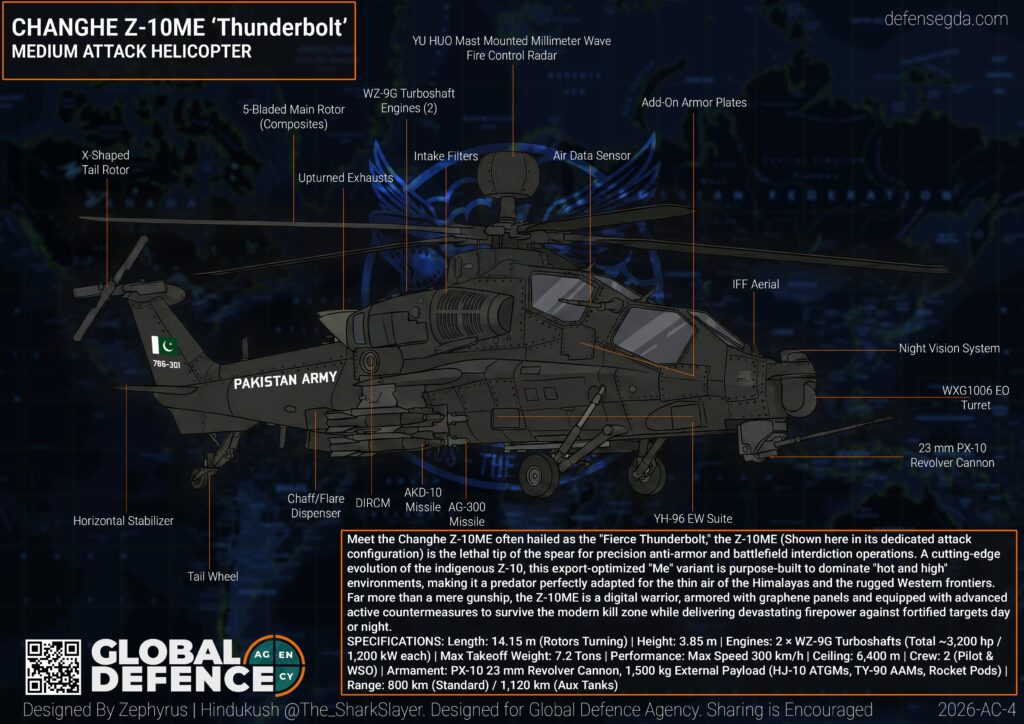
The primary targeting sensor of the Z-10 is the WXG1006 electro-optical package, housed within a highly maneuverable, ball-shaped turret located on the chin of the aircraft.1 This suite contains a forward-looking infrared (FLIR) sensor, a low-light television camera, a laser rangefinder, and a laser designator required to illuminate targets for semi-active laser-guided munitions.1 The cockpit is a fully digital “glass” environment equipped with multi-functional displays (MFDs) and governed by a digital fly-by-wire (FBW) control system.29 Both the pilot and the gunner are equipped with sophisticated helmet-mounted sights (HMS) that integrate night vision goggles (NVG) and flight telemetry directly into their field of view, allowing them to cue the chin-mounted cannon and missile seekers merely by looking at the target.27
However, the crowning achievement of the Z-10’s sensor architecture is the integration of the Yu Huo millimeter-wave (MMW) fire-control radar on advanced variants.1 Analogous in function to the AN/APG-78 Longbow radar found on the American AH-64D/E Apache, the Yu Huo radar is housed in a dome mounted on a mast directly above the main rotor hub.1
Operating in the millimeter-wave frequency band, this radar can penetrate severe battlefield obscurants that defeat standard optical and infrared sensors, including dense smoke, heavy rain, fog, and kicked-up desert dust.1 The Yu Huo radar provides true 360-degree, all-weather target acquisition, capable of detecting and classifying targets at ranges approaching 20 to 37 kilometers.7 It can simultaneously track dozens of moving mechanized vehicles, rapidly prioritizing targets and distributing this telemetry via encrypted data-links to other helicopters or ground units, fundamentally transforming the Z-10 from a visual-range attack asset into a networked, beyond-visual-range command node.1
7. Armament and Lethality
The Z-10 relies on a modular, heavy-payload weapon architecture based around two mid-fuselage stub wings. Each stub wing possesses two hardpoints, providing a total of four external weapon stations capable of carrying a combined useful payload ranging between 1,500 kg and 3,000 kg, depending on engine configuration.1
7.1. Internal and Close-In Weaponry
The primary kinetic effector for close-in engagements consists of a chin-mounted turret featuring a 180-degree horizontal traverse arc. In the baseline PLAGF configurations, this turret houses a 23mm PX-10A automatic chain gun.1 However, recognizing the diverse requirements of export clients and differing operational doctrines, the weapon station was designed with modularity in mind. The Z-10 can readily be refitted to carry heavier 25mm or 30mm autocannons, or alternatively, 40mm automatic grenade launchers and 14.5mm multi-barrel Gatling guns.1
7.2. Precision Air-to-Ground Missiles
The Z-10’s anti-armor capability is heavily reliant on a suite of advanced guided missiles. The helicopter is capable of carrying a maximum loadout of 16 anti-tank guided missiles (four per hardpoint).1 Legacy loadouts included the HJ-8 and HJ-9 wire/laser-guided ATGMs.1 Modern iterations, however, utilize the much more advanced HJ-10 (also designated AKD-10) and AKD-9 laser-guided air-to-surface missiles.1 The integration of the HJ-10, paired with the upgraded engine endurance, effectively bridges the firepower gap between the Z-10 and heavier Western platforms like the Apache.26
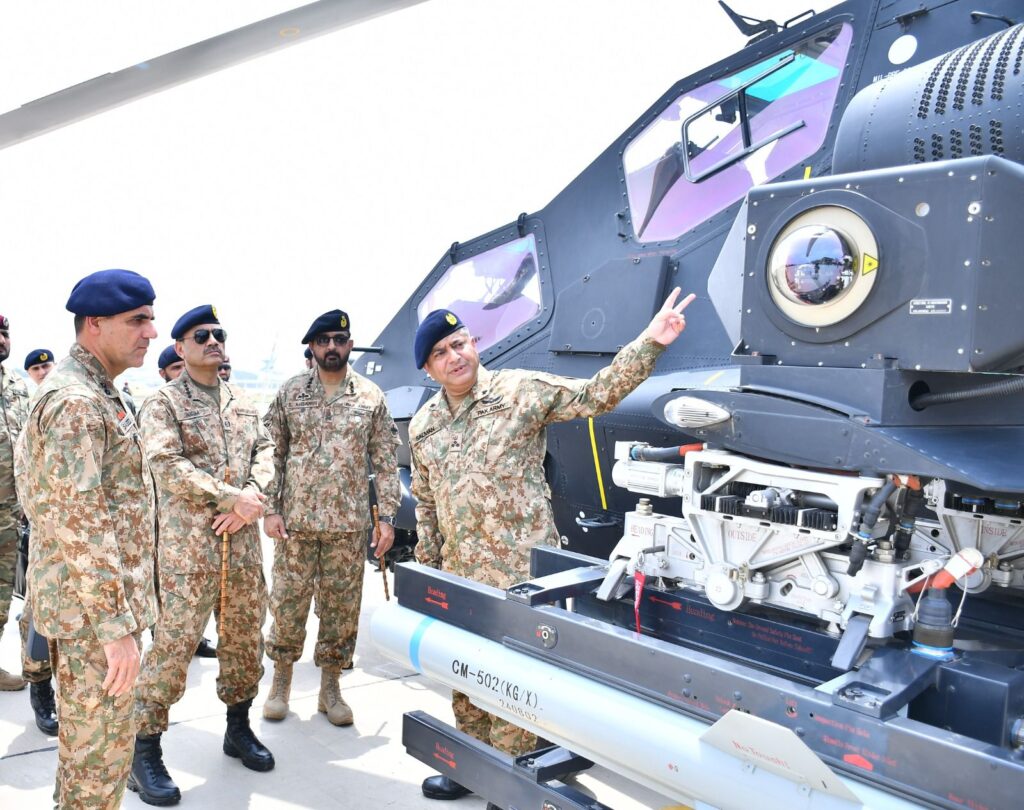
The pinnacle of the Z-10’s strike capability is the integration of the CM-502KG non-line-of-sight multipurpose air-to-surface missile.35 Debuted in 2012 by the China Aerospace Science & Technology Corporation (CASC), the CM-502KG is a heavy, precision-guided standoff weapon.35 It weighs 45 kilograms and carries an 11-12 kg blast-fragmentation or semi-armor-piercing high-explosive (SAP-HE) warhead.35 Flying at speeds of Mach 1.1, it executes a top-attack trajectory, plunging vertically into the thin top armor of main battle tanks, with a penetration value exceeding 1,000 millimeters.35 Most importantly, the CM-502KG boasts an engagement range of 25 kilometers.35 Its guidance system combines MEMS inertial navigation with GNSS satellite guidance, offering terminal homing through TV, infrared, or millimeter-wave seekers.35
7.3. The TY-90: Unprecedented Air-to-Air Capability
While many Western attack helicopters adapt infantry MANPADS (such as the FIM-92 Stinger) for aerial self-defense, the Z-10 was integrated from its inception with the TY-90, an air-to-air missile purpose-built specifically for helicopter-to-helicopter dogfighting.6 Developed by AVIC, the TY-90 weighs 20 to 24 kilograms and reaches speeds exceeding Mach 2.0.41 It possesses an effective range of 6 to 8 kilometers and can endure extreme aerodynamic overloads of up to 20G, allowing it to track and destroy highly evasive rotary-wing targets.41
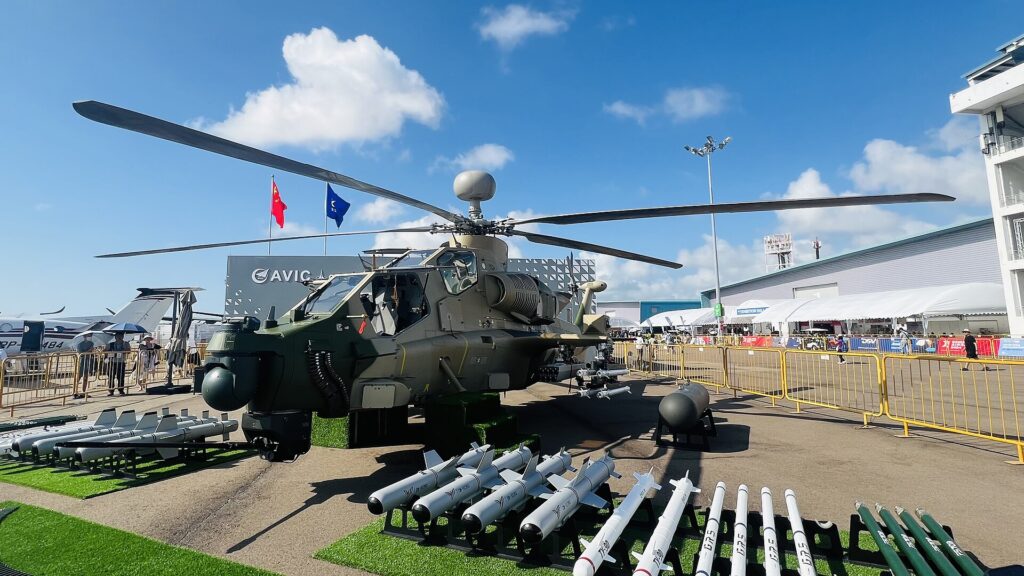
Equipped with an all-aspect infrared homing seeker featuring robust Infrared Counter-Countermeasures (IRCCM), the TY-90 resists enemy flares and jamming.42 Its lethality is guaranteed by a laser proximity fuze and a 3 kg high-explosive warhead that generates a 4-meter defeat radius, specifically engineered to slice through the light armor plating of attack helicopters like the Apache or Mi-28.40 The Z-10 can carry up to 16 TY-90s, or alternatively, up to 4 heavier PL-5, PL-7, or PL-9 air-to-air missiles.10
7.4. Auxiliary Munitions
For lighter interdiction or area-suppression missions, the Z-10 utilizes 57mm, 70mm, or 90mm unguided rockets housed in 7-tube or 19-tube pods.1 The platform also deploys the GR5 (FS70A/B) 70mm guided rockets, which offer sub-2-meter precision accuracy and an 18-meter fragmentation kill radius.1 Furthermore, the hardpoints can accommodate GB25 and GB50 guided glide bombs, 280kg drop tanks for extended ferry ranges, and can even serve as an aerial launch platform for SW-6 swarming unmanned aerial vehicles (UAVs).1
Z-10 Hardpoint Capacity and Armament Configuration
| Weapon Category | Specific Systems Integrated | Key Specifications & Tactical Utility |
| Chin Turret Cannon | 23mm PX-10A (Standard) / 25mm / 30mm Chain Guns | 180° traverse; helmet-sight cued. Modular for export.1 |
| Anti-Tank Missiles | HJ-8, HJ-9, HJ-10 (AKD-10) | Maximum of 16 carried. Primary anti-armor effectors.1 |
| Standoff Strike | CM-502KG | 25 km range, Mach 1.1, top-attack profile, 11kg SAP-HE warhead.35 |
| Air-to-Air Missiles | TY-90 / PL-5 / PL-9 | Purpose-built for heli-dogfights. 6-8 km range, Mach 2.2, 20G overload.40 |
| Rockets & Bombs | 57mm/90mm unguided, GR5 guided, GB25/GB50 bombs | GR5 70mm rockets offer precision strike with sub-2-meter accuracy.1 |
8. Taxonomy of Z-10 Variants
As the base airframe matured, Chinese manufacturers diversified the platform to meet the specialized needs of different military branches and international clients.
- Z-10 (Baseline): The original production model deployed by the PLAGF, generally equipped with the WZ-9 engines and standard electro-optical targeting.1
- Z-10K: A specialized, lighter variant designed explicitly for the People’s Liberation Army Air Force (PLAAF) Airborne Corps.1 Eight units are known to be stationed with the PLA Hong Kong Garrison, providing armed escort, localized close-air support, and search-and-rescue overwatch during maritime and urban insertion operations.30
- Z-10M / Z-10ME: The comprehensive export variant unveiled in 2018. The “ME” standard introduced critical high-end features necessary to compete with Western platforms. It incorporates the uprated WZ-9C or WZ-16 engines (1,200 kW), appliqué graphene armor panels, larger ammunition magazines for the main cannon, new intake filtration systems for desert climates, and up-turned exhaust nozzles for IR suppression.1
- Z-10ME-02 / Z-10ME-II: The latest and most lethal export iteration, showcased prominently at the Singapore Airshow and AAD 2024. Powered by the 1,500 hp WZ-9G engine, this model comprehensively overhauls the electronic warfare architecture. It replaces discrete UV/IR sensors with flush AESA radar panels for spherical warning and jamming, integrates the mast-mounted Yu Huo MMW radar, and utilizes active DIRCM laser turrets to defeat MANPADS.1
9. The Strategic Pivot: Pakistan’s Procurement of the Z-10ME
The most consequential and widely analyzed evolution in the Z-10’s operational history is its recent procurement and integration by the Pakistan Army Aviation Corps. The acquisition process spans nearly a decade and perfectly encapsulates the shifting geopolitical realignments in South Asia, characterized by Pakistan’s decisive pivot away from Western defense suppliers toward Chinese military-industrial ecosystems.6
9.1. The Vulnerability of the Legacy Fleet
For over four decades, the primary strike capability of the Pakistan Army Aviation Corps rested on a fleet of American-supplied Bell AH-1F Cobra attack helicopters.6 Acquired during the Cold War and the subsequent War on Terror, these Cobras were optimized for a bygone era of direct-fire close air support. They lacked the sensor fusion, electronic warfare suites, and standoff munitions required to survive against modern, layered, multi-tier air defense systems.7 Furthermore, their aging engines struggled to generate adequate lift for counterinsurgency operations in the extreme altitudes of the Hindu Kush and the Karakoram ranges bordering Afghanistan and Indian-administered Kashmir.6
Pakistan did supplement its fleet with a small procurement of Russian-made Mil Mi-35M “Hind” heavy attack helicopters.46 However, the Mi-35M, while heavily armored and equipped with night-vision systems like the GOES-342 electro-optical target system, suffers from profound aerodynamic limitations.48 Due to its massive weight, the Mi-35M possesses severely restricted hovering endurance and struggles to take off with a full complement of fuel, weapons, and onboard infantry simultaneously, often requiring rolling takeoffs from paved runways.48 This rendered the Mi-35M tactically inflexible for rapid ambush operations in mountainous defiles.
9.2. Failed Western Procurements and Embargoes
Recognizing the urgent need for modernization, Pakistan initially sought to maintain its Western-oriented aviation doctrine. In 2015, the U.S. State Department approved a $952 million Foreign Military Sale of 15 advanced Bell AH-1Z Viper helicopters to Pakistan.26 Concurrently, Pakistan engaged in preliminary evaluations of Chinese hardware, taking delivery of three early-model Z-10s for high-altitude trials.1
During these 2015 trials, conducted at high-altitude sites like Qasim Base and in terrains exceeding 4,000 meters, the severe limitations of the early Chinese WZ-9 engines became glaringly apparent. Delivering only 957 kilowatts of power, the Z-10s could not lift a meaningful combat load of fuel and missiles under the thin air conditions of Pakistan’s northern borders.1 Deeming the platform inadequate, the Pakistan Army returned the three evaluation aircraft to China.
With the Z-10 rejected, Pakistan finalized a massive $1.5 billion contract with Turkey in 2018 to procure 30 TAI/AgustaWestland T129 ATAK helicopters.26 However, the T129 relies on LHTEC T800-4A turboshaft engines, which are produced by a joint venture between the UK’s Rolls-Royce and the United States firm Honeywell.47 Amidst rapidly deteriorating diplomatic relations between Washington and Islamabad, and parallel American strategic efforts to strengthen defense ties with India as a counterweight to China, the U.S. government exerted its veto power under ITAR regulations, blocking the export licenses for the T800 engines.1 This effectively killed the Turkish deal. Furthermore, Washington simultaneously suspended the delivery of the previously approved AH-1Z Vipers.1
9.3. Contract Finalization and Delivery
Cornered by these Western embargoes and highly vulnerable to India’s rapid military modernization, Islamabad was forced back to the drawing board to source a replacement completely insulated from Western sanctions.8 This geopolitical opening was rapidly exploited by Beijing.
By early 2022, serious negotiations for the upgraded Z-10ME commenced.1 By this time, Chinese engineers had successfully resolved the Z-10’s historical payload and altitude limitations through the deployment of the WZ-9G and WZ-16 engines, directly addressing the very flaws that caused Pakistan to reject the helicopter seven years prior.1
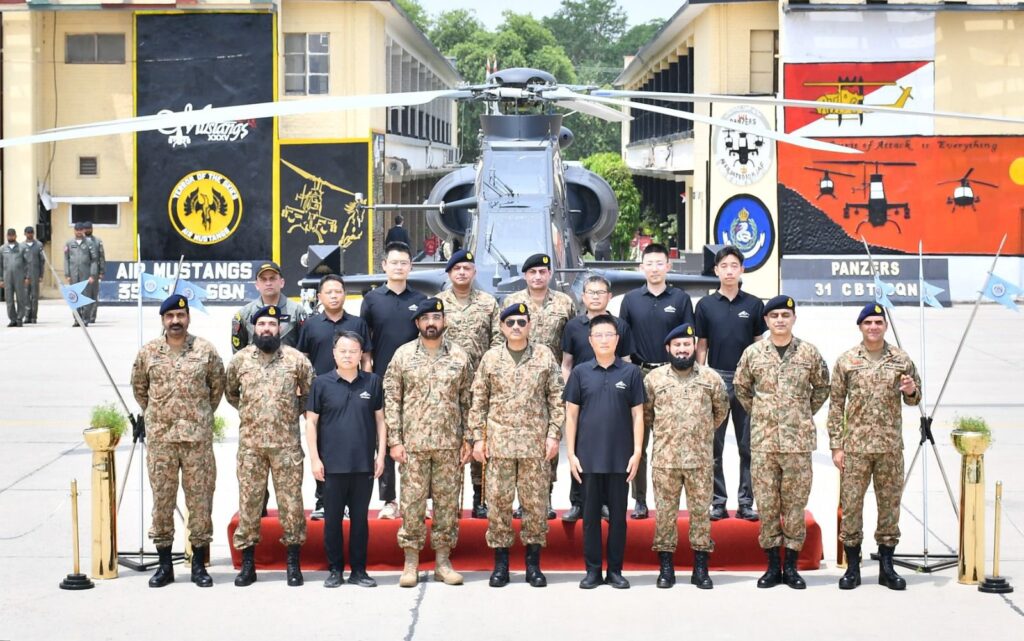
The Pakistan Army signed the contract for the Z-10ME, an acquisition that proved remarkably cost-effective. The procurement cost per Z-10ME is estimated at approximately $15 million to $25 million per unit, with a highly sustainable flight-hour cost of roughly $38,000, substantially lower than the operational costs of American platforms.6 Deliveries of the initial batches commenced in late 2023, accelerating through the summer of 2024, with formal induction ceremonies occurring at the Multan Army Aviation Base and the Muzaffargarh Field Firing Ranges.1 The visual and operational impact of these ceremonies, overseen by Chief of Army Staff General Syed Asim Munir, was intended to send an unmistakable deterrent message across the region.33 The total initial procurement is expected to comprise approximately 30 aircraft, enough to form at least one dedicated frontline attack helicopter regiment, with subsequent batches anticipated to arrive through late 2026.6
10. Capability Infusion: Transforming the Pakistan Army Aviation Corps
The formal induction of the Z-10ME, specifically configurations mirroring the radar-equipped Z-10ME-02/Z-10ME-II, does not merely recapitalize an aging fleet; it introduces generational technological leaps into the Pakistan Army, fundamentally altering the tactical and operational doctrine of the South Asian battlespace.7
10.1. Transition to “Peek-and-Strike” Tactics
The legacy AH-1F Cobras were inherently limited by their optical and wire-guided weapon systems, forcing Pakistani pilots to fly in close visual proximity to targets, aggressively exposing the aircraft to enemy fire.7
The integration of the mast-mounted Yu Huo millimeter-wave radar allows the Pakistan Army to abandon direct-fire assault in favor of highly survivable “peek-and-strike” ambush tactics.7 A Z-10ME can establish a hover behind a natural terrain feature, such as a Himalayan ridgeline, dense forest cover, or an urban structure, keeping the entirely of its fuselage masked from enemy detection.7 Only the radar dome, situated above the rotor hub, is exposed. The radar scans the battlespace, identifying and categorizing hostile mechanized formations out to 20 kilometers.7 Upon acquiring a high-value target, the helicopter can briefly pop up, launch its fire-and-forget missiles, and immediately drop back into defilade before the adversary’s air defense tracking algorithms can establish a weapons lock.7
10.2. Network-Centric Standoff Lethality
This terrain-masked doctrine is actualized through the Z-10ME’s pairing with the CM-502KG air-to-surface missile.6 With a maximum operational range of 25 kilometers, the CM-502KG vastly outranges the wire-guided TOW missiles of the AH-1F and more than doubles the range of the AGM-114 Hellfire.7
By marrying the 20-kilometer MMW radar with the 25-kilometer CM-502KG missile, the Z-10ME can engage Indian armored columns, fortified bunkers, or artillery positions from deep within friendly airspace, operating entirely outside the engagement envelope of mobile SHORAD systems like the Tunguska and shoulder-fired MANPADS.7 This capability represents a transition toward modernized “hunter-killer” rotary-wing tactics, dramatically increasing the survivability of the platform.7
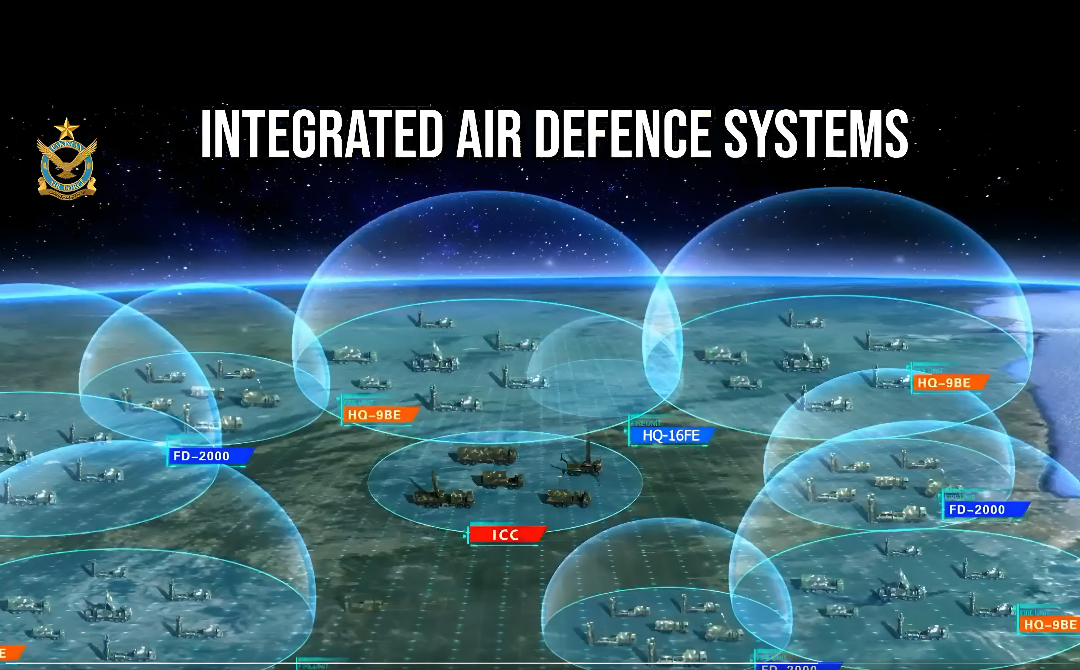
Furthermore, the Z-10ME functions as a critical enabling node within Pakistan’s evolving “system-of-systems” battlefield architecture.7 Utilizing encrypted broadband data-links, the helicopter can share its radar tracks in real-time, executing Manned-Unmanned Teaming (MUM-T) operations with Pakistani tactical drones, or feeding telemetry to long-range artillery and JF-17 Block III fighter jets.7 The helicopter operates seamlessly within an integrated Chinese technological ecosystem that now spans Pakistan’s entire defense apparatus, including J-10C fighters and HQ-9 surface-to-air missile batteries.7
10.3. Regional Strategic Balance: Countering the Indian Apache
The urgency behind Pakistan’s Z-10ME procurement was directly catalyzed by India’s acquisition of 22 Boeing AH-64E Apache Longbow attack helicopters.7 The Indian Apache fleet granted the Indian Army and Air Force an undisputed, asymmetric qualitative superiority in rotary-wing firepower, particularly regarding nighttime operations and anti-armor interdiction.
The induction of the Z-10ME effectively narrows this qualitative gap, providing Pakistan with a symmetric counter to the Apache.7 While Indian defense analysts correctly note that the heavier Apache retains certain advantages in overall payload mass, the Z-10ME offers Pakistan the exact same operational capabilities that make the Apache so lethal: all-weather MMW radar targeting, top-attack fire-and-forget missiles, integrated DIRCM survivability, and terrain-masked ambush potential.6
The deployment of Z-10MEs near the Line of Control in Kashmir deeply complicates Indian strategic planning.7 Indian mechanized thrusts into Pakistani territory must navigate constrained, high-altitude mountainous corridors where maneuver space is highly restricted. The presence of network-enabled Z-10MEs armed with 25-km standoff missiles compresses the reaction times of these Indian armored formations, inflicting severe attrition before Indian armor can engage.7 In direct response to the integration of the Z-10ME, which has already been utilized in the Raad ul Fatah live-fire combined arms exercises alongside legacy AH-1s and deployed for counterinsurgency in the Bajaur district, India has reinforced its border deployments of AH-64Es and increased combat air patrols utilizing Su-30MKI and Rafale fighters.6
11. Conclusion
The Changhe Z-10 attack helicopter represents a remarkable feat of aerospace engineering persistence and evolutionary design. Originating from a clandestine, conceptual design authored by the Kamov Bureau during a period of catastrophic financial distress for the Russian defense sector, the platform survived severe developmental hurdles. Navigating international espionage scandals, the imposition of United States embargoes targeting its Pratt & Whitney engines, and early weight-to-power limitations, the Z-10 has matured into an independent, highly lethal, and globally competitive weapons system.1 The successful indigenous development of the WZ-9C, the WZ-9G, and the collaborative Sino-French WZ-16 powerplants freed the platform from its historical altitude and payload restrictions, allowing Chinese engineers to integrate heavy graphene armor, advanced AESA/DIRCM electronic warfare suites, and mast-mounted millimeter-wave radars.1
For the Pakistan Army Aviation Corps, the acquisition of the Z-10ME provides far more than a simple one-for-one replacement for the obsolescent Bell AH-1F Cobra.6 By successfully bypassing the political vulnerabilities and unreliability associated with Western military procurements, evidenced by the aborted AH-1Z Viper and T129 ATAK deals, Pakistan has secured a platform that fundamentally modernizes its tactical doctrine.26
The combination of terrain-masked “peek-and-strike” tactics enabled by the Yu Huo radar, the 25-kilometer standoff range and top-attack profile of the CM-502KG missile, and the organic, high-speed air-to-air lethality of the TY-90 missile provides Pakistan with a highly credible, survivable deterrent against India’s AH-64E Apaches.6 Ultimately, the deployment of the Z-10ME establishes the PLA Army Aviation Corps and its primary export clients as operators of a top-tier, network-centric rotary combat ecosystem, fundamentally reshaping the balance of mechanized and aerial warfare in contested regional environments across the Indo-Pacific and South Asia.7
Works cited
- Changhe Z-10 – Wikipedia, accessed May 17, 2026, https://en.wikipedia.org/wiki/Changhe_Z-10
- Harbin Z-9 – Wikipedia, accessed May 17, 2026, https://en.wikipedia.org/wiki/Harbin_Z-9
- Z-10, accessed May 17, 2026, https://www.deagel.com/Aerospace%20Forces/Z-10/a001837
- WZ-10 (Z-10) Chinese Attack Helicopter – ODIN, accessed May 17, 2026, https://odin.t2com.army.mil/WEG/Asset/WZ-10_(Z-10)_Chinese_Attack_Helicopter
- China’s Z-10 ‘Changhe’ Attack Helicopter | CROUCHING EUROTIGER HIDDEN APACHE GUNSHIP – YouTube, accessed May 17, 2026, https://www.youtube.com/watch?v=-4xGgIeV1-w
- Pakistan replaces US-made attack helicopters with Chinese Z-10ME/P to strike faster and farther – Army Recognition, accessed May 17, 2026, https://www.armyrecognition.com/news/aerospace-news/2025/pakistan-replaces-us-made-attack-helicopters-with-chinese-z-10me-p-to-strike-faster-and-farther
- Pakistan’s Radar-Eyed Z-10ME Sparks Alarm Across South Asia as China’s ‘Apache Killer’ Reshapes India-Pakistan Air War Balance, accessed May 17, 2026, https://defencesecurityasia.com/en/pakistan-z10me-mmwave-radar-apache-killer-india-china-air-war-balance/
- Pakistan Army Aviation Upgrades Fleet with Advanced Z-10ME Attack Helicopters, accessed May 17, 2026, https://www.youtube.com/shorts/NU5m9V8K82E
- Z-9 Harbin (WZ-9) Chinese Medium Multi-Role Helicopter – ODIN, accessed May 17, 2026, https://odin.t2com.army.mil/WEG/Asset/665e08f1f03808795b6e98d30b9eac5d
- WT Live // Images by alcjyTMD1013, accessed May 17, 2026, https://live.warthunder.com/post/947018/en/
- How the first modern Chinese combat helicopter was designed in Russia – vpk.name, accessed May 17, 2026, https://vpk.name/en/1038636_how-the-first-modern-chinese-combat-helicopter-was-designed-in-russia.html
- Kamov Reveals Involvement in China’s Z-10 Attack Helicopter | Aviation International News, accessed May 17, 2026, https://www.ainonline.com/aviation-news/defense/2013-03-15/kamov-reveals-involvement-chinas-z-10-attack-helicopter
- China’s Main Attack Helicopter WZ-10 was Made by russian Designers of Ka-52, accessed May 17, 2026, https://en.defence-ua.com/analysis/chinas_main_attack_helicopter_wz_10_was_made_by_russian_designers_of_ka_52-6786.html
- Deferred Prosecution Agreement between United States of America and United Technologies Corp, Pratt & Whitney Canada Corp, a – ICE, accessed May 17, 2026, https://www.ice.gov/doclib/news/releases/2012/120628bridgeport2.pdf
- United Technologies Subsidiary Pleads Guilty to Criminal Charges for Helping China Develop New Attack Helicopter – Department of Justice, accessed May 17, 2026, https://www.justice.gov/archives/opa/pr/united-technologies-subsidiary-pleads-guilty-criminal-charges-helping-china-develop-new
- United States of America v. United Technologies Corp, Pratt & Whitney Canada Corp, and Hamilton Sunstrand Corp – ICE, accessed May 17, 2026, https://www.ice.gov/doclib/news/releases/2012/120628bridgeport1.pdf
- Company earned millions in defense contracts while making illegal sales to China, accessed May 17, 2026, https://publicintegrity.org/national-security/company-earned-millions-in-defense-contracts-while-making-illegal-sales-to-china/
- WHY IS THE CHINESE COPYCAT Z-10ME ATTACK HELICOPTER SO PROBLEMATIC?, accessed May 17, 2026, https://www.youtube.com/watch?v=GP2Kj2i2um0
- Discover Z-10ME: China’s Attack Helicopter Presents for International Market at AAD 2024, accessed May 17, 2026, https://www.armyrecognition.com/news/aerospace-news/2024/discover-z-10me-chinas-attack-helicopter-presents-for-international-market-at-aad-2024
- CAIC Z-10ME-02 – Fiercer Thunderbolt – Implemented – War Thunder — official forum, accessed May 17, 2026, https://forum.warthunder.com/t/caic-z-10me-02-fiercer-thunderbolt/216868
- Further additions of the Z-10 – Helicopter – War Thunder — official forum, accessed May 17, 2026, https://forum.warthunder.com/t/further-additions-of-the-z-10/8053?page=7
- Ardiden 3C, the first jointly-developed aero engine to be entirely certified in China | Safran, accessed May 17, 2026, https://www.safran-group.com/products-services/ardiden-3c-first-jointly-developed-aero-engine-be-entirely-certified-china
- Safran Ardiden – Wikipedia, accessed May 17, 2026, https://en.wikipedia.org/wiki/Safran_Ardiden
- Safran and AECC introduce the WZ16, the first jointly-developed aero engine to be certified in China, accessed May 17, 2026, https://www.safran-group.com/pressroom/safran-and-aecc-introduce-wz16-first-jointly-developed-aero-engine-be-certified-china-2019-10-10
- Safran Ardiden 3C / WZ16 – Helis.com, accessed May 17, 2026, https://www.helis.com/database/engines/Ardiden-3C-WZ16/
- First Images Confirm Chinese Z-10ME Attack Helicopters Are Now in Pakistani Service, accessed May 17, 2026, https://militarywatchmagazine.com/article/first-images-confirm-chinese-z10me-pakistan
- WZ-10 Z-10 Caic – Army Recognition, accessed May 17, 2026, https://www.armyrecognition.com/military-products/air/helicopters/attack-helicopters/wz-10-z-10-caic
- Z-10ME-II Attack Helicopter – Full Specifications | TheDefenseWatch.com, accessed May 17, 2026, https://thedefensewatch.com/product/z-10me-ii-attack-helicopter/
- Z-10 Attack Helicopter, China – Army Technology, accessed May 17, 2026, https://www.army-technology.com/projects/z-10-attack-helicopter-china-liberation-army/
- Chinese CAIC Z-10Ks enter service with the PLA’s Hong Kong garrison – Vertical Magazine, accessed May 17, 2026, https://verticalmag.com/news/chinese-caic-z-10ks-enter-service-with-the-plas-hong-kong-garrison/
- Pakistan receives first batch of Chinese-made Z-10ME attack helicopters | IRIA News, accessed May 17, 2026, https://www.ir-ia.com/news/pakistan-receives-first-batch-of-chinese-made-z-10me-attack-helicopters/
- [Development] Z-10ME & Z-10A Squadron Vehicle: China’s New Helicopters – War Thunder, accessed May 17, 2026, https://warthunder.com/en/news/9558-development-z-10me-z-10a-squadron-vehicle-chinas-new-helicopters-en
- Pakistan inducts Chinese-made Z-10ME attack helicopters, accessed May 17, 2026, https://defence-blog.com/pakistan-inducts-chinese-made-z-10me-attack-helicopters/
- CAIC Z-10 Attack Helicopter | Thai Military and Asian Region, accessed May 17, 2026, https://thaimilitaryandasianregion.wordpress.com/2015/10/19/caic-z-10-attack-helicopter/
- CM-501 – Wikipedia, accessed May 17, 2026, https://en.wikipedia.org/wiki/CM-501
- China’s Z-10ME Attack Helicopter Armed with CM-502KG Missiles Signals Major Shift in PLA Rotary-Wing Strike Doctrine – Defence Security Asia, accessed May 17, 2026, https://defencesecurityasia.com/en/china-z10me-attack-helicopter-cm502kg-missile-pla-rotary-wing-power/
- AR-1, accessed May 17, 2026, https://www.deagel.com/Defensive%20Weapons/AR-1/a003469
- [DEV] Incorrect CM-502KG Missile Stats – Gaijin.net // Issues, accessed May 17, 2026, https://community.gaijin.net/issues/p/warthunder/i/f9VI64P1RVnp
- Z10ME Lacking Alternate Anti Armor Warhead For CM-502KG – Helicopter – War Thunder — official forum, accessed May 17, 2026, https://forum.warthunder.com/t/z10me-lacking-alternate-anti-armor-warhead-for-cm-502kg/270318
- TY-90, accessed May 17, 2026, https://www.deagel.com/weapons/ty-90/a002627
- TY-90 – Wikipedia, accessed May 17, 2026, https://en.wikipedia.org/wiki/TY-90
- TY-90 – War Thunder Wiki, accessed May 17, 2026, https://old-wiki.warthunder.com/TY-90
- Air-to-air missile TY-90 – Missilery.info, accessed May 17, 2026, https://en.missilery.info/missile/ty-90
- Pakistan Inducts Chinese Z-10ME Attack Helicopters – Defensemirror.com, accessed May 17, 2026, https://defensemirror.com/news/39978/Pakistan_Inducts_Chinese_Z_10ME_Attack_Helicopters
- How Pakistan’s Z-10ME Could Challenge India’s Apache Dominance Along the LoC, accessed May 17, 2026, https://defencesecurityasia.com/en/pakistan-z10me-attack-helicopter-kashmir/
- Pakistan Army Aviation Corps – Wikipedia, accessed May 17, 2026, https://en.wikipedia.org/wiki/Pakistan_Army_Aviation_Corps
- Pakistan Takes Another Look at Chinese Attack Helicopter – Defense Security Monitor, accessed May 17, 2026, https://dsm.forecastinternational.com/2020/02/28/pakistan-takes-another-look-at-chinese-attack-helicopter/
- Pakistan Army’s MI35M : r/Helicopters – Reddit, accessed May 17, 2026, https://www.reddit.com/r/Helicopters/comments/1ratyi2/pakistan_armys_mi35m/
- Mi-35 Attack Helicopter & it’s Role in Pakistan Army – YouTube, accessed May 17, 2026, https://www.youtube.com/watch?v=V4TRe04FysY
- Pakistan Army Officially Commissions Z-10ME Attack Helicopters Amid Rising Tensions, accessed May 17, 2026, https://defencesecurityasia.com/en/pakistan-army-commissions-z10me-attack-helicopters-amid-rising-tensions/
- Is Pakistan’s army satisfied with the Mi-35 helicopters they purchased from Russia? – Quora, accessed May 17, 2026, https://www.quora.com/Is-Pakistans-army-satisfied-with-the-Mi-35-helicopters-they-purchased-from-Russia
New Chinese Z-10ME-II Attack Helicopters Take Centre Stage in …, accessed May 17, 2026, https://militarywatchmagazine.com/article/new-chinese-z10-pakistani-drills