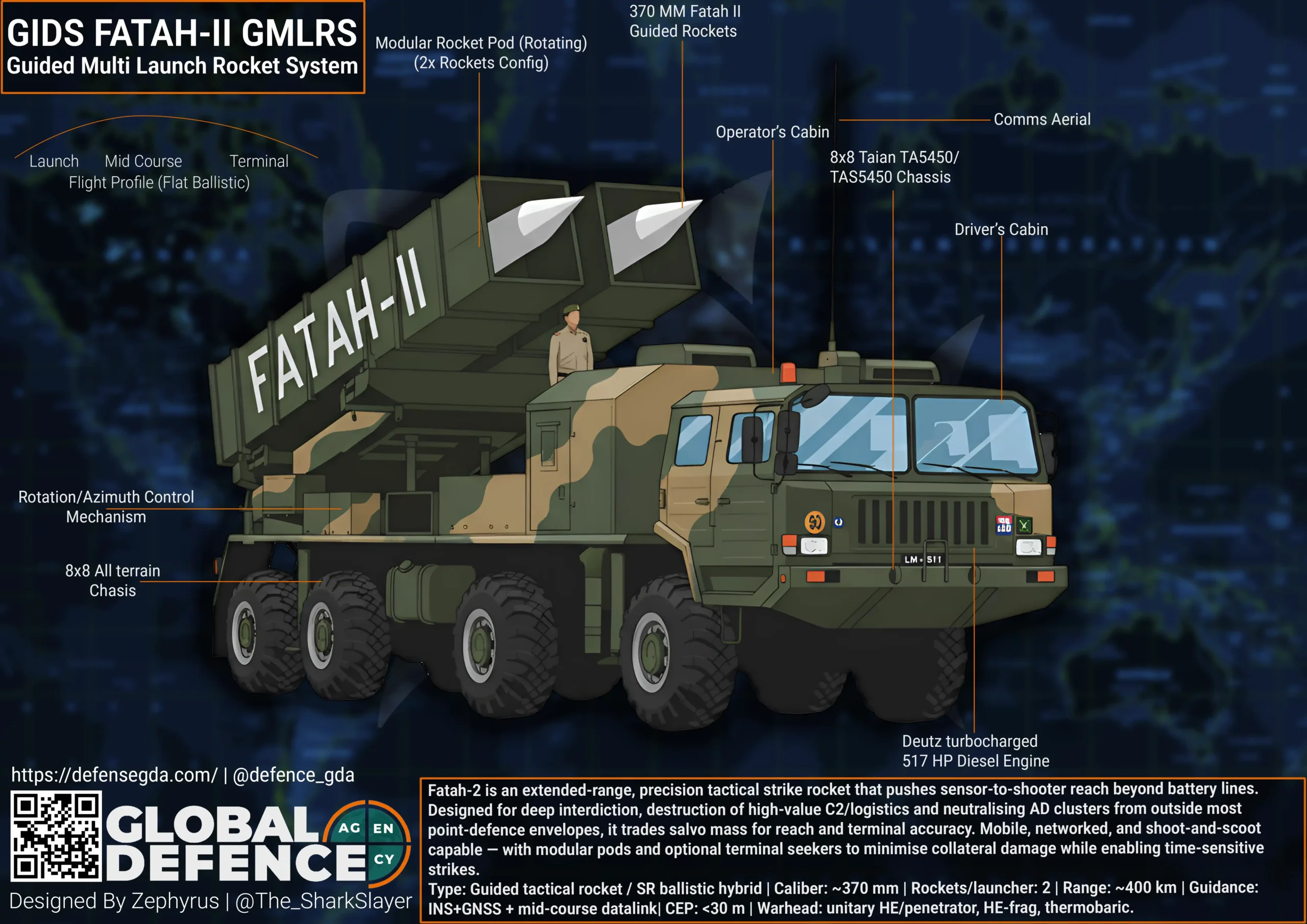




Pakistan has been consistently working to modernize its conventional defense capabilities, and a major step in this direction is the development and induction of the Fatah-II Guided Rocket System.
This isn’t just another piece of artillery—it represents a significant leap in the country’s long-range precision-strike options. Here is a breakdown of what makes the Fatah-II system so notable:
The Technical Edge of Fatah-II
The Fatah-II is an advanced, domestically developed weapon that significantly surpasses its predecessor, the Fatah-I.
| Feature | Detail |
| Weapon Type | Guided Multiple Launch Rocket System (GMLRS). |
| Maximum Range | Approximately 400 kilometers (≈250 miles). |
| Guidance System | Highly sophisticated integration of Inertial Navigation System (INS) and satellite navigation for mid-course correction. |
| Accuracy (CEP) | Reportedly very high, with official claims of a Circular Error Probable (CEP) of less than 10 meters. |
| Trajectory | Features a unique, “flat trajectory” profile, making it extremely difficult for conventional radar systems to detect and challenging for missile defense systems to intercept. |
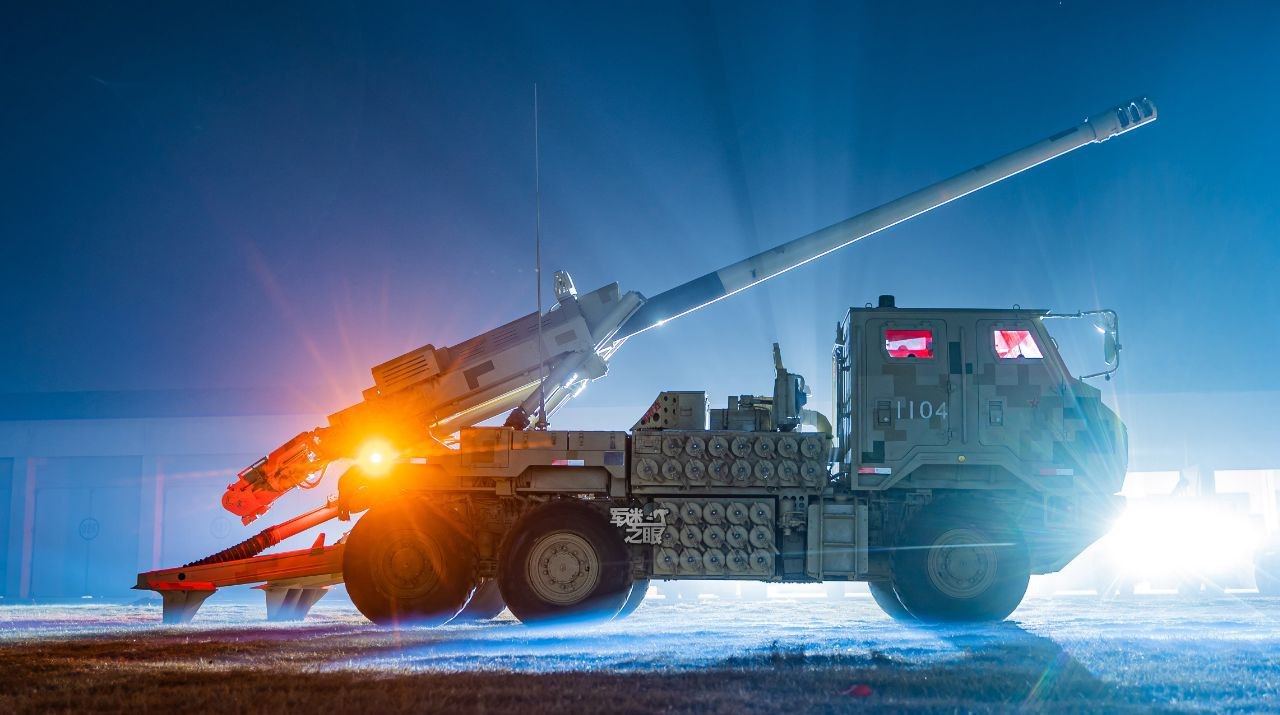
| Launch Platform | Highly mobile, typically seen mounted on a wheeled 8×8 mobile launcher (Transporter Erector Launcher or TEL) with two rockets. |
| Warhead | Carries a conventional warhead, designed for high-precision strikes. |
Export to Sheets
Why is the Fatah-II a Game-Changer?
The introduction of the Fatah-II system into the Pakistan Army’s Artillery Divisions is seen as a strategic upgrade for several key reasons:
- Deep Strike Capability: With a range of 400 km, the system allows the military to engage high-value targets—such as enemy airfields, military bases, command centers, and radar installations—far deeper inside adversarial territory than traditional artillery.
- Maneuverability and Survivability: The mobile launcher ensures that the system can be quickly relocated after firing, making it much harder for an adversary to target and destroy.
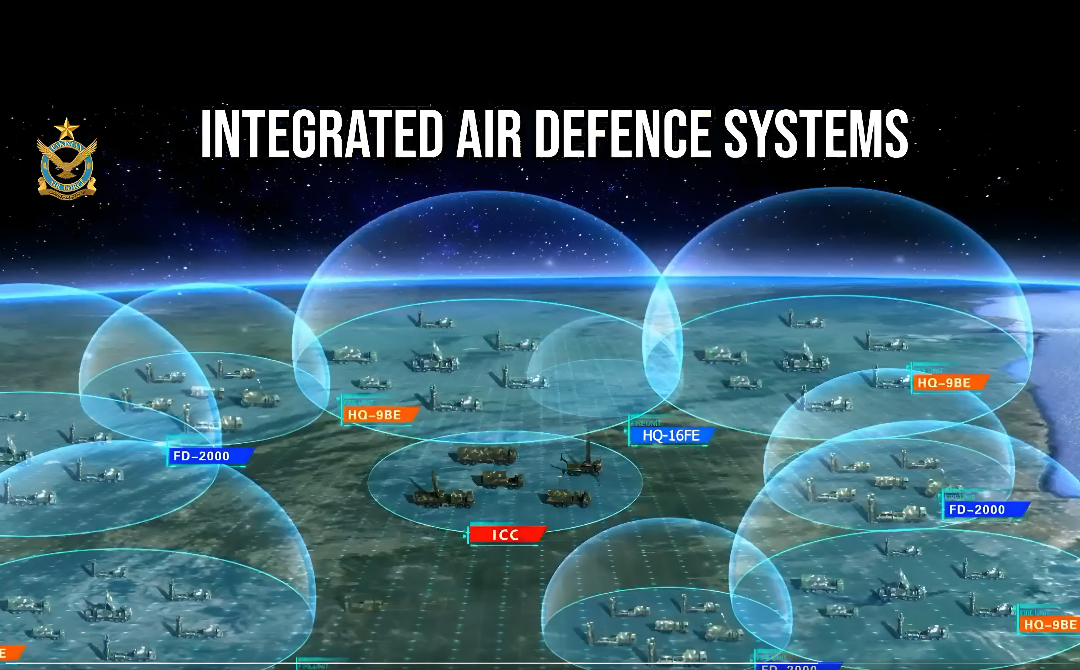
- Countering Air Defense: The system’s signature feature—its flat and maneuverable flight path—is a deliberate design choice aimed at challenging advanced layered air defense systems. By staying low and fast, the Fatah-II aims to shorten the reaction time available for interceptors.
- Precision and Lethality: The combination of an extended range with high precision (CEP <30 meters), achieved through modern avionics and guidance, transforms the rocket from a traditional area-saturation weapon into a genuine precision-strike tool.
The Fatah-II is categorized as a tactical, conventional weapon, reinforcing Pakistan’s ability to conduct stand-off, precision strikes and significantly upgrading the reach and lethality of its conventional arsenal.