
Introduction: The Anatomy of a Strategic Dilemma
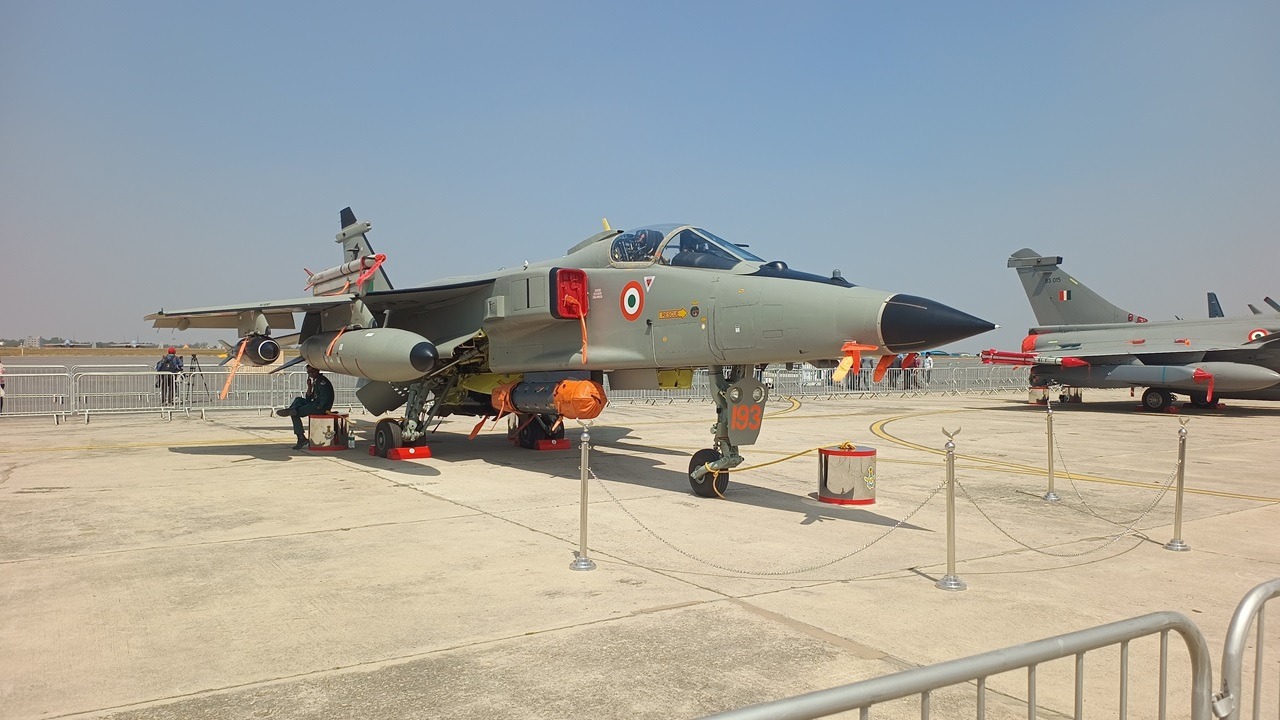
For over four decades, the SEPECAT Jaguar, affectionately designated the ‘Shamsher’ (Sword of Justice) in Indian service, has formed the tip of the spear for the Indian Air Force (IAF) in deep penetration strike missions.1 Conceived in the late 1960s as a joint British-French supersonic attack aircraft and trainer, the platform was initially inducted into the IAF in 1979.2 India rapidly became its largest global operator, acquiring over 160 airframes, some directly from the United Kingdom in fly-away condition, and the majority manufactured under license by Hindustan Aeronautics Limited (HAL).1 The Jaguar was specifically selected for its ruggedness, twin-engine reliability, and highly specialized low-level terrain-following capabilities, which allowed it to slip under adversary radar horizons to deliver conventional and tactical nuclear payloads deep into hostile territory.1
However, as of mid-2026, the strategic landscape and the physical condition of the fleet have radically deteriorated. The IAF finds itself in an increasingly precarious position regarding the sustainment of this legacy platform.6 Following the retirement of the Jaguar by the French Air Force in 2005, the United Kingdom’s Royal Air Force in 2007, and the Royal Air Force of Oman in 2014, India stands isolated as the solitary remaining operator of the aircraft globally.4 Consequently, the IAF must navigate a completely fragmented and collapsed international supply chain to keep an aging, fatigue-ridden fleet airborne.8
The systemic hurdles currently plaguing the Jaguar fleet are multifaceted, representing a destructive confluence of aerodynamic deficits, decades of bureaucratic mismanagement in defense procurement, and executional paralysis within India’s domestic aviation infrastructure.6 Out of a nominal inventory of approximately 115 to 120 airframes distributed across six frontline squadrons (Nos. 5, 6, 14, 16, 27, and 224), persistent maintenance bottlenecks, chronic engine failures, and critical spares constraints have depressed the operational availability to a mere 83 functional airframes.6 The fleet is effectively suffocating under the weight of an unresolved and officially abandoned propulsion crisis, heavily delayed indigenous avionics upgrades, and an over-reliance on a high-risk logistics strategy of global cannibalization.2
This comprehensive report evaluates the structural, economic, and strategic factors driving the Jaguar sustainment crisis. By extensively dissecting the operational collapse of the Adour engine replacement program, the protracted delays in the Digital Attack Ranging Inertial Navigation (DARIN) III upgrades, the extreme measures taken in international scavenging, and the tragic human cost of structural airframe fatigue, this analysis maps the profound doctrinal shifts being forced upon India’s defense planners.1 Furthermore, as the IAF struggles with a dangerously depleted squadron strength, having plummeted to a historic low of 29 against an authorized government mandate of 42.5 squadrons, the prolonged, agonizing twilight of the Jaguar serves as a critical case study in defense procurement pathologies and the urgent imperative for holistic force modernization.6
The Propulsion Crisis: Aerodynamic Deficits and the Re-engining Debacle
At the very core of the Jaguar’s operational degradation is a severe, chronic, and ultimately unrectified propulsion crisis. The aircraft is powered by two Rolls-Royce/Turbomeca Adour Mk 811 afterburning turbofans.14 These powerplants, originally designed in the 1970s and built under license by HAL for the Indian market since 1981, generate approximately 32.5 kiloNewtons (kN) of dry thrust and 37.5 kN (roughly 8,400 to 8,430 pounds) of maximum thrust with the afterburners engaged.3 While this thrust output was deemed adequate during the platform’s initial inception as a light tactical strike fighter, the progressive accretion of weight from successive heavy avionics suites, electronic warfare pods, and structural reinforcements has severely compromised the aircraft’s critical thrust-to-weight ratio.15
Thermodynamics and Hot-and-High Performance Penalties
The performance deficit of the legacy Adour Mk 811 engines is most acute in the hot-and-high environments typical of India’s strategic frontiers, particularly the high-altitude theaters of the Himalayas along the Line of Actual Control (LAC) and the extreme thermal conditions of the Thar Desert bordering Pakistan.3 The thermodynamic efficiency of any low-bypass turbofan engine is highly sensitive to ambient air density. As operational altitude and ambient temperature increase, the density of the air entering the engine intakes decreases substantially. This fundamentally alters the mass flow rate through the engine’s compressor and combustion core.
Mathematically, the actual thrust available at a given altitude and elevated temperature can be approximated relative to optimal sea-level thrust, demonstrating a non-linear decay in performance. For the Adour Mk 811 operating in India’s demanding high-density altitudes, this physical reality manifests as a critical 15% to 30% loss in available thrust during crucial phases of flight.6
This massive degradation fundamentally alters the tactical utility and survivability of the aircraft. Pilots are routinely forced into highly restrictive zero-sum calculations between munitions payload and operational range.3 A fully combat-loaded Jaguar, struggling with a 30% thrust penalty off the runway, cannot achieve the optimal climb rates required to clear terrain safely, nor can it reliably maintain the high subsonic cruising speeds essential for low-level penetration survival against modern interceptors.3 Veteran flight test engineers and frontline squadron pilots have persistently cited this lack of thrust as a severe operational hazard that exponentially increases pilot workload, limits the aircraft’s flight envelope, and restricts mission profiles entirely.3
The Collapse of the Honeywell F125IN Procurement
Recognizing this critical structural vulnerability, the IAF and the Ministry of Defense (MoD) initiated a highly ambitious, multi-billion dollar re-engining program aimed at entirely replacing the aging Adour engines to recapture the platform’s tactical viability.3 Following a formal Request for Proposal (RFP) issued on November 26, 2010, the process rapidly devolved into a bureaucratic quagmire indicative of India’s cumbersome Defense Procurement Procedure (DPP).3
The MoD established a specialized committee, headed by K.V.L. Rao, a prominent aero-engine expert and former project director at the Aeronautical Development Agency (ADA), to evaluate proposals.3 The mandate was to procure approximately 270 to 280 engines, sufficient to outfit a planned 120 aircraft with twin engines, alongside an allocation of 40 spare powerplants.3
Rolls-Royce initially responded by proposing the Adour Mk 821, an evolution of the existing engine that incorporated civil and military technology inserts to offer greater thrust, higher operating temperatures, and lower life-cycle costs.14 Because the Mk 821 would utilize existing HAL infrastructure, minimize complex airframe integration modifications, and share commonality with the Adour engines powering the IAF’s BAE Hawk advanced jet trainers, it appeared to be a highly pragmatic, low-risk solution.16 However, the MoD’s rigid bureaucratic interpretation of the “Open Tender” system dictated that the RFP called for a completely new engine replacement rather than an upgraded variant of the existing powerplant.18 Feeling structurally excluded by the strict parameters of the tender, Rolls-Royce formally withdrew from the bidding process entirely.18
This left the American aerospace manufacturer Honeywell as the sole vendor in the competition.21 Honeywell offered the F125IN turbofan, an engine that promised a revolutionary leap in the Jaguar’s capabilities.3
| Propulsion Parameter | Rolls-Royce Adour Mk 811 | Honeywell F125IN |
| Status | Current operational powerplant | Proposed upgrade, cancelled in 2019 |
| Maximum Thrust (Wet) | ~37.5 kN (8,430 lbf) | ~43.8 kN (9,850 lbf) |
| Maximum Thrust (Dry) | ~32.5 kN | ~27.7 kN |
| Physical Weight | Baseline | -600 lbs per engine compared to baseline |
| Hot-and-High Penalty | Severe (15% – 30% thrust loss) | Significantly mitigated by higher thrust |
| Projected Takeoff Run | Baseline | 25% shorter hot-and-high takeoffs |
| Projected Combat Range | Baseline | +36% combat range extension |
| Advanced Features | Analog/Mechanical control | Automatic restart after flame-out capability |
Table 1: Comparative capabilities of Jaguar propulsion options evaluated by the IAF. 3
Generating 43.8 kN of wet thrust while weighing a remarkable 600 pounds less than the legacy Adour, the F125IN was designed to theoretically drop-fit into the existing Jaguar airframes.3 The new engines were projected to enable 25% shorter takeoffs in hot-and-high conditions, extend the aircraft’s combat radius by an unprecedented 36%, and introduce crucial safety features like automatic restart after a mid-air flame-out.18 By 2016, following extensive evaluations, the IAF selected the F125IN on a single-vendor basis, intending to initially upgrade a core fleet of 80 aircraft.10
However, the financial realities of integrating cutting-edge foreign propulsion systems into legacy domestic airframes soon triggered a fatal dispute. In August 2019, after nearly a decade of stalled negotiations, the MoD officially cancelled the entire $2.4 billion re-engining program.10
Detailed financial breakdowns reveal the extent of the economic unviability that killed the project. Honeywell’s final quotation amounted to an exorbitant $13.3 million per engine (totaling roughly $2.4 billion or ₹18,500 crore for 180 engines).23 Concurrently, HAL, tasked with the incredibly complex engineering required to modify the airframes, integrate the new thrust profiles, develop the flight-control software, and conduct extensive flight-testing and certification, quoted over $3.12 million (₹20 crore) per aircraft installation.10 The combined procurement and integration costs pushed the per-aircraft upgrade price beyond $30 million (over ₹210 crore).23
HAL executives actively protested to Honeywell, writing formal notes arguing that the “high and unacceptable quote” would effectively “kill” the plan.22 When negotiations failed to reduce the overall package cost to a requested $1.9 billion, the IAF refused to seek the Defense Ministry’s essential ‘Acceptance of Necessity’ for the project, officially terminating the effort.23
The cancellation of the F125IN project underscores a profound misalignment between operational requirements and defense economics in India. While the MoD successfully saved billions of dollars in immediate capital outlay, the strategic consequence of this decision was catastrophic for the fleet. It condemned the remaining Jaguar squadrons to fly out their residual lifespans dangerously underpowered, exacerbating safety risks, accelerating the mechanical fatigue of the existing Adour engines, and drastically limiting their utility in a modern theater of war.6
Technological Ambition vs. Executional Paralysis: The DARIN Upgrades
While the propulsion upgrades ended in an expensive failure, the IAF achieved partial, though heavily delayed, success in modernizing the Jaguar’s avionics, electronic warfare, and weapon systems. This was executed through the indigenous Digital Attack Ranging Inertial Navigation (DARIN) programs, sequential upgrade suites designed to transform an analog Cold War-era bomber into a modern, network-centric precision-strike platform.7
The Evolution of the DARIN Architecture
The Jaguar’s modernization has occurred in three distinct phases over three decades. The initial DARIN I upgrade, implemented in the 1980s, retained the aircraft’s original “chisel” nose profile but introduced a foundational digital architecture.7 It integrated a Mil Std 1553B digital databus, Sagem navigation and attack systems, a combined map and electronic display, a modern head-up display (HUD), and a weapon-aiming computer.7 This foundational databus architecture was critical, as it enabled the subsequent integration of the laser-guided bombs that proved absolutely vital during the high-altitude precision strikes of the 1999 Kargil War against Pakistani infiltrators.1
The DARIN II modernization, which saw broad induction culminating around 2010, fundamentally altered the aircraft’s physical nose profile to accommodate a sophisticated Thales laser targeting and designation system.5 This upgrade package transitioned the cockpit toward a digital environment, adding an Israeli-made Elbit HUD, advanced inertial navigation/GPS systems, and a primary multifunction display (MFD).7 Crucially, DARIN II vastly improved the aircraft’s self-protection capabilities by integrating the Israeli-made Elta EL/L-8222 electronic warfare jammer, locally produced Tarang radar warning receivers (RWR), and new countermeasures dispensers.5 It also expanded the Jaguar’s offensive lethality by integrating the Textron CBU-105 Sensor Fuzed Weapon and the ASRAAM air-to-air missile.7
Furthermore, the DARIN II program heavily modernized the specialized maritime strike variant of the Jaguar, known as the Jaguar IM. Originally equipped with an obsolete Agave radar and Sea Eagle anti-ship missiles, the DARIN II upgrade replaced these legacy systems with the highly capable Elta EL/M-2032 radar and the American-made AGM-84 Harpoon Block II anti-ship missile, retaining the Jaguar’s relevance in coastal defense and naval interdiction roles.7 Approximately 60 of these DARIN-II upgraded Jaguars currently remain in service, constituting roughly half the active fleet, though they are strictly scheduled for phased retirement beginning in 2028 and concluding by 2031.25
The DARIN III Standard: 4.5-Generation Capabilities
The pinnacle of the Jaguar modernization effort is the DARIN III program. Initiated in 2008, informed heavily by avionics lessons learned from the indigenous Tejas Light Combat Aircraft (LCA) program, and led by HAL, the DARIN III suite was designed to elevate the surviving Jaguar airframes to a 4.5-generation equivalent in terms of situational awareness and targeting capabilities.7
The most significant technological leap in the DARIN III package is the integration of the Israeli-made Elta EL/M-2052 Active Electronically Scanned Array (AESA) radar.7 This integration marks a historic paradigm shift for the IAF, granting the Jaguar the distinction of being the first combat jet in Indian service to feature an operational AESA radar.7 The AESA radar provides massive tactical advantages, including the simultaneous tracking of multiple air and ground targets, vastly superior resistance to electronic jamming (ECCM), and high-resolution synthetic aperture ground mapping for pinpoint all-weather bombing.26
To process this wealth of sensor data, the DARIN III completely overhauls the cockpit. The analog instrumentation is entirely stripped out and replaced with a fully “glass” cockpit featuring three large multifunction displays (MFDs), a digital Engine and Flight Instrument System (EFIS), and a locally developed open-system-architecture mission computer.7
Furthermore, the pilot’s situational awareness and lethality are maximized through the integration of the Elbit Display and Sight Helmet (DASH).7 The DASH system is directly slaved to the MBDA Advanced Short Range Air-to-Air Missile (ASRAAM). Uniquely, the Jaguar mounts its air-to-air defense missiles on specialized overwing pylons, a design quirk that frees up critical underwing hardpoints for heavy drop tanks and ground-attack munitions.7 The integration of the ASRAAM with the helmet-mounted DASH display provides the pilot with a formidable high-off-boresight self-defense capability; the pilot merely needs to look at an intercepting enemy aircraft to achieve a missile lock, radically improving the otherwise sluggish aircraft’s survivability in contested airspace.7
| DARIN Standard | Key Upgrades & Integrations | Status | Planned Phase-Out |
| DARIN I (1980s) | Mil Std 1553B databus, Sagem Nav/Attack, HUD | Obsolete | Already retired |
| DARIN II (2000s) | Thales laser targeting, EL/M-2032 radar (IM variant), Harpoon, EL/L-8222 Jammer | ~60 active airframes | 2028 – 2031 |
| DARIN III (2010s) | EL/M-2052 AESA Radar, Glass Cockpit, DASH Helmet, ASRAAM | ~58-60 planned airframes | 2035 – 2050 |
Table 2: Evolution of the Jaguar DARIN avionics modernization programs. 5
Supply Chain Disruptions and HAL’s Implementation Delays
Despite the impressive technical specifications on paper, the execution of the DARIN III program has been a case study in systemic delay and supply chain vulnerability. The first flight of a DARIN III upgraded Jaguar occurred in 2012.7 Between 2015 and 2017, the DARIN III package was successfully integrated and tested on three prototype airframes, representing the IS (single-seat), IB (twin-seat trainer), and IM (maritime strike) variants, achieving Initial Operational Clearance (IOC).27
However, the transition from successful prototypes to serial fleet upgrades stalled dramatically. HAL executives publicly attributed significant delays to persistent supply chain disruptions originating from French defense contractors, particularly regarding the delivery of upgraded autopilot systems necessary to interface with the new digital architecture.26
Furthermore, the integration of the crucial AESA radar was bottlenecked by the complexities of international technology transfer (ToT). HAL signed a ToT contract with Israel’s Elta Systems to produce 54 EL/M-2052 radars at HAL’s Avionics Division in Hyderabad.27 The indigenization process required HAL to move sequentially from integrating completely built units (CBU) purchased directly from Israel, to assembling semi-knocked down (SKD) kits, and eventually producing completely knocked down (CKD) kits with indigenous parts.27 Clearance for the first CBU-phase AESA radar was only received in early 2021, meaning years were lost simply setting up the assembly protocols.27
Because of these cascading delays encompassing open-architecture software integration, radar assembly, and foreign parts sourcing, only about 58 to 60 airframes, representing half the operational fleet, were ultimately slated to receive the complete DARIN III package.17 The inability of HAL to rapidly execute these upgrades means that the profound tactical advantages of the AESA radar and ASRAAM are heavily diluted across the broader fleet. This has fractured the IAF’s Jaguar inventory into distinct capability tiers, vastly complicating maintenance logistics, training pipelines, and tactical deployment strategies.5
Logistical Collapse and the Imperative of Global Cannibalization
With global production lines for the Jaguar having been shuttered decades ago, and primary operators like the United Kingdom and France retiring their fleets in 2007 and 2005 respectively, the IAF is entirely isolated in its sustainment efforts.4 The lack of original equipment manufacturer (OEM) support from BAE Systems, combined with HAL’s own cessation of Jaguar airframe production, has precipitated a severe, existential logistics crisis.10
To circumvent the mass grounding of the fleet due to unserviceability, India has been forced to adopt an aggressive, desperate strategy of global scavenging. The IAF and HAL actively search the world for decommissioned Jaguar airframes, acquiring them strictly for parts recovery and dismantling rather than reactivation.2 This strategy of large-scale cannibalization reflects the highest degree of logistical strain imaginable for a modern air force, effectively running a massive reverse-engineering operation to harvest usable components before they degrade beyond repair.
The global footprint of this scavenging operation spans several continents:
- France: Recognizing India’s plight, France provided a critical initial tranche of support between 2018 and 2019. The French government transferred 31 to 32 retired Jaguar airframes, assorted Adour engines, and a vast quantity of spare parts to India essentially for free, with New Delhi only paying for the logistical shipping costs.2
- United Kingdom: The Royal Air Force offered critical support for India’s training infrastructure by transferring two Jaguar T-2 twin-seat trainer airframes, alongside an inventory of over 600 specialized spare items.2
- Oman: In a major diplomatic and defense alignment executed just ahead of Prime Minister Narendra Modi’s visit to Muscat in December 2025, Oman agreed to dispatch its entire surplus inventory to India. Oman, which operated the Jaguar until 2014, transferred over 20 retired airframes along with several highly coveted Adour engines and thousands of structural components.2
- Ecuador: Demonstrating the extreme lengths to which the IAF must go to sustain the Shamsher, New Delhi has actively negotiated with the South American nation of Ecuador. India seeks to acquire Ecuador’s decommissioned fleet of Cold War-era Jaguars specifically to strip them for any remaining viable parts.2
| Sourcing Nation | Assets Acquired / Negotiated | Operational Context | Status / Timeline |
| France | 31-32 airframes, engines, spares | Retired fleet in 2005 | Completed (2018-2019) |
| United Kingdom | 2 T-2 trainers, 600+ spare items | Retired fleet in 2007 | Completed |
| Oman | ~20 retired airframes, Adour engines | Retired fleet in 2014 | Executed late 2025 |
| Ecuador | Decommissioned airframes & parts | Former export operator | Under negotiation / Review |
Table 3: The IAF’s global sourcing and cannibalization footprint for Jaguar sustainment. 2
Beyond massive structural components like landing gear and wing spars, highly specialized, life-saving flight equipment is facing critical shortages. The Martin-Baker ejection seats utilized in the Jaguar rely on a highly specific supply of explosive pyrotechnics and mechanical spares to function.8 Because these pyrotechnic components have strict expiration dates and Martin-Baker’s support for the legacy Jaguar seat is virtually exhausted, the IAF has faced a “spares crunch” that directly threatens pilot lives.8 This has forced the IAF and indigenous research institutions to scramble for homegrown or alternative foreign substitutes to ensure basic pilot survivability during an emergency egress.8
The second-order implication of relying heavily on 59-year-old, heavily fatigued cannibalized components is severe. The mean time between failures (MTBF) for critical systems drops exponentially when utilizing salvaged parts, driving up maintenance man-hours and reducing overall sortie generation rates to a fraction of optimal wartime requirements.6
Infrastructure Deficits and the HAL Bottleneck
The structural inefficiencies and capacity limitations within India’s domestic defense production ecosystem bear significant responsibility for the protracted nature of the Jaguar fleet’s sustainment crisis. HAL’s Overhaul Division in Bangalore represents the nexus of this bottleneck.30 Established in December 1940, the division has over 80 years of history, having serviced World War II-era Liberators and Dakotas before transitioning to modern jets.31 Today, it is nominally responsible for the deep maintenance, major inspections, and complex DARIN upgrades of the Jaguar fleet, utilizing a workforce of 1,000 personnel and over 900 types of system testing equipment.30
However, the Overhaul Division’s capacity is vastly outstripped by the sheer volume and complexity of HAL’s overarching corporate mandate. HAL currently manages an immense, unprecedented order book valued at approximately ₹2.5 to ₹2.7 lakh crore (roughly $27 to $30 billion USD), which equates to nearly eight times the state-owned enterprise’s annual revenue.32 This massive backlog includes commitments to manufacture 83 Tejas Mk1A fighters, an additional order for 97 more Mk1A units, 156 Light Combat Helicopters (LCH Prachand), and 240 AL-31FP engines for the Su-30MKI fleet.32
| HAL Major Platform Commitments | Approximate Value / Order Size | Impact on Infrastructure Capacity |
| Tejas Mk1A Fighter | 83 initial + 97 additional units (~₹1.03 lakh crore) | Primary focus of fighter manufacturing lines |
| LCH Prachand Helicopter | 156 units (~₹62,700 crore) | Dominates rotorcraft division resources |
| Su-30MKI Engines | 240 units (~₹26,000 crore) | Monopolizes engine overhaul and testing bays |
| Jaguar / Mirage Overhaul | Deep maintenance and DARIN III upgrades | Constrained by higher-priority modern platforms |
Table 4: Overview of HAL’s massive $30 Billion order book creating infrastructure bottlenecks. 11
The geographic, heavily siloed structure of HAL’s operations, split between disparate manufacturing and overhaul divisions in Nashik, Bengaluru, and Koraput, has been consistently cited by the IAF, former Navy Chiefs, and MoD officials as a root cause of chronic delivery delays, cost overruns, and inconsistent quality control.11 The Jaguar upgrade program is forced to compete for specialized engineering talent, hangar space, and testing equipment against much higher-priority national platforms like the Tejas and Su-30MKI.
The systemic inability of HAL to rapidly execute the DARIN III upgrades and manufacture bespoke replacement parts for legacy fleets reached a critical threshold of political intolerance recently. Acknowledging the severe threat to India’s broader airpower readiness, the Ministry of Defense, driven by direct oversight from the Prime Minister’s Office following a July 2025 facility inspection, took an unprecedented step.32 The MoD formally engaged the Massachusetts-based Boston Consulting Group (BCG) to design a comprehensive, top-to-bottom restructuring blueprint for HAL.32 With a strict implementation deadline of March 2026, this restructuring mandates a transition away from HAL’s inefficient geography-based divisions toward streamlined, platform-based business units (e.g., Combat Aircraft, Helicopters).32
While this massive organizational pivot is absolutely necessary to ensure the success of future indigenous programs like the Tejas Mk2 and the fifth-generation Advanced Medium Combat Aircraft (AMCA), it comes too late to alter the trajectory of the Jaguar fleet. The legacy strike fighters remain hopelessly bottlenecked in Bengaluru’s overhaul bays, victims of an aerospace giant stretched far beyond its operational capacity.
A Decade of Losses: Attrition Rates and Major Incidents (2016–2026)
The systemic sustainment challenges and deep structural fatigue plaguing the Jaguar have directly manifested in an alarmingly high attrition rate over the platform’s lifespan. By 2015, aviation safety experts noted that the Jaguar fleet had already suffered an attrition rate of nearly 46%, with approximately 65 aircraft lost to crashes out of the 140 to 145 initially inducted into the IAF. Over the last decade (2016–2026), this perilous trend has continued unabated, with the IAF losing at least 13 to 16 additional Jaguars to various technical malfunctions and accidents.
This continuous attrition has exacerbated the IAF’s overall squadron depletion, stripping the force of vital deep-strike assets and irreplaceable aviators. The last ten years have been marked by a series of severe accidents, frequently linked to the legacy Adour engines or mid-air technical snags:
- September 13, 2016 (Ambala, Haryana): A Jaguar fighter caught fire during its takeoff roll at the Ambala Air Force Station. The pilot successfully aborted the takeoff, executed a rapid exit from the aircraft, and escaped safely while the fire was subsequently contained.
- October 3, 2016 (Pokhran, Rajasthan): A twin-seat Jaguar trainer crashed in the Pokhran area after developing a severe technical snag that triggered a mid-air fire and explosion during a routine firing practice. Both pilots successfully ejected and were recovered safely approximately 1.5 kilometers from the crash site.
- June 5, 2018 (Kutch, Gujarat): During a routine training mission originating from the Jamnagar air base, a Jaguar crashed over the Kutch region. The pilot, Air Commodore Sanjay Chauhan, sustained fatal injuries. Tributes and reports indicated that he chose not to eject immediately, valiantly staying with the failing aircraft to steer it away from a local village to prevent civilian casualties.
- March 7, 2025 (Panchkula/Ambala, Haryana): A Jaguar aircraft crashed shortly after taking off for a routine sortie. The pilot managed to eject safely and was hospitalized for observation.
- April 2, 2025 (Jamnagar, Gujarat): A twin-seater Jaguar went down in an open field near Suwarda village during a night training mission. Tragically, one young IAF pilot lost his life in the crash, while the second pilot ejected safely but sustained a fractured leg.
- July 9, 2025 (Churu, Rajasthan): A twin-seater trainer flying out of the Suratgarh air base crashed into an agricultural field near Bhanuda village. The devastating incident resulted in the fatal loss of both aviators, Squadron Leader Lokendra Sindhu (44) and Flight Lieutenant Rishi Raj Singh.
The Human Toll: Structural Fatigue and the 2025 Crash Spate
The convergence of an abandoned propulsion upgrade, deep structural airframe fatigue, and an overwhelming reliance on 59-year-old cannibalized spares translates directly into acute operational hazards for IAF aviators.5 Aircraft lacking specified rigid airframe calendar lives, such as the Jaguar, rely purely on ongoing Fatigue Index monitoring based on telemetry data.5 However, the extreme operational exploitation of the Jaguar fleet in high-stress, low-level environments has pushed many airframes to their absolute physical limits.5
The catastrophic, fatal consequences of these systemic sustainment failures were starkly highlighted throughout 2025. In a grim indication of the fleet’s rapidly declining safety margins, the IAF suffered an alarming spate of three severe Jaguar crashes within a single calendar year, with incidents occurring across the states of Haryana (March), Gujarat (April), and Rajasthan.34
The most devastating of these incidents occurred during a routine daytime training sortie over Bhanuda village in Rajasthan’s Churu district.34 The crash of a twin-seat Jaguar trainer resulted in the fatal loss of two highly trained aviators: Squadron Leader Lokendra Sindhu (44) and Flight Lieutenant Rishi Raj Singh.35
Courts of Inquiry routinely investigate these tragic incidents, frequently citing a repeating pattern of technical malfunctions indicative of extreme wear and tear. These failures range from sudden engine flameouts and catastrophic compressor stalls to unrecoverable oil pressure anomalies that seize the legacy Adour engines mid-flight.6 While the IAF has broadly and successfully reduced its overall accident rate over the last two decades, dropping from 0.93 per 10,000 flight hours between 2000 and 2005 down to 0.20 between 2020 and 2024, the localized, acute spike in Jaguar attrition during 2025 underscores a specific fleet entering the exponential, terminal phase of the aerospace reliability “bathtub curve”.36 The structural degradation of the platform actively forces the IAF leadership to balance the strategic necessity of maintaining minimum squadron numbers against the heavy ethical and operational cost of losing irreplaceable pilots to mechanical obsolescence.
Doctrinal Obsolescence and the Deep Strike Paradigm Shift
Beyond the tangible mechanics of engine failures and logistical collapse, the SEPECAT Jaguar is confronting a fundamental, insurmountable doctrinal obsolescence. The platform was designed and optimized around a very specific Cold War tactical paradigm: ultra-low-level, high-speed penetration.1 The foundational logic of the Jaguar was to fly barely above the treetops, utilizing terrain-masking to remain firmly under the radar horizon of enemy air defenses, in order to deliver conventional or tactical nuclear payloads deep into adversary staging areas.1
However, the regional balance of power and the proliferation of modern military technology have rendered this specific flight profile exceptionally hazardous. The deployment of modern Integrated Air Defense Systems (IADS) along India’s strategic periphery, specifically the densely networked active-electronically scanned radars, advanced infrared search and track (IRST) sensors, and long-range surface-to-air missiles (SAMs) fielded in massive numbers by China and Pakistan, has rendered low-altitude penetration virtually suicidal.6 Close-in, terrain-following flight profiles now expose the underpowered Jaguar to lethal arrays of modern short-range point defenses, man-portable air-defense systems (MANPADS), and the look-down/shoot-down capabilities of advanced airborne early warning and control (AEW&C) aircraft utilized by adversaries.6
Consequently, IAF combat doctrine is undergoing a massive, decisive shift away from direct, localized penetration toward network-centric, stand-off precision strike architectures.6 The survival and lethality of an attack aircraft in the 2030s relies almost entirely on its ability to deploy precision-guided munitions (PGMs) and cruise missiles from launch distances exceeding 300 to 400 kilometers, allowing the launching aircraft to remain well outside the lethal threat rings of enemy SAM systems.
While the DARIN III upgrade commendably introduced the ASRAAM for self-defense and the AESA radar for advanced situational awareness, the Jaguar fundamentally lacks the aerodynamic payload capacity, ground clearance, and structural integration potential to carry heavy, long-range stand-off cruise missiles like the supersonic BrahMos.6 The aircraft’s inherent physical inability to adapt to this stand-off doctrine effectively seals its strategic irrelevance in any future high-intensity, peer-to-peer conflict.
The Squadron Depletion Crisis and Interim Mitigation Strategies
The impending retirement of the Jaguar fleet cannot be viewed in isolation; it must be contextualized within the broader, severe crisis of the IAF’s shrinking combat mass. The Indian government explicitly recognizes a sanctioned requirement of 42.5 combat fighter squadrons to credibly deter a two-front collusive threat from Pakistan and China.7 However, following the long-overdue retirement of legacy MiG-21 Bison interceptor squadrons in 2025, the IAF’s effective strength has plunged to a historic, alarming low of just 29 to 31 active squadrons.8
In this environment of severe deficit, no combat-capable airframe can be retired without precipitating a dangerous capability gap, necessitating a highly stratified and careful phase-out plan. The oldest, non-upgraded Jaguar airframes, mostly the original British-built and early HAL batches utilizing the obsolete DARIN-II standard, are strictly scheduled for phased retirement beginning in 2028 and concluding by 2031.1 Conversely, the 60 DARIN III upgraded variants, possessing vastly superior electronic warfare and targeting capabilities, will be artificially sustained in service until roughly 2035, and potentially up to 2050 in highly niche, localized roles, though their operational tempo and flight hours will be severely curtailed to preserve airframe life.1
To prevent a total, catastrophic collapse in combat readiness while awaiting new aircraft, defense planners are executing complex interim mitigations. Chief among these is the life extension of the Dassault Mirage-2000 ‘Vajra’ fleet.1 Inducted in 1985 and originally scheduled for final retirement around 2035 alongside the Jaguars, the highly dependable Mirage-2000 fleet is now slated to remain in frontline service until 2038 or 2039.1
Unlike the Jaguar, the Mirage-2000 possesses robust, ongoing OEM technical backing from Dassault Aviation, readily accessible global spares, and thoroughly modernized RDY-2 radars paired with lethal MICA air-to-air missiles.1 This makes the life extension of the ‘Vajra’ a highly viable strategic stopgap. This extension is absolutely vital, as it buys critical time for the maturation and induction of the indigenous Tejas Mk1A, the under-development Tejas Mk2, and the protracted procurement of additional Multi-Role Fighter Aircraft (MRFA), such as further tranches of the Dassault Rafale.1
| Aircraft Platform | Original Retirement Target | Revised Service Extension | Primary Role in Force Transition |
| Jaguar (DARIN-II) | Mid-2020s | 2028 – 2031 | Gradual phase-out to free up manpower/resources |
| Jaguar (DARIN-III) | 2030s | 2035 – 2050 | Sustained for niche precision/maritime strike |
| Mirage-2000 (Vajra) | ~2035 | 2038 – 2039 | Critical stopgap to maintain squadron count |
| MiG-21 Bison | Complete by 2025 | Retired (2025) | Retirement triggered current 29-squadron low |
Table 5: Phased retirement and extension timelines impacting IAF fighter squadron strength. 1
The Strategic Successor: The “Super Su-30MKI” Transition
To definitively fill the vast operational void that will be left by the Jaguar’s obsolete deep-penetration capabilities, the IAF is relying heavily on the radical modernization of its massive heavy fighter fleet through the “Super Su-30MKI” program.6
Led by HAL in collaboration with the Defense Research and Development Organisation (DRDO) and private-sector aerospace partners, this massive ₹60,000 to ₹65,000 crore (approximately $7.2 to $7.8 billion USD) initiative aims to transform an initial tranche of 84 Su-30MKI air superiority fighters into true 4.5+ generation deep-strike platforms.6 The sweeping modernization encompasses 51 major planned system upgrades, fundamentally altering the aircraft’s combat architecture to replace the Jaguar’s mission set.6
Transitioning to Standoff Strike and SEAD
The Super Su-30MKI is designed explicitly to execute the stand-off doctrine the Jaguar cannot physically perform. The core of the upgrade is the integration of the indigenous Virupaksha (or Uttam) AESA radar, offering a 1.5 to 1.7 times improvement in detection range over existing Russian-origin sensors.6 Crucially, the heavy Sukhoi airframe provides the immense structural integration capacity required for heavy stand-off munitions. This includes the Astra Mk3 beyond-visual-range missile, the BrahMos-NG supersonic cruise missile, and the Rudram family of anti-radiation missiles.6
By integrating dedicated anti-radiation weapons, the Super Su-30MKI acquires a lethal Suppression of Enemy Air Defenses (SEAD) capability completely absent in the Jaguar’s architecture.6 Instead of attempting to fly under hostile radar networks like the Jaguar, the Super Su-30MKI will utilize its advanced electronic warfare suites and Rudram missiles to systematically blind and destroy the IADS networks that currently threaten IAF strike packages.6 Furthermore, analytical assessments dictate a massive force multiplier effect: due to its Mach 2 speed, vastly superior loiter time, and triple the payload capacity, a single modernized Super Su-30MKI can effectively perform the operational workload of two legacy Jaguars in a combat scenario.6
The Strategic Timing Risk
While the Super Sukhoi program masterfully rationalizes the fleet and promises an impressive 78% indigenous component content to boost strategic autonomy, the transition carries profound, immediate strategic timing risks.6 Following formal government approval, the incredibly complex upgrade program requires an estimated 5 to 7 years to reach initial and full operational capability milestones.6
With the bulk of the Jaguar fleet inevitably collapsing due to fatigue between 2028 and 2033, HAL must achieve a highly accelerated, flawless upgrade rate of 24 to 30 Su-30MKIs annually to bridge the looming capability gap.6 Given HAL’s deep historical inability to meet complex production deadlines, the very failure that necessitated the urgent 2026 BCG restructuring, any slippage in the Super Sukhoi timeline will result in a dangerous, multi-year erosion of India’s conventional deep-strike deterrence posture against its nuclear-armed neighbors.6
Conclusion
The twilight of the Indian Air Force’s SEPECAT Jaguar fleet represents a deeply complex, cautionary intersection of aeronautical physics, shifting modern warfare doctrines, and decades of chronic procurement mismanagement. The catastrophic failure to recapitalize the aircraft’s propulsion systems with the Honeywell F125IN engines ultimately condemned the platform. It forced the aircraft to operate with severe, compounding aerodynamic deficits that maximize pilot workload, restrict combat utility, and vastly increase the risk of tragic attrition, as grimly witnessed in the fatal 2025 crash spate in Rajasthan.6
Concurrently, the ambitious DARIN III avionics upgrades, while technologically brilliant in their integration of the EL/M-2052 AESA radar and ASRAAM missiles, were severely crippled by international supply chain disruptions and HAL’s indigenous integration bottlenecks.7 This executional paralysis resulted in a fractured fleet capability, where only half the Jaguars received the technology necessary to survive in modern airspace.5
The subsequent, desperate strategy of global cannibalization, scouring the boneyards of Oman, France, the United Kingdom, and potentially Ecuador for decommissioned airframes merely to harvest basic structural components and ejection seat pyrotechnics, is a profound testament to the resourcefulness of IAF logisticians.2 However, it starkly highlights a fundamentally unsustainable national defense posture. A modern, aspiring superpower cannot rely on reverse-engineering 59-year-old scavenged components to maintain credible deterrence against advanced, heavily networked, two-front adversaries.6
Ultimately, the Jaguar’s foundational low-altitude penetration doctrine has been definitively eclipsed by the lethality of modern integrated air defense systems, necessitating a total doctrinal transition to the heavy, stand-off strike and SEAD capabilities of the Super Su-30MKI.6 However, with the IAF hovering at an alarming, historic low of 29 fighter squadrons against an authorized 42.5, the institutional margin for error is non-existent.8 The successful phase-out of the Jaguar and the preservation of India’s strike capabilities now depends entirely on the Ministry of Defense and a newly restructured HAL ruthlessly executing the Su-30MKI upgrades and Tejas production lines on schedule.6 Until that transition is secured, the venerable Shamsher will continue to fly on borrowed time, sustained by global scrap and the extraordinary courage of its pilots, plugging a critical, dangerous gap in India’s national defense architecture.
Works cited
- Jaguar Phase-Out Being Prepared by IAF – Raksha Anirveda, accessed May 22, 2026, https://raksha-anirveda.com/jaguar-phase-out-being-prepared-by-iaf/
- India to Get Over 20 ‘Retired’ Jaguar Fighter Aircraft from Oman, accessed May 22, 2026, https://bharatshakti.in/oman-to-dispatch-jaguar-fighter-jets-to-india-for-spare-parts-acquisition-ahead-of-pm-modis-visit/
- Indian Jaguars to be re-engined – Military and General Aviation – CombatACE, accessed May 22, 2026, https://combatace.com/forums/topic/42884-indian-jaguars-to-be-re-engined/
- SEPECAT Jaguar – Wikipedia, accessed May 22, 2026, https://en.wikipedia.org/wiki/SEPECAT_Jaguar
- Touted As ‘Stealthier’ Than F-22 Raptor At Certain Angles, Why Is IAF Still Flying One Of World’s Oldest Jaguar Fighters? – EurAsian Times, accessed May 22, 2026, https://www.eurasiantimes.com/the-last-jaguars-in-the-world-crash-sparks-concern/
- India’s Strike Power Crisis: Ageing Jaguar Fleet Faces Collapse as …, accessed May 22, 2026, https://defencesecurityasia.com/en/india-air-force-jaguar-retirement-super-su30mki-deep-strike-dilemma-airpower-shift/
- India Can’t Give Up Its Jaguar Strike Aircraft – The War Zone, accessed May 22, 2026, https://www.twz.com/air/india-cant-give-up-its-jaguar-strike-aircraft
- Last Jaguar operator, IAF faces ejection-seat spares crunch, accessed May 22, 2026, https://www.newindianexpress.com/india/2026/May/22/last-jaguar-operator-iaf-faces-ejection-seat-spares-crunch
- India turns to Ecuador to keep Sepecat Jaguar attack jets flying until mid-2030s, accessed May 22, 2026, https://www.airdatanews.com/india-turns-to-ecuador-to-keep-sepecat-jaguar-attack-jets-flying-until-mid-2030s/
- India cancels Jaguar upgrade over Honeywell’s $2.4B price tag – Defense News, accessed May 22, 2026, https://www.defensenews.com/global/asia-pacific/2019/08/26/india-cancels-jaguar-upgrade-over-honeywells-24b-price-tag/
- HAL – Time to Get Going – A Comprehensive Story – Air Power Asia, accessed May 22, 2026, https://airpowerasia.com/2020/06/12/hal-time-to-get-going-a-comprehensive-story/
- India’s Shrinking Wings – Addressing The Indian Air Force’s Squadron Crisis – The Geostrata, accessed May 22, 2026, https://www.thegeostrata.com/post/india-s-shrinking-wings-addressing-the-indian-air-force-s-squadron-crisis
- Indian Air Force’s Fighter Jet Modernisation Plan – GS SCORE, accessed May 22, 2026, https://iasscore.in/current-affairs/indian-air-forces-fighter-jet-modernisation-plan
- Rolls-Royce Turbomeca Adour – Wikipedia, accessed May 22, 2026, https://en.wikipedia.org/wiki/Rolls-Royce_Turbomeca_Adour
- Jaguar Upgrade Now or Never – SP’s Aviation, accessed May 22, 2026, https://www.sps-aviation.com/story/?id=2182&h=Jaguar-Upgrade-Now-or-Never
- Rolls-Royce engine test proves Adour MK 821 is fit for Indian Jaguar requirement, accessed May 22, 2026, https://www.rolls-royce.com/media/press-releases-archive/yr-2009/160609-adour-indian-jaguar.aspx
- IAF Jaguars – “Aging Like A Fine Wine,” Why Retiring Nuke-Capable Combat Jets Is Not A Great Move? – EurAsian Times, accessed May 22, 2026, https://www.eurasiantimes.com/iaf-jaguars-stealthier-than-raptors-deadlier/
- Honeywell F125 Confirmed for Indian Jaguar Re-Engining – Aviation International News, accessed May 22, 2026, https://www.ainonline.com/aviation-news/2012-10-19/honeywell-f125-confirmed-indian-jaguar-re-engining
- The Truth About India’s Old Jaguar Fighter Jet Deal | Indian Air Force – YouTube, accessed May 22, 2026, https://www.youtube.com/watch?v=VzigiVV17DA
- Jaguar re–engining conundrum – SP’s MAI, accessed May 22, 2026, https://www.spsmai.com/experts-speak/?id=13
- IAF Jaguars Face Re-Engine Limbo As Single Vendor Situation Looms – Livefist, accessed May 22, 2026, https://www.livefistdefence.com/iaf-jaguars-face-re-engine-limbo-as/
- Honeywell’s high cost threatens Jaguar fighter’s engine upgrade – Broadsword by Ajai Shukla – Strategy. Economics. Defence., accessed May 22, 2026, https://www.ajaishukla.com/2019/01/honeywells-high-cost-threatens-jaguar.html
- Uncertainty over future of IAF’s Jaguars – Rediff.com, accessed May 22, 2026, https://m.rediff.com/news/report/uncertainty-over-future-of-iafs-jaguars/20190130.htm
- Honeywell/ITEC F124 – Wikipedia, accessed May 22, 2026, https://en.wikipedia.org/wiki/Honeywell/ITEC_F124
- IAF to Retire 60 Jaguar Aircraft with DARIN-II by 2031, Remaining Upgrading with DARIN-III, AESA Radar and ASRAAM | Defence News India, accessed May 22, 2026, https://defence.in/threads/iaf-to-retire-60-jaguar-aircraft-with-darin-ii-by-2031-remaining-upgrading-with-darin-iii-aesa-radar-and-asraam.9467/
- India Jaguar fighters face upgrade challenges – Defense News, accessed May 22, 2026, https://www.defensenews.com/air/2017/08/16/india-jaguar-fighters-face-upgrade-challenges/
- What happened to the Jaguar Darin 3 upgrades? : r/IndianDefense – Reddit, accessed May 22, 2026, https://www.reddit.com/r/IndianDefense/comments/1h4zj2w/what_happened_to_the_jaguar_darin_3_upgrades/
- IAF Jaguar firing AIM-132 ASRAAM from it’s overwing pylon. [1280×720] – Reddit, accessed May 22, 2026, https://www.reddit.com/r/WarplanePorn/comments/1nh4l9f/iaf_jaguar_firing_aim132_asraam_from_its_overwing/
- India Scours World for 59-Year-Old Jaguars, Bought From Oman, France, Now Ecuador Can’t Afford to Lose 6 Squadrons | Defense Express, accessed May 22, 2026, https://en.defence-ua.com/news/india_scours_world_for_59_year_old_jaguars_bought_from_oman_france_now_ecuador_cant_afford_to_lose_6_squadrons-17181.html
- Hindustan Aeronautics Limited – CARE Ratings, accessed May 22, 2026, https://www.careratings.com/upload/CompanyFiles/PR/202603130335_Hindustan_Aeronautics_Limited.pdf
- Overhaul Division Bangalore – Hindustan Aeronautics Limited, accessed May 22, 2026, https://hal-india.co.in/production-unit-details/overhaul-division-bangalore
- HAL at a Turning Point amid India’s Airpower Gap – CSDR, accessed May 22, 2026, https://csdronline.com/blind-spot/hal-at-a-turning-point-amid-indias-airpower-gap/
- Hindustan Aeronautics Limited – Wikipedia, accessed May 22, 2026, https://en.wikipedia.org/wiki/Hindustan_Aeronautics_Limited
- This Is Exclusive: IAF Jet Crashes In Rajasthan | Third Jaguar Fighter Jet Crash in 2025, accessed May 22, 2026, https://www.youtube.com/watch?v=kAhco8G7zGk
- Pilots Killed In Jaguar Crash: Squadron Leader, 31, Flight Lieutenant, 23 – NDTV, accessed May 22, 2026, https://www.ndtv.com/india-news/iaf-jaguar-crash-in-churu-pilots-killed-in-jaguar-crash-squadron-leader-44-and-young-lieutenant-8852285
- IAF Jaguar Fighter Jet Crashes in Rajasthan’s Churu – Bharat Shakti, accessed May 22, 2026, https://bharatshakti.in/iaf-jaguar-fighter-jet-crashes-in-rajasthans-churu-third-jaguar-loss-in-2025/
- Future of the Indian Air Force – Wikipedia, accessed May 22, 2026, https://en.wikipedia.org/wiki/Future_of_the_Indian_Air_Force
Indian Air Force plans Jaguar retirement and Mirage-2000 life extension to 2039, accessed May 22, 2026, https://aerospaceglobalnews.com/news/indian-air-force-sepecat-jaguar-retirement-mirage-2000-extension/