


Executive Summary
The modernization of the Indian Armed Forces has undergone a profound paradigm shift since the turn of the millennium. Over the past two and a half decades, the defense procurement ecosystem has transitioned from a rigid, monolithic reliance on state-owned Defence Public Sector Undertakings (DPSUs) and the Ordnance Factory Board (OFB) to a highly integrated, decentralized approach that actively incorporates private sector enterprises. This transition, driven by overarching policy frameworks such as the Defence Procurement Procedure (DPP) reforms, “Make in India,” and the subsequent “Aatmanirbhar Bharat” (Self-Reliant India) initiative, was designed to foster domestic technological innovation, reduce debilitating import dependencies, and expedite the acquisition of critical military hardware. However, this strategic pivot has exposed profound, systemic vulnerabilities within the defense supply chain. An exhaustive analysis of procurement data, Comptroller and Auditor General (CAG) audit reports, legal proceedings, and military operational records from 2000 to 2026 reveals a persistent and dangerous pattern: the procurement of substandard, defective, and strategically compromised components from at least twelve identified Indian private defense contractors.
These manufacturing defects are not isolated industrial anomalies; they are the direct consequences of systemic failures in vendor evaluation methodologies, quality assurance protocols, and supply chain transparency. The ramifications of these failures extend far beyond mere financial losses or contractual disputes. Substandard components injected by private vendors have directly caused catastrophic accidents resulting in fatalities, severely degraded the operational readiness of front-line combat platforms, and introduced acute geopolitical vulnerabilities through the clandestine integration of adversarial technologies. From armored divisions immobilized in extreme climates by inadequate thermodynamic components to devastating naval tragedies resulting from defective battery valves, and from artillery platforms utilizing counterfeit bearings to advanced aviation systems suffering fatal metallurgical fatigue, the contamination of the military ecosystem by defective private-sector parts constitutes a critical national security threat. This report provides an exhaustive, multi-domain analysis of these procurement failures, dissecting the precise mechanisms of supply chain contamination, quantifying the responsible private actors, evaluating the resulting operational consequences, and analyzing the complex regulatory challenges inherent in balancing quality assurance with procurement velocity.
The Strategic Context: Privatization and Procurement Velocity (2000-2026)
The Indian defense procurement ecosystem is arguably one of the most complex logistical networks globally, tasked with maintaining a massive, multi-theatre military apparatus facing active, hostile borders. Historically, the supply of munitions, armored vehicles, aerospace platforms, and naval assets was the exclusive domain of the state. The OFB, a conglomerate of 41 ordnance factories, alongside various DPSUs like Hindustan Aeronautics Limited (HAL) and Bharat Electronics Limited (BEL), monopolized defense production.1 While these state entities remain foundational to India’s military capabilities, their operations have historically been plagued by bureaucratic lethargy, technological obsolescence, and profound production shortfalls. For example, extensive audit reports evaluating the period between 2009 and 2016 indicated that the OFB’s production shortfalls for various types of critical ammunition ranged from 54 percent to an astonishing 95 percent, leaving the military with dangerously inadequate war wastage reserves (WWR).3 The 1999 Kargil conflict (Operation Vijay) served as a stark catalyst, where emergency procurements revealed the absolute inadequacy of existing supply chains and highlighted the prevalence of substandard equipment delivery.5
To rectify these chronic deficits, the Ministry of Defence (MoD) aggressively opened the sector to private industry. Private firms, ranging from large corporate conglomerates to micro, small, and medium enterprises (MSMEs), were contracted to supply everything from raw materials and basic sub-assemblies to complete technological platforms, such as unmanned aerial vehicles (UAVs) and advanced tactical firearms.6 While this policy successfully diversified the industrial base and generated employment, it simultaneously dismantled centralized oversight. The defense supply chain became highly fragmented. Prime integrators like HAL, the Gun Carriage Factory (GCF), and the Heavy Vehicles Factory (HVF) increasingly relied on multiple tiers of private subcontractors to supply critical dynamic components, electronics, and precision metallurgy.
This decentralization introduced a profound structural risk. Many private vendors, eager to secure lucrative defense contracts and capitalize on government production-linked incentives, lacked the specialized infrastructure, advanced metallurgical expertise, and rigorous quality control protocols strictly required for military-grade manufacturing.8 Furthermore, the overarching procurement doctrine heavily favored the Lowest Bidder (L1) system. Under this rigid financial framework, contracts are routinely awarded to the vendor offering the lowest financial quote, provided they meet baseline technical criteria on paper. This systemic prioritization of cost efficiency over proven, specialized capability has repeatedly resulted in the selection of inexperienced vendors, leading directly to the infiltration of defective components into the military supply chain.
Quantifying the Crisis: Identifying the Private Actors and Defect Typologies
A critical requirement for understanding the scope of this crisis is the explicit identification and quantification of the private Indian companies that have been documented as producing or supplying subpar, defective, or compromised parts to the military since the year 2000. While the absolute number of offending sub-tier MSMEs is obscured by prime contractor non-disclosure agreements and complex supply webs, explicit government documentation, CAG reports, Central Bureau of Investigation (CBI) probes, and MoD debarment lists explicitly name at least twelve prominent Indian private companies implicated in severe quality failures, supply chain subversion, or fatal manufacturing defects.
The table below enumerates these specifically identified Indian private defense contractors, detailing their operational domains, the nature of the defective or compromised components they supplied, and the resulting operational impact on the armed forces.
| Indian Private Company | Military Domain | Component Supplied | Nature of Defect / Supply Chain Failure | Documented Consequence |
| Tec Aero Devices | Aerospace/Aviation | 172 components for Light Combat Aircraft (LCA) Tejas Mk1A | Submission of 199 completely forged material and quality test reports (tensile strength, salt spray, etc.). | Company debarred for three years (until March 2027); criminal FIR filed by HAL for cheating and forgery. |
| Perfect Radiators and Oil Coolers Pvt Ltd (later Lloyd Electric and Engineering Ltd) | Armored Vehicles | Plate and bar type radiators for T-90 Main Battle Tanks | Total failure of thermodynamic cooling capacity; severe metallurgical non-conformance; lack of manufacturing capability. | 93 newly built T-90 tanks grounded due to overheating (120°C); forced emergency import of radiators from Russia at a cost of $6.94 million; ₹2.78 crore domestic expenditure rendered infructuous.8 |
| Sidh Sales Syndicate | Artillery Systems | Wire Race Roller Bearings for the 155mm Dhanush Howitzer | Supply of counterfeit, cheap Chinese bearings fraudulently embossed as “CRB-Made in Germany”; severe deviations in dimensional tolerances. | Subverted the artillery supply chain; jeopardized the traverse/elevation mechanisms and structural safety of a frontline artillery piece; triggered CBI criminal investigation.10 |
| Exide Industries (acquired Standard Batteries Limited) | Naval/Submarines | Lead-acid submarine battery banks and associated ventilation valves | Supply of defective battery valves leading to the catastrophic failure to vent highly volatile hydrogen gas during charging cycles. | Initiated an uncontrolled accumulation of hydrogen gas leading to massive internal explosions on the INS Sindhurakshak, resulting in the sinking of the vessel and the deaths of 18 naval personnel.13 |
| Dhaksha Unmanned Systems | Aerospace/UAS | Medium, Heavy, and Light-weight Logistics Drones | Clandestine integration of banned, uncertified Chinese electronic components, sensors, and motors into military drone platforms. | ₹230 crore emergency procurement contracts for the Army scrapped; introduced severe cyber-kinetic vulnerabilities, including the risk of electronic hijacking and data exfiltration.18 |
| Garuda Aerospace | Aerospace/UAS | Swarm Drones, Logistics Drones | Utilization of banned Chinese components in military-grade unmanned aerial systems despite strict MoD prohibitions. | Department of Defence Production (DDP) issued official warnings to industry bodies against sourcing from the company; defense contracts subjected to heavy scrutiny and cancellation risks.7 |
| Sky Industries | Aerospace/UAS | Unmanned Aerial Vehicles | Integration of prohibited foreign electronics posing extreme national security and cybersecurity risks. | Officially flagged by the MoD in June 2024 directives to FICCI and SIDM, warning the broader defense ecosystem to exercise extreme caution.22 |
| HBL NIFE | Tactical Communications | Nickel-Cadmium (NiCd) battery sets for military radio equipment | Complete failure to withstand prescribed operational life cycle tests; delivered 6,416 defective batteries that could not sustain power. | ₹2.32 crore expenditure on defective power sources; troops issued failing communication equipment; contract improperly amended to relieve vendor of replacement liabilities.24 |
| T S Kishan and Co Pvt Ltd | Munitions/Artillery | Explosive shells and sub-components for 155mm Bofors guns | Implicated in massive corruption, bribery, and the delivery of compromised shell components to the OFB. | Company formally blacklisted by the MoD for ten years following CBI investigations into the Sudipto Ghosh OFB bribery scandal.25 |
| R K Machine Tools (India) | Munitions/Artillery | 120mm shells, 155mm ammunition components, and flares | Engagement in illicit gratification and bribery to push sub-standard munitions components through the Ordnance Factory Board. | Formally debarred and blacklisted from conducting any business with the defense establishment for a decade.25 |
| HYT Engg (India) | Munitions/Artillery | 155mm artillery components | Implicated in the systemic subversion of the munitions procurement process through corrupt practices. | Blacklisted indefinitely alongside international firms during the sweeping 2009 anti-corruption purges.25 |
| Ideaforge Technology | Aerospace/UAS | Surveillance and reconnaissance drones | Allegations of circumventing indigenous manufacturing requirements by utilizing illegal Chinese components in drone platforms. | Highlighted systemic issues in the drone supply chain, leading to regulatory scrutiny regarding claims of indigenous technological development.28 |
This quantification underscores that the introduction of defective parts is not localized to a single military branch but spans armor, artillery, naval propulsion, aviation, tactical communications, and modern unmanned systems.
Systemic Pathologies: Procurement Mechanisms and Quality Assurance Deficits
The recurring procurement of defective components from these identified private entities is symptomatic of broader, systemic pathologies within the MoD’s acquisition and oversight apparatus. The Comptroller and Auditor General (CAG) of India has repeatedly highlighted the absence of a professional and technically competent framework capable of accurately identifying industrial gaps and evaluating the true capacities of private vendors.29
A primary point of failure lies within the Directorate General of Quality Assurance (DGQA), the central nodal agency responsible for ensuring the absolute quality, metallurgical fidelity, and operational safety of military equipment and stores.30 While the DGQA possesses extensive testing infrastructure, its functional ability to meticulously audit thousands of private subcontractors and MSMEs is fundamentally constrained by severe manpower limitations, outdated inspection methodologies, and bureaucratic inertia. Consequently, quality assurance checks are often reduced to perfunctory sampling, allowing substandard materials to seamlessly bypass inspection. In Munitions India Limited (MIL), for instance, systemic deficiencies in the timely procurement and rigorous inspection of raw materials from private suppliers have resulted in vast inventories of compromised stores, directly impacting the safety and efficacy of the munitions ultimately produced by the state.31
Emergency Procurements (EP), often triggered by immediate operational necessities such as the 2020 Galwan Valley border skirmishes with China or Operation Sindoor, further exacerbate these inherent vulnerabilities. Under EP phases (EP-1 through EP-6), standard technical trials, comprehensive environmental evaluations, and extensive vendor vetting processes are routinely truncated or entirely waived to drastically accelerate delivery timelines.30 A comprehensive CAG audit of Army emergency procurements revealed a disturbing reality: 72 percent of these expedited contracts suffered from extensive delays, and a significant 30 percent of supply orders intended for indigenized development had to be foreclosed entirely.32 The primary reasons for these foreclosures included the private vendors’ sheer inability to develop the required items, their failure to source specified military-grade materials, and their lack of foundational manufacturing infrastructure.32 This dynamic creates a hazardous environment where inexperienced private firms secure highly lucrative contracts they are technically incapable of fulfilling. When faced with impending deadlines, these firms subsequently resort to substandard manufacturing processes or rely on unauthorized grey-market imports to meet delivery schedules.
Case Study I: Thermal Dynamics and Armored Failure – The T-90 Radiator Crisis
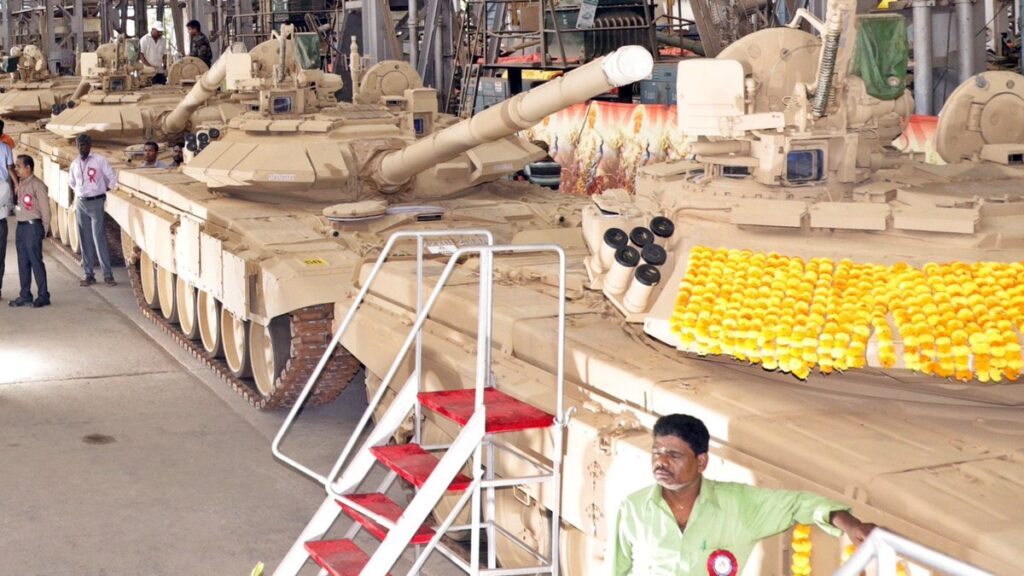
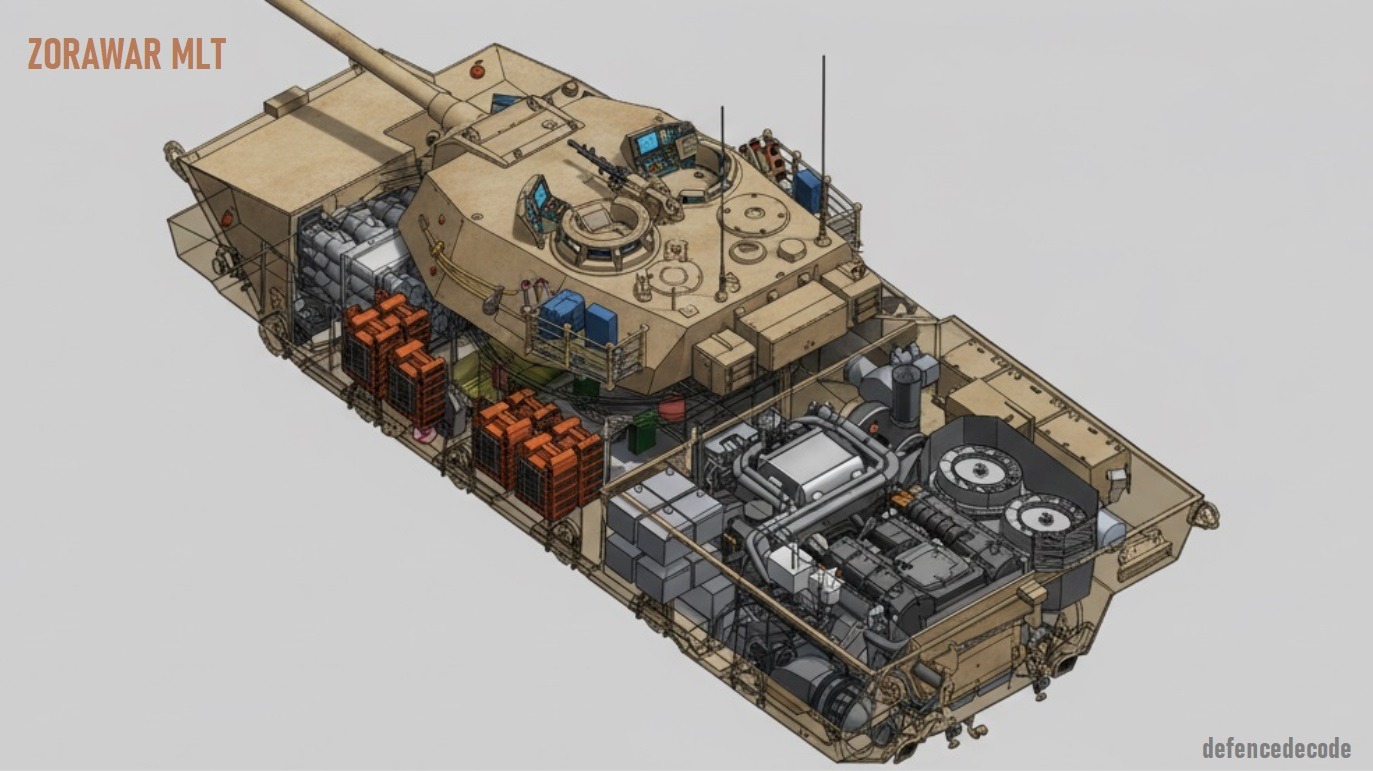
The procurement of radiators for the Indian Army’s premier Main Battle Tank, the T-90 “Bhishma,” serves as the quintessential case study illustrating the catastrophic dangers of the L1 vendor system and the profound operational consequences of substandard private manufacturing. Indigenous production of the T-90 at the Heavy Vehicles Factory (HVF) in Avadi is based on a complex Transfer of Technology (ToT) obtained from Russian state agencies in 2001.8 The T-90 utilizes a highly specialized plate and bar type radiator, combining a precise water cooler and oil cooler within a fabricated framed structure, which is absolutely vital for maintaining engine temperatures within critical tolerances, particularly during sustained operations in the extreme 50°C heat of the Thar Desert.8
In May 2005, HVF issued a tender inquiry for 102 radiator units to support a broader Army indent for 300 tanks. A specialized Technical Committee was convened to verify the manufacturing capabilities of the bidding firms. This committee explicitly warned that the lowest bidder, Firm ‘A’ (M/s. Perfect Radiators and Oil Coolers Private Limited, later renamed M/s. Lloyd Electric and Engineering Limited), possessed absolutely no prior experience in manufacturing this highly specific, thermally demanding type of radiator.8 The committee noted that the company was merely in the preliminary process of establishing an aluminum radiator facility, which was not slated to commence commercial production for several months.8 Conversely, a more expensive bidder, M/s Teksons Limited (Firm ‘B’), possessed a proven track record, having previously developed radiator cores of the exact design and size for the Combat Vehicles Research and Development Establishment (CVRDE).8
Disregarding these stark technical warnings, the Tender Purchase Committee-I (TPC-I) of HVF awarded the contract to Perfect Radiators in July 2006 solely because their financial quote of ₹2.28 crore was lower than Teksons’ quote of ₹3.79 crore.8
The subsequent execution of the contract was characterized by severe deviations from established quality control protocols. The contract mandated the delivery of two pilot samples for rigorous testing. However, HVF inexplicably waived this requirement, testing only a single sample that was delivered five months behind schedule.8 Despite formally acknowledging existing discrepancies in raw material quality and fitment dimensions, HVF irresponsibly issued Bulk Production Clearance (BPC) in January 2008.8 The private vendor subsequently failed to meet all delivery timelines, dragging the supply of 65 radiators out to 2010.8 Inexplicably, HVF continued to place additional option-clause orders with the failing company through 2013.8
The operational fallout was disastrous and swift. During Joint Receipt Inspections (JRI) conducted by the Army in October 2014, testing revealed a critical defect: the indigenous radiators fundamentally failed to cool the massive tank engines, causing thermal dynamics to break down and engine temperatures to dangerously spike to 120°C.8 A detailed technical analysis by the Controllerate of Quality Assurance, Heavy Vehicle (CQA), the quality assurance establishment under the DGQA, confirmed that the radiators manufactured by Perfect Radiators failed to meet the stipulated drawings and specifications. The components suffered from severe manufacturing, material, and structural non-conformances.8 Consequently, 93 newly produced T-90 tanks were rendered entirely combat-ineffective and formally unacceptable to the Army.8
To rectify the immediate crisis and restore the armored brigade’s operational readiness, the MoD was forced to bypass the domestic supply chain entirely. The government initiated an emergency import of 93 replacement radiators directly from the Russian Original Equipment Manufacturer (OEM) at a substantial cost of $6.94 million USD.8 Concurrently, the ₹2.78 crore spent on the indigenous private radiators was declared an entirely infructuous expenditure.8 This case unequivocally demonstrates how prioritizing minor financial savings (roughly ₹1.5 crore) during private vendor selection can compromise the strategic readiness of entire armored divisions, delay inductions by nearly a decade, and ultimately incur massive secondary hard-currency costs.
Case Study II: Artillery Supply Chain Subversion – The Dhanush Counterfeit Bearings
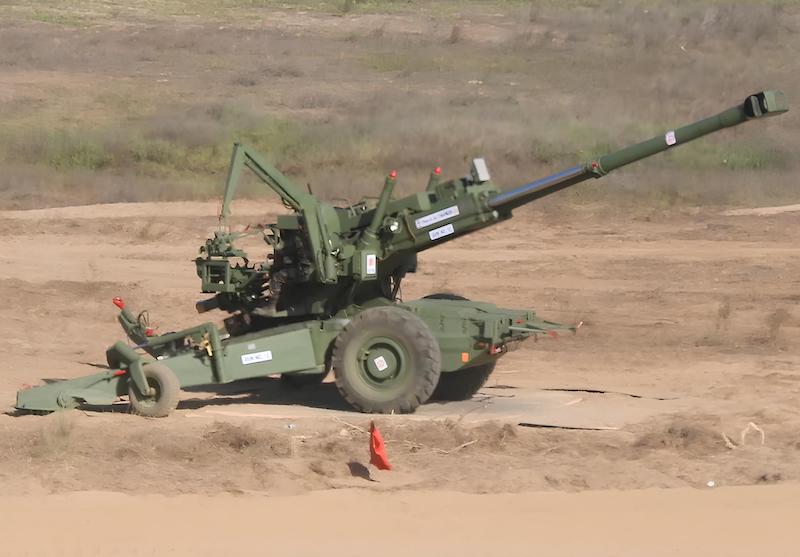
While the T-90 incident highlights profound technical incompetence paired with bureaucratic negligence, the procurement of sub-components for the Dhanush 155mm artillery gun exposes active supply chain obfuscation, forgery, and outright fraud by private defense contractors. The Dhanush is an indigenized, technologically upgraded variant of the original Swedish Bofors howitzer. Having proved its devastating worth during the 1999 Kargil conflict, the localized Dhanush represents a critical, high-prestige pillar of the Indian Army’s artillery modernization program.11 The precise metallurgical fidelity of its dynamic components is non-negotiable, as artillery platforms are subjected to immense kinetic forces, extreme friction, and thermal stresses during sustained firing missions.
In 2013, the Gun Carriage Factory (GCF) in Jabalpur floated a sensitive tender for the procurement of “Wire Race Roller Bearings,” a highly specialized dynamic component absolutely essential for the massive gun’s traverse and elevation mechanisms. The contract, valued at over ₹50 lakh across multiple orders, was awarded to a private Delhi-based vendor, Sidh Sales Syndicate.11 The uncompromising terms of the contract explicitly required these critical bearings to be sourced from CRB Antriebstechnik, a highly reputed manufacturer based in Germany.11
However, deep investigations initiated by the Central Bureau of Investigation (CBI) revealed a highly coordinated criminal conspiracy to infiltrate the defense supply chain with counterfeit, fundamentally unsafe components.10 The CBI probe discovered that the specified German firm did not, in fact, manufacture these specific spares.11 Instead, Sidh Sales Syndicate had illicitly sourced cheap, substandard bearings from Sino United Industries located in Luyang, Henan, China.11 To bypass strict origin restrictions, the private Indian vendor actively camouflaged these Chinese parts, physically embossing the metal with the fraudulent stamp “CRB-Made in Germany” and submitting entirely forged certificates of origin to the GCF.11
Further compounding this massive failure of integrity, preliminary quality assurance tests conducted by the GCF clearly indicated that the supplied bearings were unacceptable due to severe deviations in basic dimensional tolerances.11 Yet, in a glaring breach of military protocol that triggered the CBI’s cheating and criminal conspiracy charges, unidentified GCF officials formally accepted the counterfeit components as a “special case” based entirely on the private vendor’s hollow assurance that they would replace the bearings free of cost in the event of non-performance.11
The integration of fake, dimensionally deviant, uncertified Chinese bearings into a frontline artillery piece severely jeopardizes the physical safety of gun crews. In the context of heavy artillery, mechanical failure of a traverse bearing under recoil stress can lead to catastrophic platform destruction. This incident underscores a critical vulnerability in the current private-sector integration model: private vendors acting as mere aggregators or middlemen can easily exploit opaque supply networks to bypass origin restrictions, thereby masking the true provenance and metallurgical quality of vital military hardware.
Case Study III: Naval Catastrophes – Battery Valve Defects and the Submarine Fleet
The most tragic, fatal manifestation of defective private sector manufacturing within the Indian military occurred in the unforgiving underwater domain. The Indian Navy’s submarine fleet, heavily reliant on conventional diesel-electric propulsion architecture, requires massive banks of highly specialized lead-acid batteries. These batteries are the literal lifeblood of a conventional submarine, providing the immense electrical power required to operate silently while submerged. However, the chemical charging cycles of these batteries generate highly volatile hydrogen gas. Preventing an explosion requires flawless structural integrity, state-of-the-art ventilation systems, and precision valve mechanisms to prevent accumulation in the confined spaces of a pressurized hull.14
For decades, the Indian Navy has relied on a virtual monopoly for its submarine batteries, primarily sourcing them from an established Indian private vendor, Standard Batteries Limited, a company that was subsequently acquired by the corporate giant Exide Industries.15 A typical Kilo-class (Sindhughosh-class) submarine utilizes a staggering battery bank consisting of approximately 500 individual cells, with each cell weighing 800 kilograms.14 The sheer volume of packaged electrical power requires absolute perfection in manufacturing and materials science.
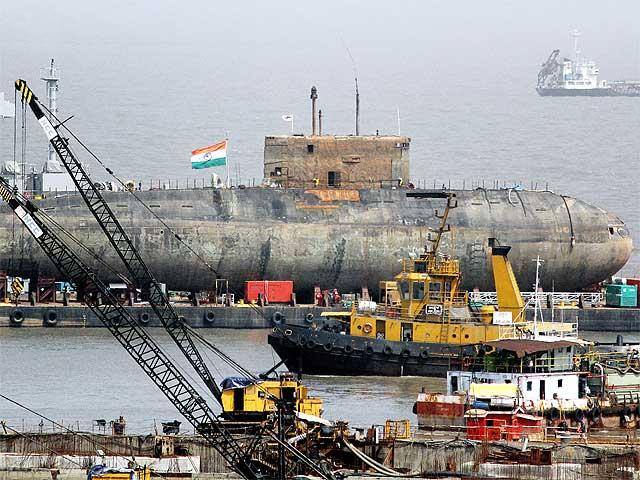
In August 2013, the INS Sindhurakshak, a Kilo-class submarine that had recently returned from a refit in Russia, suffered a catastrophic series of internal explosions while berthed at the naval dockyard in Mumbai. The immense blast breached the pressure hull and sank the vessel in shallow waters, resulting in the tragic deaths of all 18 naval personnel on board.17 Subsequent, highly classified naval Boards of Inquiry focused their investigations on the battery compartment, ultimately pinning the primary cause of the initial, triggering explosion to a severe defect manufactured by the private supplier.13 Specifically, a faulty battery valve failed to operate correctly, leading to an uncontrolled leakage and a highly concentrated, localized buildup of volatile hydrogen gas. A spark subsequently ignited this pocket of gas, creating a localized explosion that detonated the vessel’s adjacent forward ammunition compartment.13
The destruction of the INS Sindhurakshak was not an isolated incident; it was part of a highly disturbing pattern of battery and electrical component failures that plagued the Navy’s submarine fleet. Just months later, in February 2014, the INS Sindhuratna suffered a severe onboard fire, an incident so grave it led to the immediate resignation of the Chief of Naval Staff, Admiral D.K. Joshi.38 While initial probes into the Sindhuratna incident pointed to aging cables rather than expired batteries, the systemic reliance on a single private vendor for highly complex, volatile battery systems, coupled with ongoing legal disputes from competitors like HILIFE Batteries claiming superior products, highlighted a critical structural weakness.16 The lack of a diversified, highly regulated competitive base for submarine batteries allowed quality control standards to stagnate. The failure to rigorously audit the specific metallurgy and mechanical reliability of the battery valves directly resulted in the complete loss of a strategic naval asset and the highest peacetime casualty rate the modern Indian Navy has endured.
Case Study IV: Aerospace Metallurgy and the ALH Dhruv Groundings
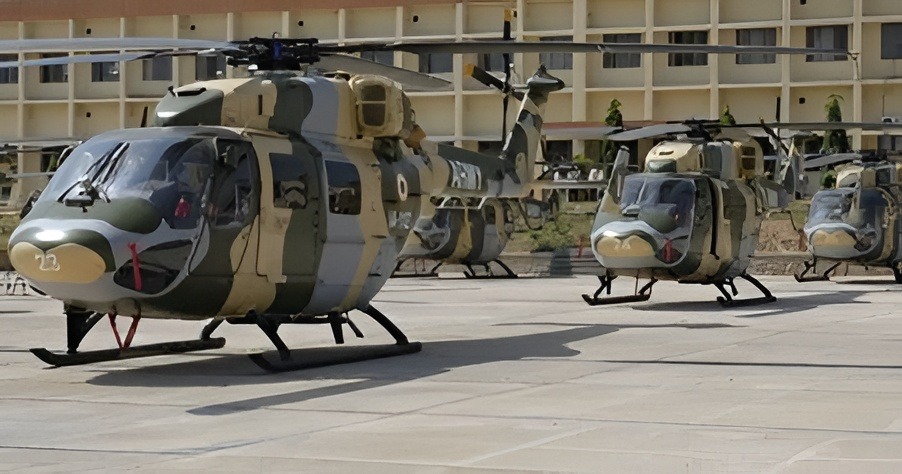
The aerospace sector presents the most unforgiving environment for substandard components, where gravity immediately punishes any deviation from strict aeronautical standards. The Advanced Light Helicopter (ALH) Dhruv, designed and integrated by HAL, serves as the rotary-wing workhorse of the Indian Army, Air Force, Navy, and Coast Guard.39 However, to meet production targets, the platform relies on a vast, decentralized network of private MSMEs and tier-2 vendors to supply the intricate, precision-machined parts that make up its Integrated Dynamic System (IDS) and transmission.6
The ALH utilizes a rigid rotor system with a uniquely high virtual hinge offset (close to 17 percent). This specific aerodynamic design subjects the helicopter’s dynamic components to extreme aerodynamic forces and mechanical mast moments during maneuvers, requiring materials with immense fatigue resistance.40 Over the past decade, the ALH fleet has experienced multiple sudden, fatal crashes, prompting repeated, prolonged fleet-wide groundings. A comprehensive Defect Investigation (DI) committee isolated the root cause to catastrophic metallurgical fatigue failures in the upper control circuitry, specifically pinpointing the collective booster rods and the non-rotating swash plate (NRSP).41
The NRSP is a hyper-critical component that transmits pilot flight control inputs to the four-bladed main rotor; a structural failure here results in an immediate, unrecoverable loss of cyclic control, dooming the aircraft.41 Investigations revealed that the metallurgical quality and the specific manufacturing processes utilized by the private sub-vendors supplying these parts fundamentally failed to ensure a fatigue life commensurate with the operational demands of the helicopter.41 Early attempts to rectify the control rod issue involved HAL replacing the original parts with newly designed stainless steel rods. However, this redesign inadvertently transferred unprecedented kinetic loads down the linkage to the swashplate, leading to its rapid structural failure.41
During a year-long grounding phase following a fatal Coast Guard crash at Porbandar, fleet-wide technical inspections of the proprietary IDS uncovered multiple cases of incipient fatigue failure in the NRSP, particularly prevalent in the newly delivered ALH Mark-III variants operated by the Navy and Coast Guard.40 The revelation that brand-new helicopters were rolling off the assembly line with fundamentally compromised dynamic components indicated a severe breakdown in the quality assurance protocols governing HAL’s private supply chain. When components that are engineered to last the lifetime of an airframe begin fracturing within hundreds of flight hours, it points directly to unauthorized alterations in metallurgy, substandard machining by private vendors seeking higher profit margins, and a failure by the prime integrator to independently validate the structural fidelity of its outsourced parts.
Case Study V: Cyber-Kinetic Vulnerabilities – Unmanned Aerial Systems and Geopolitical Contamination
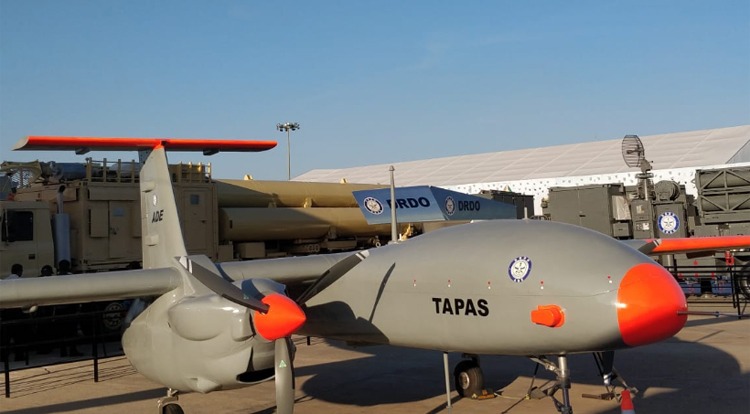
The rapid integration of unmanned aerial systems (UAS) represents the cutting edge of military modernization. However, the inherently commercial nature of global drone technology introduces entirely new, insidious vectors for supply chain contamination. Unlike heavy armor or large-caliber artillery, drones rely heavily on commercial off-the-shelf (COTS) electronics, micro-motors, miniaturized sensors, and communications payloads. The global dominance of China in these specific technological niches poses an extreme, unacceptable geopolitical risk to India’s military procurement.23
Following the bloody military standoff in Eastern Ladakh in 2020, the Indian Army initiated extensive emergency procurement protocols to rapidly acquire hundreds of logistics, surveillance, and kamikaze drones to secure the high-altitude borders.18 In 2023, contracts collectively worth over ₹230 crore were awarded to leading Chennai-based private drone manufacturers, primarily Dhaksha Unmanned Systems and Garuda Aerospace, to supply 400 medium, heavy, and light-weight logistics drones for deployment along the Line of Actual Control (LAC).18
By early 2025, however, the defense establishment abruptly scrapped these massive contracts.45 Intelligence reports and deep technical audits revealed a disturbing reality: despite strict Ministry of Defence directives explicitly prohibiting the utilization of components from adversarial nations, these private Indian companies were covertly integrating Chinese electronics, motors, and communication subsystems into their military drone platforms.18 The Director General Military Intelligence (DGMI) had previously issued stringent warnings in 2010 and 2015 that even ostensibly non-critical Chinese components act as “Trojan horses,” presenting massive, systemic cybersecurity threats.21
The integration of adversarial hardware into highly networked military systems creates extreme kinetic and cyber vulnerabilities. Chinese-manufactured electronics are highly susceptible to embedded malware, unauthorized data exfiltration protocols, and pre-programmed software backdoors that easily bypass standard Indian security protections.18 In an active combat scenario, an adversary could exploit these latent hardware vulnerabilities to execute a “soft kill”, jamming the drone’s telemetry, severing its command link, or actively seizing flight control.18 This risk is not merely theoretical; in August 2023, an Indian infantry unit deployed along the highly volatile Line of Control (LoC) inexplicably lost complete control of a fixed-wing VTOL UAV, which subsequently veered directly into Pakistan-occupied territory, strongly suggesting a potential electronic hijack or catastrophic component failure linked to insecure electronics.18
Furthermore, the Department of Defence Production (DDP) was forced to issue unprecedented letters to major industry bodies like FICCI and SIDM in June 2024, explicitly warning the broader defense manufacturing ecosystem to exercise extreme caution when dealing with Dhaksha Unmanned Systems, Garuda Aerospace, and Sky Industries due to their reliance on Chinese parts.22 Similar allegations of illegal Chinese components also shadowed the IPO of Ideaforge Technology, highlighting an industry-wide contagion.28
The drone procurement scandal perfectly encapsulates the modern supply chain dilemma. Private vendors, eager to maximize profit margins, rapidly capture market share and capitalize on lucrative government Production-Linked Incentive (PLI) schemes, routinely bypass expensive, time-consuming domestic R&D. Instead, they favor cheap, readily available Chinese imports, merely assembling and repackaging them as “indigenous” products.7 This practice not only defrauds the government of its self-reliance goals but introduces an unacceptable level of strategic vulnerability into front-line combat networks.
Case Study VI: Aerospace Components Forgery – The Tec Aero Devices Scandal (2024-2026)

The most recent and glaring example of supply chain subversion involves the indigenous Light Combat Aircraft (LCA) Tejas Mk1A program, a cornerstone of the Indian Air Force’s modernization. In June 2026, Hindustan Aeronautics Limited (HAL) filed a criminal FIR against a Hyderabad-based private supplier, Tec Aero Devices, exposing a massive quality assurance fraud.
Between March 2022 and September 2023, HAL had issued 18 purchase orders to Tec Aero Devices for the supply of 172 various components critical to the Tejas Mk1A fighter jets. Strict procurement protocols mandate that vendors provide certified material test reports, covering critical parameters such as tensile strength, hardness, break load, shear, non-destructive testing (NDT), microstructure, and salt spray testing, before any bulk supplies are accepted into the aviation supply chain.
To meet these stringent requirements, Tec Aero Devices submitted 199 test reports between February and September 2023. However, during routine quality control checks, HAL requested the original documentation, which the supplier failed to produce. The vendor subsequently claimed these tests had been conducted by Axis Inspection Solutions, a Hyderabad-based testing agency. When HAL conducted an independent audit of Axis Inspection Solutions in November 2023, the agency confirmed that they had not issued a single one of the 199 reports and that Tec Aero Devices had deliberately forged their signatures and misused their name to fabricate the documents.
The injection of unverified, potentially metallurgically flawed components into a supersonic fighter jet could result in catastrophic mid-air structural failures. Following the discovery of this severe forgery, HAL halted all payments to the vendor, permanently removed them from the approved suppliers list, and officially debarred Tec Aero Devices for three years until March 10, 2027. The subsequent FIR, filed by HAL’s Aircraft Division under sections relating to cheating and forgery, highlights the extreme lengths to which some private vendors will go to bypass military quality controls.
Auxiliary Failures: Tactical Communications and Munitions
Beyond the major platforms, the insidious effects of substandard private manufacturing degrade everyday tactical operations. A CAG audit (Report No. 17 of 2008-09) documented the procurement of highly defective tactical communication power sources. The Director General Ordnance Services (DGOS) placed an order worth ₹1.44 crore with the private firm M/s HBL NIFE for Nickel-Cadmium (NiCd) batteries intended to power frontline military radio sets.24 Upon testing, 6,416 of these batteries, ultimately valuing ₹2.32 crore, completely failed to withstand the prescribed life cycle tests.24 In a shocking display of administrative failure, rather than rejecting the lot, the military issued the failing batteries to the troops, ensuring that tactical communications would be compromised in the field. Worse, the contract was subsequently amended to entirely free the private supplier of their legal liability to replace or refund the cost of the defective products.24
Similarly, the munitions supply chain is riddled with compromised private inputs. While the OFB takes the brunt of the blame for faulty ammunition, which has caused 403 serious accidents and 27 tragic fatalities since 2014, many of the sub-components within these shells are sourced from private industry.1 Private firms like T S Kishan and Co Pvt Ltd, R K Machine Tools, and HYT Engg were heavily embedded in the OFB’s supply chain, providing explosive shells, 120mm components, and 155mm sub-assemblies.25 Their formal blacklisting in 2009 for bribery and supplying unverified materials directly correlates to the systemic quality drops observed in indigenous ammunition, resulting in the Army actively refusing to fire certain types of long-range shells due to the acute risk of fatal barrel bursts.1
The Evolution of Punitive Frameworks: Blacklisting and Judicial Interventions
The Indian government’s regulatory response to substandard manufacturing, supply chain fraud, and corruption has historically been characterized by extreme, yet often counterproductive, measures. In the late 2000s and early 2010s, following the massive Sudipto Ghosh OFB bribery scandal, the MoD routinely utilized blanket blacklisting to punish vendors. Six major defense firms, including international giants and domestic private suppliers like T S Kishan and R K Machine Tools, were summarily debarred from all business dealings with the OFB and MoD for a period of ten years.25
While intended as a severe deterrent to corruption and the delivery of defective goods, this blunt-force approach inadvertently crippled India’s own operational readiness. Banning premier suppliers entirely disrupted the flow of critical spares and specialized ammunition for platforms already in service, effectively shooting the military in the foot.26 Recognizing this self-inflicted strategic damage, the MoD recognized the need for reform. In 2016, and refined heavily going into 2024, the MoD introduced modified penalty guidelines establishing a more graduated response system. Under the current framework, errant private vendors are classified into debarred, suspended, or restricted-procurement categories based strictly on the severity of the infraction and the strategic necessity of their products.27
Crucially, the Indian judiciary has aggressively intervened to establish the formal doctrine of “egregious misconduct” regarding the blacklisting of private contractors. Relying on landmark Supreme Court rulings (e.g., Gorkha Security Services and UMC Technologies), High Courts have repeatedly ruled that blacklisting represents a “civil death” for a corporation. It debars the contractor from all future government tenders, ruins reputations, and therefore must strictly satisfy tests of fairness, proportionality, and reasoned decision-making.51
Habitual failure to perform, collusive bid-rigging, and the deliberate, fraudulent supply of sub-standard or defective goods with malafide intent, such as Sidh Sales Syndicate supplying counterfeit Dhanush bearings or Tec Aero Devices submitting forged test reports, firmly qualify as egregious misconduct warranting a multi-year ban. However, if a private vendor supplies a defective part due to a genuine manufacturing error, logistical failure, or design misunderstanding rather than willful fraud, the state is heavily encouraged by the courts to utilize contractual remedies. These remedies include liquidating massive performance bank guarantees, demanding immediate replacement at the vendor’s cost, or re-tendering the specific contract at the vendor’s risk, rather than issuing an immediate, ecosystem-destroying blanket ban.51 This highly nuanced approach allows the military to ruthlessly punish fraudulent vendors without permanently destroying the nascent domestic defense industrial base that it so desperately needs to cultivate.
The Double-Edged Sword of Modernization: DGQA Reforms and Self-Certification Risks
In direct response to the chronic delays and severe supply chain bottlenecks caused by the DGQA’s overwhelmed inspection processes, the MoD initiated a sweeping, comprehensive reorganization of the Directorate General of Quality Assurance in 2024 and 2025.30 Branded as a flagship initiative to promote the “Ease of Doing Business” within the defense sector, these deep reforms focus heavily on accelerating trials, reducing redundant layers of bureaucratic decision-making, and opening formerly restricted military proof establishments to private industry testing through a newly created Directorate of Defence Testing and Evaluation Promotion.30
A central, highly controversial pillar of this reform agenda is the massive expansion of the “Self-Certification” scheme. Under this new paradigm, deserving private vendors and DPSUs that demonstrate a consistent track record are granted the extraordinary authority to self-certify the quality of their manufactured components, effectively bypassing mandatory pre-dispatch physical inspections by DGQA personnel.56 The administrative rationale is that shifting the immense responsibility of quality control directly to the manufacturer will drastically reduce procurement timelines, unclog the supply chain, and organically foster a culture of total quality management within the private sector.59
However, implementing widespread self-certification within an industrial ecosystem that is currently demonstrating a profound, documented propensity for substandard manufacturing represents an immense, potentially catastrophic strategic risk. The historical data spanning two decades clearly indicates that private defense contractors in India routinely struggle with maintaining strict metallurgical consistency, adhering faithfully to design tolerances, and securing their complex sub-tier supply chains against counterfeit or adversarial components. Permitting private vendors, especially MSMEs acting as profit-driven aggregators for complex electronic or dynamic systems, to self-certify their products operates on the highly flawed assumption of inherent corporate integrity and technical maturity.
The self-certification guidelines dictate that if major defects are observed by the end-user post-delivery, the vendor’s self-certification status will be immediately canceled, and they must initiate rectification of the defect within 72 hours.56 In the unforgiving context of military operations, however, post-delivery defect discovery is almost exclusively paid for in blood and lost assets. An artillery shell that detonates prematurely in a gun barrel due to a metallurgical flaw, a submarine battery valve that covertly leaks explosive hydrogen gas, or a helicopter swashplate that shatters mid-flight under load cannot be remedied by a 72-hour corporate rectification window. Thus, while the administrative goal of accelerating procurement velocity is perfectly valid, the systemic abdication of independent, rigorous, state-sponsored metallurgical and electronic auditing invites operational disaster.
Strategic Conclusions
The integration of private sector manufacturing into the Indian defense industrial base is a necessary, irreversible evolution required to achieve true strategic autonomy and modern operational readiness. However, the exhaustive procurement data spanning from 2000 to 2026 unequivocally underscores that this transition has been fraught with severe vulnerabilities. The persistent procurement of substandard, defective, and counterfeit components from identified private entities is not merely an administrative oversight; it is a critical, structural vulnerability that directly degrades the war-waging potential of the Indian Armed Forces.
The root of this crisis lies in a procurement doctrine that fundamentally misaligns financial incentives with operational realities. The rigid, historical adherence to the Lowest Bidder (L1) financial framework actively penalizes high-quality, experienced manufacturers who invest heavily in R&D and quality control. Conversely, it directly rewards firms that cut corners, utilize inferior metallurgy, or illicitly source cheap, compromised components from geopolitical adversaries like China. Furthermore, the functional inability of the DGQA to conduct comprehensive, multi-tier supply chain audits allows prime contractors and MSMEs to obfuscate the true origin and quality of their critical sub-assemblies.
To secure the defense supply chain against further catastrophic failures, the Ministry of Defence must urgently transition from a purely cost-centric procurement model to a comprehensive “Best Value” framework. This model must heavily weight a private vendor’s technical infrastructure, demonstrable past performance, and internal quality control mechanisms far above mere financial quotes. Furthermore, the aggressive push for “Ease of Doing Business” through self-certification must be drastically curtailed for critical, life-saving, and high-stress dynamic components. Ensuring the operational readiness and physical safety of the military requires the uncompromising enforcement of metallurgical, electronic, and structural fidelity. Until the domestic private defense sector matures to a verifiable level of inherent technical excellence, rigorous, independent, and technologically advanced quality assurance must remain the absolute, unyielding bedrock of Indian military procurement.
Works cited
- Indian Army raises alarm over rising accidents due to faulty ammunition – The Times of India, accessed June 11, 2026, https://timesofindia.indiatimes.com/india/army-raises-alarm-over-rising-accidents-due-to-faulty-ammunition/articleshow/69315854.cms
- Military’s woes of ammunition shortages — and more – SP’s MAI, accessed June 11, 2026, https://www.spsmai.com/military/?id=3558&q=Militaryandrsquo;s-woes-of-ammunition-shortages-andmdash;-and-more
- Army stocking up munitions for 40-day war | India News, accessed June 11, 2026, https://timesofindia.indiatimes.com/india/army-stocking-up-munitions-for-40-day-war/articleshow/73647518.cms
- Faulty Ammunition Kills – SP’s MAI, accessed June 11, 2026, https://www.spsmai.com/experts-speak/?id=696&q=Faulty-Ammunition-Kills
- APPENDIX ‘B’ SOME KEY CASE STUDIES FROM AUDIT REPORTS – Comptroller and Auditor General of India, accessed June 11, 2026, https://cag.gov.in/uploads/cag_pdf/thematic_history/appendix_b.pdf
- HAL ALH Dhruv Army and Air Force Variants Cleared for Operational Use, accessed June 11, 2026, https://aviationspaceindia.com/news/hal-alh-dhruv-army-and-air-force-variants-cleared-operational-use
- Dhaksha UAV Market Potential Analysis | PDF | Unmanned Aerial Vehicle – Scribd, accessed June 11, 2026, https://www.scribd.com/document/943841628/Drones
- CHAPTER-VII : ORDNANCE FACTORY ORGANISATION, accessed June 11, 2026, https://cag.gov.in/uploads/download_audit_report/2017/Chapter_7_-_ORDNANCE_FACTORY_ORGANISATION_of_Report_No.15_of_2017_-_Compliance_audit_Union_Government_Army_and_Ordnance_Factories_Reports_of_Defence_Services.pdf
- Union Government (Defence Services) Army and Ordnance Factories Report No.15 of 2017 – Comptroller and Auditor General of India, accessed June 11, 2026, https://cag.gov.in/webroot/uploads/download_audit_report/2017/Report_No.15_of_2017_Compliance_audit_Union_Government_Army_and_Ordnance_Factories_Reports_of_Defence_Services.pdf
- CBI finds fake Chinese parts in Indian Army’s Dhanush gun – BEARING NEWS, accessed June 11, 2026, https://www.bearing-news.com/cbi-finds-fake-chinese-parts-indian-armys-dhanush-gun/
- CBI files FIR against firm that passed off Chinese parts as German …, accessed June 11, 2026, https://indianexpress.com/article/india/cbi-fir-against-firm-that-passed-off-chinese-parts-as-german-for-artillery-guns-4761830/
- Fake, cheap Chinese spares for Indian-made Bofors guns Dhanush: CBI FIR, accessed June 11, 2026, https://www.deccanchronicle.com/nation/current-affairs/210717/fake-chinese-spares-for-indian-made-bofors-guns-dhanush-cbi-fir.html
- INS Sindhurakshak – Wikipedia, accessed June 11, 2026, https://en.wikipedia.org/wiki/INS_Sindhurakshak
- Explosion on Indian Navy submarine INS Sindhurakshak possibly due to gas buildup, accessed June 11, 2026, https://www.indiatoday.in/india/north/story/indian-navy-submarine-ins-sindhurakshak-fire-explosion-gas-buildup-173752-2013-08-13
- Union Of India & Anr vs Hbl Nife Power Systems Ltd on 20 January, 2016 – Indian Kanoon, accessed June 11, 2026, https://indiankanoon.org/doc/6692896/
- Ageing batteries behind INS Sindhuratna tragedy? – India Today, accessed June 11, 2026, https://www.indiatoday.in/india/north/story/ins-sindhuratna-submarine-accident-red-tapism-ministry-of-defence-183218-2014-03-01
- Blast sinks INS Sindhurakshak; experts blame battery fire, ammunition explosion, accessed June 11, 2026, https://www.business-standard.com/article/current-affairs/blast-sinks-ins-sindhurakshak-experts-blame-battery-fire-ammunition-explosion-113081500054_1.html
- Government scraps deals for 400 defence drones with Chinese parts – The Times of India, accessed June 11, 2026, https://timesofindia.indiatimes.com/india/government-scraps-deals-for-400-defence-drones-with-chinese-parts/articleshow/117997096.cms
- Government Cancels Contracts for 400 Defence Drones Over Chinese Components, accessed June 11, 2026, https://www.seaandjob.com/government-cancels-contracts-for-400-defence-drones-over-chinese-components/
- Army cancels Rs 230 crore drone contracts over alleged use of Chinese components, accessed June 11, 2026, https://www.indiatoday.in/india/story/army-cancels-rs-230-crore-drone-contracts-over-alleged-use-of-chinese-components-2676137-2025-02-07
- Army Halts Dhaksha Drone Contract Amid Chinese Components Concerns, accessed June 11, 2026, https://www.electronicsforyou.biz/industry-buzz/army-halts-dhaksha-drone-contract-amid-chinese-components-concerns/
- Defence Ministry cautions against use of Chinese parts in Indian military drones, accessed June 11, 2026, https://m.economictimes.com/news/defence/defence-ministry-cautions-against-use-of-chinese-parts-in-indian-military-drones/articleshow/112899688.cms
- The Rising Stock of Drones in India | by Sanjay Dangi – Authum Investment & Infrastructure, accessed June 11, 2026, https://sanjay-dangi-authum-investment.medium.com/the-rising-stock-of-drones-in-india-6a481eb7b81e
- CAG Compliance Audit Report 2008-09 | PDF – Scribd, accessed June 11, 2026, https://www.scribd.com/document/466439917/C-AG-Report-No-17
- Defence procurement worth $1.5 billion on hold as India blacklists Singaporean, Israeli firms, accessed June 11, 2026, https://defensemirror.com/news/3142/Defence_procurement__worth__1_5_billion_on_hold_as_India_blacklists_Singaporean__Israeli_firms
- India Blacklists 6 Defence Firms – Livefist, accessed June 11, 2026, https://www.livefistdefence.com/india-blacklists-6-defence-firms/
- India debars, suspends and restricts defense firms in new corruption rule, accessed June 11, 2026, https://www.defensenews.com/industry/2018/02/21/india-debars-suspends-and-restricts-defense-firms-in-new-corruption-rule/
- Exposing Ideaforge Drone Fraud | PDF | Unmanned Aerial Vehicle – Scribd, accessed June 11, 2026, https://www.scribd.com/document/655666864/Idea-Forgery-IPO-Scam-SEBI-2
- CAG Report on Defence Offsets Policy Reveals Failures on All Fronts | NewsClick, accessed June 11, 2026, https://www.newsclick.in/CAG-Report-Defence-Offsets-Policy-Reveals-Failures-All-Fronts
- DGQA celebrates 69th Foundation Day | Akashvani News – Newsonair, accessed June 11, 2026, https://newsonair.gov.in/dgqa-celebrates-69th-foundation-day/
- CAG AUDIT REPORT ON DEFENCE PUBLIC SECTOR UNDERTAKINGS TABLED IN PARLIAMENT, accessed June 11, 2026, https://cag.gov.in/uploads/PressRelease/PR-Press-Brief-ON-REPORT-NO-34-Eng-06944f1d810f985-48377902.pdf
- CAG Flags Delays in 72% Army Emergency Procurement Contracts, Objects to Regularising Deviations – The Wire, accessed June 11, 2026, https://m.thewire.in/article/government/cag-flags-delays-in-72-army-emergency-procurement-contracts-objects-to-regularising-deviations/amp
- Artillery: News & Discussion – Bharat Rakshak Forum, accessed June 11, 2026, https://forums.bharat-rakshak.com/viewtopic.php?t=6651
- Supply of Fake Chinese Parts for Dhanush Guns – Press Release Page | Press Information Bureau, accessed June 11, 2026, https://www.pib.gov.in/PressReleasePage.aspx?PRID=1522500
- M/S. Exide Industries Ltd vs The State Of Maharashtra And Ors on 4 August, 2014, accessed June 11, 2026, https://indiankanoon.org/docfragment/49599517/?formInput=battery
- Exide – Wikipedia, accessed June 11, 2026, https://en.wikipedia.org/wiki/Exide
- Indian Submarine Mishaps: Causes, Impact, & Prevention – Smart Columbus, accessed June 11, 2026, https://smart.columbus.gov/columbus-news/indian-submarine-mishaps-causes-impact-and-prevention-1764804093
- INS Sindhuratna fire: cables to blame, not expired batteries, says initial probe – NDTV, accessed June 11, 2026, https://www.ndtv.com/india-news/ins-sindhuratna-fire-cables-to-blame-not-expired-batteries-says-initial-probe-552622
- HAL Dhruv – Wikipedia, accessed June 11, 2026, https://en.wikipedia.org/wiki/HAL_Dhruv
- 50 Days Grounded, A Prescription To Bring Dhruv Back – Livefist, accessed June 11, 2026, https://www.livefistdefence.com/50-days-grounded-a-prescription-to-bring-dhruv-back/
- Indian Navy ALH Dhruv fleet set to resume flights after grounding – Vertical Mag, accessed June 11, 2026, https://verticalmag.com/news/indian-navy-alh-dhruv-fleet-set-to-resume-flights-after-grounding/
- What exactly is wrong with the HAL Dhruv? : r/Helicopters – Reddit, accessed June 11, 2026, https://www.reddit.com/r/Helicopters/comments/1k2h1ls/what_exactly_is_wrong_with_the_hal_dhruv/
- INDIA’S DRONE IMPERATIVE – Securing Air Superiority Against China and Pakistan by 2030 – CSDR, accessed June 11, 2026, https://csdronline.com/wp-content/uploads/2025/06/CSDR_Indias-Drone-imperative_Jun-2025.pdf
- Indian Army Scraps Drone Contracts with Domestic Firms over Chinese Components, accessed June 11, 2026, https://defensemirror.com/news/38781
- Morning Brief: PM Modi Criticises Congress For ‘Hindu Rate Of Growth’ Label; Deals For 400 Drones Scrapped Over Chinese Parts; World’s Largest Sovereign Wealth Fund Boosts India Portfolio – Swarajya, accessed June 11, 2026, https://swarajyamag.com/news-brief/morning-brief-pm-modi-criticises-congress-for-hindu-rate-of-growth-label-deals-for-400-drones-scrapped-over-chinese-parts-worlds-largest-sovereign-wealth-fund-boosts-india-portfolio
- India scraps deals for 400 defence drones with Chinese parts – Report.az, accessed June 11, 2026, https://report.az/en/other-countries/india-scraps-deals-for-400-defence-drones-with-chinese-parts
- Faulty Weapons By Ordnance Factory Claim 27 Indian Soldiers Lives In Last 6 Years, accessed June 11, 2026, https://www.youtube.com/watch?v=U1DQ5DaDhis
- Accidents are complex phenomena, says Ordnance Factory Board after Indian Army report, accessed June 11, 2026, https://www.deccanchronicle.com/nation/current-affairs/011020/accidents-are-complex-phenomena-says-ordnance-factory-board-after-ind.html
- The Government of India has extended the ban on six defence firms for another 3 years. These firms were earlier blacklisted over corruption charges and irregularities in defence deals. The extension means they remain barred from bidding or working on any Indian defence contracts : r/IndianDefense – Reddit, accessed June 11, 2026, https://www.reddit.com/r/IndianDefense/comments/1kbfjte/the_government_of_india_has_extended_the_ban_on/
- MoD Penalty Guidelines 2026: Defence Debarment Reform, accessed June 11, 2026, https://defencestandard.com/mod-penalty-guidelines-defence-debarment-reform-2026/
- Chhattisgarh high court overturns 3-year blacklisting of contractors in Jal Jeevan Mission, cites lack of proof of forgery – The Times of India, accessed June 11, 2026, https://timesofindia.indiatimes.com/legal/news/chhattisgarh-high-court-overturns-3-year-blacklisting-of-contractors-in-jal-jeevan-mission-cites-lack-of-proof-of-forgery/articleshow/129313881.cms
- Ktech Engineer Builders Co. Private … vs Union Of India & Ors. on 24 May, 2024, accessed June 11, 2026, https://indiankanoon.org/doc/38151820/
- Navy-Dhruv Spat Escalates, Key Officers Throw It Back To HAL – Livefist, accessed June 11, 2026, https://www.livefistdefence.com/navy-dhruv-spat-escalates-key-officers-throw-it-back-to-hal/
- Department of Defence Production issues notification for re-organisation of DGQA, accessed June 11, 2026, https://avantiscdnprodstorage.blob.core.windows.net/legalupdatedocs/31025/Ministry_of_Defence_issued_a_notification_for_re_organisation_of_DGQA_Mar282024.pdf
- Directorate General of Quality Assurance celebrates its 68th Raising Day – PIB, accessed June 11, 2026, https://www.pib.gov.in/PressReleasePage.aspx?PRID=2059578
- Deptt. of Defence Production Self-certification Scheme DPSUs & Pvt Vendors, accessed June 11, 2026, https://www.ddpmod.gov.in/sites/default/files/8d9871362379bdc6a4d12ac3af1b415575500fc33e11be2405278ed069299346/42550d09b274faa603550a807df411ccf559661ca4823d64dedd19409559ecdb.pdf
- Deptt. of Defence Production Scheme for Self Certification of Defence Public Sector & Private Vendors, accessed June 11, 2026, https://www.ddpmod.gov.in/sites/default/files/aad813826756e08ee864ce44ad3ea3b2a983b52cf0305abb639e199be0606046/a035811dcc11edbffb50bef24bfbb468562b8c66f651d3fee7e433bb4ec0767c.
- Defence ministry allows private companies to self-certify product quality | Bengaluru News – Times of India, accessed June 11, 2026, https://timesofindia.indiatimes.com/city/bengaluru/defence-ministry-allows-private-companies-to-self-certify-product-quality/articleshow/69421126.cms
- REGISTRATION OF MANUFACTURER FOR DEFENCE – Directorate of Standardisation, accessed June 11, 2026, https://ddpdos.gov.in/sites/default/files/upload_docs/GENERAL/JSG/JSG%20015-2018.pdf