

The integration of higher education, defense research, and military doctrine forms the absolute bedrock of modern national security infrastructure. In an era where warfare is increasingly defined by technological asymmetry, multi-domain operations, and the rapid indigenous prototyping of critical platforms, the institutional architecture governing a nation’s strategic culture is of paramount importance. The traditional model of military procurement, reliant on protracted acquisition cycles and total dependency on foreign original equipment manufacturers (OEMs), is no longer viable for states aspiring to maintain strategic autonomy and regional hegemony. Consequently, the fusion of academic research and development (R&D) with military end-user requirements has emerged as the defining metric of a state’s war-fighting sustainability.
An exhaustive comparative analysis of the defense-academic ecosystems in South Asia reveals a stark and highly consequential structural divergence between Pakistan and India. Pakistan has aggressively cultivated a highly centralized, interwoven model spearheaded by the National University of Sciences and Technology (NUST) and the National Defence University (NDU), embedding applied military research and overarching strategic doctrine directly into the academic and industrial fabric of the state. Conversely, India’s approach remains highly decentralized, disjointed, and historically fragmented. Despite possessing a globally recognized civilian technological base and vast intellectual capital, India’s failure to operationalize a dedicated apex defense university, specifically, the Indian National Defence University (INDU), a project plagued by over five decades of bureaucratic inertia, has engendered significant doctrinal, institutional, and strategic vulnerabilities. This report meticulously investigates the evolution, structural outputs, and broader geopolitical implications of these contrasting paradigms, analyzing how the presence or absence of unified defense academia dictates the trajectory of national security, indigenous military R&D, and civil-military jointness.
Pakistan’s Integrated Defense-Academia Ecosystem: The Architecture of Synergy
The architecture of Pakistan’s military-academic integration relies on a meticulously engineered triad of institutions: NUST for applied technological engineering and R&D, NDU for strategic policy and doctrinal development, and the newly established National University of Technology (NUTECH) for vocational, technical, and industrial support. This ecosystem is designed to eliminate the traditional organizational boundaries and bureaucratic friction between civilian researchers, active-duty military personnel, and defense production complexes. By institutionalizing the proximity between the innovator and the warfighter, Pakistan has created a closed-loop system of military modernization.
NUST: The Vanguard of Applied Military Technology
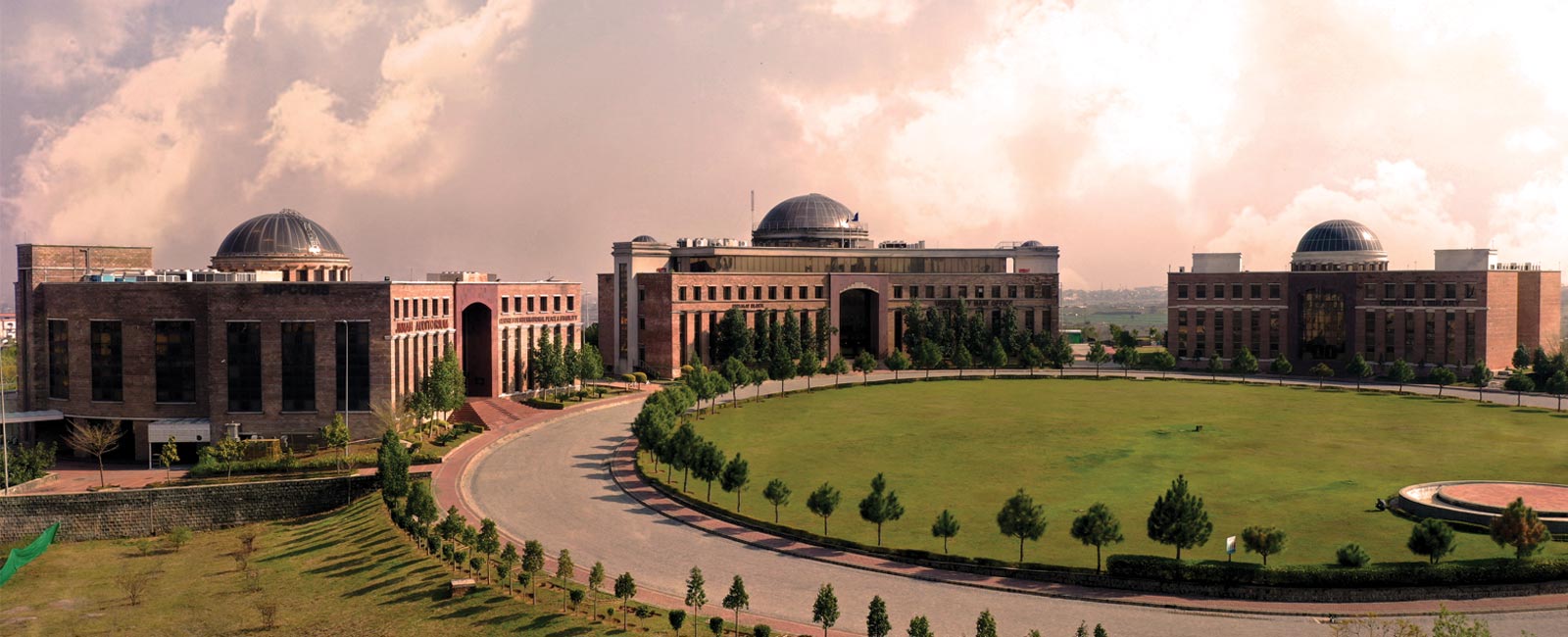
The National University of Sciences and Technology (NUST), headquartered in Islamabad, operates as the primary conduit and incubator for Pakistan’s military-technological advancements. Established through the strategic amalgamation of several historic military constituent colleges, NUST effectively bridges the formidable gap between abstract academic theory and tangible battlefield utility.1 Operating under a dual military-civilian mandate, the university is highly ranked globally, frequently securing the premier position in Pakistan for critical engineering and technology disciplines.3 NUST’s organizational structure is uniquely utilitarian; it seamlessly integrates active-duty military officers, civilian scientists, and industry practitioners into a singular, cohesive research ecosystem. This integration fosters a shared operational language that significantly accelerates the transition of technologies from prototype to production.
The decentralized yet unified structure of NUST is sustained by its specialized constituent campuses, each tasked with dominating a specific domain of military engineering. The overarching R&D philosophy is managed by the Directorate of Research, an integral component of the Office of Research, Innovation and Commercialization (ORIC), which ensures that high-quality research caters directly to Pakistan’s civil and defense sector needs.4 The university boasts an impressive array of 34 commercial-ready, state-of-the-art testing and research facilities spread across its schools, reflecting a massive investment in physical research infrastructure.5
Military College of Engineering (MCE)
Situated in Risalpur, MCE represents one of the oldest military institutions of the Pakistan Army, established in 1952 with the primary aim of training combat engineers.6 Having gained degree-awarding status in 1962, MCE has evolved into a premier hub for civil engineering, transportation, and disaster management.6 The college actively collaborates with the public and private sectors through its Industry Advisory Board, ensuring its curriculum and research outputs are strictly aligned with national requirements.9
The research infrastructure at MCE is highly specialized for military and civil hard-target engineering. It features the country’s largest Seismic Testing Facility and a state-of-the-art Structural Dynamics laboratory equipped with advanced compression and universal testing machines.6 These facilities are critical for the design of hardened military infrastructure, bunkers, and command centers capable of withstanding kinetic strikes and natural disasters. MCE’s tangible national contributions include the development of the Building Code of Pakistan with specialized fire safety provisions, real-time remote monitoring of the Shisper Glacier at Hunza, and the establishment of a sophisticated mining cadastre system for Khyber Pakhtunkhwa (KPK).7 Furthermore, its suite of geotechnical, concrete, transportation, and strength of materials laboratories are open for commercial and defense testing, making MCE a pivotal asset in national infrastructure resilience.5
Military College of Signals (MCS)
Located in Rawalpindi, MCS acts as the nerve center for the Pakistan Army’s telecommunications, software engineering, and information security requirements.10 As the modern battlespace becomes increasingly digitized, MCS’s research environment is highly attuned to the cyber and electronic warfare needs of the armed forces. The college conducts cutting-edge research through specialized clusters. The Cloud Security Research Group focuses on secure computing, addressing the evolving challenges of cybersecurity to protect sensitive data and maintain trust in cloud-based command and control systems.12 Simultaneously, the AI and NLP Research Group explores disruptive technologies, including Large Language Models (LLMs), computer vision, data mining, and recommendation systems to drive algorithmic innovation in intelligence gathering and target recognition.12
MCS maintains robust and highly active linkages with prominent national entities such as the Space and Upper Atmosphere Research Commission (SUPARCO), the Institute of Space Technology (IST), and the Pakistan Telecommunication Authority (PTA).13 These memorandums of understanding cover joint exhibitions, lab sharing, and the development of indigenous cryptographic and signal processing tools.13 Furthermore, MCS hosts annual Open House events that serve as critical liaison points, allowing fresh military and civilian graduates to showcase commercially viable telecommunication projects directly to leading defense and corporate industry practitioners.14
College of Aeronautical Engineering (CAE)
Operating in extremely close proximity to the Pakistan Aeronautical Complex (PAC) Kamra, CAE is central to Pakistan’s quest for aerospace self-reliance and import substitution.15 CAE is a premier teaching institution offering undergraduate and postgraduate programs in Aerospace and Avionics Engineering.16 The fundamental objective of its research is to reduce dependency on foreign aerospace OEMs, thereby preserving vital foreign exchange and securing independent operational capabilities.15 The proximity to PAC Kamra is not merely geographical but deeply structural; faculty members often possess extensive hands-on experience in factory-level projects of national importance at PAC, facilitating an unparalleled flow of technical knowledge regarding the actual field maintenance and design challenges of the Pakistan Air Force (PAF).17
The research output of CAE is categorized into several highly focused groups:
- Material Research Group: This group investigates the behavior of composite-based innovative materials, aiming to replace conventional metals to achieve superior strength-to-weight ratios, a critical metric for modern aviation platforms, mirroring global industry standards seen in platforms like the Boeing 787.15
- Alternate Energy Research Group: Tasked with addressing Pakistan’s acute electricity shortages, this group focuses on implementing wind, solar, and hydro power generation technologies for both civilian application and resilient military base operations.15
- FEA and CFD Analysis Groups: Utilizing Finite Element Analysis (FEA) and Computational Fluid Dynamics (CFD), these groups simulate aerodynamic performance and structural behaviors to propose innovative, cost-effective solutions to specific field problems faced by PAF aircraft and aerial weapons.15
- Aircraft Structural Design & Aerodynamics Groups: These clusters are dedicated to the physical design, simulation, and manufacturing of small-scale aeronautical platforms, heavily focusing on Unmanned Aerial Vehicles (UAVs), Unmanned Combat Aerial Vehicles (UCAVs), and ultra-light aircraft.15
- Propulsion and Turbo Machinery Group: This group is deeply involved in the design and rigorous analysis of jet and turboprop engines utilized in advanced aircraft and aerial munitions.15
- Specialized Cyber and Radar Clusters: Moving beyond pure aerodynamics, CAE also hosts the CIPHER (Cybersecurity, Information Protection, and Encryption Research) and RISE (Radar, Intelligent Signal Processing, and Electronic Warfare) research groups, ensuring that the avionics and electronic warfare suites of indigenous aircraft are highly resilient and capable.19 Further research is conducted by NEXUS (Next-Generation Wireless Communication), MIG (Machine Intelligence Group), and RACE (Robotics, Autonomous Control, and Embedded Systems).19
College of Electrical & Mechanical Engineering (CEME)
CEME is an integral component in the mechanization, automation, and modernization of the Pakistani armed forces. It houses the Research and Development Center (RDC), a facility explicitly mandated with the rapid, indigenous development of emerging technologies tailored to the changing environments of the modern battlefield.21 The RDC operates as a rapid prototyping hub; it routinely undergoes structural and organizational adaptations to directly serve and align with the evolving requirements of the Pakistan Army and the Corps of EME.21
The center functions as a vital bridge where academic research conducted within CEME is rapidly developed into viable commercial and military products. Its fields of interest are diverse and highly pragmatic, encompassing electric vehicle (EV) motor development, oil and gas industry systems, digital display panels, and advanced diagnostic troubleshooting tools.21 Notably, the RDC has successfully developed critical training and testing hardware, including engine dynamometers, throttle actuators, and the Alcotan M-100 AR/VR Simulator.21 In addition, CEME operates under the National Centre of Robotics and Automation (NCRA), developing indigenous solutions in swarm robotics, automated UAV testing (Hardware-in-the-loop and Software-in-the-loop), and precision agricultural automation.22
PNEC, NBC, and the Broader R&D Ecosystem
The NUST ecosystem is further augmented by the Pakistan Navy Engineering College (PNEC) in Karachi, which specializes in naval architecture, marine engineering, and maritime cyber security, catering primarily to the Pakistan Navy.2 Similarly, the NUST Balochistan Campus (NBC) in Quetta focuses on civil engineering, mining, mineral resources, and artificial intelligence, supporting the regional development imperatives of the state.2
The institutional synergy within NUST is actively formalized through a highly aggressive policy of academia-industry linkage. NUST maintains institutionalized pathways for student internships and collaborative research with state-owned defense conglomerates, prominently including Heavy Industries Taxila (HIT), Pakistan Ordnance Factories (POF) Wah, and the Pakistan Aeronautical Complex (PAC).23 By embedding students in these defense manufacturing hubs early in their academic careers, NUST ensures its engineering curriculum is constantly calibrated to the actual production and maintenance needs of the state.25
Moreover, this integration extends beyond domestic borders. NUST has established strategic Memorandums of Understanding (MoUs) with international defense giants, most notably Turkish Aerospace Industries (TAI).26 This multi-strand engagement facilitates student and faculty exchanges, joint research, intellectual property training, and direct technology transfer.26 TAI’s strategic decision to establish its Pakistan Office directly within the National Science & Technology Park (NSTP) at NUST is a testament to the university’s central role as the premier conduit for foreign defense technology assimilation.26 This continuous feedback loop among the military end-user, the academic researcher, and the industrial manufacturer ensures that the notorious “Valley of Death”, the phase where R&D fails to transition into viable procurement, is significantly mitigated in Pakistan’s defense sector.
NDU: Cultivating Strategic Culture and Civil-Military Fusion
While NUST provides the tangible hardware, structural engineering, and technological framework for the armed forces, the National Defence University (NDU) in Islamabad supplies the vital software: the strategic doctrine, national security policy formulations, and the civil-military leadership consensus required to navigate complex geopolitical landscapes. Established in 1963 and officially chartered by the President of the Islamic Republic of Pakistan as its Chancellor, NDU serves as the premier apex institution for higher military education and strategic policy studies in the country.28
NDU’s internal structure is meticulously designed to foster an environment of “jointness” among the upper echelons of the civil-military elite. The university is primarily bifurcated into two core components: the National Security College, which educates senior civilian bureaucrats and military officers on grand strategy, statecraft, and national security policy; and the Armed Forces War College, which provides higher military education at the operational and strategic levels, preparing high-ranking officers for senior command and staff positions.29 A third component, the Allied Officers Division (AOD), trains officers from allied and partner nations, serving as a powerful tool for military diplomacy and international strategic cooperation.29
A critical component of NDU’s operational value to the state is the Institute for Strategic Studies, Research & Analysis (ISSRA), which functions as a formidable national think tank on security matters.29 ISSRA is reportedly an internal functional part of the government’s National Security Division, providing direct, actionable inputs to both the civilian government and the armed forces.29 This structural arrangement effectively makes NDU an operational extension of the state’s security and intelligence apparatus, tasked with continuously refining the national narrative on nuclear politics, diplomacy, conflict resolution, and regional stability.30
The institutionalization of doctrine is further practically applied at the National War Gaming Centre housed within NDU. This center provides a highly sophisticated simulated environment utilized by the Pakistan Army, Navy, and Air Force to conduct strategic and operational-level exercises, test war plans, simulate military operations other than war (MOOTW), and rehearse massive disaster management scenarios.29 By mandating that military leaders, civilian bureaucrats, and foreign officers engage in intensive, multi-year master’s programs together, NDU guarantees a homogenization of strategic thought.30 This structural unity ensures that technological acquisitions (driven by NUST), foreign policy initiatives, and joint military doctrines are developed in tandem, eliminating the institutional silos that traditionally plague civil-military relations.
NDU also maintains a high tempo of international engagement to ensure its doctrines remain globally relevant. For example, NDU delegations routinely visit international defense forums, such as the Near East South Asia (NESA) Center in Washington, D.C., to engage in high-level discussions on U.S.-China strategies, disruptive technologies, and evolving strategic competition.31 NDU has also played a pivotal role in the Challenges Forum, shaping international policies on mission leadership in United Nations Peacekeeping Operations.28 Through its premier publication, the NDU Journal, the university disseminates research papers authored by participants of the National Security and War Course, providing a continuous stream of academic literature on issues of national and regional significance.30
NUTECH: Bridging the Vocational-Industrial Gap
Recognizing that advanced aeronautical engineering and grand strategic doctrine must be inextricably supported by a highly skilled, technically proficient workforce on the factory floor, the Government of Pakistan launched the National University of Technology (NUTECH).32 Operating under a distinct mandate to fulfill the urgent requirements of the 21st-century industrial and defense landscape, NUTECH was established to provide technical and vocational education, bridging the gap between traditional universities and pure vocational training institutes.33
A primary catalyst for NUTECH’s establishment was the need to support the massive infrastructure and industrial requirements of the China-Pakistan Economic Corridor (CPEC) and the broader objectives of Pakistan’s Vision 2025.32 The university focuses on the creation, development, and implementation of emerging technologies to drive import substitution, enhance value-added exports, and facilitate high-tech product development.34 NUTECH is rapidly expanding its physical footprint, aiming to purchase land and develop massive infrastructure for its main campus on Motorway-2 in the vicinity of the Islamabad International Airport.32
NUTECH serves as an umbrella organization that not only produces hands-on engineers and applied scientists but also standardizes the training of skilled technicians and tradespeople required to build, service, and maintain advanced technology-based plant and defense equipment.33 The university actively incorporates representatives from business and industry in the design of its curricula, ensuring its graduates perfectly match the immediate needs of the industrial base.33 Its commitment to R&D and innovation is evidenced by its faculty receiving prestigious National Research Program for Universities (NRPU) award grants from the Higher Education Commission (HEC) for innovative research, and its active collaborations with entities like the National Incubation Center for Aerospace Technologies (NICAT) for initiatives such as Aero Fusion.36
In totality, Pakistan has successfully engineered a highly synergistic ecosystem: NDU formulates the overarching strategic threat assessment and military doctrine; NUST translates those requirements into applied technological R&D and physical engineering; and NUTECH trains the indispensable vocational workforce required to mass-produce and maintain the resulting military hardware.
India’s Defense Academia Landscape: The Paradox of Potential and Fragmentation
India presents a fascinating, yet strategically perilous, paradox. The nation possesses one of the world’s most dynamic and expansive civilian technological sectors, underpinned by the globally renowned Indian Institutes of Technology (IITs), a highly successful sovereign space program (ISRO), and a burgeoning, well-funded start-up ecosystem. However, the translation of this vast raw technological potential and intellectual capital into sovereign military capability has been historically stymied by a decentralized, siloed, and bureaucratically burdened defense-academic model. The most glaring and detrimental manifestation of this institutional failure is the prolonged inability of the Indian state to establish the Indian National Defence University (INDU), a critical institution that has languished in legislative and bureaucratic purgatory for over five decades.
The Elusive Indian National Defence University (INDU): A Chronicle of Strategic Inertia
The conceptualization of an apex national defense university in India predates almost all modern Indian defense reforms. The idea was first mooted by the Chiefs of Staff Committee as early as 1967, reflecting an early understanding that a modern military required a centralized academic institution to address deficiencies in national security management and to formulate policies regarding long-term strategic challenges.37 However, the absolute necessity of such an institution became undeniably clear only following the intelligence and operational failures of the 1999 Kargil War.
In the aftermath of the conflict, the Kargil Review Committee, followed by a high-level ministerial review by a Group of Ministers (GoM) in 2001 and the Task Force on Management of Defence headed by Arun Singh, strongly recommended the immediate establishment of a National Defence University.40 The proposed INDU was envisioned as a multi-disciplinary “center of excellence” of national importance, explicitly modeled on similar highly successful institutions existing in the United States and China.40 The primary mandate of INDU was to inculcate a robust strategic culture, promote jointness and structural coordination among the Army, Navy, and Air Force, and bridge the massive communication gap between the armed forces, intelligence agencies, and the civil bureaucracy.40 It was designed to oversee higher education in defense studies, defense management, technology acquisition, and defense R&D.41
Following these recommendations, the Committee on the National Defence University (CONDU), headed by the late K. Subrahmanyam, was established in 2002, projecting that the university should be operational by 2008.37 What followed, however, was a masterclass in bureaucratic inertia and strategic apathy. The Union Cabinet finally gave an “in principle” approval for the setting up of INDU in May 2010.37 In September 2012, land for the proposed 205-acre campus was acquired at Binola village in the Gurugram district of Haryana (gifted by the Haryana state government to the Ministry of Defence) at a cost of Rs 164.62 crore.38 In May 2013, the foundation stone was laid amidst much fanfare, with the total estimated cost for setting up the university projected at an astronomical Rs 2,072 crore, with plans for implementation across three phases over ten years.38
A draft INDU Bill was formulated and made available online for public consultation on the MyGov.in portal and the Defence Ministry website in 2015 and 2016.38 However, since that brief moment of momentum, the bill has been trapped in a labyrinth of inter-agency ping-pong. The draft legislation has languished with the Cabinet Secretariat and the Prime Minister’s Office (PMO) for years.46
The reasons for this inexcusable delay are rooted deeply in India’s complex civil-military relations and entrenched bureaucratic power struggles. Evidence strongly suggests intense turf wars over the administrative control, leadership appointments, and functional autonomy of the university.48 For instance, despite being a military-centric institution, it was determined that once established, INDU would not come under the administration of the newly created Department of Military Affairs (DMA) headed by the Chief of Defence Staff (CDS), but rather under the civilian-led Department of Defence (DoD) headed by the Defence Secretary.39 This structural arrangement immediately triggered resistance and friction regarding military vs. civilian primacy within the institution’s hierarchy. Even when India’s first CDS, General Bipin Rawat, made a renewed and forceful push to obtain PMO clearance for the IDU draft bill, emphasizing it as one of his key priorities, the bureaucratic machinery remained immovable.39
The Public Accounts Committee (PAC) of Parliament recently delivered a scathing reprimand to the Ministry of Defence (MoD) in its action-taken report, expressing profound disappointment that 57 years after it was first mooted, the university remains an illusion.42 The PAC sharply criticized the MoD for its “trite and lax reply” regarding the delay, rebuking it for failing to clearly define the university’s scope and mandate, and for maintaining a “project formulation team” that continues to draw recurring expenses on pay and allowances without delivering any tangible results on the ground.42 To date, the Binola site possesses little more than a boundary wall and a perimeter road.46
The Strategic Fallout of the INDU Void
The absence of an apex national defense university represents a massive systemic vulnerability for India. The downstream impacts of this missing link reverberate through defense procurement, doctrinal evolution, and civil-military relations:
- Stunted Civil-Military Integration: The original mandate of INDU was to inject a much-needed strategic culture into governance and encourage robust cross-linkages between the executive and academia.43 Its absence perpetuates the historical bureaucratic insulation of the Indian armed forces. Without a shared academic proving ground where IAS officers, diplomats, intelligence operatives, and military generals can war-game future scenarios together (a function seamlessly performed by Pakistan’s NDU), policy decisions are often made sequentially rather than collaboratively.42 This leads to immense friction in the acquisition processes and defense planning, as civilian bureaucrats often lack a deep, academic understanding of military exigencies.
- Doctrinal Lag and Lack of Jointness: The Kargil Review Committee explicitly tied the creation of INDU to the absolute necessity of tri-service jointness.40 As modern warfare rapidly shifts towards multi-domain operations (cyber, space, electromagnetic spectrum), single-service solutions are obsolete. Pakistan addresses this by consolidating multi-disciplinary engineering and strategic thought under NUST and NDU. In India, the transition to Integrated Theater Commands remains highly contentious and sluggish, largely because there is no centralized academic institution actively socializing the officer corps into a joint, multi-domain mindset from the mid-career level onwards.37 Strategic thought remains siloed within individual service war colleges (e.g., the Army War College or the College of Naval Warfare).
- The “Valley of Death” in R&D and Perpetual Import Dependency: Although India’s defense budget reached a massive ₹7.85 lakh crore in 2024-25, emphasizing capital expenditure and the Atmanirbhar Bharat (self-reliance) initiative, India remained the world’s largest importer of defense equipment between 2019 and 2023, accounting for 9.8% of global imports.50 The lack of a centralized academic institution that links strategic threat assessment directly with domestic R&D timelines means India defaults to emergency imports when indigenous development cycles fall out of sync with immediate military requirements.50 Furthermore, India’s R&D expenditure, allocating roughly ₹23,855 crores to defense R&D, pales in comparison to global leaders as a percentage of GDP, trailing behind the US, China, Germany, and South Korea.50 This underinvestment is compounded by a risk-averse institutional culture where defense R&D is viewed as an expenditure rather than a strategic investment; scientists are penalized for failed prototypes rather than encouraged to pursue DARPA-style moonshot innovations.52 Without the strategic cover and policy guidance that INDU could theoretically provide, defense R&D remains disconnected from the military end-user.
India’s Compensatory Mechanisms: Evaluating Specialized Institutions
In the glaring absence of a comprehensive national defense university, the Indian government has relied heavily on specialized, localized institutions. While these universities have achieved notable success in their highly specific niches, they fundamentally cannot replace the holistic doctrinal, tri-service, and strategic integration intended for INDU.
Defence Institute of Advanced Technology (DIAT)
Located in Girinagar, Pune, and operating directly under the administrative and financial framework of the Department of Defence Research and Development (DRDO), the Defence Institute of Advanced Technology (DIAT) functions as the primary pedagogical and investigative vehicle for achieving strategic autonomy in military technology.53 DIAT has a deep historical legacy, originating in 1952 as the Institute of Armament Studies within the College of Military Engineering (CME) campus.55 In 1967, it was renamed the Institute of Armament Technology, eventually acquiring the status of a “Deemed to be University” in 2000, and taking its current name in 2006.55
Spread over a scenic 496-acre campus in the Sahyadri hills overlooking Khadakwasla Lake, DIAT is supported by the vast network of 52 DRDO laboratories, enabling it to conduct collaborative research and validate innovative technologies.55 The university is structured around specialized engineering departments that address the core hardware requirements of modern defense systems:
- Aerospace Engineering and Autonomous Systems: Focuses heavily on the design and development of UAVs, guided missiles, and advanced flight control systems.54
- Mechanical Engineering: A critical department offering unique M.Tech programs in Armament and Combat Vehicles (ACV), Marine Engineering, and Robotics, which are exclusive to DIAT in India and hold NBA certification.54
- Electronics and Applied Physics: Conducts vital research in sensor system technology, defense electronic systems, advanced communication, lasers, electro-optics, and quantum technology.54
- School of Defence Technology: Launched recently in 2020, this school is dedicated to training the DRDO workforce and Tri-services personnel in advanced mechatronics, electro-optics, military metallurgy, and high-energy materials, focusing specifically on testing military weapons and combat vehicles.57
DIAT has demonstrated significant success in intellectual property generation and technology transfer (ToT). Its faculties have secured critical patents for defense applications, including anti-corrosive coatings from waste thermoplastics, hydrophobic coating technologies, mobile modular ramp assemblies, and blast doors designed for strategic infrastructure protection.54 Furthermore, DIAT has actively engaged in commercializing its research to support the private sector. A prime example occurred during the COVID-19 pandemic when DIAT transferred the ToT for its “Aushada Tara” anti-microbial bodysuits, featuring superior hydrophobic and splash-resistant properties, to M/s. Siddheshwar Techtessile Pvt. Ltd. for mass production.56 Additionally, under the Ministry of Heavy Industry’s scheme, DIAT is establishing a Center of Excellence in Advanced Nano Alloys to bridge technology gaps through academia-industry joint ownership.58 DIAT also plays a role in military training through the Military Institute of Technology (MILIT), offering command and staff appointment training and intensive certification programs in Cybersecurity, AI, and Machine Learning for armed forces officers.56
However, despite these impressive engineering and material science achievements, DIAT’s fundamental mandate remains overwhelmingly technical. It is designed to produce highly specialized engineers and scientists for the DRDO and defense Public Sector Undertakings (DPSUs); it is not architected to cultivate grand strategic thinkers, formulate national security policy, or foster joint military-civil doctrine. It is an institution of military hardware, not strategic software.
Rashtriya Raksha University (RRU)
Another highly specialized institution is the Rashtriya Raksha University (RRU), designated as an Institution of National Importance and situated in Gujarat. RRU focuses almost exclusively on internal security, police administration, and strategic culture from a homeland security and border management perspective.59 RRU’s mission is to prepare and sustain a statecraft of national strategic and security culture by developing cadres from security, police, and civilian society.59
RRU offers highly specialized programs that integrate domain knowledge with critical language proficiency in international relations and foreign affairs, catering largely to police forces, paramilitary organizations (like the BSF), and civilian security professionals.60 The university’s School of Internal Security and Defence and Strategic Studies (SISDSS), directed by internal security experts, leads the university’s academic research initiatives, heavily focusing on internal stability and threat mitigation.62 Its Directorate of Research and Publications actively engages in international research on internal security, overseeing numerous completed and ongoing major research projects.63 While RRU produces valuable academic output regarding policing and internal state security, its primary orientation toward paramilitary and domestic law enforcement precludes it from serving the tri-service, military-strategic, and geopolitical mandate required of an apex national defense university like INDU.
The DIA-CoE Framework: Decentralized Innovation as a Strategic Substitute
Recognizing the immense difficulty in establishing a centralized defense university, and acknowledging the chronic disconnect between DRDO and the private sector, the Indian government has pivoted aggressively toward a highly decentralized model. This approach leverages India’s existing, world-class network of civilian academic institutions through the DRDO Industry Academia Centre of Excellence (DIA-CoE) initiative.64 This strategy aims to crowdsource defense innovation by funding directed research across multiple Indian Institutes of Technology (IITs) and the Indian Institute of Science (IISc).65
The DIA-CoE framework is explicitly designed to drive translational research in critical, futuristic defense sectors, helping India achieve self-reliance by transferring lab-developed technologies to industries and start-ups.64 The structural mechanism involves DRDO providing 100% funding for sanctioned projects in highly specific research verticals assigned to different institutions based on their inherent regional and academic strengths.65 To date, DRDO has established 15 such DIA-CoEs across the country.68
A detailed breakdown of key DIA-CoE operational nodes highlights the breadth of this decentralized research effort:
| DIA-CoE Institution | Designated Research Verticals and Technological Focus Areas | Key Achievements and Sanctioned Projects |
| IIT Delhi (DIA-CoE IITD) | Advanced Ballistics & Protection Technologies, Terahertz Technologies, Brain-Computer Interface, Quantum Communication, High-Speed Imaging, Smart Textiles.69 | Developed the ABHED lightweight bulletproof jacket (polymers & boron carbide) with ToT to MIDHANI.71 MoA signed with Reliance Industries for Polymeric Ballistic Material.71 Demonstrated 1km free-space quantum secure communication.73 |
| IIT Bombay (DIA-CoE IITB) | Small & Large Aero Engines, Solid Propulsion Technologies, Hypersonic Propulsion, Advanced Aircraft Structures.69 | N/A (Focus on long-term aeronautical and propulsion R&D). |
| IIT (BHU) Varanasi | Powder Metallurgy, High-Power Microwave Sources and Devices, Electronic Functional Materials.64 | Signed MOU in 2022. Sanctioned 12 advanced projects in 2023 with a massive budget of ₹55.14 Crores.64 |
| IIT Jodhpur | Applications of Advanced Technologies for Desert Warfare, Omni Mobility Drones, AI for Information and War Gaming.67 | Inaugurated April 2024. Strategically positioned in the Thar desert to address border-specific military challenges.67 |
| IIT Hyderabad | Ultra-High Temperature Materials for Hypersonics, AI for Missile Defence, Space Systems for Defence, Nano-Ornithopter Technologies.69 | N/A (Focus on advanced materials and space-defense tech). |
| IIT Roorkee | Smart Infrastructure and Hardened Structures, Energy Storage, Avalanche Studies, Laser Ranging and Detection (LTRD).69 | N/A (Focus on high-altitude and structural defense engineering). |
| IISc Bengaluru (DIA-RCoE) | Broad mandate for world-class collaborative research programs in critical and future-oriented technologies.66 | Serves as the DRDO Industry Academia Raman Centre of Excellence.66 |
This decentralized academic approach is heavily supplemented by external financial mechanisms aimed directly at the private sector, such as the Technology Development Fund (TDF) and the Innovations for Defence Excellence (iDEX) scheme. These programs provide substantial grants to start-ups and MSMEs (e.g., up to ₹50 crore per project under enhanced TDF, and up to ₹10 crore under iDEX Prime) to build solutions for real military problems.65 The integration of dynamic start-ups has yielded highly disruptive successes that bypass traditional DRDO sluggishness; for example, under a Defence India Startup Challenge (DISC-1) grant, an IIT-Delhi incubated start-up developed a highly advanced 100-megapixel camera for airborne platforms and missiles in a mere 12 months, a capability previously restricted to a few advanced nations.74 The government has also introduced the Development cum Production Partner (DcPP) model, allowing private industry to partner with DRDO during the system development phase, ensuring smoother transitions to mass manufacturing.75
Critique of the Decentralized Model
While the DIA-CoE model successfully harnesses India’s vast civilian intellectual capital and produces undeniably brilliant, component-level technological breakthroughs (such as advanced ballistics at IIT Delhi or desert warfare drones at IIT Jodhpur), it operates as a loosely federated network rather than a cohesive strategic unit. The structural dichotomy of this model reveals its inherent limitations. Civilian researchers at IITs remain geographically, culturally, and doctrinally removed from the harsh tactical realities and strategic imperatives of the military end-user.
Without the central academic authority of an institution like INDU to synthesize these disparate technological advancements into a unified operational doctrine, the risk of developing brilliant but militarily un-integratable technology remains high. Pakistan’s system ensures that an aerospace engineer at NUST understands the exact strategic threat matrix formulated by NDU before they design a UAV component. India’s system hopes that an academic researcher at an IIT, funded by DRDO, accidentally builds something that aligns perfectly with a rapidly evolving military General Staff Qualitative Requirement (GSQR).
Conclusion
The comprehensive comparative analysis of the defense-academic ecosystems in Pakistan and India reveals a profound geopolitical truth: raw technological prowess and high defense budgets are entirely insufficient to guarantee national security if the institutional framework governing that technology is fragmented.
Pakistan, through the highly integrated, closed-loop synergy of NUST, NDU, and NUTECH, has successfully engineered an ecosystem where strategic doctrine dictates academic research, which in turn seamlessly transitions into industrial production. By aggressively embedding military leadership within the academic structure, mandating proximity to defense production complexes, and forcing civil-military jointness at the highest intellectual levels, Pakistan actively eliminates the bureaucratic friction that traditionally paralyzes defense procurement.
India, conversely, represents a frustrating paradox of immense capability restrained by bureaucratic inertia and structural fragmentation. The successful deployment of the DIA-CoE model across various IITs, the highly specialized engineering outputs of DIAT, and the rapid innovation injected by iDEX start-ups prove unequivocally that India possesses the intellectual capital required to dominate future warfare technologies. However, the decentralized, federated nature of this model cannot compensate for the glaring doctrinal and strategic void left by the five-decade delay in establishing the Indian National Defence University.
The persistent politico-bureaucratic stalling of the INDU project has systematically denied India a crucial, institutionalized mechanism for fostering civil-military jointness, cultivating a unified strategic culture, and synchronizing long-term threat assessments with domestic R&D pipelines. Until India resolves its internal turf wars, bridges this massive institutional gap, and elevates defense academia from a decentralized logistical and funding exercise to a centralized, apex strategic imperative, its grand aspirations for complete indigenous defense modernization, Atmanirbhar Bharat, and unified tri-service operational readiness will remain fundamentally constrained by the very bureaucracy meant to enable it.
Works cited
- Military College of Signals – Wikipedia, accessed June 4, 2026, https://en.wikipedia.org/wiki/Military_College_of_Signals
- National University of Sciences and Technology (Pakistan) – Wikipedia, accessed June 4, 2026, https://en.wikipedia.org/wiki/National_University_of_Sciences_and_Technology_(Pakistan)
- TAKE A GLANCE AT NUST – UNIFAP, accessed June 4, 2026, https://www2.unifap.br/procri/files/2022/01/Anexo_2995696_Brochure___Take_a_Glance_at_NUST.pdf
- Working Paper No.22 approved in 42 ACM held on 10 Feb 2015 CHAPTER 2: RESEARCH & DEVELOPMENT POLICY 2.1 Introduction 2.2 Obj, accessed June 4, 2026, https://research.nust.edu.pk/wp-content/uploads/2020/09/NUST-Research-Policy-2015.pdf
- NUST Test Facilities, accessed June 4, 2026, https://nust.edu.pk/wp-content/uploads/2020/03/NUST-Test-Facilities-V.5.pdf
- Home – NUST Military College of Engineering, accessed June 4, 2026, https://mce.nust.edu.pk/
- COMMANDANT MESSAGE – Military College of Engineering – NUST, accessed June 4, 2026, https://mce.nust.edu.pk/about-us/principals-message/
- MARCOMS-PROSPECTUS-2025-V.5.0-04032025_compressed.pdf – NUST, accessed June 4, 2026, https://nust.edu.pk/wp-content/uploads/2020/03/MARCOMS-PROSPECTUS-2025-V.5.0-04032025_compressed.pdf
- Academic-Industry Collaboration – NUST Military College of Engineering, accessed June 4, 2026, https://mce.nust.edu.pk/research/academic-industry-collaboration/
- JOINING INSTRUCTIONS – NUST Military College of Signals (MCS), accessed June 4, 2026, https://mcs.nust.edu.pk/wp-content/uploads/2025/09/UG-Joining-Instructions-Fall-25-1.pdf
- + Engineering + Information Technology + Computer Science – NUST, accessed June 4, 2026, https://nust.edu.pk/wp-content/uploads/2020/03/Prospectus-EngineeringITCS-2021-V.9.2-13102021.pdf
- Researches Archive – NUST Military College of Signals (MCS), accessed June 4, 2026, https://mcs.nust.edu.pk/research/
- ACADEMIC INDUSTRY COLLABORATION – NUST Military College of Signals (MCS), accessed June 4, 2026, https://mcs.nust.edu.pk/research/academic-industry-collaboration/
- NUST offers academia-industry liaison – The Express Tribune, accessed June 4, 2026, https://tribune.com.pk/story/1991230/nust-offers-academia-industry-liaison
- Research – Aerospace Engineering, accessed June 4, 2026, https://cae.nust.edu.pk/research/research-groups/
- NUST College of Aeronautical Engineering (CAE): Home, accessed June 4, 2026, https://cae.nust.edu.pk/
- Dr Riaz Ahmad – faculty – National University of Sciences and Technology (NUST), accessed June 4, 2026, https://smme.nust.edu.pk/faculty/riaz-ahmad/
- Muhammad Sohail – faculty – National University of Sciences and Technology (NUST), accessed June 4, 2026, https://smme.nust.edu.pk/faculty/muhammad-sohail-1/
- Researches Archive – NUST College of Aeronautical Engineering (CAE), accessed June 4, 2026, https://cae.nust.edu.pk/research/
- RISE (Radar, Intelligent Signal Processing, and Electronic Warfare), accessed June 4, 2026, https://cae.nust.edu.pk/research/rise/
- RDC – CEME, accessed June 4, 2026, https://ceme.nust.edu.pk/rdc/
- NCRA – CEME – NUST, accessed June 4, 2026, https://ceme.nust.edu.pk/ncra/
- Kamra Air Weapon Complex (AWC) Pakistan Aeronautical Complex (PAC) – Nuke, accessed June 4, 2026, https://nuke.fas.org/guide/pakistan/facility/kamra.htm
- Role Of Defense Spending, Myths And Realities; A Case Of Pakistan Aeronautical Complex, accessed June 4, 2026, https://www.pide.org.pk/pdf/thesis/mphil-development-studies-2013-fida-muhammad-khan–role-of-defense-spending-myths-and-realities-a-case-of-pakistan-aeronautical-complex.pdf
- PROSPECTUS – NUST Balochistan Campus, accessed June 4, 2026, https://nbc.nust.edu.pk/wp-content/uploads/2020/05/Prospectus_Engineering-IT-CS-2019.pdf
- NUST inks MoU with Turkish Aerospace Industries, accessed June 4, 2026, https://nust.edu.pk/news/nust-inks-mou-with-turkish-aerospace-industries/
- Turkish Aerospace Industries, NUST explore new avenues for partnership, accessed June 4, 2026, https://nust.edu.pk/news/president-and-ceo-turkish-aerospace-industries-visits-nust/
- Pakistan – ChallengesForum, accessed June 4, 2026, https://challengesforum.org/partner/pakistan/
- National Defence University (Pakistan) – Wikipedia, accessed June 4, 2026, https://en.wikipedia.org/wiki/National_Defence_University_(Pakistan)
- National Defence University, Pakistan – Military Wiki | Fandom, accessed June 4, 2026, https://military-history.fandom.com/wiki/National_Defence_University,_Pakistan
- Pakistan National Defence University Engagement – NESA Center, accessed June 4, 2026, https://nesa-center.org/pakistan-national-defense-university-visit/
- NUTECH Campus Development Project Overview | PDF | Employment – Scribd, accessed June 4, 2026, https://www.scribd.com/document/409574278/Sample-Document
- Pakistan Launches NUTech to Prepare 21st Century Workforce – Haq’s Musings, accessed June 4, 2026, http://www.riazhaq.com/2018/06/pakistan-launches-nutech-to-prepare.html
- About Us – NUTECH, accessed June 4, 2026, https://nutech.edu.pk/about/about-us/
- IC Directorate Office – NUTECH, accessed June 4, 2026, https://nutech.edu.pk/about/ic-directorate-office/
- News – NUTECH, accessed June 4, 2026, https://nutech.edu.pk/news/
- Defence Reforms: A National Imperative – Brookings Institution, accessed June 4, 2026, https://www.brookings.edu/wp-content/uploads/2018/04/book-defence-reform-3.pdf
- Govt makes much-awaited Draft Indian National University Bill online for public comments, accessed June 4, 2026, https://www.indiatoday.in/education-today/news/story/draft-defence-university-national-bill-online-333655-2016-08-06
- CDS Bipin Rawat Makes A Renewed Push For Establishment Of …, accessed June 4, 2026, https://swarajyamag.com/insta/cds-bipin-rawat-makes-a-renewed-push-for-establishment-of-the-much-delayed-indian-defence-university
- Integrating the Indian Military: Retrospect and Prospect – IDSA, accessed June 4, 2026, https://www.idsa.in/system/files/jds_2_2_vanand.pdf
- Future Battlefield Victory Only Through Joint Warfare – Raksha Anirveda, accessed June 4, 2026, https://raksha-anirveda.com/future-battlefield-victory-only-through-joint-warfare/
- Parl panel slams MoD for delay in setting up defence university – The Tribune, accessed June 4, 2026, https://www.tribuneindia.com/news/india/parl-panel-slams-mod-for-delay-in-setting-up-defence-university-589271/
- Indian National Defence University – Wikipedia, accessed June 4, 2026, https://en.wikipedia.org/wiki/Indian_National_Defence_University
- JOINT DOCTRINE INDIAN ARMED FORCES, accessed June 4, 2026, https://cms.spacesecurityportal.org/uploads/1718bbb2_cb9c_4ef5_9843_cb670e58afb7_324809bdc3.pdf
- [Solved] The Indian National Defence University (INDU) is located at – Testbook, accessed June 4, 2026, https://testbook.com/question-answer/the-indian-national-defence-university-indu-is-l–68446e3c7f26caf69cf844e1
- India’s Chimerical Indian Defence University Symbolises Its Chronic Strategic Inertia, accessed June 4, 2026, https://m.thewire.in/article/politics/government/chimerical-indian-defence-university-chronic-strategic-inertia
- All talk: Fate of national defence university shows apathy towards defence modernisation, accessed June 4, 2026, https://timesofindia.indiatimes.com/blogs/toi-editorials/all-talk-fate-of-national-defence-university-shows-apathy-towards-defence-modernisation/
- India’s National Defence University: A dream deferred or … – The Week, accessed June 4, 2026, https://theweek.in/news/india/2024/02/09/indias-national-defence-university-a-dream-deferred-or-disappeared.html
- India’s National Defence University: A dream deferred or disappeared? – The Week, accessed June 4, 2026, https://www.theweek.in/news/india/2024/02/09/indias-national-defence-university-a-dream-deferred-or-disappeared.html
- Strengthening Defence R&D: Role of Academia – MP-IDSA, accessed June 4, 2026, https://idsa.in/publisher/issuebrief/strengthening-defence-rd-role-of-academia
- Ambition vs Reality: The Paradox Of India’s Defence Spending, accessed June 4, 2026, https://www.orfonline.org/research/ambition-vs-reality-the-paradox-of-india-s-defence-spending
- A new DRDO for critical tech: R&D in defence is an investment, not an expenditure, accessed June 4, 2026, https://timesofindia.indiatimes.com/blogs/voices/a-new-drdo-for-critical-tech-rd-in-defence-is-an-investment-not-an-expenditure/
- DIAT – Defence Institute of Advanced Technology, accessed June 4, 2026, https://diat.ac.in/
- Defence Institute of Advanced Technology (DIAT), Pune | IIRF Ranking, accessed June 4, 2026, https://iirfranking.com/university/defence-institute-of-advanced-technology/60dff7f29891dd8770bef40e
- defence institute of advanced technology, accessed June 4, 2026, https://diat.ac.in/wp-content/uploads/2026/02/DIAT-brochure-2025_new.pdf
- Defence Institute of Advanced Technology – Wikipedia, accessed June 4, 2026, https://en.wikipedia.org/wiki/Defence_Institute_of_Advanced_Technology
- Department of Defence Technology and Management – DIAT, accessed June 4, 2026, https://diat.ac.in/school-of-defence-technology-2/
- PDF – DIAT, accessed June 4, 2026, https://diat.ac.in/wp-content/uploads/2024/06/32-BOM-Minutes.pdf
- Rashtriya Raksha University – UArctic, accessed June 4, 2026, https://www.uarctic.org/members/member-profiles/54344/rashtriya-raksha-university
- Rashtriya Raksha University, accessed June 4, 2026, https://rru.ac.in/
- School of International Cooperation, Security and Strategic Languages (SICSSL) – Rashtriya Raksha University, accessed June 4, 2026, https://rru.ac.in/school/sicssl
- School of Internal Security, Defence and Strategic Studies (SISDSS) – Rashtriya Raksha University, accessed June 4, 2026, https://rru.ac.in/school/sisdss
- Research & Publications – Rashtriya Raksha University, accessed June 4, 2026, https://rru.ac.in/research
- DRDO Industry Academia-Centre of Excellence – IIT (BHU) Varanasi, accessed June 4, 2026, https://www.iitbhu.ac.in/rnd/project/dia
- development of advanced technologies for military – PIB, accessed June 4, 2026, https://www.pib.gov.in/PressReleasePage.aspx?PRID=1809581
- DIA – RCoE|IISc – Indian Institute of Science, accessed June 4, 2026, https://diarcoe.iisc.ac.in/
- DRDO Industry Academia Centre of Excellence IIT Jodhpur (DIA-CoE), accessed June 4, 2026, https://www.iitj.ac.in/dia-coe/
- DIA-CoE IITKGP – IIT Kharagpur, accessed June 4, 2026, https://diacoekgp.iitkgp.ac.in/
- DIA-CoEs | Defence Research and Development Organisation, accessed June 4, 2026, https://drdo.gov.in/drdo/en/offerings/schemes-and-services/dia-coes
- Advertisement for the Post of Director, DIA-CoE, IIT Delhi, accessed June 4, 2026, https://home.iitd.ac.in/show.php?id=681&in_sections=News
- DRDO Industry Academia-Center of Excellence (DIA-CoE) at IIT …, accessed June 4, 2026, https://home.iitd.ac.in/show.php?id=595&in_sections=News
- DRDO & IIT Delhi develop ABHED Light Weight Bullet Proof Jackets – Press Release: Press Information Bureau, accessed June 4, 2026, https://www.pib.gov.in/PressReleseDetailm.aspx?PRID=2058645
- DRDO, IIT-Delhi demonstrate free-space quantum secure communication over 1 km, accessed June 4, 2026, https://www.thehindu.com/sci-tech/science/drdo-and-iit-delhi-demonstrate-free-space-quantum-secure-communication-over-1-km-distance/article69701174.ece
- Indian Defence Startup Ecosystem: Why Decentralisation is the Next Frontier, accessed June 4, 2026, https://raksha-anirveda.com/indian-defence-startup-ecosystem-why-decentralisation-is-the-next-frontier/
self-reliance in defence sector – PIB, accessed June 4, 2026, https://www.pib.gov.in/PressReleasePage.aspx?PRID=1945710